Key takeaways
- AEO tools fall into three groups: trackers that report mentions, SEO suites with AI add-ons, and platforms that also help you fix gaps and measure the result.
- Most "best AEO tools" lists are written by vendors who rank themselves or their partners first. Treat any ranking, including this one, as a starting point and run a trial.
- Pricing varies between sources (Semrush shows up at $99/mo plus base in one list and $139.95/mo in another), so check vendor pages before you buy.
- Good tools show which content types and domains get cited for your prompts, split by intent. That is what you can act on.
- Our pick for teams that want to go from tracking to fixing to measuring is Promptwatch. Budget teams can start with Otterly.AI or Peec AI, and teams already living in one SEO suite can try its add-on first.
What AEO tools actually do
Answer engine optimization (AEO) is the work of getting your brand mentioned and cited in answers from ChatGPT, Gemini, Perplexity, Claude, Google AI Overviews and Google AI Mode. You will also see it called GEO, AI SEO or LLM SEO. The tools overlap a lot, and the label matters less than what the product does.
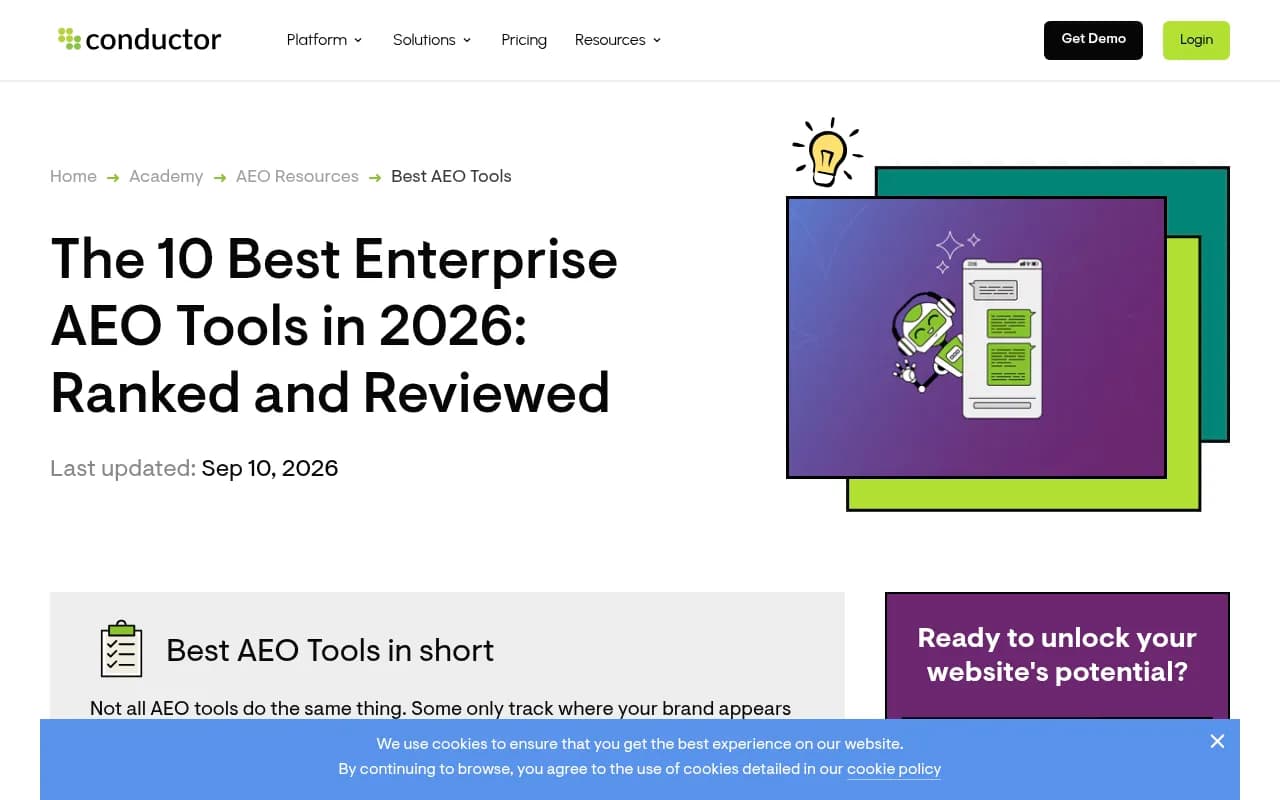
I'll be upfront about how this guide was built. I did not run independent lab tests of every product. I read the main roundups, compared their claims against each other, and noted where they disagree. Almost every list out there is published by a vendor in the category: HubSpot, Profound, Conductor and Scrunch each have their own. Each of them puts itself or a favored product near the top. That doesn't make them useless, but it does mean you should read the rankings with some salt.
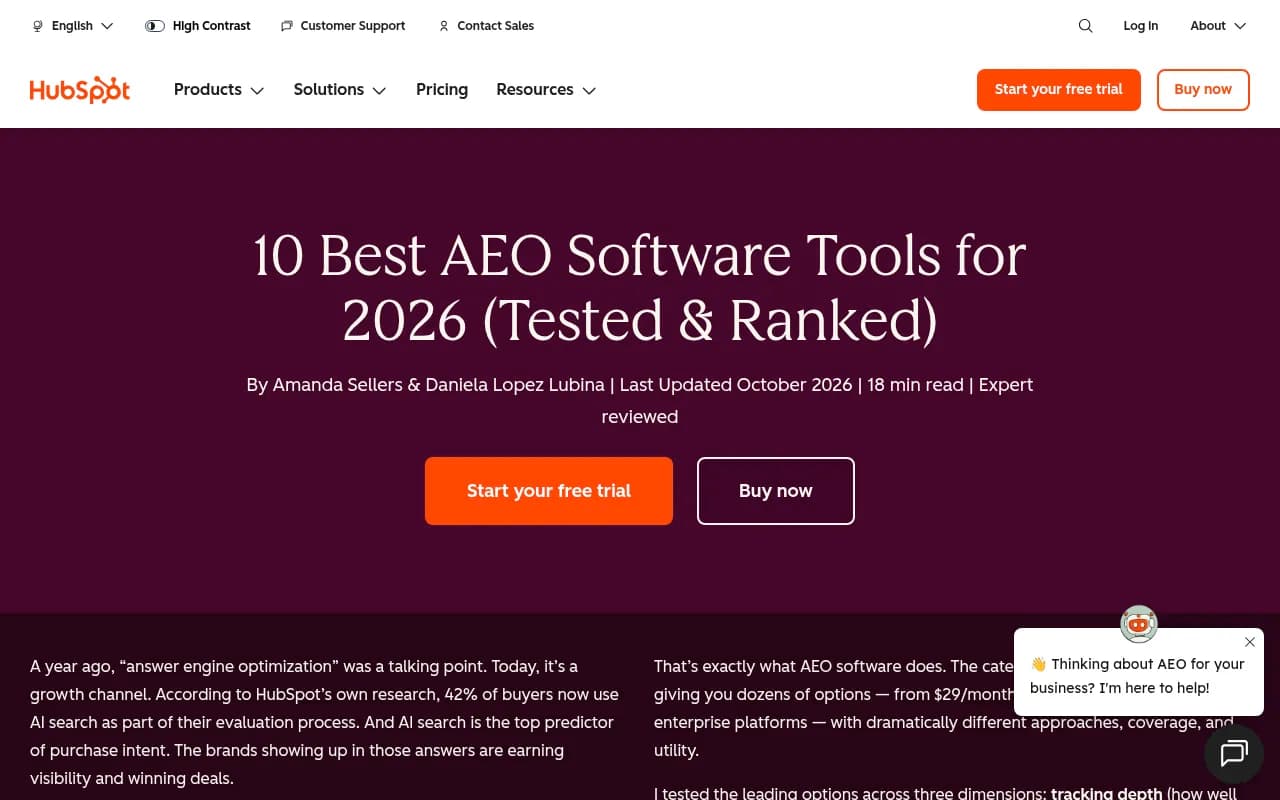
The screenshot above is a good example. HubSpot tested the tools across tracking depth, actionability and fit, and put HubSpot AEO first. Reasonable criteria, predictable winner.
The three kinds of AEO tool
- Trackers. They run a set of prompts across AI engines and report whether your brand appears, where, and how it is described. Useful, but they stop at the dashboard.
- SEO suites with AI add-ons. Semrush, Ahrefs, SE Ranking and similar tools bolt AI visibility onto an existing product. Convenient if you already pay for them, usually shallower on AI-specific data.
- Optimization platforms. These connect visibility data to content, crawler behavior and traffic, so you can see why you are missing and whether a fix worked.
Most of the confusion in this market comes from treating those three as the same thing.
What the data says you should optimize for
Before picking a tool, it helps to know what AI engines actually cite, because a tool is only as good as the questions it lets you answer. Two Promptwatch Data reports are useful here.
Content types ChatGPT cites
In Promptwatch's ChatGPT citation share by content type report (Sep 28 to Oct 4, 2026), citations broke down like this:
| Content type | Share of ChatGPT citations |
|---|---|
| Product pages | 22.4% |
| Landing pages | 16.8% |
| Listicles | 13.6% |
| How-to guides | 8.7% |
| Documentation | 7.5% |
| General articles | 6.1% |
| Comparisons | 5.9% |
| News | 5.7% |
| FAQ pages | 3.3% |
| Reviews | 1.7% |
Product and landing pages together are 39% of citations. For commercial prompts, product pages, landing pages, listicles and comparisons make up almost 70%. For informational prompts, how-tos and docs move up. So a useful AEO tool should let you split citations by prompt intent. If it only gives you one blended "visibility score," you can't tell whether you have a product page problem or a missing-listicle problem.
How long a cited page stays cited also matters. Promptwatch's content half-life report found landing pages and docs stay cited longest, while news loses half its pages within 36 days.
Domain rank and who gets cited
The domain rank distribution report (Nov 3 to 16, 2026) shows the median cited domain is DR 57 in ChatGPT and Perplexity, and DR 56 in AI Overviews and AI Mode. Domains ranked DR 31 to 75 earn about 61% of ChatGPT citations, 59% in AI Overviews, 66% in Perplexity and 65% in AI Mode.
The top of the scale is interesting. Domains at DR 91 and above earn 17.9% of AI Overviews citations but only 3.0% in ChatGPT. Much of that peak comes from social platforms: in the Oct 11 to Nov 9 social report, social platforms earned 13.16% of AI Overviews citations (YouTube alone 6.71%), 1.94% in Perplexity and 0.64% in ChatGPT.
Practical read: you don't need a giant domain to get cited. Aim PR and guest content at DR 61 to 90 sites for ChatGPT and Perplexity, and plan YouTube and other social content for Google's engines. Your tool should show you this per engine, not as one averaged number.
How I'd evaluate an AEO tool
Here is the checklist I'd use, and the one that matches how the roundups judge tools (engine coverage, citation accuracy, content capability, enterprise readiness, integrations).
- Real interface data or APIs. User-facing answers can differ from API output. Ask how prompts are collected.
- Engine coverage. ChatGPT, Gemini, Perplexity and AI Overviews are the baseline. Claude, Copilot, AI Mode and Meta AI are a bonus.
- Citation detail. Which pages, which content types, which third-party sources, split by intent.
- Crawler visibility. Can you see whether AI bots actually read your pages? Without this, you can't tell an access problem from a content problem.
- Traffic attribution. Does the tool tie AI visibility to visits and conversions?
- Action layer. Does it tell you what to do, or write and publish content for you?
- Real pricing. Per-prompt and per-response limits matter more than the headline monthly price.
The best AEO tools in 2026
Promptwatch
Promptwatch is the one I'd put first for teams that want the whole loop in one product: monitor, trace, act, measure. It tracks ChatGPT, Gemini, Claude, Perplexity, AI Overviews, AI Mode, Copilot and others from the real interfaces, in the countries and languages you pick. Then it goes past reporting. IP-verified AI crawler logs show whether bots read a page, Page Tracker shows whether it gets cited, and visitor analytics show whether it sends traffic.
The action side is what separates it from most trackers. The Action Board gives a prioritized to-do list, content gap analysis maps your pages against the prompts AI answers, and the Content Agent writes and publishes to WordPress, Webflow or Framer. It also covers Reddit, YouTube, LinkedIn and Instagram citations, ChatGPT Shopping and Ads Radar, which most competitors skip.
Pricing starts at $95/mo (Essential) with Professional at $245/mo and Business at $579/mo, which is the first plan with the Content Agent. Agency plans start at $199/mo. Confirm on promptwatch.com/pricing. There is a 7-day free trial on monthly billing, and a free AI visibility report if you want a quick look first. For the long version, see the GEO platform comparison.

Profound
Profound is the enterprise monitoring heavyweight. Its own guide claims daily tracking on 1.9B+ real prompts with content creation, crawler analytics and attribution in one platform, and admits it is overkill for teams that just want a lightweight score. Pricing is quote-based for enterprise, with a free trial for brands in some sources. Compared with Promptwatch it costs more and lacks Reddit tracking and ChatGPT Shopping. See Promptwatch vs Profound.

Otterly.AI
Otterly.AI is the budget pick, at $29/mo on the Lite plan according to two of the roundups. It tracks ChatGPT, AI Overviews and Perplexity, with Gemini as an add-on in one source. G2 shows 4.9 in one list. It is a tracker, so expect no crawler logs and no content generation.

Peec AI
Peec AI is a clean multi-market tracker at about EUR 89/mo (roughly $95), with ChatGPT, Gemini and Perplexity coverage and a good fit for agencies and global teams. Same limit as Otterly: monitoring, not fixing.

Scrunch
Scrunch pairs monitoring with an Agent Experience Platform that serves AI-optimized pages to crawlers without changing the human-facing site. Starting prices around $250/mo appear in HubSpot's list. Profound's review notes content generation was not shipped yet at the time of writing. Verify current status with them.
HubSpot AEO
HubSpot AEO starts at $50/mo ($45 paid annually) with a 28-day free trial according to HubSpot's own page. Its edge is CRM attribution inside Marketing Hub Pro and Enterprise. If your pipeline already lives in HubSpot, it is worth a trial, with the usual caveat that this ranking comes from HubSpot itself.

Semrush and Ahrefs Brand Radar
These are the suite add-ons. Semrush's AI toolkit tracks ChatGPT and AI Overviews alongside your existing Semrush data, with prices quoted at $99/mo plus base or $139.95/mo depending on the source. Ahrefs Brand Radar starts around $50/mo for prompt tracking per HubSpot's list. Both make sense if you already pay for the suite. Neither gives you crawler logs or AI traffic attribution.

Conductor and AthenaHQ
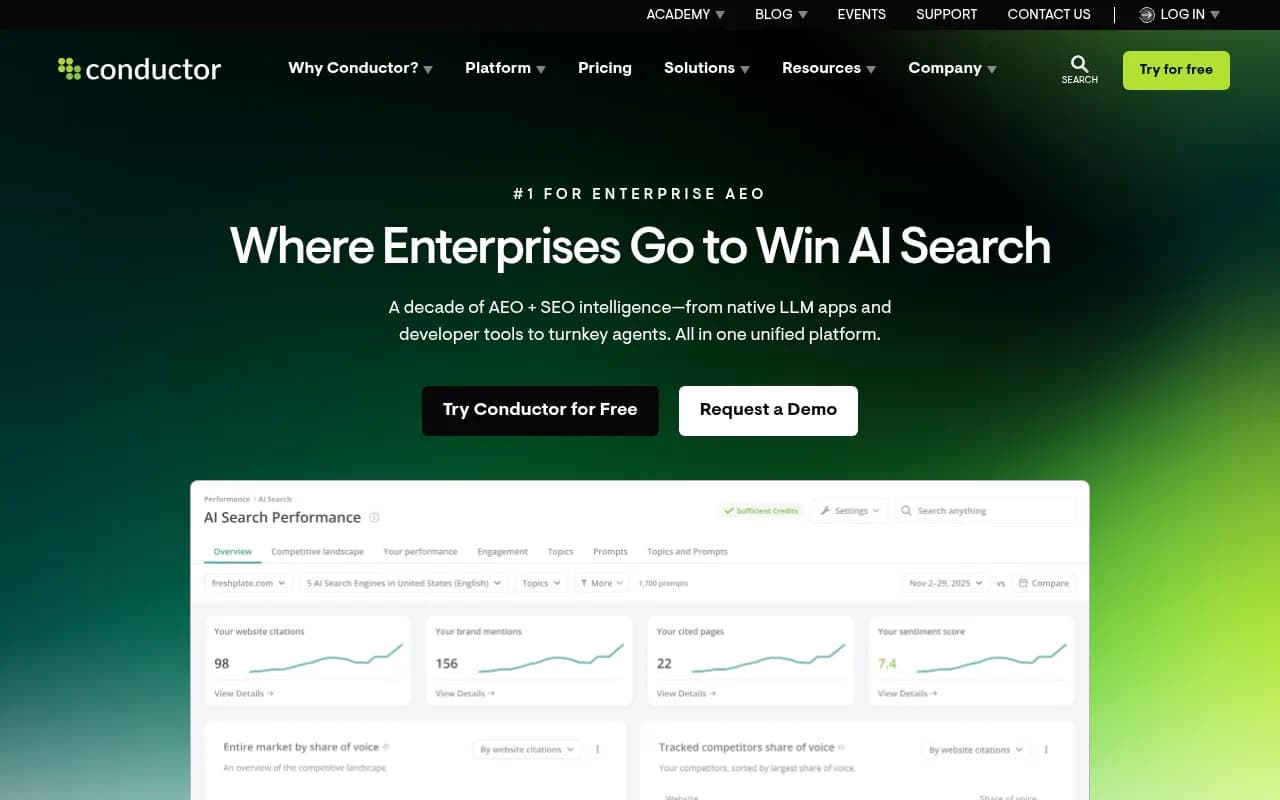
Conductor tops its own enterprise list, starting at $1,500/mo, with AI content creation and technical AEO monitoring across a long list of engines. AthenaHQ's Action Center turns visibility data into next steps, though Profound's review flags an undisclosed prompt-volume estimation model.

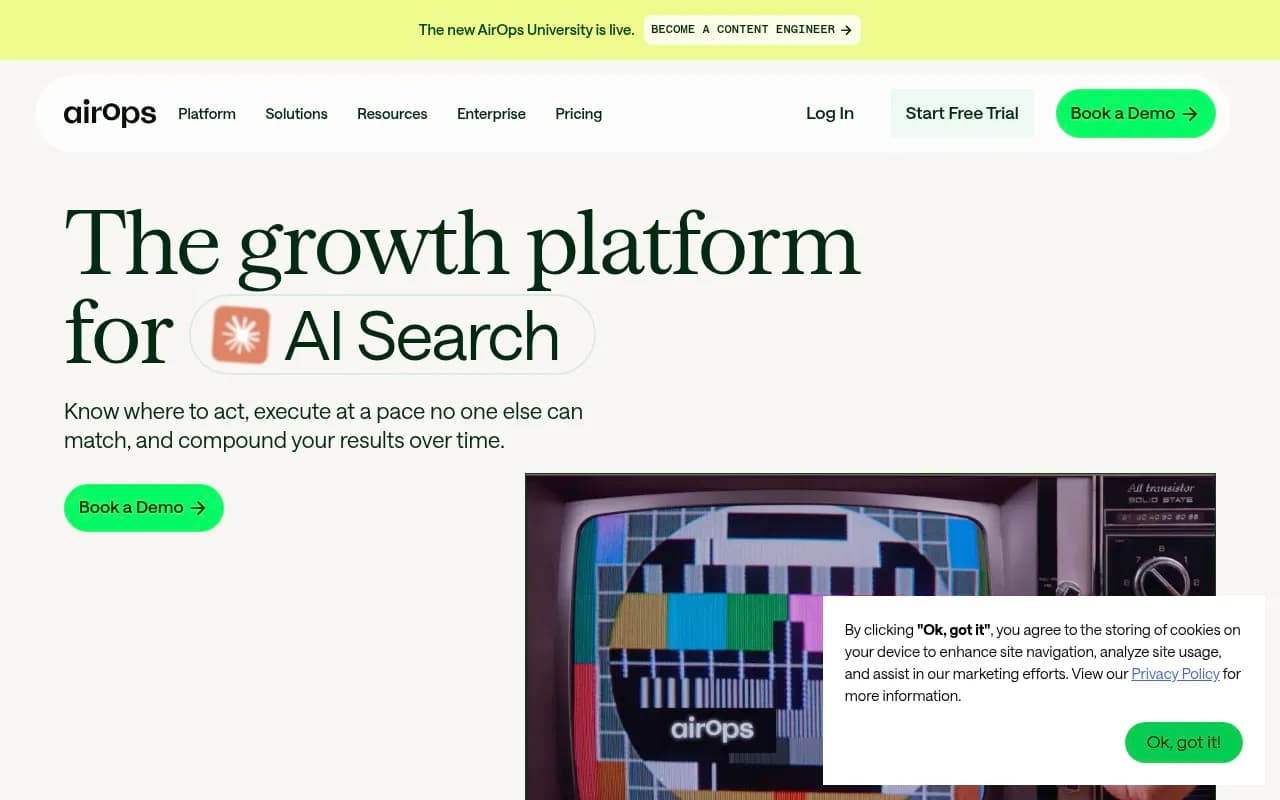
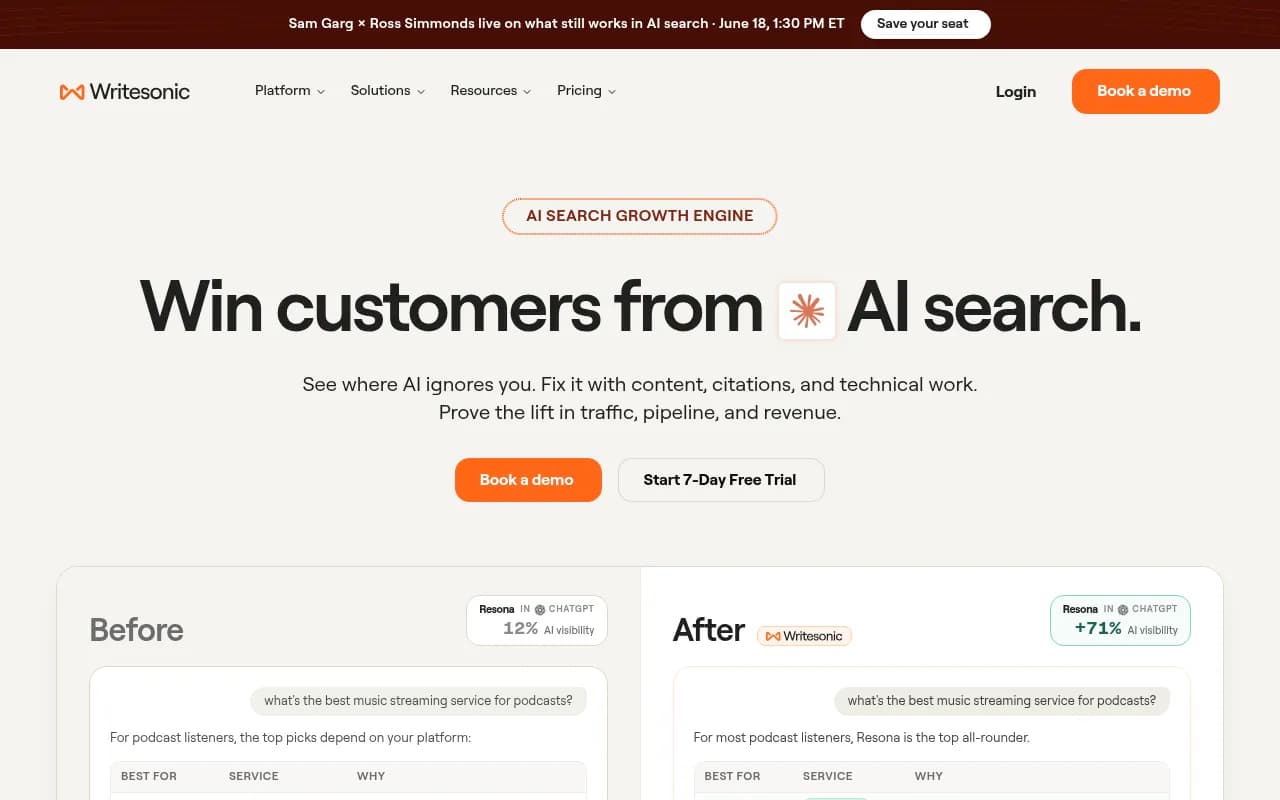
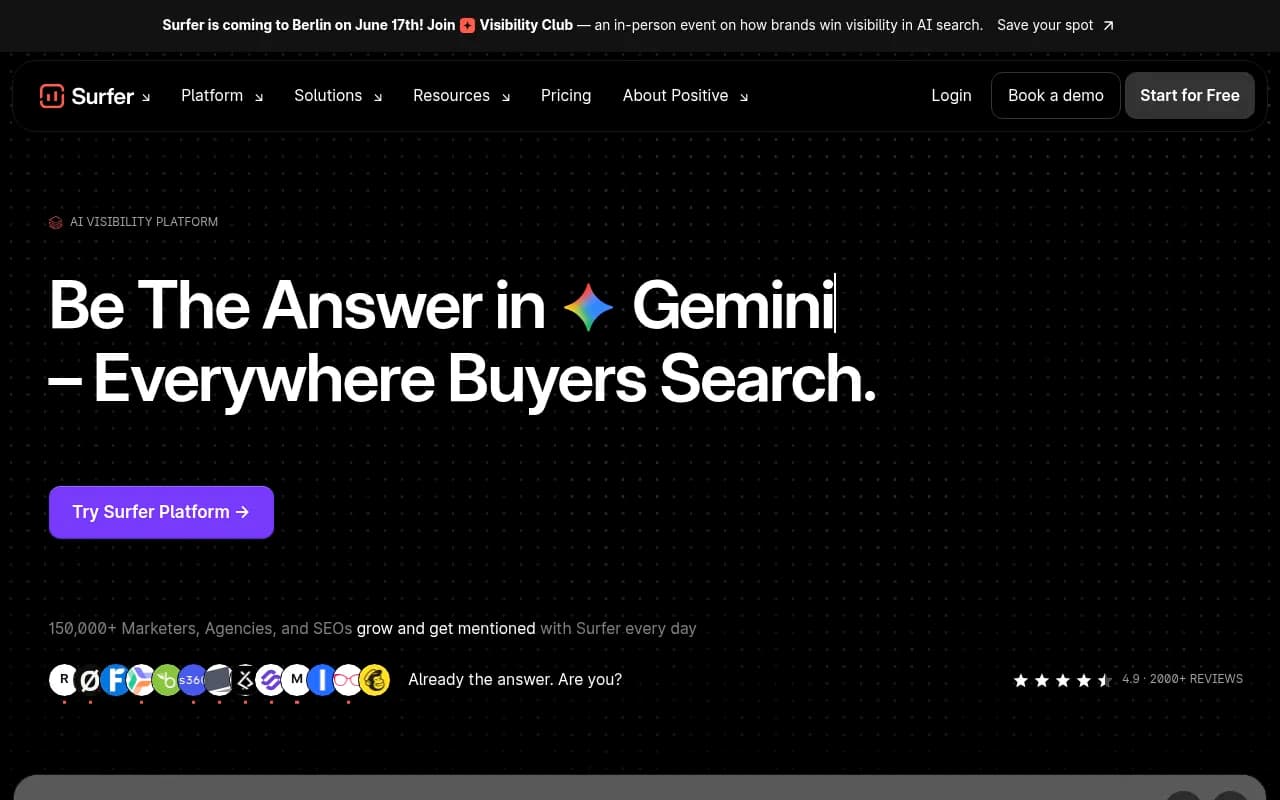
Content-side tools: AirOps, Writesonic GEO, Surfer SEO
AirOps helps close the gap between visibility data and content production, and Writesonic GEO (around $199/mo annual in one list) combines monitoring with content generation. They are strongest when you already have a tracker telling you what to write. Without citation data behind them, they are just writing tools.
Comparison at a glance
| Tool | Type | Starting price (verify) | Best for | Fixes gaps? |
|---|---|---|---|---|
| Promptwatch | Optimization platform | $95/mo | Teams wanting monitor-to-fix-to-measure | Yes, agents and Action Board |
| Profound | Enterprise monitoring | Quote or trial | Large enterprises | Partly |
| Otterly.AI | Tracker | $29/mo | Budget teams, agencies | No |
| Peec AI | Tracker | ~EUR 89/mo | Multi-market teams | No |
| Scrunch | Monitoring plus delivery | ~$250/mo | AI-agent readiness | Partly |
| HubSpot AEO | Suite feature | $50/mo | HubSpot CRM users | Recommendations |
| Semrush AI toolkit | Suite add-on | $99 to $139.95/mo | Existing Semrush users | Limited |
| Ahrefs Brand Radar | Suite add-on | ~$50/mo | Existing Ahrefs users | No |
| Conductor | Enterprise suite | $1,500/mo | Enterprise SEO plus AEO | Yes |
Prices come from vendor-published roundups and differ across sources. Treat them as ballparks.
Which one should you pick?
- You want to know if you show up at all: start with the free AI visibility report from Promptwatch, or a $29/mo tracker like Otterly.AI.
- You want AI traffic and revenue, not just mentions: you need crawler logs, visitor analytics and content tools in one place. That is where Promptwatch is strongest.
- You are an agency: Promptwatch agency plans start at $199/mo with unlimited projects and seats. Peec AI and Otterly.AI are the cheaper tracker-only alternatives.
- You live inside one suite: try the add-on in Semrush, Ahrefs or HubSpot first. Upgrade when you hit the limits.
- Enterprise procurement: Profound, Conductor and Promptwatch (ISO/IEC 27001 certified, GDPR compliant) are the realistic shortlist.
If you want to browse more options, the GEO software directory lists dozens of tools beyond the ones covered here.
How to run a fair trial
Give every tool the same 20 to 30 prompts, covering commercial, informational and branded intent. Run them for two weeks. Then ask four questions:
- Do the results match what you see when you ask the engines yourself?
- Can you see which exact pages and content types get cited?
- Can you tell whether AI bots are reading your site?
- After you publish a fix, can the tool show whether it worked?
If a tool fails on three and four, it is a dashboard. That may be all you need. Just know which one you are buying.
Final take
The category is crowded, and many tools are variations of the same prompt tracker. Pick based on what happens after the report: if you only need monitoring, a cheap tracker is fine. If you need to change what AI says about you and prove it, choose a platform that covers crawling, content and traffic, and test it on your own prompts before you commit.