Key takeaways
- Entity-level tracking means monitoring when AI models mention your brand, product, or named entity in generated responses -- not just whether your site ranks in traditional search.
- Most platforms in this space are monitoring-only dashboards; only a handful close the loop by helping you create content that improves your visibility.
- The right tool depends on your use case: enterprise depth, agency reporting, budget monitoring, or a full optimization workflow.
- Coverage varies significantly -- check which AI models a platform actually queries before committing.
- Promptwatch is the only platform in 2026 rated as a "Leader" across all categories in a head-to-head comparison of 12 GEO platforms, largely because it goes beyond tracking into content generation and optimization.
Why entity-level tracking matters now
Traditional rank tracking tells you where a URL sits on a results page. Entity-level tracking asks a different question: when someone asks an AI model for a recommendation, does your brand get named?
That distinction matters more than ever. According to SparkToro's analysis of Similarweb clickstream data from early 2026, about 68% of Google searches ended without a click -- users got their answer inside the results page itself. ChatGPT hit roughly 900 million weekly active users in February 2026 (per OpenAI, reported by TechCrunch), and Google AI Overviews now reach an estimated 2 billion people per month. When the answer is the destination, showing up inside it is what drives awareness, consideration, and eventually revenue.
Entity-level mentions are how AI models signal trust. If Perplexity recommends your CRM, or ChatGPT names your agency in a "best of" response, that's the AI equivalent of a first-page ranking. If it names your competitor instead, you have a gap -- and most traditional tools won't even show you it exists.
This guide compares the platforms that can actually surface those gaps, ranked by how far they go toward helping you close them.
What to look for in an entity tracking platform
Before diving into specific tools, here's what separates genuinely useful platforms from dashboards that just look impressive in a demo:
Model coverage. Some tools query only ChatGPT and Perplexity. Others cover Google AI Overviews, Gemini, Claude, Grok, DeepSeek, Copilot, and Meta AI. The more models you care about, the more coverage matters.
Prompt customization. Fixed prompts are a limitation. You want to track the specific questions your buyers actually ask, not a generic set chosen by the vendor.
Citation-level data. Knowing your brand was mentioned is useful. Knowing which page on your site was cited, how often, and by which model is actionable.
Competitor comparison. Entity tracking without competitive context is just vanity metrics. You need to see who's winning the prompts you're losing.
Content gap analysis. The best platforms don't just show you where you're invisible -- they show you why, and what content would fix it.
Traffic attribution. Can the tool connect AI citations to actual site visits and conversions? Most can't.
The platforms worth knowing in 2026
Promptwatch -- full-stack optimization, not just monitoring
Promptwatch is the platform that comes up most often when teams want to move beyond dashboards. It covers 10 AI models (ChatGPT, Perplexity, Google AI Overviews, Google AI Mode, Claude, Gemini, Meta/Llama, DeepSeek, Grok, Copilot) and tracks entity mentions at the prompt level with volume estimates and difficulty scores attached.
What makes it different from most tools on this list is the action loop. Answer Gap Analysis shows you the specific prompts where competitors are visible and you aren't. Content Agents then generate articles, comparisons, and briefs grounded in that gap data -- not generic SEO filler, but content engineered around the exact questions AI models are already answering without you. Then page-level tracking shows when those new pages get crawled, cited, and start driving traffic.
The AI Crawler Logs feature is genuinely rare: real-time logs of when ChatGPT, Claude, Perplexity, and other crawlers hit your site, which pages they read, and what errors they encounter. Most competitors don't offer this at all.
Pricing starts at $99/month for one site and 50 prompts, with the Professional plan at $249/month adding crawler logs and city-level tracking.
Profound -- enterprise depth with compliance focus
Profound has positioned itself as the enterprise standard, backed by $20 million in Series B funding. It's the right call for large organizations that need audit trails, compliance documentation, and deep historical data. The reporting is thorough. The price point reflects that.
Where it falls short for many teams is the action side. Profound is primarily a monitoring platform. It shows you where you stand with impressive granularity, but the workflow for actually improving your visibility lives elsewhere.
Otterly.AI -- affordable entry point for smaller teams
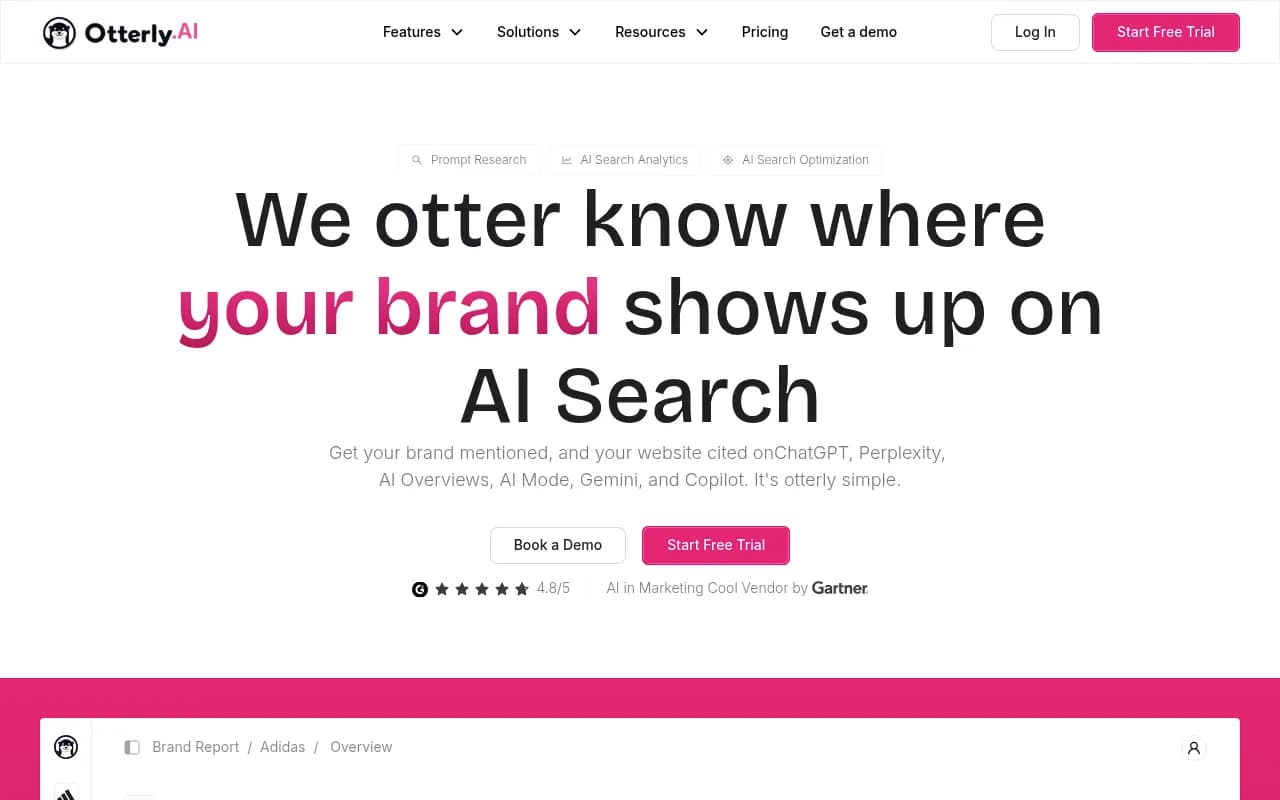
Otterly.AI is a popular choice for teams that want brand mention tracking without a large budget. It covers the major AI models, tracks competitor mentions, and surfaces prompt-level data in a reasonably clean interface.
The tradeoff is depth. There's no crawler log data, no content generation, and limited attribution. For a startup or small agency that just needs to know whether they're showing up in AI responses, it's a reasonable starting point. For teams that want to do something about what they find, it's a stepping stone.
Peec AI -- monitoring with smart suggestions
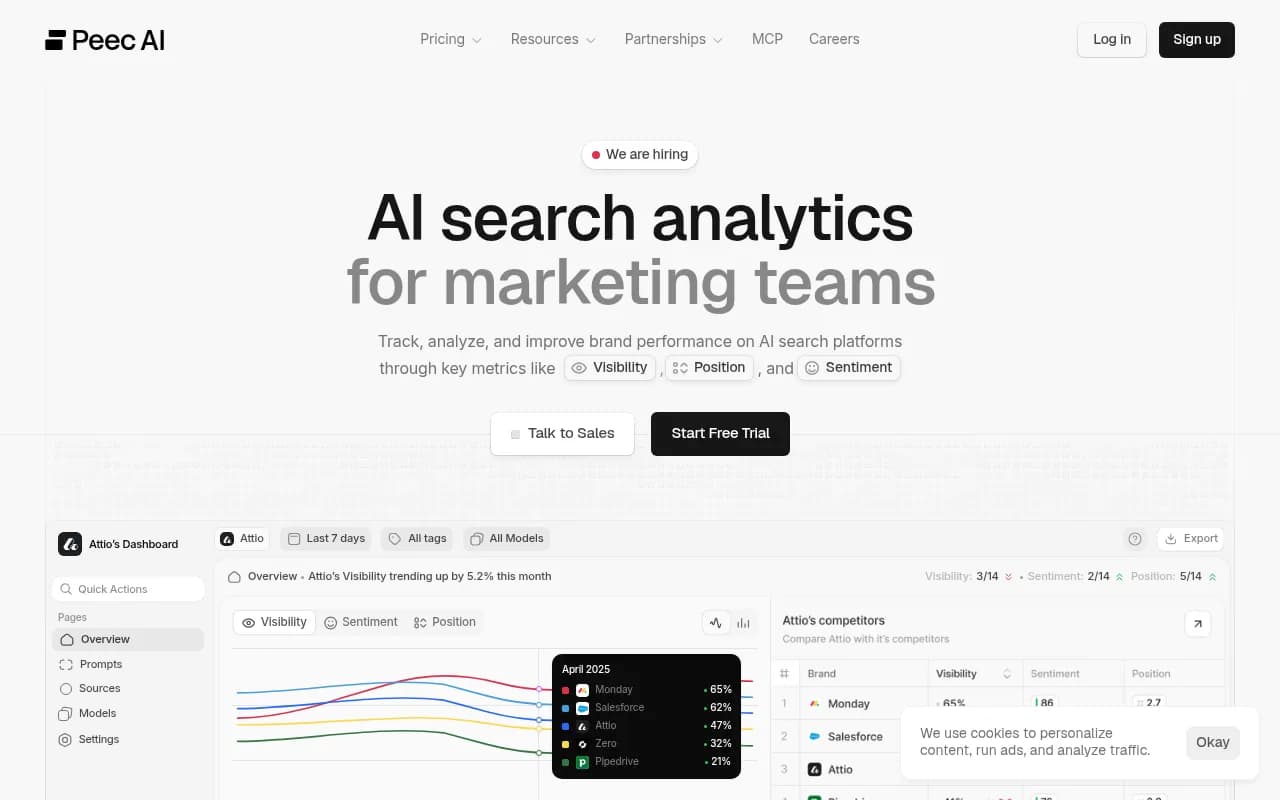
Peec AI sits in the middle ground between pure monitoring and optimization. It tracks entity mentions across AI models and surfaces some suggestions for improving visibility. The interface is clean and the onboarding is fast.
It doesn't go as deep as Promptwatch on content generation or crawler analytics, but it's a credible option for teams that want more than a raw dashboard without committing to an enterprise platform.
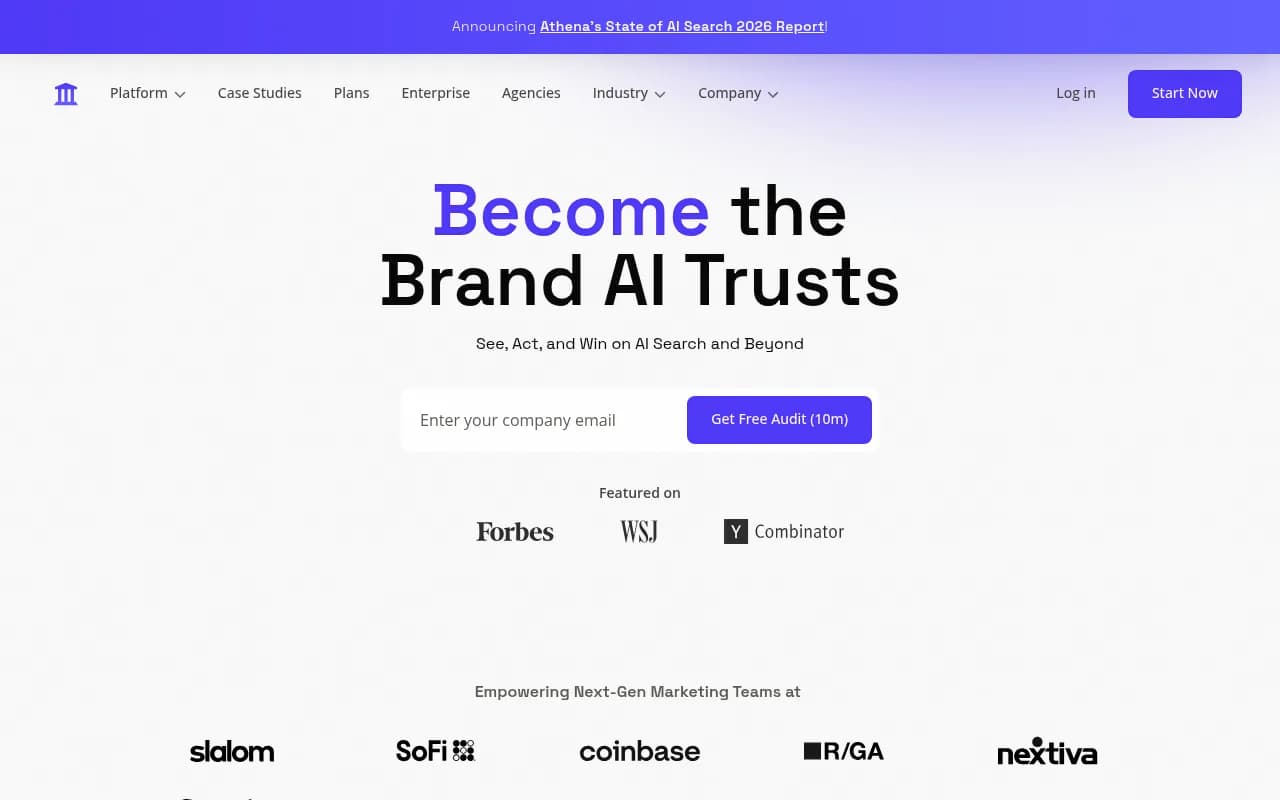
AthenaHQ -- monitoring-focused with solid UX
AthenaHQ has built a clean monitoring experience with good competitor comparison features. It's particularly useful for teams that want to track share of voice across AI models and generate reports for stakeholders.
Like most monitoring-first platforms, it stops before the optimization layer. You'll see the gap clearly; filling it requires a separate workflow.
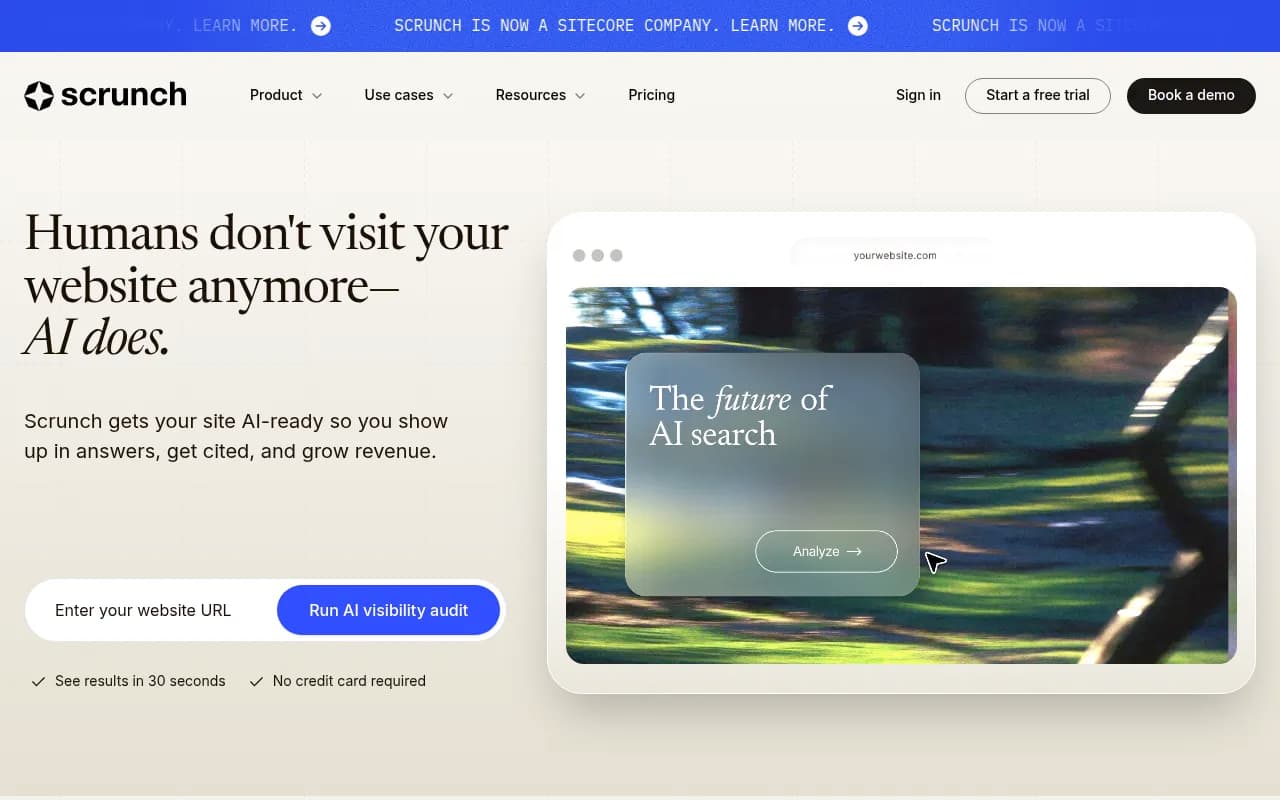
Scrunch AI -- brand and agency monitoring
Scrunch AI targets brands and agencies that need to monitor AI visibility across multiple clients or product lines. It handles multi-brand setups reasonably well and produces shareable reports.
The platform is stronger on monitoring than optimization, and it lacks some of the deeper features (crawler logs, prompt volume data, content generation) that teams running active GEO programs need.
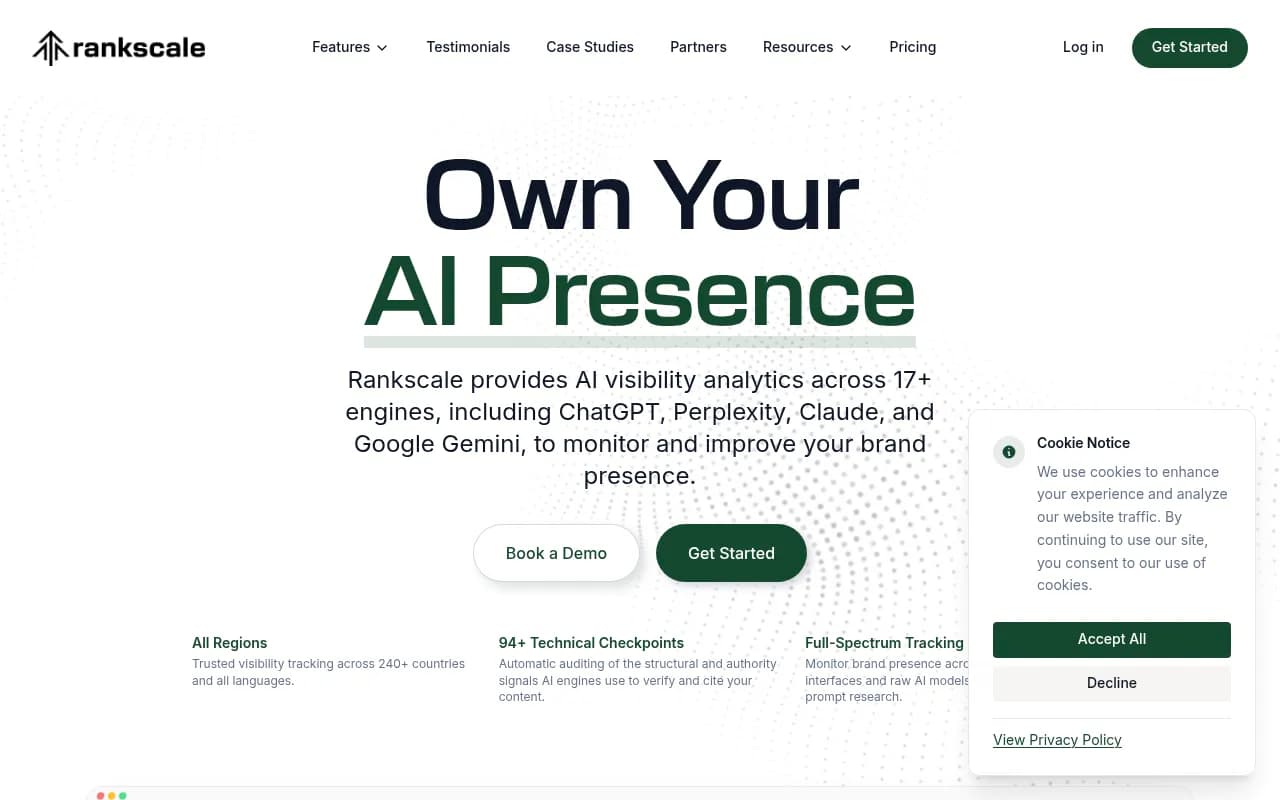
Rankscale -- rank tracking extended into AI search
Rankscale comes from a traditional rank-tracking background and has extended its feature set into AI search monitoring. If your team is already comfortable with rank tracking workflows, the learning curve is low.
The AI-specific features are growing but not yet at the depth of dedicated GEO platforms. Worth watching, but not the first choice if AI visibility is your primary focus.
Search Party -- agency-oriented reporting
Search Party is built around agency workflows: client reporting, white-labeling, and multi-account management. If you run an agency and need to show AI visibility data to clients in a presentable format, it handles that well.
Prompt metrics and content gap analysis are limited compared to platforms built around the optimization workflow.
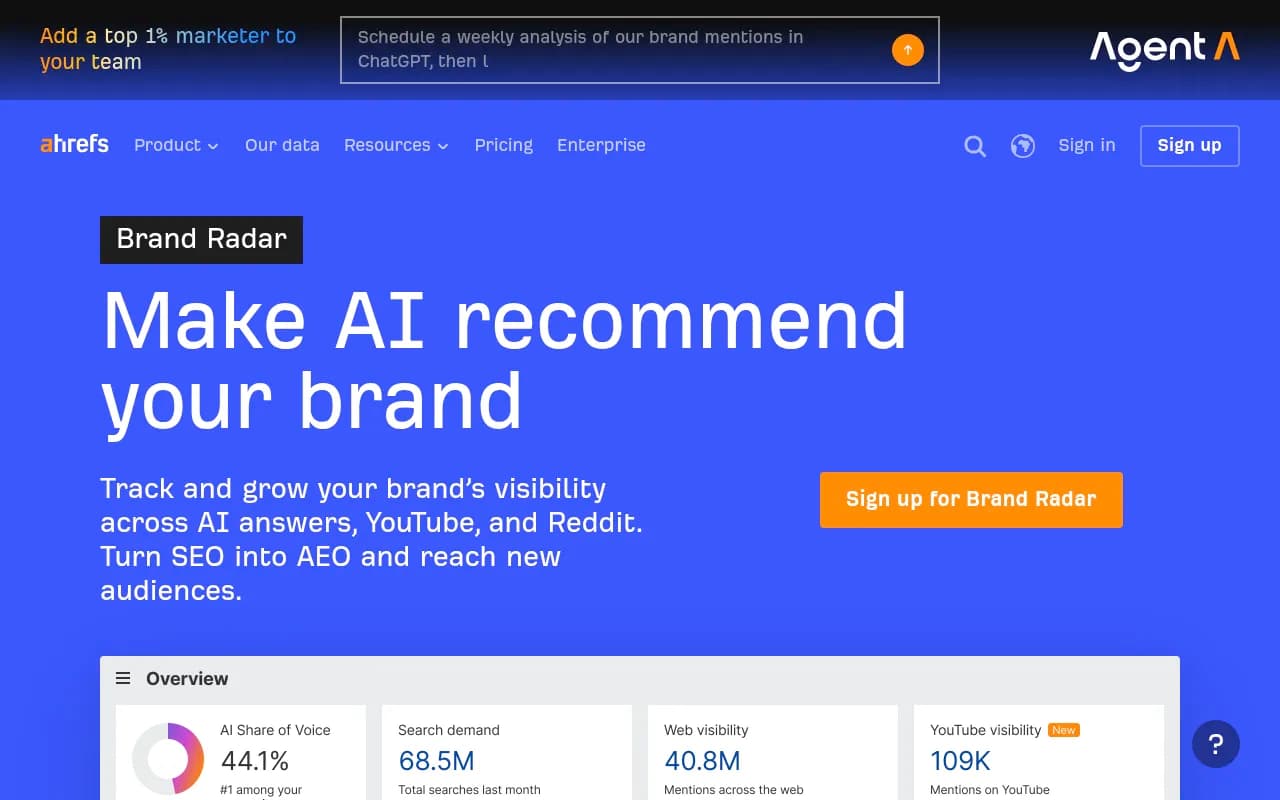
Ahrefs Brand Radar -- familiar toolset, growing AI features
Ahrefs added Brand Radar to its existing SEO platform, which means teams already using Ahrefs can get some AI visibility data without switching tools. The integration with backlink and keyword data is genuinely useful for connecting traditional SEO signals to AI visibility.
The limitations: fixed prompts (you can't customize what gets tracked), and no AI traffic attribution. It's a useful addition to an existing Ahrefs subscription, not a replacement for a dedicated AI visibility platform.
Semrush AI visibility toolkit -- SEO teams already on Semrush
Similar story to Ahrefs. If your team lives in Semrush, the AI Visibility Toolkit adds entity tracking without requiring a new platform. The fixed prompt limitation applies here too, which matters if you want to track niche or industry-specific queries.
Platform comparison table
| Platform | Model coverage | Custom prompts | Crawler logs | Content generation | Traffic attribution | Starting price |
|---|---|---|---|---|---|---|
| Promptwatch | 10 models | Yes | Yes | Yes | Yes | $99/mo |
| Profound | 6+ models | Yes | No | No | Limited | Enterprise |
| Otterly.AI | 4-5 models | Yes | No | No | No | ~$49/mo |
| Peec AI | 4-5 models | Yes | No | Limited | No | ~$49/mo |
| AthenaHQ | 5+ models | Yes | No | No | No | Custom |
| Scrunch AI | 4-5 models | Yes | No | No | No | Custom |
| Rankscale | 3-4 models | Limited | No | No | No | ~$29/mo |
| Search Party | 4-5 models | Yes | No | No | No | Custom |
| Ahrefs Brand Radar | 3-4 models | No (fixed) | No | No | No | Add-on |
| Semrush AI Toolkit | 3-4 models | No (fixed) | No | No | No | Add-on |
How to choose the right platform for your situation
The honest answer is that the right tool depends on what you plan to do with the data.
If you want to monitor and act in the same workflow, Promptwatch is the clearest choice. The gap analysis, content generation, and crawler logs form a complete cycle that most other platforms can't match. It's the only platform in a 2026 comparison of 12 GEO tools rated as a "Leader" across all categories.
If you're at an enterprise with compliance requirements, Profound's depth and audit trail features justify the price. Just plan for a separate content workflow.
If budget is tight and you just need basic tracking, Otterly.AI or Peec AI get you started. You'll outgrow them if you run an active optimization program, but they're not bad starting points.
If your team already lives in Ahrefs or Semrush, use their AI features as a supplement. Don't expect them to replace a dedicated GEO platform.
If you run an agency, Search Party's reporting features are worth a look, though the prompt metrics are thinner than you might want.
The monitoring-only trap
One thing worth naming directly: most platforms in this space are monitoring dashboards. They show you a score, a mention count, a share of voice chart. That data is useful. But it doesn't move the number.
The teams getting real traction with AI visibility in 2026 are the ones running a closed loop: find the prompts where competitors appear and they don't, create content that answers those prompts better, track when AI models start citing that content, and connect citations to traffic and revenue. That loop requires more than a dashboard.
A few platforms are building toward that loop. Most aren't there yet. When evaluating any tool, the question to ask is: "After I see the gap, what does this platform help me do about it?"
Entity tracking in practice: what good data looks like
When a platform surfaces an entity mention, the useful data points are:
- Which AI model cited your brand
- The exact prompt that triggered the citation
- Whether you were cited as a source (with a link) or just mentioned in the response
- Where in the response your brand appeared (first mention vs. buried in a list)
- Which competitor was cited instead, on prompts where you weren't mentioned
- The estimated volume of users asking that prompt
Without that level of detail, you're flying partially blind. A mention count without context doesn't tell you whether you're winning or losing, or what to do next.
Platforms like Promptwatch surface all of this at the prompt level, with volume estimates attached so you can prioritize which gaps are worth closing first. That's the difference between data and a decision.
A note on AI crawler logs
One capability that doesn't get enough attention is AI crawler monitoring. When ChatGPT or Perplexity crawls your site to gather information for responses, that crawl leaves a trace in your server logs -- if you know where to look and have a tool that interprets it.
Knowing which pages AI crawlers visit, how often they return, and whether they encounter errors (broken pages, blocked crawlers, slow load times) is directly actionable. If Perplexity's crawler can't access your most important product page, that's a fixable problem. Most platforms don't surface this data at all.
Promptwatch's AI Crawler Logs feature tracks this in real time, connected to the citation data so you can see the full timeline from crawl to citation. It's the kind of operational detail that separates teams running a serious AI visibility program from teams that just check a dashboard.
Final thoughts
AI search visibility tracking has moved from a niche experiment to a standard part of the marketing stack in 2026. The question isn't whether to track entity mentions -- it's which platform gives you the data you need and the tools to act on it.
The monitoring-only tools are fine for awareness. The optimization platforms are where the real work happens. If you're serious about improving how AI models represent your brand, the platform you choose should be able to answer "what do I do next?" -- not just "where do I stand?"