Key takeaways
- Individual clinic websites earn a tiny share of ChatGPT healthcare citations. Government, research databases, and medical associations dominate, so multi-clinic groups need tracking that covers third-party sources, not just their own domain.
- A good tool for a multi-location group needs location-level tracking, per-clinic and per-service prompt sets, citation source reporting, and some way to turn gaps into actions.
- Promptwatch is the strongest fit if you want monitoring plus execution (content, crawler logs, traffic attribution). Birdeye Search AI, Yext Scout, Profound, and Scrunch AI suit more specific needs.
- Pick tools by team size and how many locations you manage. A 4-clinic group and a 150-clinic network need very different things.
- Compliance matters more here than in most industries. Any AI-generated content still needs clinical review before it goes live.
Why multi-clinic groups have a different AI visibility problem
A single-location practice has one name, one address, and a handful of services to worry about. A group with twelve clinics across three states has twelve sets of hours, overlapping provider rosters, different insurance acceptances, and patients who ask AI assistants things like "urgent care near me that takes Aetna" or "best orthopedic group in Phoenix."
That creates a few problems that a generic brand tracker does not solve:
- AI answers vary by city, so one national visibility score hides which clinics are invisible.
- Brand-level and clinic-level names get confused. ChatGPT may cite your group but send patients to the wrong location.
- Service-line prompts (dermatology, physical therapy, pediatrics) behave differently from brand prompts.
- Health queries pull from a very narrow set of trusted sources, which changes what optimization even means.
The last point deserves its own section, because it changes how you should evaluate tools.
What AI actually cites for healthcare prompts
Promptwatch Data looked at organic healthcare prompts in ChatGPT from Sep 9 to Oct 8, 2026. The healthcare citation share report shows a pattern that should reshape your plan:
- nih.gov takes 5.46% of all healthcare citations, mostly PubMed Central (2.38%) and PubMed (2.33%).
- fda.gov gets 1.76% and nhs.uk 1.1%.
- The top non-government site is plasticsurgery.org at 0.64%, followed by aad.org at 0.54%.
- Mayo Clinic gets 0.49% and Cleveland Clinic 0.4%. They are the only hospitals in the chart.
- Doctify and WebMD doctor profiles get 0.23% each, the only review and directory sites charted.
By source type, government and public health sites earn 7.06%, NIH and research databases 5.46%, medical associations 1.39%, and hospitals and clinics only 0.89%.
The takeaway for a multi-clinic group is blunt. Your own domain is a small slice of the pie. Medical associations in a specialty (AAD and ASPS together earn 1.18%, more than Mayo and Cleveland combined) and complete provider profiles on directories matter. So does citing peer-reviewed research on PubMed and aligning pages with FDA, CDC, NHS, or NICE guidance.
One more data point: in the unique domains per response report (Sep 28 to Oct 4, 2026), 47.6% of ChatGPT responses cited 10 or more domains. But brand-specific prompts are different: only 21.3% cite 10 or more, and 5 domains is the most common count at 14.9%. So when a patient searches your clinic's name, your own site has a real chance to shape the answer. When they search a generic condition or service, you are competing with a crowd.
What to look for in a tool
Before comparing vendors, decide which of these you actually need.
Location-level tracking
This is the big one. You want to see visibility by country, and for local-intent prompts ideally by state or city. If a tool only gives you a single national number, a clinic in a small market can be invisible while your dashboard looks fine.
Prompt sets by service line
You will want to group prompts by specialty, location, and intent (symptom, "near me," insurance, provider name). Topic and tag organization is not a nice-to-have when you have 40 service lines.
Citation source reporting
Given the data above, knowing which third-party pages AI cites for your prompts is more useful than knowing whether you were mentioned. Look for tools that list cited URLs, not just brand mentions.
Crawler and traffic data
If AI bots hit errors on your site, or you cannot tell whether AI referrals turn into booked appointments, you are guessing. Crawler logs and visitor analytics close that gap.
Workflow for multiple stakeholders
Multi-clinic groups usually have a central marketing team, regional managers, and sometimes an outside agency. Look for client portals, white-label reports, multiple seats, and scheduled reporting.
Compliance posture
None of these tools should touch protected health information. Keep prompts generic (conditions, services, locations) and never paste patient data into any AI content tool. Treat anything a tool drafts as a first draft for clinical review.
Comparison at a glance
| Tool | Best for | Location-level focus | Acts on gaps (content, actions) | Notes |
|---|---|---|---|---|
| Promptwatch | Groups wanting monitoring plus execution | Country on all paid plans, state/city from Business | Yes, content agent, action board | Crawler logs, traffic attribution |
| Birdeye Search AI | Local and reputation-heavy groups | Strong, built around locations | Limited | Pairs with review management |
| Yext Scout | Enterprise multi-location brands | Strong, tied to listings data | Limited | Best if Yext already runs your listings |
| Profound | Large enterprise networks | Moderate | Limited | Higher price point |
| Scrunch AI | Groups with multiple clinics or specialties | Moderate | Moderate | Agency-friendly |
| Semrush AI Visibility Toolkit | Teams already on Semrush | Moderate | Limited | Fixed prompt sets |
| Otterly.AI | Small groups on a budget | Basic | No | Simple monitoring |
This table reflects positioning, not a hands-on benchmark. Confirm current features and pricing with each vendor before buying.
The tools worth shortlisting
Promptwatch
Promptwatch is the one I would start with for a multi-clinic group that wants to do something about its visibility rather than just watch a chart. It tracks the real interfaces of ChatGPT, Google AI Overviews, AI Mode, Gemini, Perplexity, Copilot, and others, with country tracking on every paid plan and state and city tracking from the Business plan. For a group where local differences matter, that is the relevant detail.
The parts that matter for healthcare specifically are the citation reports (which pages and source types AI pulls from for your prompts), IP-verified AI crawler logs that show whether bots can read each clinic page, and visitor analytics that connect AI referrals to actual traffic. The Action Board and Content Agent turn gaps into a prioritized to-do list and drafts, though in a medical context you should keep the review inbox on and have a clinician sign off before anything publishes.

Pricing starts with a free tier and paid plans from $95 per month, with Business at $579 per month for 5 projects and 350 prompts. Agency plans start at $199 per month if an outside partner manages several clinic brands. Check promptwatch.com/pricing for current numbers.
Birdeye Search AI
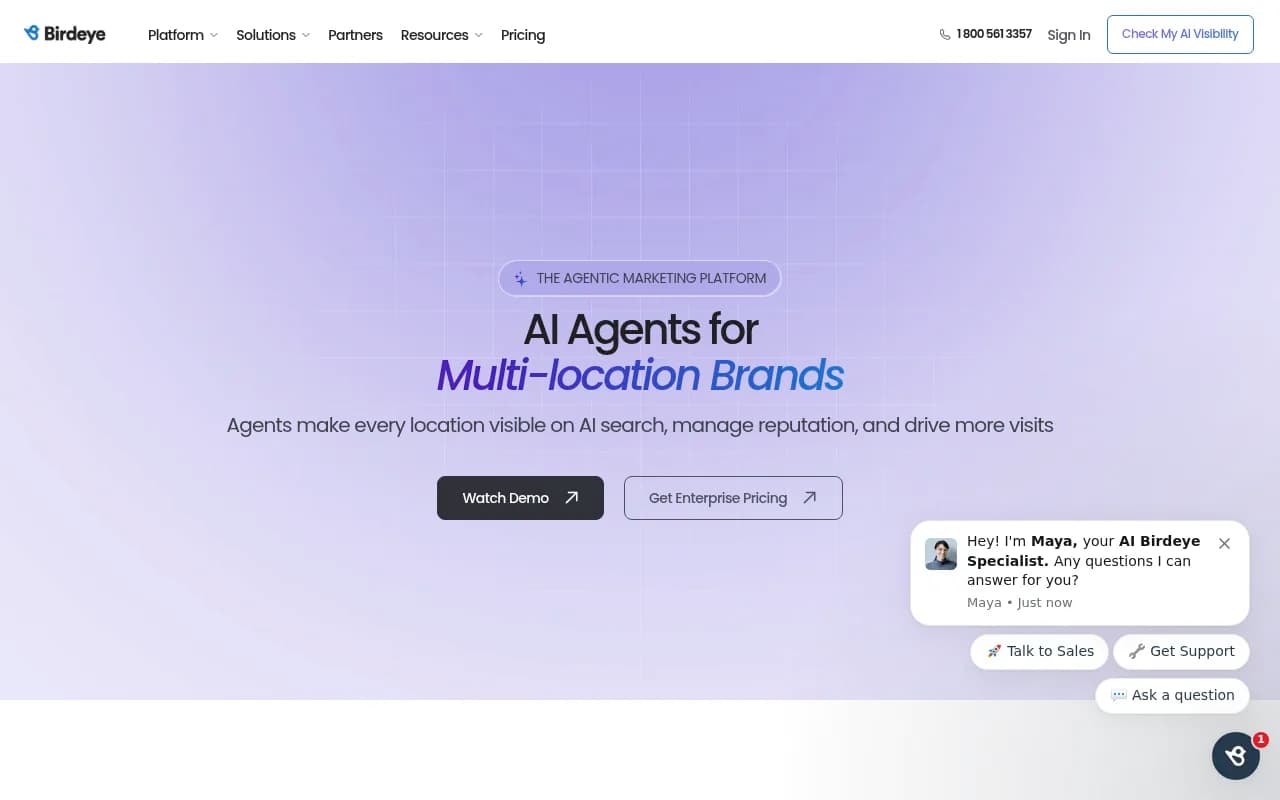
Birdeye comes at this from the local and reputation side, which suits clinics well because reviews and location data feed so much of what AI says about a practice. Its Search AI product offers location-level tracking, so you can see which clinics show up. If your biggest problem is inconsistent reviews across locations, this is worth a demo.
Yext Scout
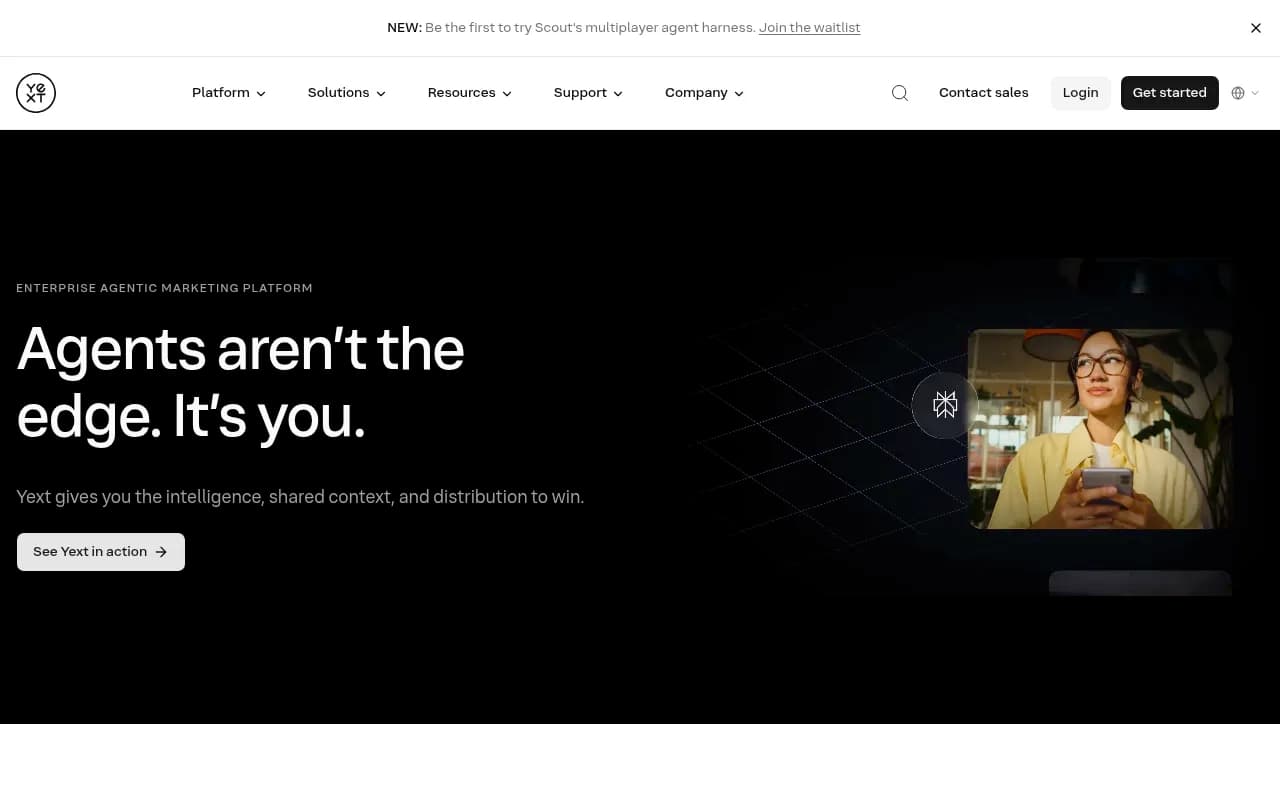
Yext's pitch is verified brand data pushed to every search and AI channel. Scout adds AI search competitive intelligence on top. If your group already uses Yext for listings, adding Scout keeps provider and location data in one place. If you do not, it is a heavier commitment than most mid-size groups need.
Yext Scout
Yext's broader platform is also in the catalog.
Profound
Profound is the enterprise name most often mentioned for large multi-location systems. It has deep prompt tracking and historical analysis. The tradeoff is price, and it is primarily a monitoring product, so you still need a content and technical workflow elsewhere.

Scrunch AI
A vendor-authored roundup describes Scrunch as suited to groups with multiple clinics or specialties. Treat that source with caution, since it was written by a competing vendor, but the positioning matches what Scrunch markets: monitoring for brands and agencies.

Semrush AI Visibility Toolkit and Ahrefs Brand Radar
If your SEO team already lives in Semrush or Ahrefs, their AI add-ons are the lowest-friction way to start. The limits are fixed prompt sets and shallower AI-specific data, with no crawler logs. Good for a first look, less good once you need per-clinic detail.

Otterly.AI and Peec AI
Both are straightforward, affordable monitors. They fit a small group with three or four clinics that wants a baseline. You will outgrow them when you need crawler data, traffic attribution, or content workflows.


Enterprise SEO suites
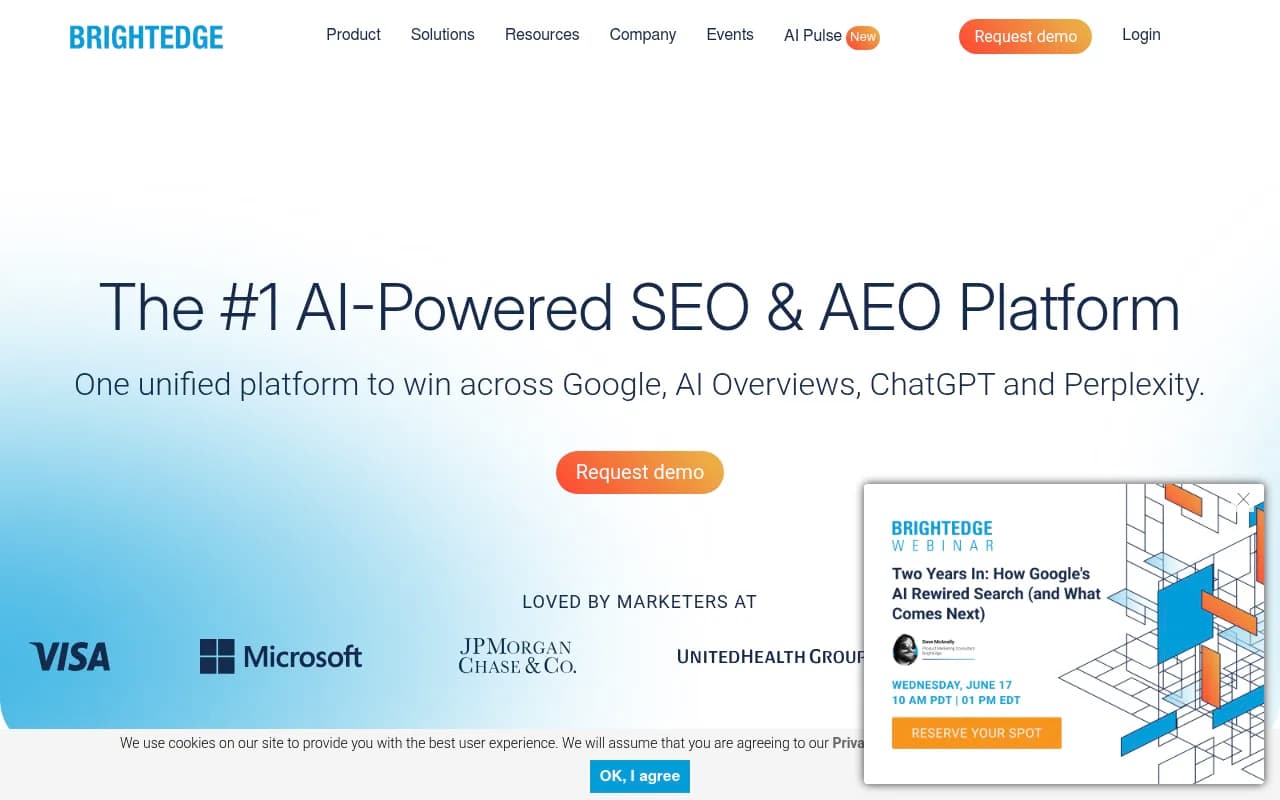
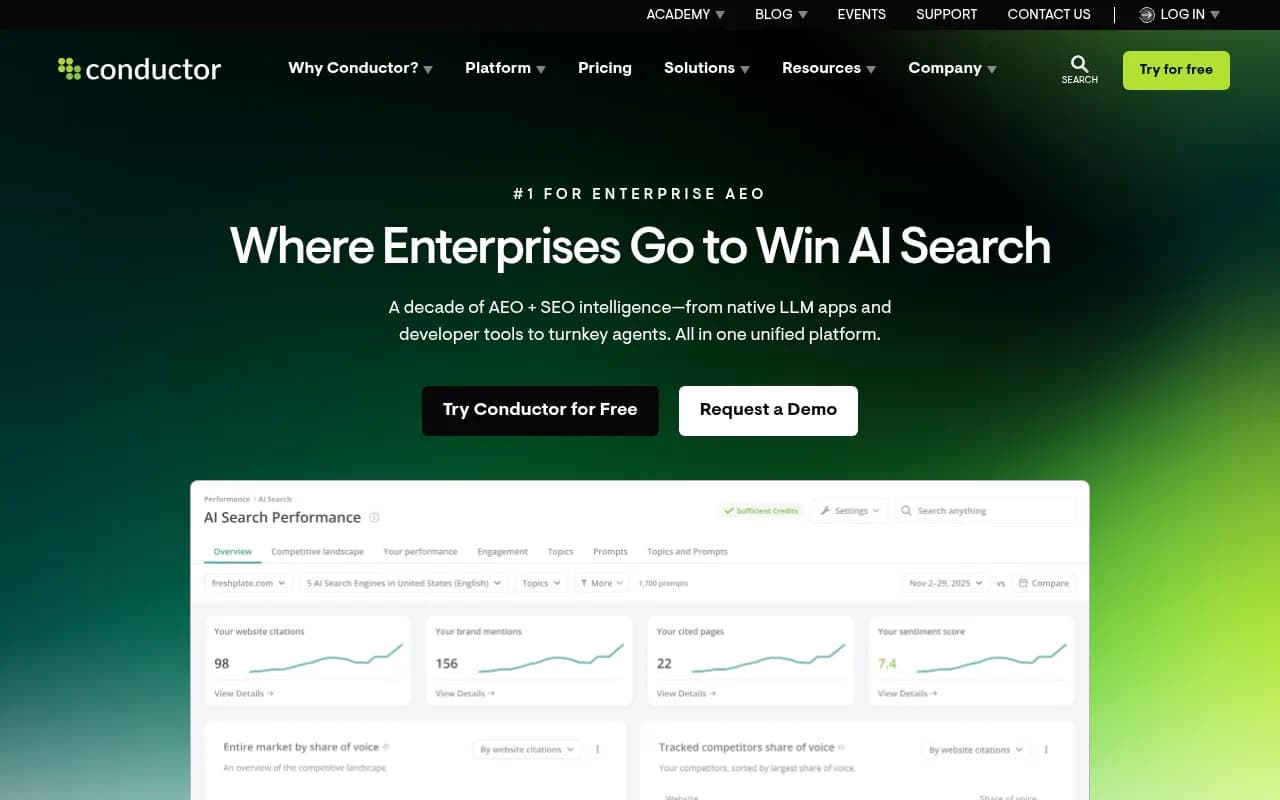
If a large health system already pays for BrightEdge or Conductor, check what AI search reporting is bundled before buying a separate tool.
For a broader view, the GEO software directory at bestgeosoftware.com lists more options by category.
How to choose by group size
2 to 5 clinics
You need a baseline and a short prompt list. Pick a plan with country tracking and 50 to 150 prompts, and focus on your top three service lines per location. A lower-cost monitor can work, but if you also want to know whether bots can read your clinic pages, choose a tool with a site audit and crawler data.
6 to 30 clinics
This is where location-level tracking and prompt organization start to matter. You need topic and tag structure, per-location reporting, and ideally actions tied to the findings. Expect to run 150 to 350 prompts.
30+ clinics or a health system
You are buying governance as much as software: SSO, audit logs, multiple seats, a dedicated success contact, and API access to feed your own dashboards. Enterprise tiers from Promptwatch, Profound, Yext, or your existing SEO suite are the realistic options.
A practical rollout plan
- Build a prompt list in four buckets: symptom questions, service plus city ("knee replacement surgeon Denver"), insurance questions, and branded queries for each clinic and provider.
- Run a baseline for two to four weeks. Record visibility, position, and which sources get cited.
- Find the citation gaps. Look for the directories, associations, and research pages AI relies on for your specialties, and check whether you appear on them.
- Fix the basics. Complete Doctify and WebMD doctor profiles where relevant, keep clinic pages unique per location, and make sure hours, services, and insurance details are accurate.
- Cite real research. Link claims to PubMed or PubMed Central studies and align pages with FDA, CDC, NHS, or NICE guidance. This matches what the healthcare citation data shows AI trusts.
- Check crawler access. Confirm AI bots are not blocked by robots.txt or hitting errors on location pages.
- Measure outcomes. Tie AI referral traffic to calls, form fills, or bookings, not just mentions.
Mistakes I see groups make
The first is tracking only the brand name. Branded prompts are the easy win, and they are the minority of what patients ask. The second is treating all locations as one entity. A strong flagship and an invisible satellite clinic average out into a misleading score. The third is publishing AI-written medical content without clinical review. Search engines and AI systems both reward accuracy, and the reputational risk of a wrong dosage or outdated guideline is far larger than the traffic upside.
A fourth, quieter mistake: ignoring the AI tools that are not ChatGPT. The social media citations report (Sep 28 to Oct 4, 2026) found ChatGPT got only 0.46% of its citations from social platforms, while Google AI Overviews got 12.2%. Different engines behave differently, so track more than one.
Should you hire help?
If your marketing team is two people covering fifteen clinics, a tool alone will not get you there. Agencies that combine technical SEO, content, and GEO can run the program for you. 1001 SEO Media is one option that works with Promptwatch as its AI visibility platform, and it offers monthly reporting without long-term contracts. Whoever you choose, ask how they handle medical review and location-level reporting.
Bottom line
For most multi-clinic groups, the data points the same way: your own sites are a small part of what AI cites for health questions, so choose a tool that shows you the sources AI trusts, tracks by location, and helps you act. Promptwatch covers that full loop. Birdeye and Yext make sense if local listings and reviews are your core problem, and Profound or Scrunch fit large teams that mainly need monitoring. Start with a free scan or trial, run a baseline on your three biggest service lines, and let the citation gaps decide where to spend next.