Key takeaways
- Most complaints about AirOps content quality come down to template rigidity and volume-first workflows. The only independent-ish source for that claim is a competitor (SlateHQ), so test it on your own content before switching.
- Your replacement depends on the real problem: weak drafts (Writer, Jasper, Koala), weak optimization (Surfer, Clearscope, Frase, MarketMuse), or no feedback loop from AI citations (Promptwatch, Profound, Scrunch).
- Promptwatch Data shows product pages, landing pages and comparisons are the most cited ChatGPT content, not generic blog volume. Quality means accuracy and fit to prompt intent.
- Content decays. Landing pages and docs hold up for months in ChatGPT citations, news fades in about five weeks. Pick a tool with a refresh workflow.
- Check current AirOps pricing before comparing. Several roundups carry stale task limits.
Why teams get unhappy with AirOps content quality
AirOps is a template and workflow platform. You build or buy a Playbook, feed it a knowledge base and a brand kit, and it pushes out drafts at volume. For standardized formats like location pages, comparison pages or glossary entries, that works fine. For anything that needs a point of view, it can feel like assembling the same article with different nouns.
AirOps is still a legitimate product. Its pricing page lists content review and quality scores, human approvals, version history, Grids, Campaigns and an MCP and API. But "quality scores" are not the same as editorial judgment. If your drafts read flat, the fix is usually one of three things:
- The tool's output is weak at the draft stage.
- The draft is fine, but nothing checks it against real search or AI answer data.
- The content ships and then rots, with no refresh loop.
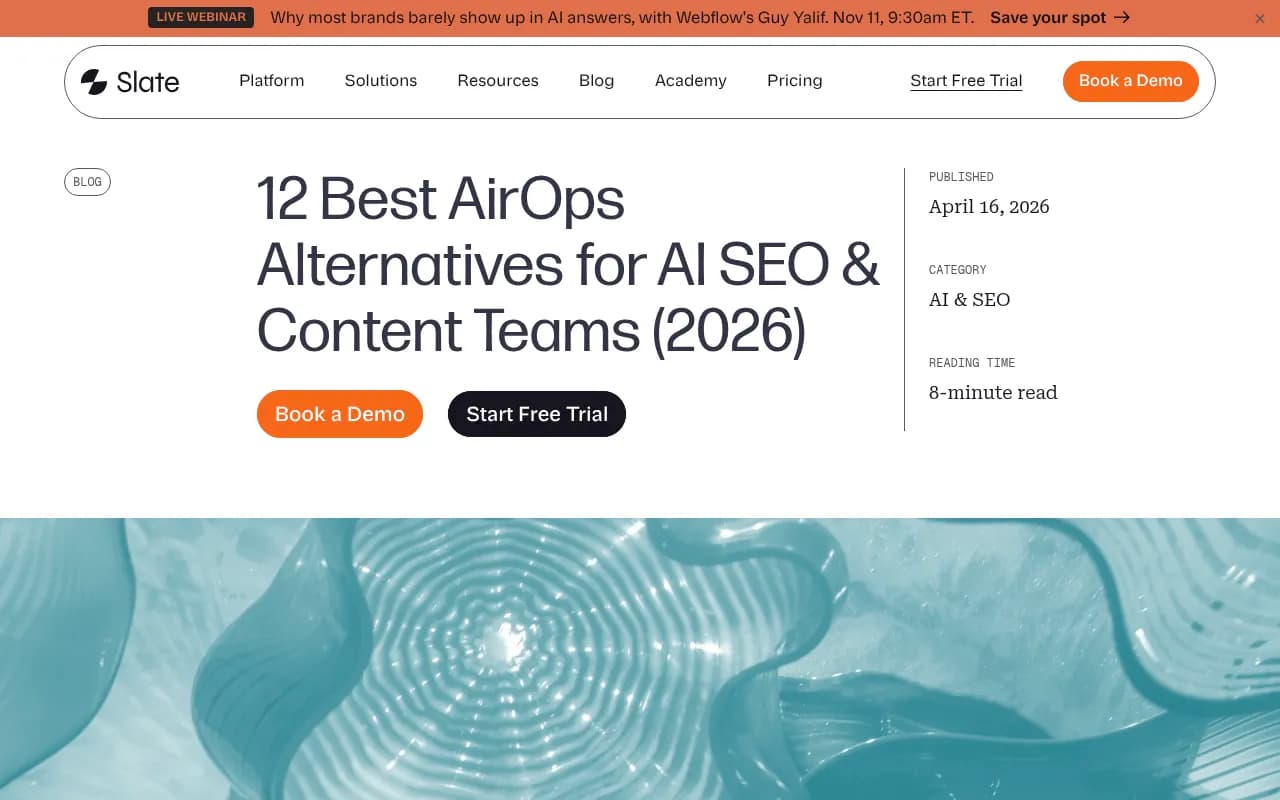
I'd be honest about the evidence here. SlateHQ's guide says template rigidity is the most common complaint, but SlateHQ sells a competing product. I found no neutral source quantifying AirOps quality problems. So treat the complaint as plausible, not proven, and diagnose your own workflow first.
Check AirOps pricing before you compare
Some roundups still quote old limits (20,000 tasks on Solo, 75,000 on Pro). The current pricing page shows Solo at 35,000 content-production tasks with ChatGPT insights only, Pro at 100,000 tasks with insights across 10+ answer engines and unlimited seats, and Enterprise on custom terms. Dollar figures weren't visible in what I could scrape, and tiers change, so confirm on the AirOps site before you build a business case.
What "quality" should mean in 2026
Before picking a replacement, decide what you're measuring. Readable prose is table stakes. For AI search, the better question is whether your content matches what AI engines actually cite.
Promptwatch's data on ChatGPT citation share by content type (Sep 28 to Oct 4, 2026) is useful here:
- Product pages made up 22.4% of classified citations and landing pages 16.8%, about 39% combined.
- Listicles were 13.6%, how-tos 8.7%, docs 7.5%, comparisons 5.9%, general articles 6.1%.
- For commercial prompts, product pages, landing pages, listicles and comparisons add up to almost 70% of citations.
So a platform that cranks out 50 generic blog posts a week is optimizing for the smaller slice. Quality in this context means accurate specs and prices on product pages, honest comparisons, and docs that answer the question.
Freshness matters too. In Promptwatch's content half-life study (pages cited Jul 6, 2026, tracked to Oct 4), ChatGPT still cited 78% of landing pages and 76% of docs after 30 days, and about 69% and 67% after 60. News lost half its pages after 36 days. Product pages, reviews and how-tos reached half-life at roughly 74 to 77 days. If your tool can't refresh existing pages, you'll keep paying to replace content that quietly aged out.
Quick comparison table
| Tool | Best fix for | Writes drafts | Optimizes against search data | Tracks AI citations |
|---|---|---|---|---|
| Promptwatch | No feedback loop from AI answers to content | Yes | Yes (gap analysis, refresh) | Yes, real UI data |
| Writer | Brand-voice consistency | Yes | Limited | No |
| Jasper | Marketing copy and campaigns | Yes | Limited | No |
| Surfer SEO | Optimizing drafts against SERPs | Assisted | Yes | Limited |
| Clearscope | Editorial-grade optimization | No (grades drafts) | Yes | No |
| Frase | Research and briefs | Yes | Yes | Some |
| MarketMuse | Topic strategy and planning | Assisted | Yes | No |
| Profound | Enterprise AI visibility | Via agents | Some | Yes |
| Scrunch | Monitoring plus agent-ready pages | Limited | Some | Yes |
| Slate | AI-search-first content ops | Yes | Yes | Yes |
I haven't independently verified every tool's current pricing or feature set, so check each vendor before buying.
Alternatives if the drafts themselves are the problem
Writer
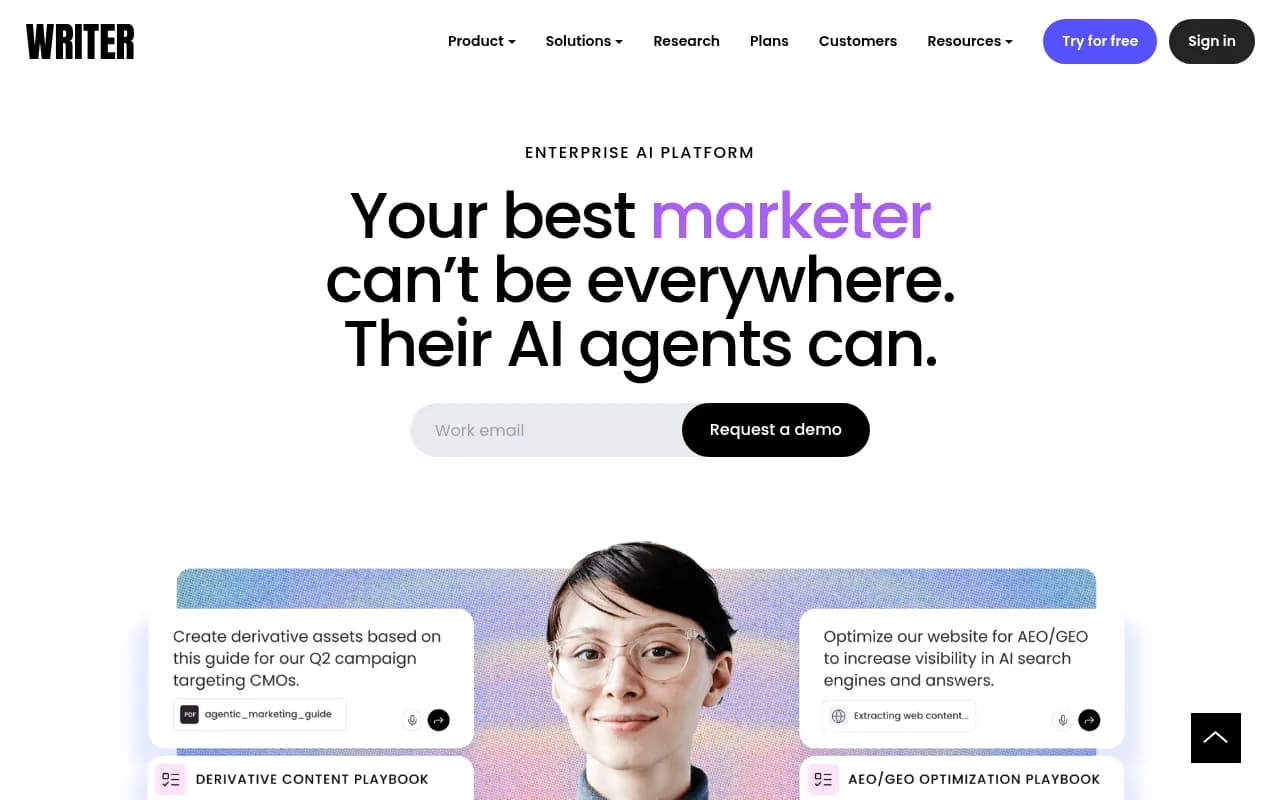
Writer is built around brand controls: terminology, style rules and guardrails enforced on every draft. If your complaint is that AirOps output doesn't sound like you, this is the most direct fix. It's an enterprise tool, so expect a sales process.
Jasper
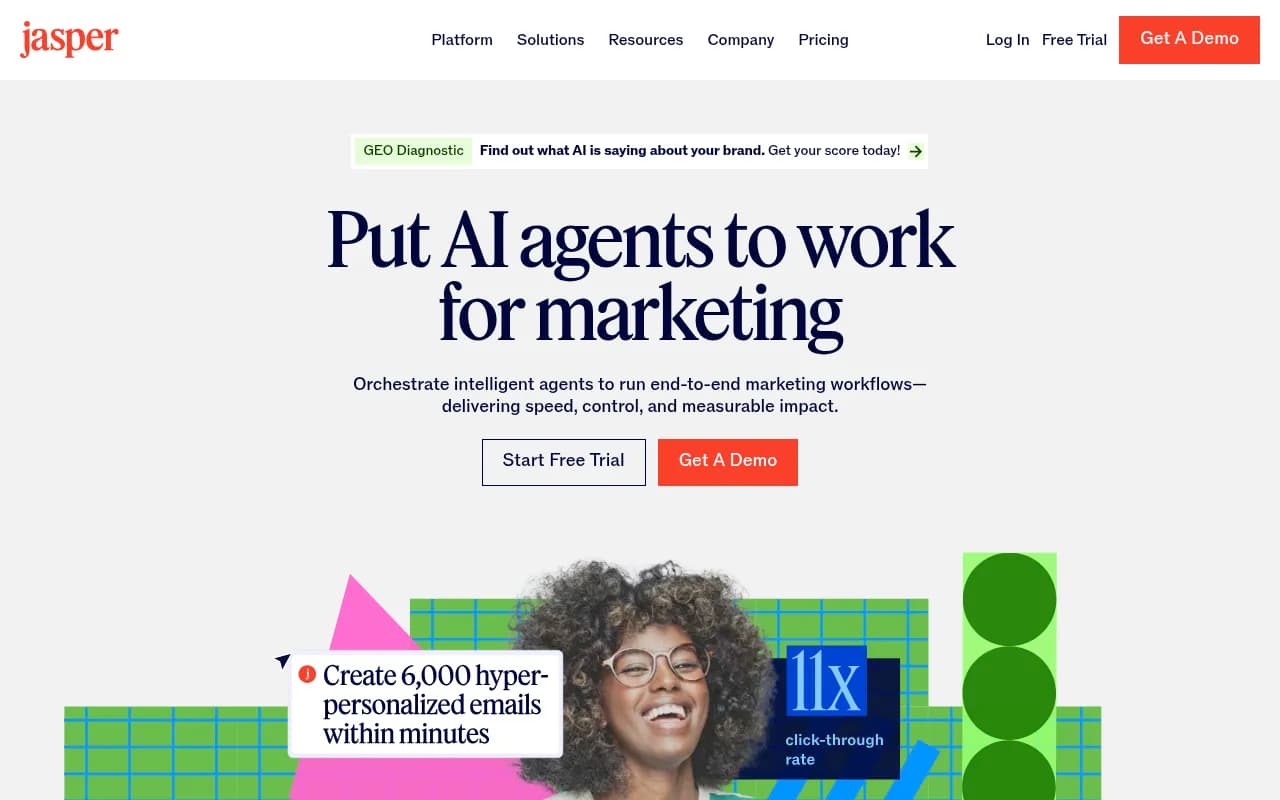
Jasper has been around long enough to have solid brand voice features and a lot of marketing templates. It's better for campaign copy than for deeply researched long-form SEO. Teams that want less workflow engineering and more writing help tend to land here.
Koala Writer and Agility Writer
Koala pulls live SERP and product data into articles, and Agility Writer pitches factual long-form pieces and reviews. Both are cheaper and lighter than a workflow platform. Neither is a quality guarantee, so keep a human editor in the loop.

Alternatives if optimization is the problem
If drafts are acceptable but don't rank or get cited, you need a grading layer.
Surfer SEO
Surfer SEO scores a draft against what's ranking and suggests terms, headings and length. It's popular, easy to adopt and pairs well with a human writer.

Clearscope
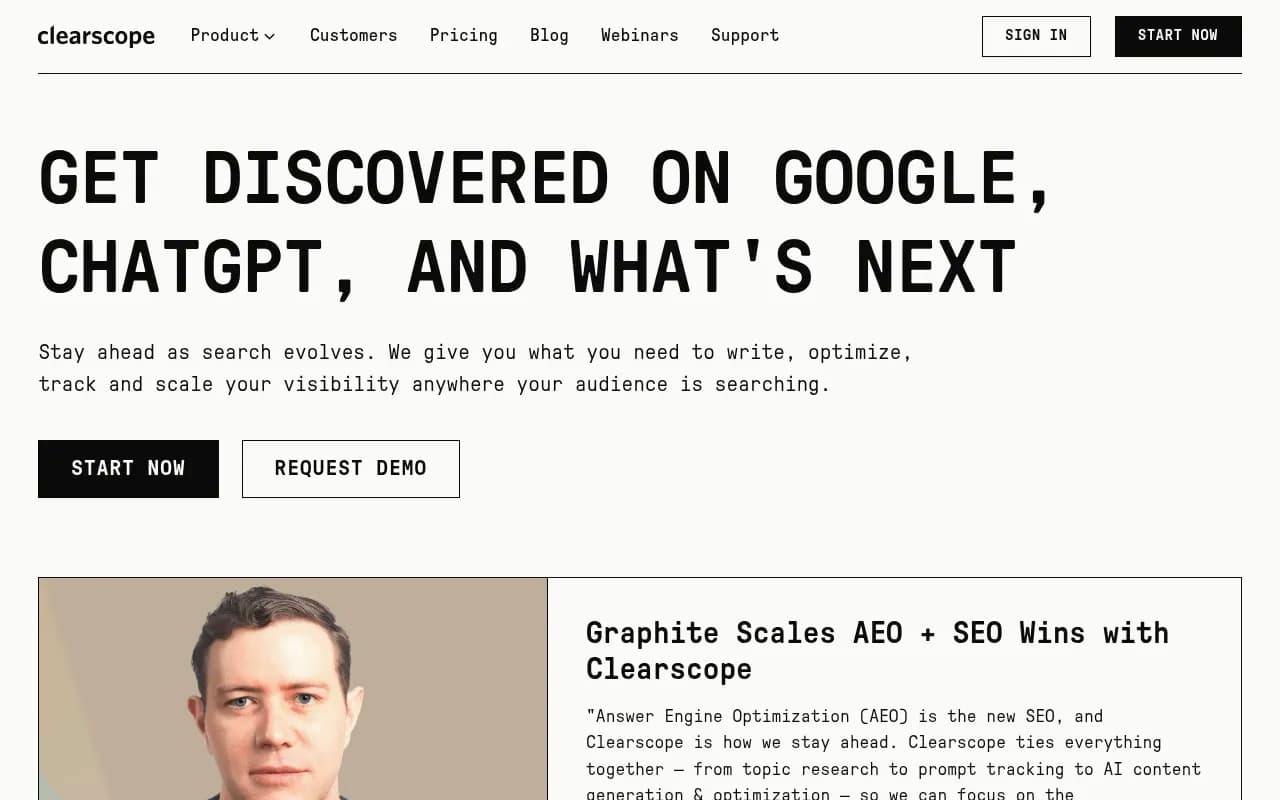
Clearscope is the more editorial option. It's pricier but tends to be liked by content teams that care about not stuffing keywords. It grades content rather than writing it.
Frase and MarketMuse
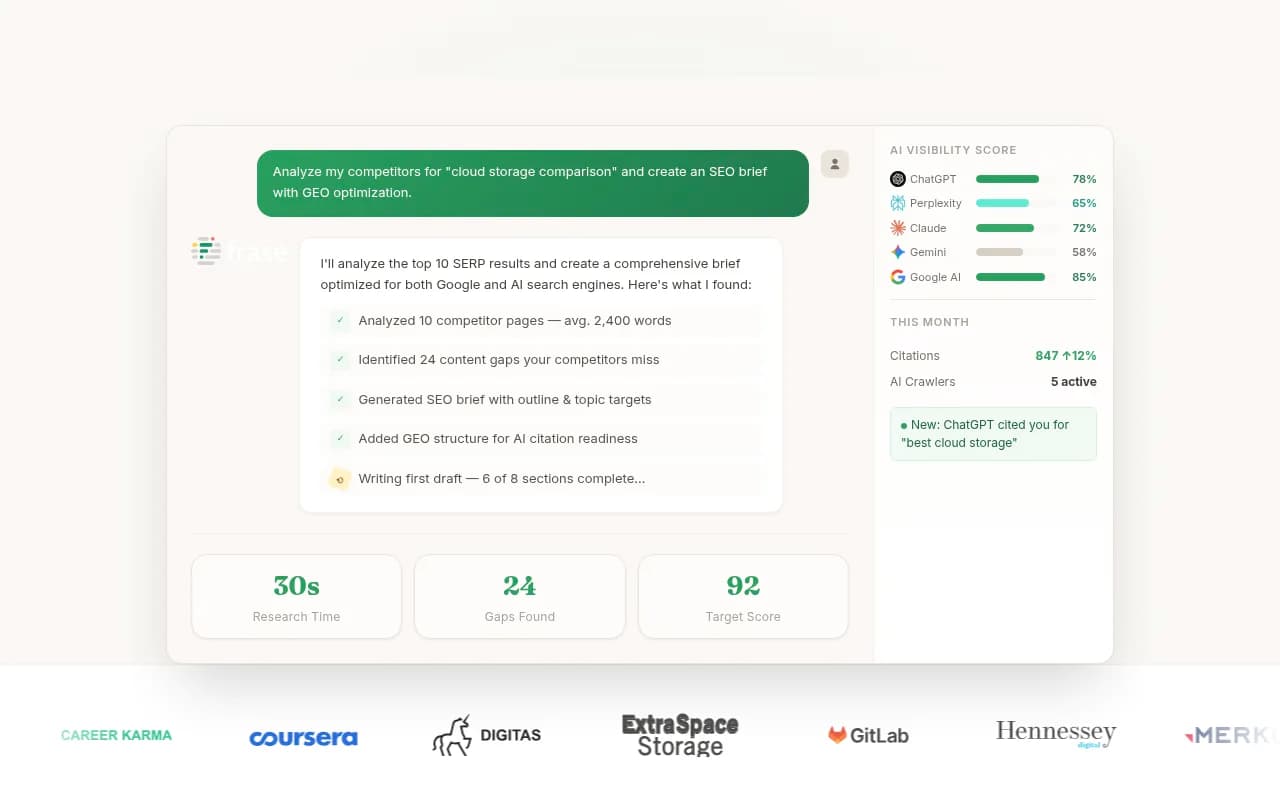
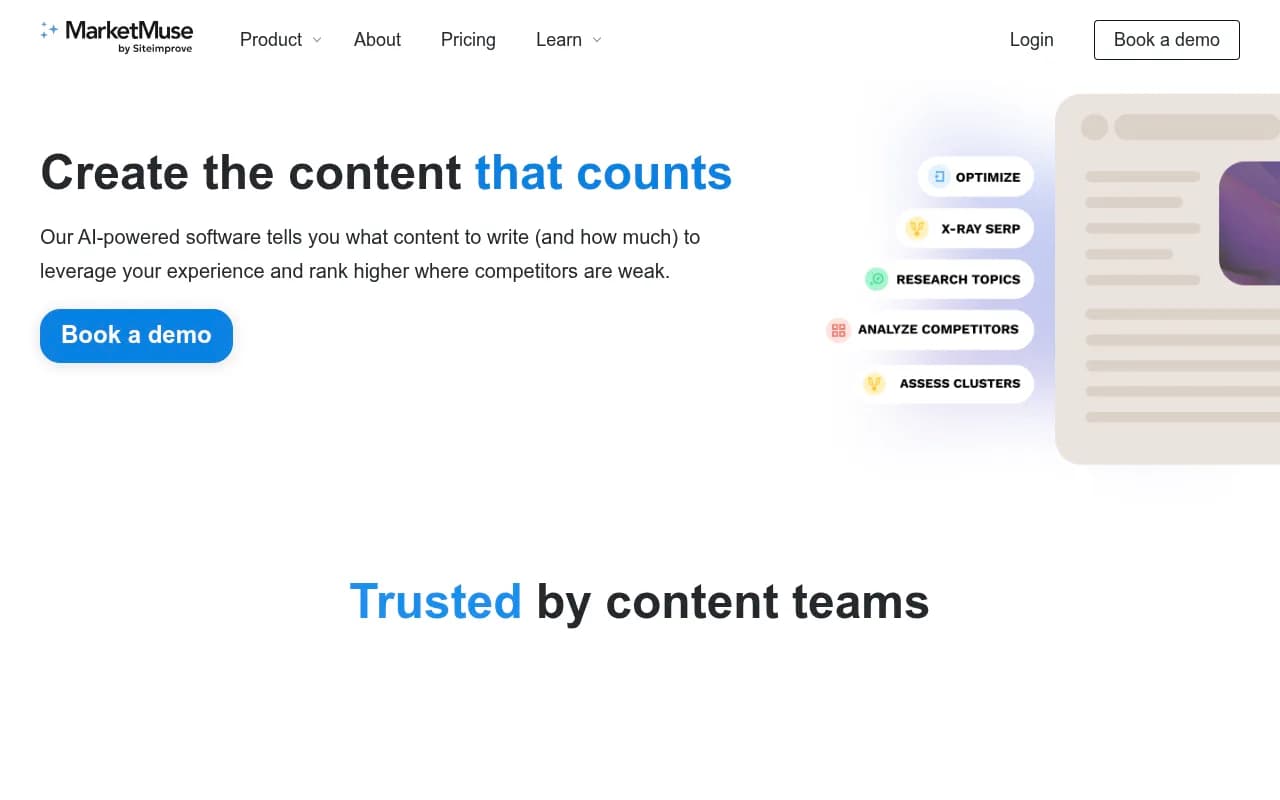
Frase is good at research and briefs. MarketMuse is stronger on topical authority planning, which fixes the "we publish a lot but nothing connects" problem.
Alternatives if nothing connects content to AI visibility
This is where I think the real gap in AirOps-style stacks sits. You can produce clean articles and still have no idea whether ChatGPT or Perplexity cites any of them.
Promptwatch
Promptwatch goes beyond monitoring. It shows which prompts you're missing through its Answer Gap analysis, then its Content Agent writes and publishes against those gaps to WordPress, Webflow or Framer, with a review inbox so a human approves what ships. Published pages are then tracked through IP-verified AI crawler logs, citations and AI-referred traffic, and underperformers come back as actions on the Action Board. Content Refresh gives git-diff-style updates for pages that have aged, which matters given the half-life data above.
It tracks the actual interfaces of ChatGPT, Google AI Overviews, AI Mode, Gemini, Perplexity, Copilot and others, rather than only API output. Plans start at $95/month (Essential), and the automated Content Agent is on Business ($579/month). Confirm on promptwatch.com/pricing.

Profound
Profound is a strong enterprise visibility platform. Third-party roundups put its entry pricing around $99/month, but I couldn't verify that, so ask for a quote. It's heavy on monitoring and analytics.

Scrunch
Scrunch pairs monitoring with agent-ready pages for your site. A reasonable pick if your issue is how AI crawlers read your content, not how it's written.

Slate
Slate positions itself as an AI-search-first content operations platform, and it's the one SlateHQ's guide naturally promotes. Worth a trial if you want content ops and citation tracking in one place, with the usual caveat that its comparison article is self-interested.

AthenaHQ and Writesonic GEO
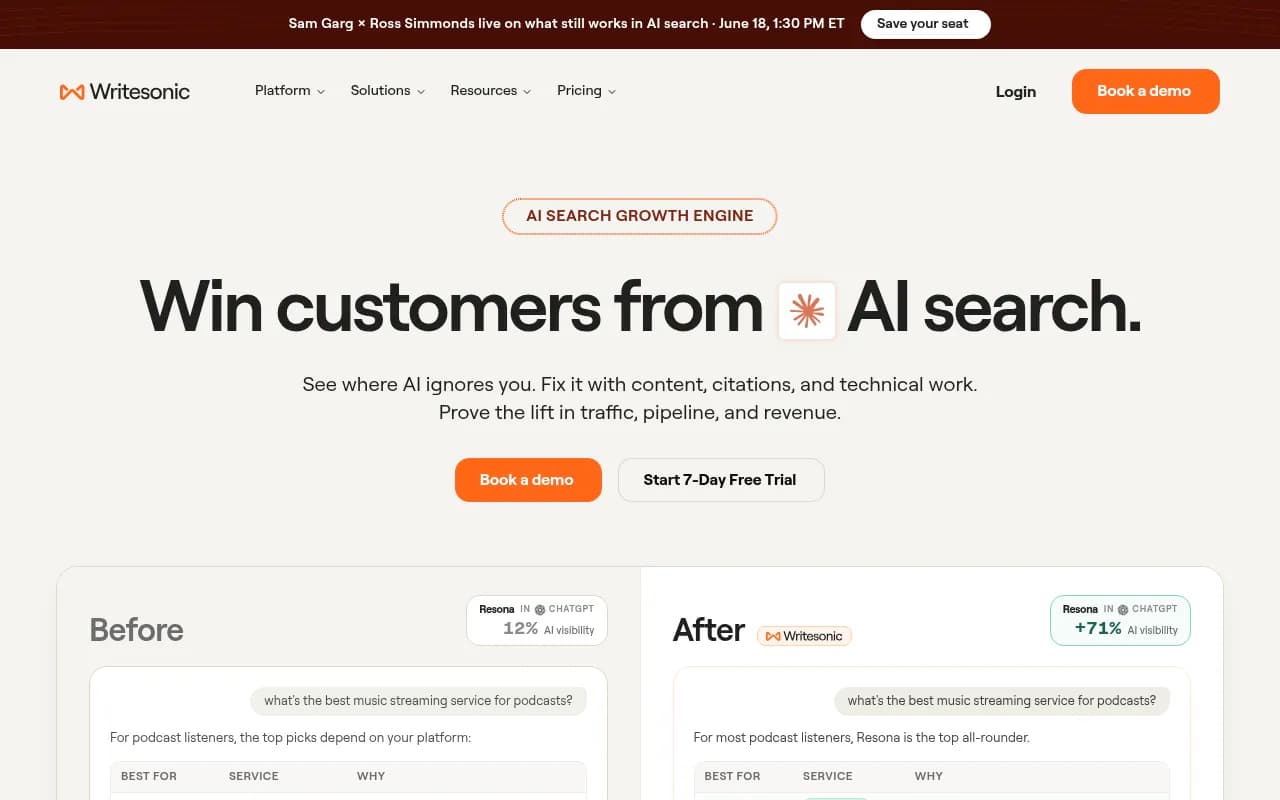
AthenaHQ is monitoring-focused with some recommendations. Writesonic's GEO product mixes visibility monitoring with content generation, which suits smaller teams that don't want two tools.

How to choose
Run this short diagnostic on your last 20 AirOps pieces:
- Which ones would you publish with no edits? If the answer is almost none, the draft engine is the problem. Look at Writer or Jasper.
- Which ones rank or get cited? If drafts are fine but results are flat, add Surfer or Clearscope, or move to a platform that closes the loop like Promptwatch.
- Which ones are older than 60 days and now stale? If you have no refresh habit, prioritize tools with refresh workflows.
- Which content types did you produce? If it's mostly generic blog posts, rebalance toward product, landing, comparison and docs pages, which is where ChatGPT citations concentrate.
A sensible stack for most teams
For a mid-sized content team, I'd pair a drafting layer that enforces brand voice (Writer or Jasper) with an AI visibility platform that tells you what to write and whether it worked. If you already have strong writers, skip the drafting tool entirely and put the money into gap analysis and refresh.
If you want to browse beyond this list, the GEO software directory covers dozens more visibility and optimization tools.
Switching without losing your work
- Export your brand kit and knowledge base from AirOps first. Those are the assets that took time to build.
- Don't delete published pages. Move them into a refresh queue and rewrite the weakest ones.
- Run a two-week pilot on 5 to 10 pages with the new tool and compare edit time, not just output volume.
- Measure citations and AI-referred traffic, not word count.
The bottom line
AirOps isn't broken, but it is optimized for volume and templates. If quality is your complaint, spend a week working out whether it's the draft, the optimization or the missing feedback loop, then buy for that one problem. For most teams unhappy with output that looks fine but doesn't get cited, the missing feedback loop is the culprit.