Key takeaways
- 80% of B2B software buyers now use AI tools as much or more than traditional search engines for vendor discovery, making AI visibility a real revenue issue, not a vanity metric.
- Most AI visibility platforms (including Profound) are monitoring dashboards. They show you where you're invisible but don't help you fix it.
- The best alternatives for B2B SaaS teams combine prompt tracking, content gap analysis, and some form of content optimization or generation.
- For teams that need action, not just data, Promptwatch is the only platform rated "Leader" across all categories in a 2026 comparison of 12 GEO platforms.
- Budget, team size, and whether you need multi-model coverage all affect which tool is the right fit.
B2B SaaS buying has changed more in the last 18 months than in the previous decade. GenAI chatbots are now the number one source influencing vendor shortlists, outranking software review sites, peer recommendations, and even vendor websites. A buyer types "best project management software for engineering teams" into ChatGPT or Perplexity, reads the answer, and builds a shortlist from it. If your product isn't cited, you don't exist in that moment.
Profound was one of the first enterprise-grade tools to take AI visibility seriously, and it deserves credit for that. But in 2026, the market has moved. Teams are asking harder questions: Which prompts are my buyers actually using? Why is a competitor getting cited and I'm not? What do I publish to change that?
Profound answers the first question reasonably well. The second and third? Less so. That's the gap these alternatives are trying to fill.
Why B2B SaaS teams are looking beyond Profound
Profound's core value is enterprise-grade monitoring. It tracks how your brand appears across LLMs, gives you share-of-voice data, and lets you benchmark against competitors. For large teams that need executive reporting, that's useful.
The friction shows up when someone asks: "Okay, we're invisible for 'CRM for mid-market SaaS' -- what do we do about it?" Profound doesn't have a great answer. It shows you the gap. Closing it is your problem.
For B2B SaaS companies specifically, this matters more than it might for a consumer brand. Buyer research queries are long, specific, and comparison-heavy. "Best [category] software for [use case]", "alternatives to [competitor]", "how does [tool] handle [feature]" -- these are the prompts that drive pipeline. Winning them requires understanding not just that you're missing, but why, and what content would change the outcome.
There's also the pricing reality. Profound sits at the enterprise end of the market. For a Series A or B SaaS company with a lean marketing team, paying enterprise rates for a monitoring dashboard is hard to justify when the tool doesn't help you act on what it finds.
The three types of tools in this space
Before diving into specific alternatives, it helps to understand what you're actually choosing between. AI visibility tools in 2026 fall into three rough categories:
Monitoring-only platforms track your brand mentions and citation rates across LLMs. They're useful for reporting but don't help you improve. Most of the market sits here.
Monitoring plus content guidance tools go one step further. They identify content gaps and tell you what topics to cover, but content creation is still on you.
End-to-end optimization platforms close the loop. They find the gaps, help you create content to fill them, and then track whether that content starts getting cited. This is where the real ROI lives for B2B SaaS teams.
Keep this framework in mind as you evaluate options. A monitoring tool might be exactly what you need if you already have a strong content operation. If you don't, you'll want something that does more.
The best Profound alternatives for B2B SaaS in 2026
Promptwatch: the end-to-end option
Promptwatch is the most complete platform in this comparison. Where most tools stop at "here's where you're invisible," Promptwatch runs a full cycle: find the gaps, create content to fill them, track the results.
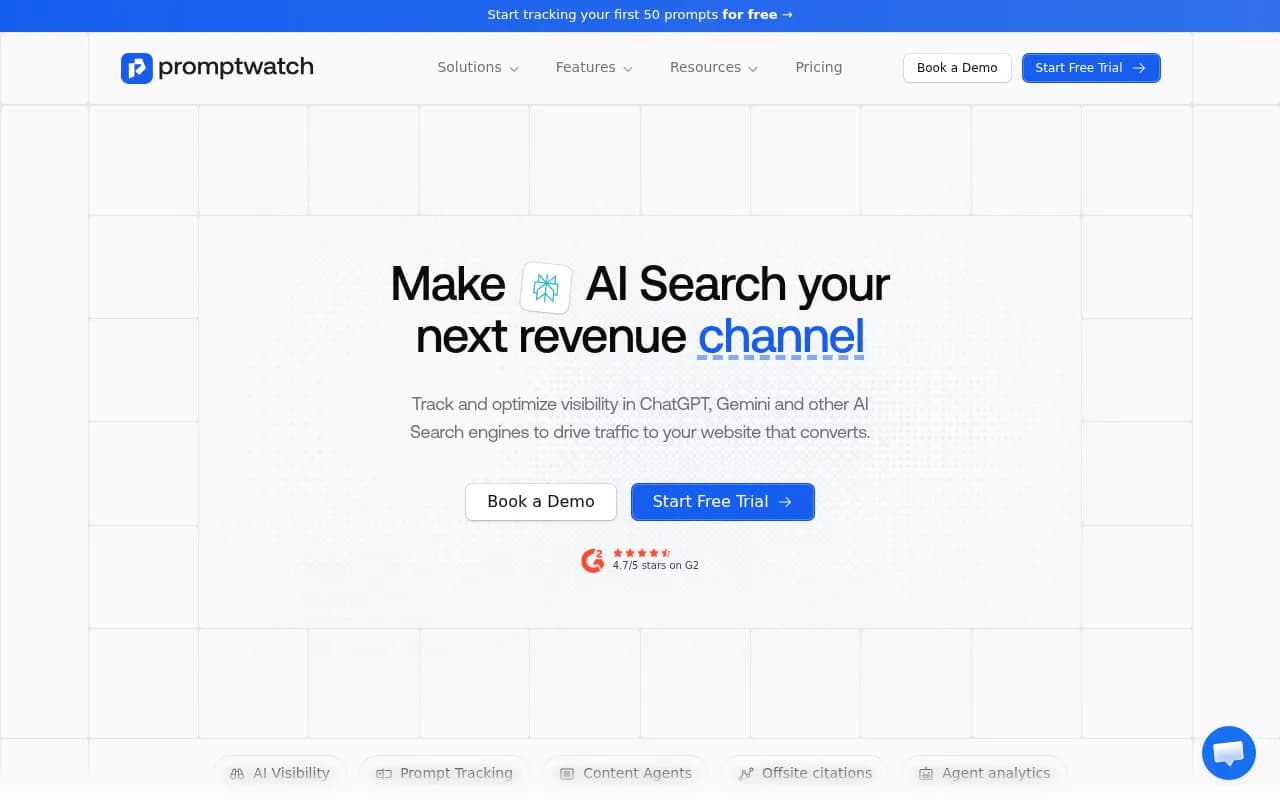
The Answer Gap Analysis is genuinely useful for B2B SaaS teams. It shows you the specific prompts your competitors are getting cited for that you're not -- not just categories, but the actual questions buyers are asking. From there, Content Agents generate articles, comparisons, and listicles grounded in that prompt data. This isn't generic AI writing; it's content built around the exact gaps the models are exposing.
For B2B buyer research queries specifically, a few things stand out. Promptwatch tracks real user-facing AI responses, not just API outputs (which can differ significantly). It covers 10 models including ChatGPT, Perplexity, Google AI Overviews, Claude, Gemini, and Grok. It also tracks Reddit and YouTube -- which matters because Perplexity and Google AI Overviews heavily cite both, and most B2B SaaS categories have active Reddit communities that influence AI answers.
The AI Crawler Logs feature is something most competitors lack entirely. You can see exactly which pages ChatGPT or Perplexity's crawlers have visited, when, and whether those visits resulted in citations. For a B2B SaaS team trying to understand why a competitor's comparison page is getting cited and theirs isn't, this is the kind of data that actually answers the question.
Pricing starts at $99/month for a single site with 50 prompts. The Professional plan at $249/month adds crawler logs, multi-location tracking, and 15 articles per month. For most B2B SaaS marketing teams, Professional is the right entry point.
Scrunch AI: strong monitoring with good competitor analysis
Scrunch AI is one of the more direct Profound competitors in terms of feature depth. It focuses on generative engine visibility and does a solid job of tracking share-of-voice across LLMs, with decent competitor benchmarking.
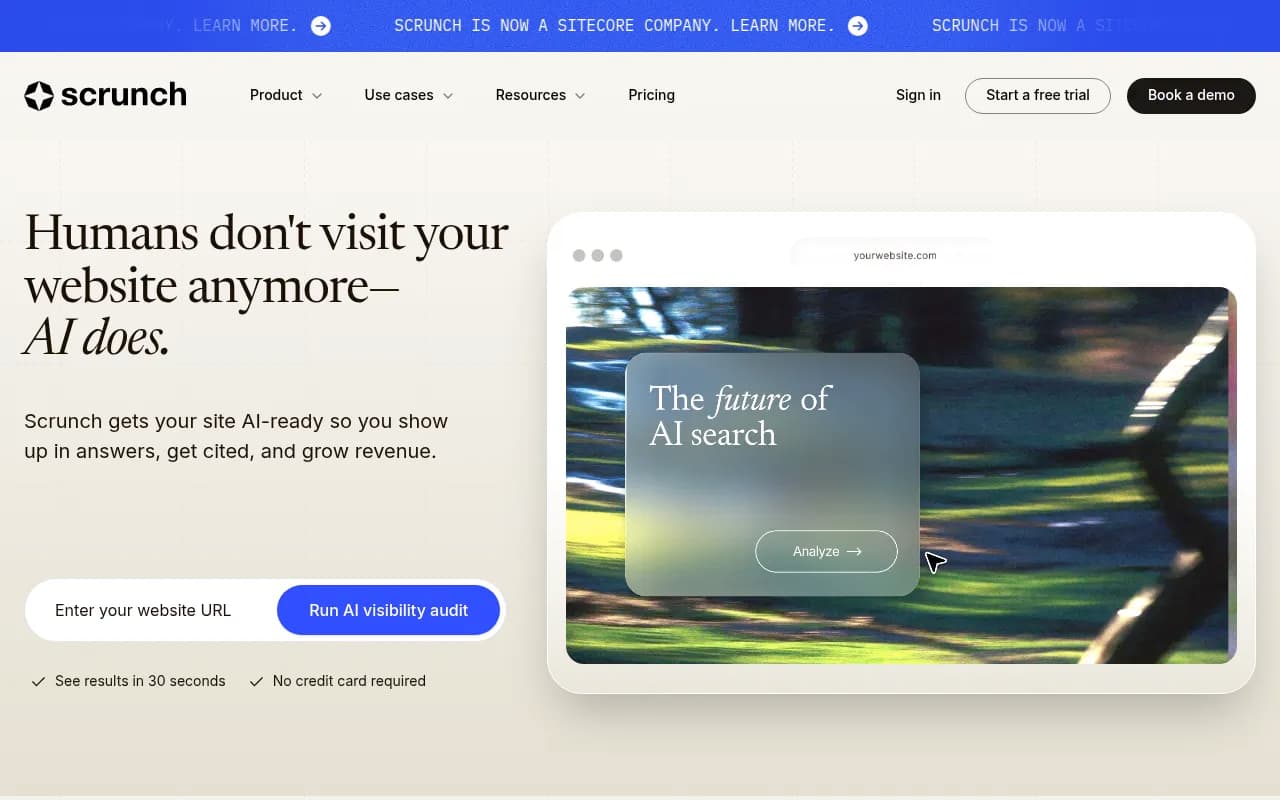
Where Scrunch falls short for B2B SaaS teams is on the action side. The monitoring data is good, but there's no content generation or structured gap-closing workflow. You'll know you're losing to a competitor for "best [category] tool for enterprise" -- but you'll need to figure out what to do about it yourself.
Still, if you have a content team that just needs better signal about where to focus, Scrunch is worth evaluating. It's more affordable than Profound and the interface is cleaner.
AthenaHQ: monitoring-focused, good for larger teams
AthenaHQ takes a research-heavy approach to AI visibility. It's well-suited to teams that want detailed prompt analytics and competitive intelligence but aren't looking for the platform to generate content for them.
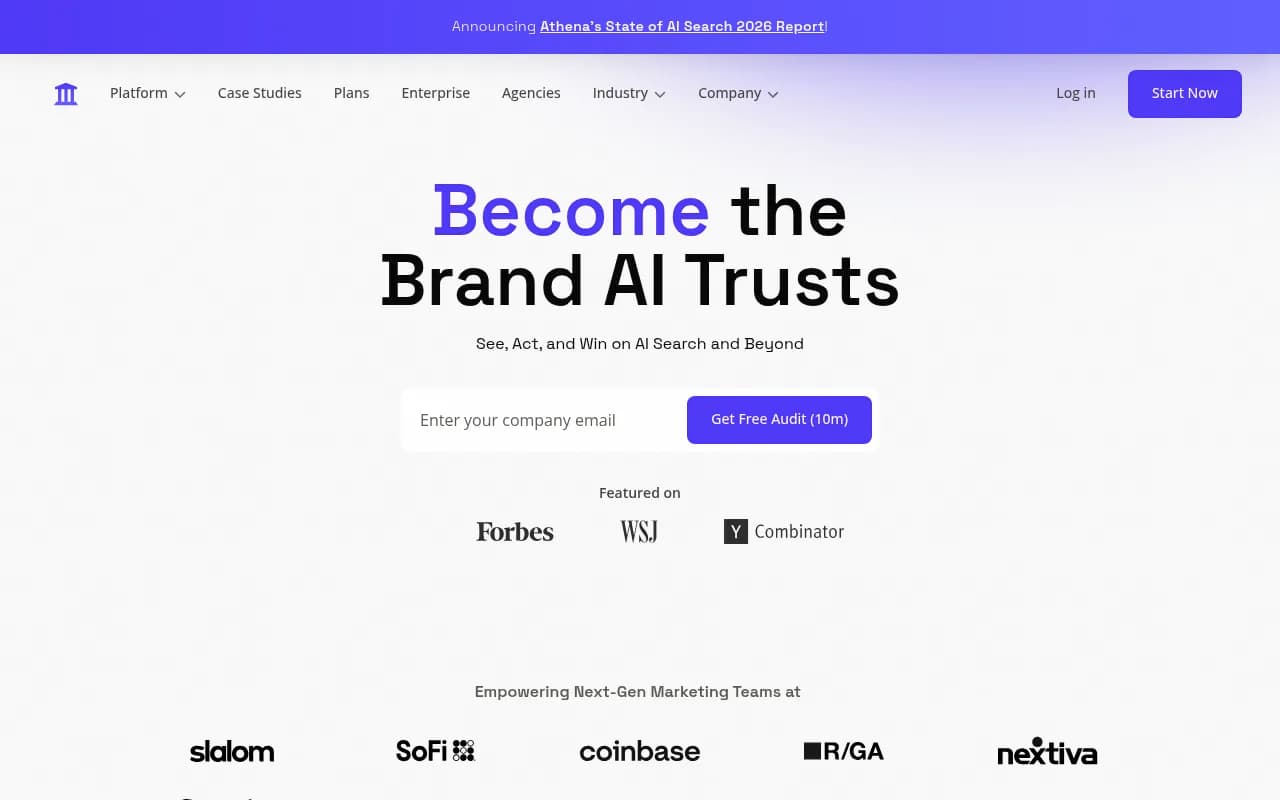
The prompt tracking is thorough, and the competitive benchmarking is one of the stronger implementations in the market. For a B2B SaaS company with a dedicated SEO team that can act on the data, AthenaHQ gives you good raw material.
The gap is the same as Scrunch: no content optimization or generation. You're paying for insight, not execution. At the price point AthenaHQ operates at, that's a meaningful consideration.
Otterly.AI: the budget-friendly starting point
If you're early-stage and just want to understand where your brand shows up in AI answers, Otterly.AI is a reasonable starting point. It's affordable, covers the major models, and gives you basic share-of-voice tracking.
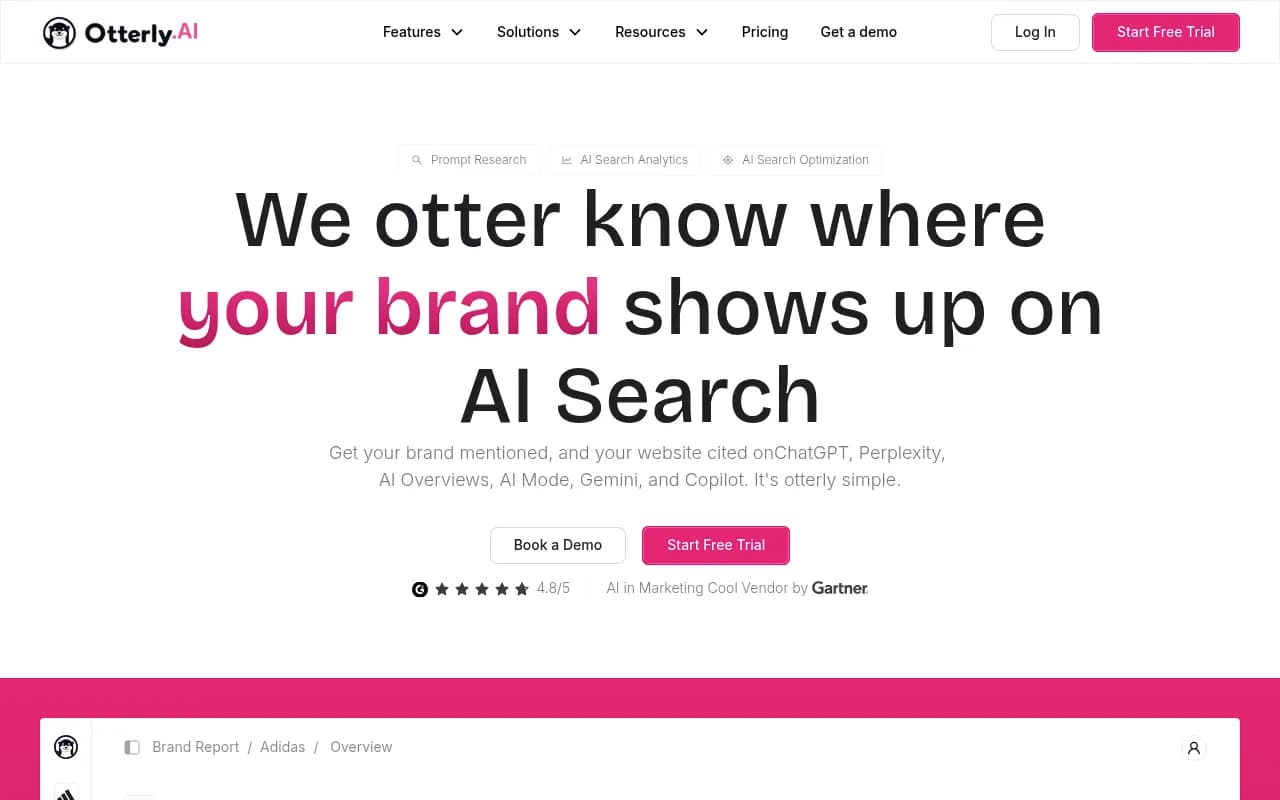
The limitations are real though. No crawler logs, no content generation, limited prompt volume data, and no Reddit or YouTube tracking. For a B2B SaaS company where buyer research queries are the whole game, you'll likely outgrow it quickly.
Use Otterly.AI to get oriented. Don't use it as your primary AI visibility strategy.
Peec AI: clean interface, limited depth
Peec AI is monitoring-focused with a clean interface and some basic suggestions for improving visibility. It's easier to onboard than most tools in this category.
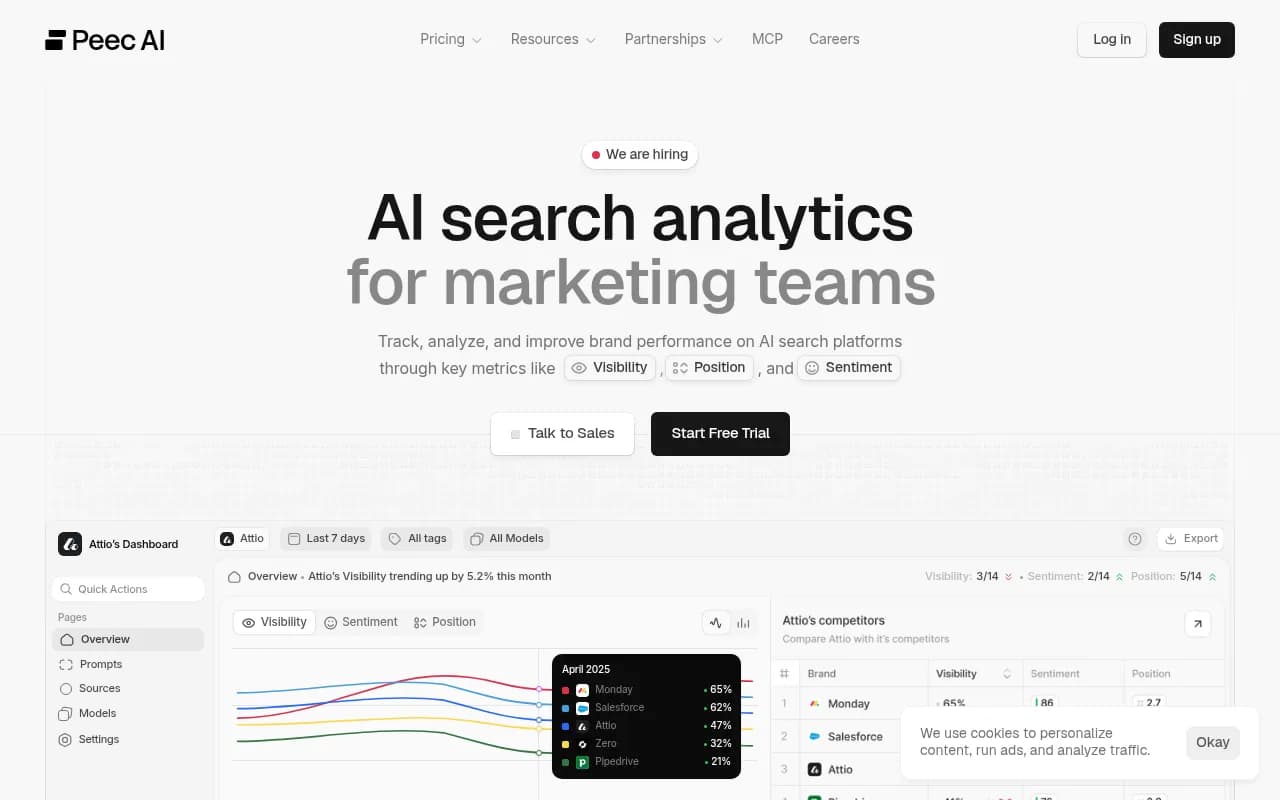
For B2B SaaS, the depth isn't quite there. Prompt volume data is limited, there's no content generation, and the competitor analysis is fairly surface-level. It works well for small teams that want a simple dashboard without a steep learning curve.
Semrush AI Visibility Toolkit: familiar but constrained
Semrush has added AI visibility features to its existing platform, which is convenient if you're already paying for Semrush. The integration with traditional SEO data is genuinely useful -- you can see how your traditional rankings and AI citations relate.
The constraint is that Semrush uses fixed prompt sets rather than letting you define the specific buyer research queries your customers actually use. For B2B SaaS, where the prompt universe is highly specific to your category and use case, that's a meaningful limitation. You're tracking visibility for prompts Semrush chose, not the ones your buyers type.
Ahrefs Brand Radar: solid data, no optimization
Ahrefs Brand Radar gives you brand tracking across AI search engines with the data quality you'd expect from Ahrefs. The underlying data is good.
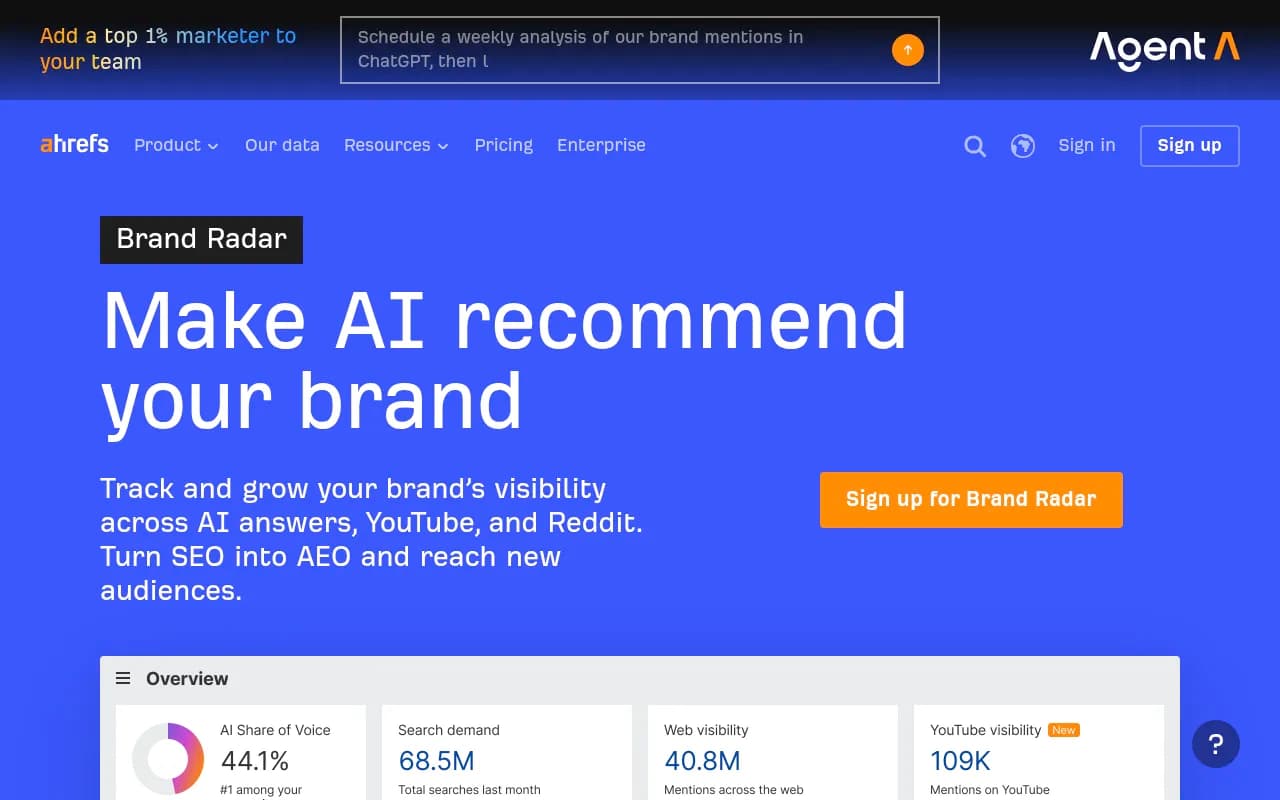
The problems for B2B SaaS teams: fixed prompts (same issue as Semrush), no AI traffic attribution, and no content optimization features. It's a useful add-on if you're already in the Ahrefs ecosystem, but it won't replace a dedicated AI visibility platform.
Conductor: enterprise content + AI visibility
Conductor sits at the intersection of content marketing and AI visibility. It's an enterprise platform with a strong content workflow and decent AI search monitoring built in.
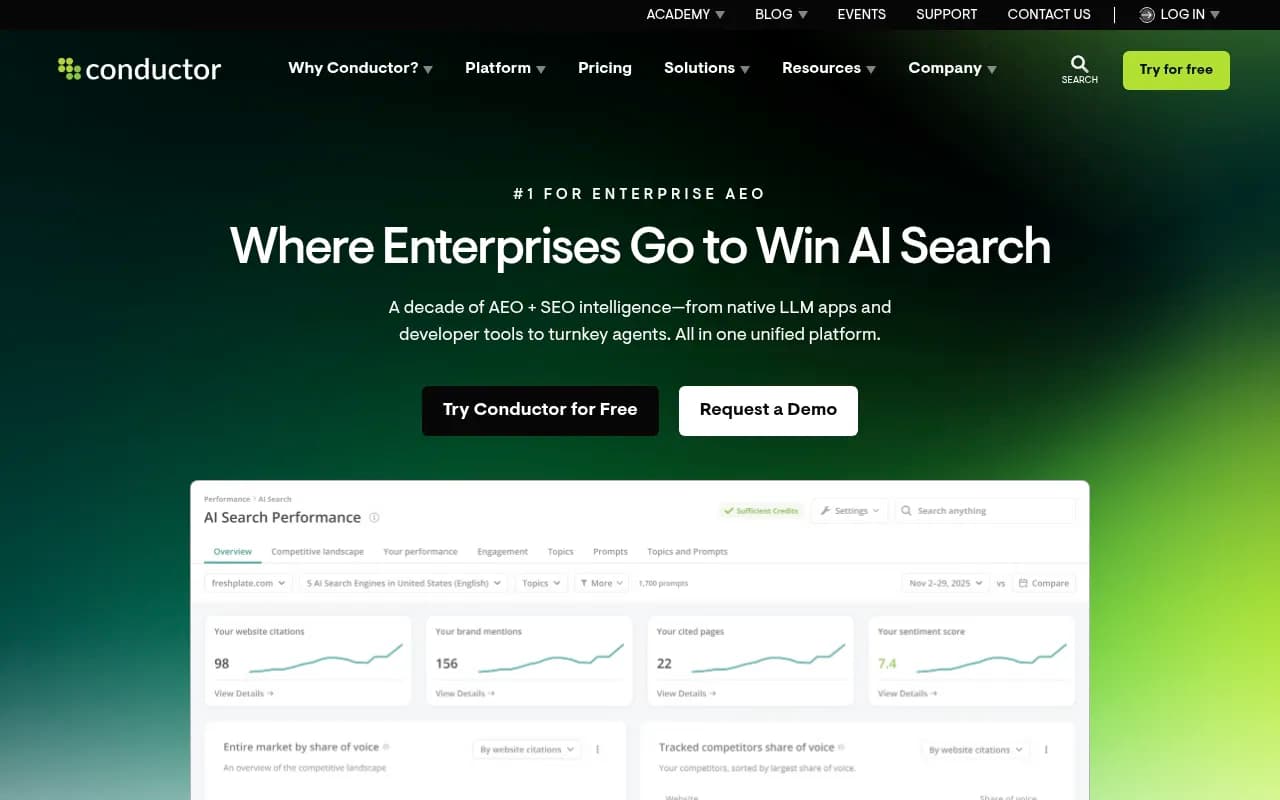
For large B2B SaaS companies with mature content operations, Conductor makes sense. The AI visibility features aren't as deep as dedicated platforms, but the content workflow is strong. If your main problem is content production at scale rather than figuring out which prompts to target, Conductor is worth a look.
AirOps: AI content workflows at scale
AirOps is less of an AI visibility tracker and more of a content workflow tool that helps you produce content at scale using AI. It's relevant here because B2B SaaS teams that have identified their content gaps need a way to fill them efficiently.
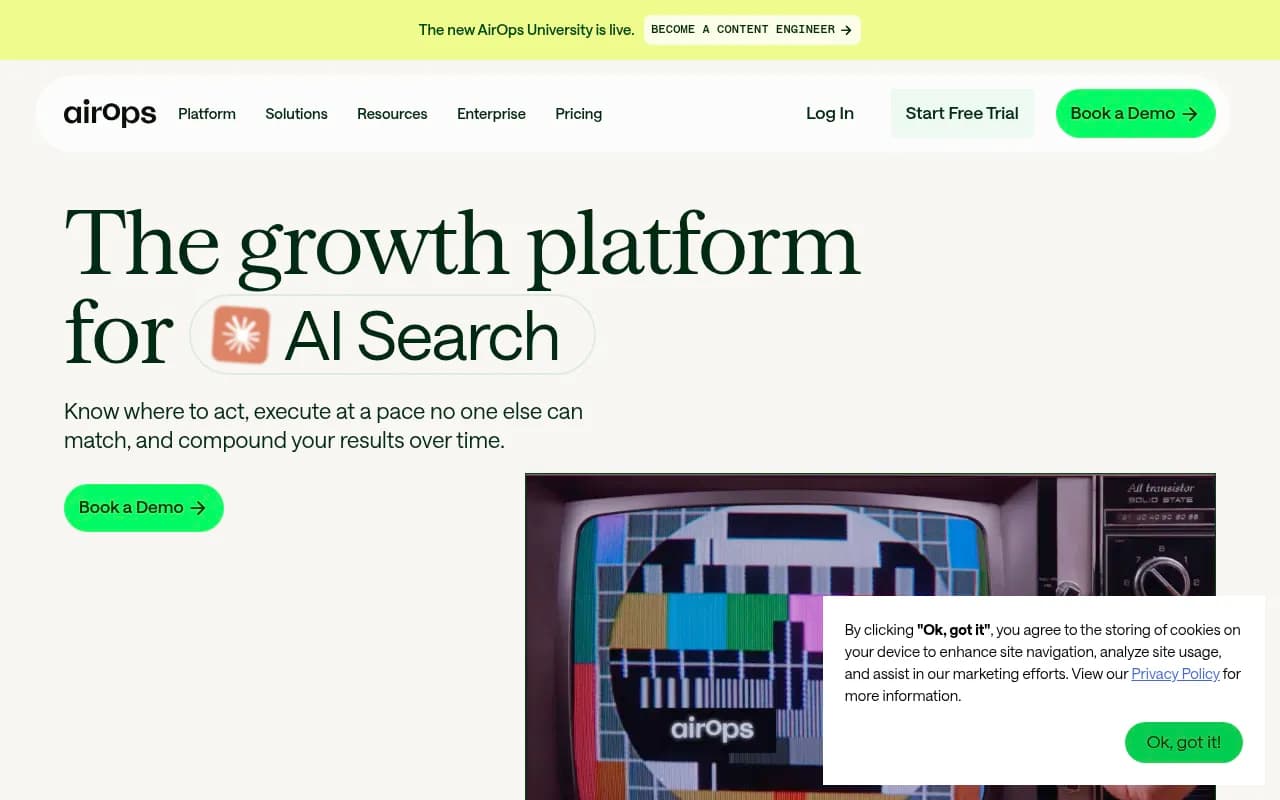
AirOps doesn't track AI citations or give you prompt data. But if you're using another tool for monitoring and need to accelerate content production, it pairs well. Think of it as the execution layer, not the strategy layer.
Search Party: agency-oriented, limited for in-house teams
Search Party is built primarily for agencies managing multiple clients. The multi-client dashboard is well-designed, and it covers the major AI models.
For an in-house B2B SaaS marketing team, it's less of a fit. Prompt metrics are limited, there's no content gap analysis, and the pricing structure assumes you're managing multiple brands. If you're an agency with SaaS clients, it's worth evaluating. If you're in-house, look elsewhere.
Feature comparison: Profound vs. the top alternatives
| Platform | AI models tracked | Prompt customization | Content generation | Crawler logs | Reddit/YouTube tracking | Starting price |
|---|---|---|---|---|---|---|
| Profound | 6+ | Yes | No | No | No | Enterprise |
| Promptwatch | 10 | Yes | Yes | Yes | Yes | $99/mo |
| Scrunch AI | 5+ | Yes | No | No | No | Mid-market |
| AthenaHQ | 5+ | Yes | No | No | No | Mid-market |
| Otterly.AI | 4+ | Limited | No | No | No | ~$49/mo |
| Peec AI | 4+ | Limited | No | No | No | Low |
| Semrush AI | 4+ | No (fixed) | No | No | No | Add-on |
| Ahrefs Brand Radar | 4+ | No (fixed) | No | No | No | Add-on |
| Conductor | 4+ | Yes | Yes (content) | No | No | Enterprise |
| AirOps | N/A | N/A | Yes | No | No | Usage-based |
What B2B SaaS buyer research queries actually look like
This is worth spending a moment on because it shapes which tool you need.
B2B software buyers don't type "CRM software" into ChatGPT. They type things like:
- "What's the best CRM for a 50-person SaaS company that uses HubSpot for marketing?"
- "Salesforce vs HubSpot for mid-market B2B -- which is better for sales-led growth?"
- "What do people say about [your product] on Reddit?"
- "Alternatives to [competitor] that are better for enterprise security requirements"
These are long, specific, comparison-heavy queries. The AI models answering them pull from a mix of your own website, third-party review sites, Reddit discussions, YouTube videos, and news coverage.
Winning these queries requires knowing which ones exist, which ones you're missing, and what content (on your site and off it) would change the outcome. That's why monitoring-only tools have a ceiling for B2B SaaS teams. The data is necessary but not sufficient.
A useful stat from Discovered Labs: only about 12% of URLs cited by AI sit in Google's top 10 for the same query. Your traditional SEO rankings are a weak predictor of AI citation. This is why teams that rely on Semrush or Ahrefs alone are flying blind on AI visibility.
How to choose the right platform for your stage
The right tool depends on where your team is and what you actually need to do next.
Early-stage (pre-Series A, small marketing team): Start with something affordable that gives you basic visibility data. Otterly.AI or Peec AI work here. The goal is orientation -- understanding which prompts matter and whether you're showing up at all. Don't over-invest in tooling before you've validated your content strategy.
Growth-stage (Series A-C, dedicated content or SEO function): This is where the monitoring-only tools start to feel limiting. You know you're invisible for important queries. You need to know why and what to do. Promptwatch's Professional plan ($249/month) is the right level here -- you get prompt data, content gap analysis, crawler logs, and content generation in one place.
Enterprise (large team, multiple products, agency relationships): Profound, Conductor, or a combination of Promptwatch and an enterprise content platform. At this stage you're probably running parallel tools anyway. The question is whether your AI visibility tool can feed into your content workflow.
The third-party presence problem most tools ignore
One thing that doesn't get enough attention in these comparisons: for B2B SaaS, a huge portion of AI citations come from off your website. Review sites like G2 and Capterra, Reddit threads, comparison articles on third-party blogs, YouTube reviews -- these are what AI models cite when a buyer asks "what do people think of [your product]."
Most AI visibility tools only track your own domain's citation rate. That's useful, but it misses half the picture. If a competitor is getting cited because they have 200 five-star G2 reviews and an active Reddit presence, no amount of on-site content optimization will close that gap.
Promptwatch's offsite citation analysis and Reddit/YouTube tracking are genuinely differentiated here. You can see which external sources are driving AI citations for you and for competitors, which tells you where to invest beyond your own content.
A practical 30-day starting point
If you're switching from Profound or starting fresh, here's a reasonable sequence:
Week 1: Map your prompt universe. List every question a buyer might ask during research -- discovery queries ("what's the best X for Y"), comparison queries ("X vs Y"), and validation queries ("what do people say about X"). Aim for 50-100 prompts. This is the input your tracking tool needs.
Week 2: Run your prompt list through your chosen platform. Identify where you have zero visibility and where competitors are consistently cited. Look for patterns -- are you missing comparison queries? Specific use-case queries? Integration-related queries?
Week 3: Audit your existing content against the gaps. Often you have content that's close but not quite answering the prompt. A page about "project management features" won't get cited for "best project management tool for remote engineering teams" -- the specificity has to match.
Week 4: Create or update 3-5 pieces of content targeting your highest-priority gaps. Publish, submit for indexing, and start tracking. Most teams see initial citation movement within 4-8 weeks of publishing well-targeted content.
The tools in this guide exist to make each of these steps faster and more data-driven. But the underlying logic -- find the gaps, fill them with specific content, track the results -- is the same regardless of which platform you use.
Bottom line
Profound is a capable monitoring platform, and if enterprise-grade reporting is your primary need, it does that well. But for most B2B SaaS marketing teams in 2026, monitoring alone isn't enough. The buyers are already using AI to build their shortlists. The question is whether you're on them.
If you need a platform that goes from "here's where you're invisible" to "here's the content that will change that" to "here's proof it's working," Promptwatch is the strongest option in this comparison. If budget is the primary constraint and you just need basic visibility data, Otterly.AI or Peec AI get you started. If you're an enterprise with a mature content team, Conductor or a Scrunch/AthenaHQ combination might fit better.
The worst outcome is staying with a monitoring-only tool, watching the data, and not acting on it. The AI search window for B2B SaaS is real, and the companies building visibility now will be much harder to displace in 12 months.