Key takeaways
- AI-powered search now accounts for over 40% of queries, but traditional SEO tools like rank trackers tell you nothing about whether ChatGPT or Perplexity cites your brand.
- The best AI visibility tools go beyond monitoring -- they help you find content gaps, generate optimized content, and track the results.
- Most tools in this space are monitoring-only dashboards. A smaller number (Promptwatch, Profound, Writesonic GEO) close the loop with content creation and optimization.
- Coverage matters: look for tools that track multiple LLMs (ChatGPT, Claude, Gemini, Perplexity, Grok, etc.) rather than just one or two.
- Pricing ranges from free tiers to enterprise contracts. The right choice depends on how many sites, prompts, and AI models you need to track.
Traditional SEO metrics are increasingly incomplete. You can rank #1 on Google and still be invisible to the millions of people who ask ChatGPT "what's the best project management tool?" or "which accounting software should I use for a small business?" Those AI-generated answers pull from a different set of signals, and if your content isn't in that mix, no amount of keyword optimization will help.
That's the gap AI visibility tools are built to fill. They run queries across LLMs, track when and how your brand gets cited, and (in the better ones) help you figure out what to do about it.
This guide covers what to look for, which tools are worth your time, and how to choose the right one for your situation.
What AI search visibility actually means
When someone asks an AI assistant a question, the model generates a response by synthesizing information from its training data and, in some cases, live web retrieval. Your brand either shows up in that response or it doesn't. If it does, the model might cite your website, mention your product by name, or recommend you in a comparison.
AI visibility is the measure of how often and in what context your brand appears in those responses -- across different models, different query types, and different user personas.
This is fundamentally different from traditional search visibility. There's no "position 1" in a ChatGPT response. There's no click-through rate from a Perplexity citation in the same way there is from a Google result. The metrics are different: share of voice, citation frequency, sentiment, prompt coverage, and whether your URLs are actually being retrieved and referenced.
What to look for in an AI visibility tool
Not all tools claiming to track AI visibility are doing the same thing. Here's what separates the useful ones from the noise:
Multi-model coverage. Your customers use different AI tools for different tasks. A tool that only tracks ChatGPT misses what's happening on Perplexity, Google AI Overviews, Claude, and Gemini. Look for platforms that cover at least 5-6 models.
Real query simulation. The best tools run actual queries against LLMs and record the responses -- not just API calls, but the user-facing interfaces where answers can differ. Screenshots and response logs are a good sign.
Competitor benchmarking. Knowing your own citation rate is useful. Knowing you're getting cited 30% less than your main competitor for the same prompts is actionable.
Content gap analysis. This is where most tools fall short. Identifying that you're invisible for a set of prompts is step one. Knowing why -- because you don't have content that answers those questions -- is what lets you fix it.
Content generation. A smaller number of platforms go further and help you create the content that fills those gaps, using real prompt data and citation patterns as the brief.
Crawler and traffic data. Some platforms can tell you when AI crawlers visit your site, which pages they read, and whether those pages end up being cited. This closes the loop between your website and your AI visibility score.
The best AI visibility tools in 2026
Promptwatch -- best for end-to-end optimization
Promptwatch is the most complete platform in this space. Where most tools stop at showing you a dashboard of citation data, Promptwatch is built around a three-step loop: find the gaps, create content to fill them, and track the results.
The Answer Gap Analysis shows you which prompts your competitors are visible for that you're not -- with the specific content your site is missing spelled out clearly. Content Agents then generate articles, listicles, and comparisons grounded in that real prompt data. And page-level tracking shows you when new content gets crawled, cited, and starts driving traffic.
It also has capabilities most competitors don't: AI crawler logs that show you in real time which AI agents are visiting your site and what they're reading, ChatGPT Shopping tracking, Reddit and YouTube citation analysis, and prompt volume and difficulty scores so you can prioritize the gaps worth fixing first.
Covers 10+ models including ChatGPT, Claude, Gemini, Perplexity, Grok, DeepSeek, Copilot, and Google AI Overviews. Used by 1,480+ brands including Booking.com and Center Parcs.
Pricing starts at $99/month for the Essential plan (1 site, 50 prompts, 5 articles). Professional is $249/month, Business $579/month.
Profound -- best for enterprise teams
Profound is a strong platform for larger organizations that need comprehensive AI search analytics. It covers multiple LLMs, tracks share of voice over time, and gives enterprise teams the reporting depth they need. The trade-off is price -- it sits at a higher price point than most alternatives -- and it's more monitoring-focused than action-oriented. There's no content generation built in, and Reddit/YouTube tracking isn't part of the package.
Otterly.AI -- best for budget-conscious teams
Otterly.AI is one of the more affordable options in the market, which makes it popular with smaller teams and solo marketers. It tracks brand mentions across several LLMs and gives you a reasonable view of your citation landscape. The limitation is that it's a monitoring tool -- you get the data, but you're on your own figuring out what to do with it. No crawler logs, no content generation, no gap analysis.
Peec AI -- good for smart suggestions
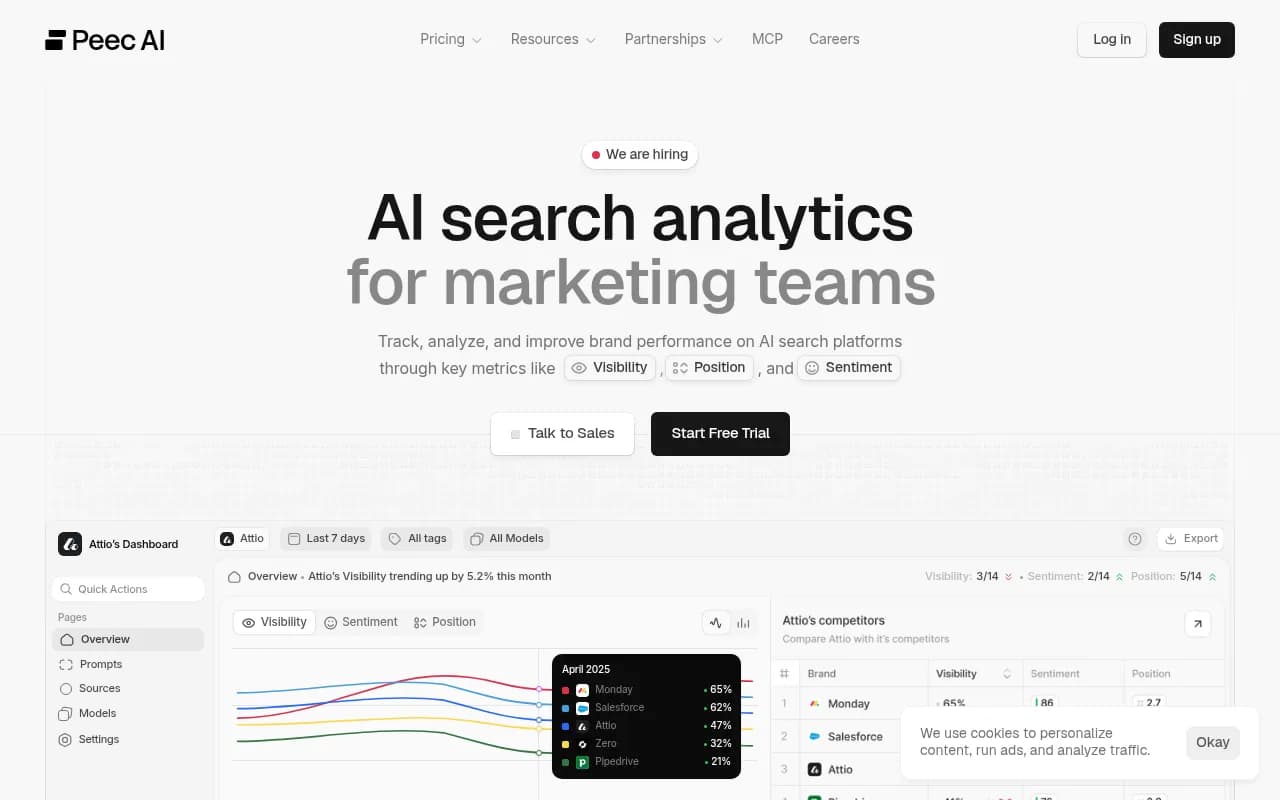
Peec AI tracks your AI visibility across LLMs and adds some useful suggestion features that push it slightly beyond pure monitoring. It's a solid mid-tier option for teams that want more than a dashboard but aren't ready for a full optimization platform. Coverage is decent, and the interface is clean.
Semrush AI Visibility Toolkit -- best for existing Semrush users
If your team already lives in Semrush, the AI Visibility Toolkit is a natural extension. It adds AI search monitoring to the SEO workflows you're already running. The main limitation is that it uses fixed prompt sets rather than letting you define your own, and there's no AI traffic attribution. Good for getting started, less good for deep optimization work.
Ahrefs Brand Radar -- best for existing Ahrefs users
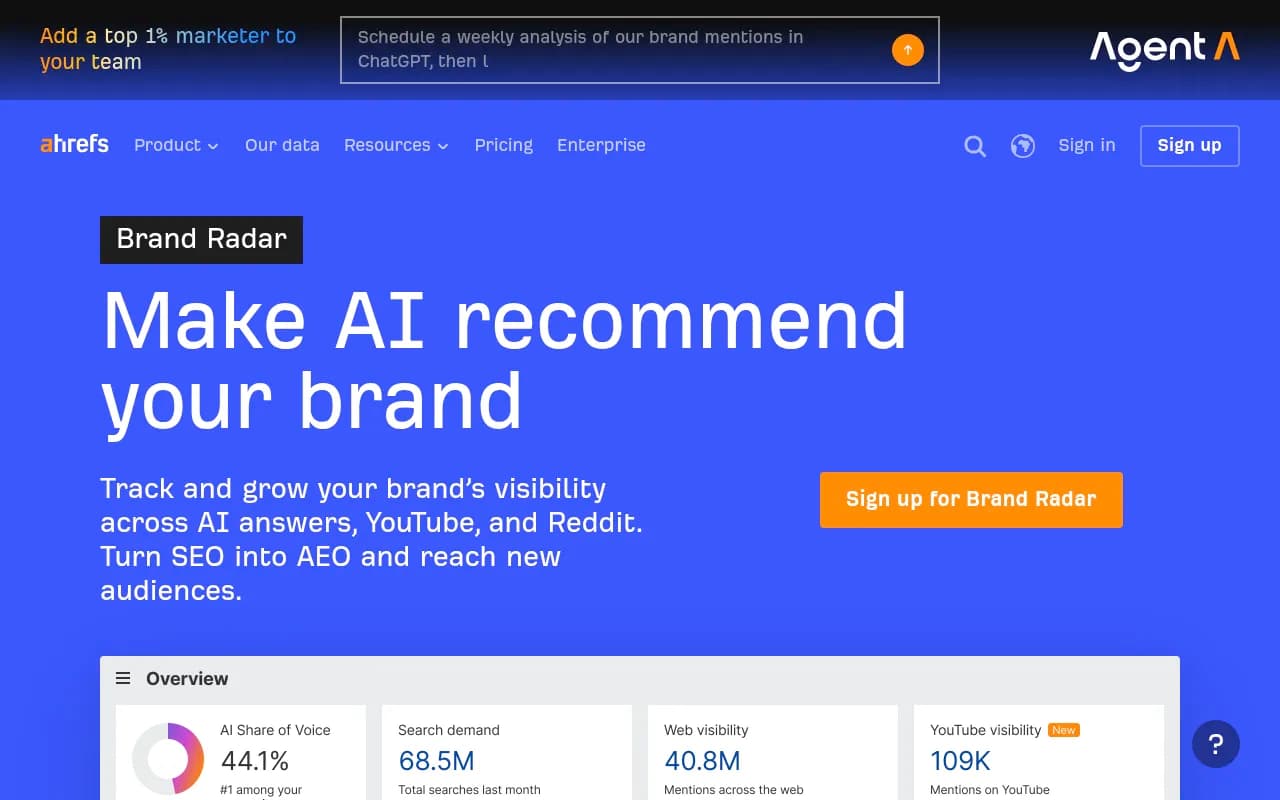
Similar story to Semrush. Ahrefs Brand Radar gives you a view of your brand's presence in AI search, and it integrates neatly with the rest of the Ahrefs toolset. Fixed prompts and no AI traffic attribution are the main gaps. Worth using if you're already paying for Ahrefs; harder to justify as a standalone purchase.
SE Ranking Visible -- solid mid-market option
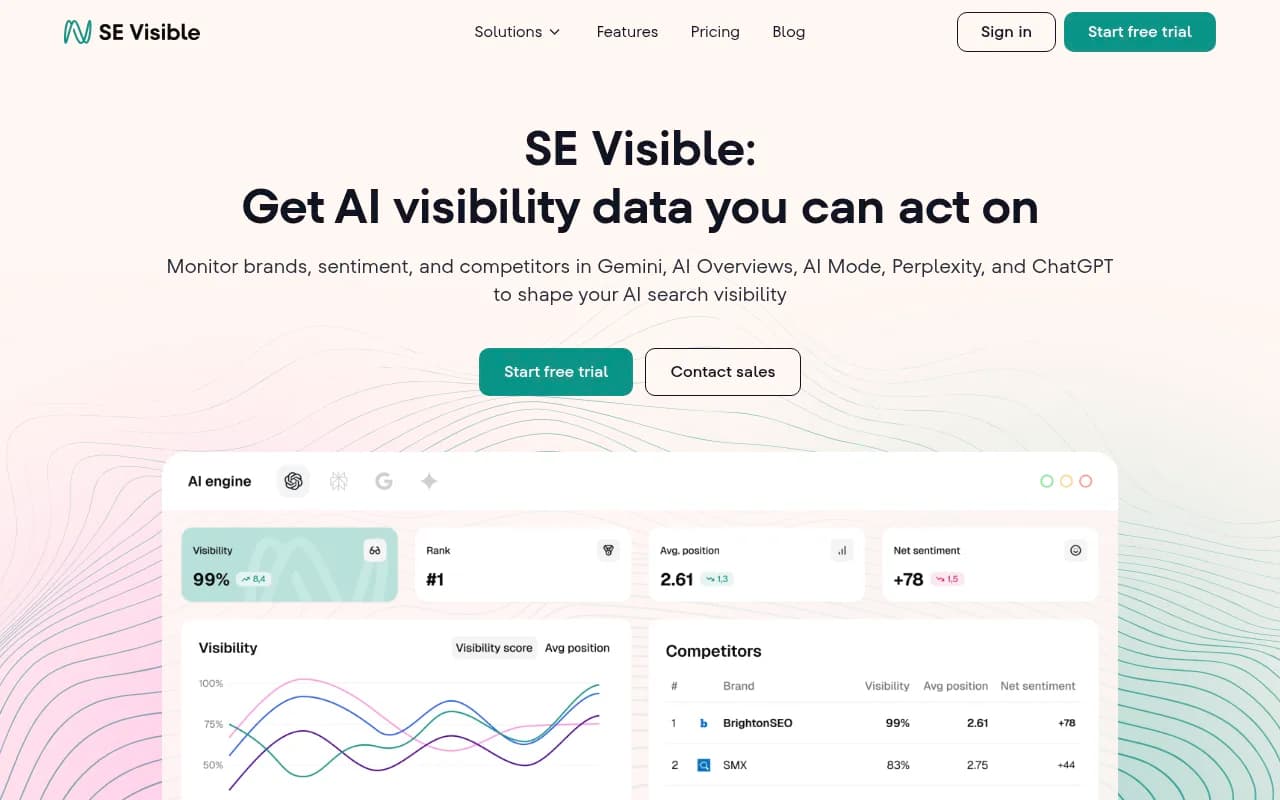
SE Ranking's AI visibility product (branded as Visible) covers the core use cases: LLM monitoring, brand mention tracking, and some competitor benchmarking. It's a reasonable choice for mid-market teams that want AI visibility data without committing to a premium platform. The feature set is narrower than Promptwatch or Profound, but the price reflects that.
Scrunch AI -- good for agencies
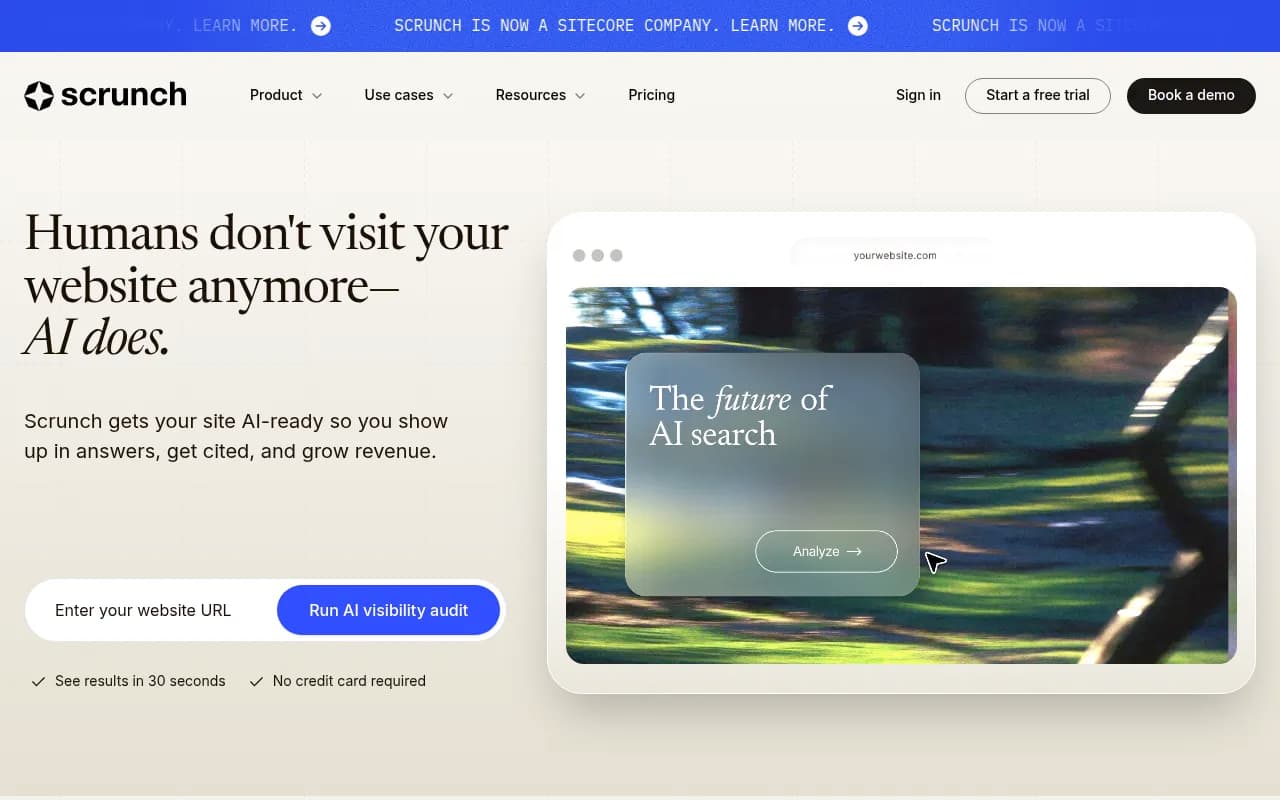
Scrunch AI is built with agencies in mind, offering multi-client management and white-label reporting. If you're running AI visibility tracking for multiple clients, the workflow is cleaner here than in most platforms. Feature depth is moderate -- it's more of a monitoring and reporting tool than an optimization one.
AthenaHQ -- monitoring-focused
AthenaHQ tracks brand mentions and citations across AI models with a clean interface. It's monitoring-only -- there's no content optimization or generation built in -- but the data quality is solid and the platform is easy to get into quickly.
Writesonic GEO -- best for content-first teams
Writesonic GEO combines AI visibility monitoring with content generation, which puts it in a similar category to Promptwatch in terms of approach. It's a good option for teams that are already using Writesonic for content and want to extend that into GEO. The monitoring depth isn't quite as broad as dedicated platforms, but the content generation side is strong.
Nightwatch -- rank tracking extended into AI
Nightwatch started as a rank tracker and has extended into AI search monitoring. If you're already using it for traditional rank tracking, the AI features are a useful addition. As a standalone AI visibility tool, it's less compelling than purpose-built platforms.
Search Party -- agency-oriented
Search Party is designed for agencies managing multiple clients across AI search. It has good multi-client workflow features but limited prompt metrics and no content gap analysis. Better for reporting than for optimization.
Feature comparison
| Tool | Models tracked | Content generation | Gap analysis | Crawler logs | Reddit/YouTube | Starting price |
|---|---|---|---|---|---|---|
| Promptwatch | 10+ | Yes | Yes | Yes | Yes | $99/mo |
| Profound | 6+ | No | Limited | No | No | High |
| Otterly.AI | 5+ | No | No | No | No | Low |
| Peec AI | 5+ | No | Some | No | No | Mid |
| Semrush AI Toolkit | 4+ | No | No | No | No | Add-on |
| Ahrefs Brand Radar | 4+ | No | No | No | No | Add-on |
| SE Ranking Visible | 5+ | No | No | No | No | Mid |
| Scrunch AI | 5+ | No | No | No | No | Mid |
| AthenaHQ | 5+ | No | No | No | No | Mid |
| Writesonic GEO | 4+ | Yes | Some | No | No | Mid |
| Nightwatch | 4+ | No | No | No | No | Low |
How to choose the right tool
The honest answer is that it depends on where you are in your AI visibility journey and what you actually need to do.
If you're just getting started and want to understand whether your brand shows up in AI responses at all, almost any tool on this list will give you that. Otterly.AI or Nightwatch are low-cost ways to get a baseline.
If you're at a point where you know you have an AI visibility problem and you want to fix it -- not just measure it -- you need a platform with content gap analysis and ideally content generation built in. That's a much shorter list: Promptwatch and Writesonic GEO are the main options here.
If you're an agency managing multiple clients, look at Scrunch AI or Search Party for the workflow features, though you'll want to supplement with a more capable optimization tool if clients need to actually improve their visibility.
If you're an enterprise team already invested in Semrush or Ahrefs, start with their AI add-ons. They won't give you everything, but they'll get you oriented without adding another platform.
A few practical questions to ask before committing:
- How many AI models do you need to track? If your audience uses Perplexity heavily, make sure the tool covers it properly.
- Do you need multi-site or multi-region support? Some tools limit you to one domain or one language at the lower tiers.
- Do you need to track competitors? Most tools offer this, but the depth varies significantly.
- Do you need to connect AI visibility to actual traffic and revenue? Very few tools do this -- Promptwatch's traffic attribution is one of the few that tries.
The monitoring-only trap
One thing worth flagging: a lot of teams buy an AI visibility tool, look at the dashboard for a few weeks, and then... don't know what to do next. The data shows they're invisible for 60% of relevant prompts. That's useful to know. But knowing it doesn't fix it.
The tools that actually move the needle are the ones that help you act on the data -- by showing you exactly what content is missing, helping you create it, and then confirming that the new content is getting picked up by AI crawlers and cited in responses. That's the loop that matters.
Most platforms in this space are still monitoring-only. That's fine as a starting point, but if you're serious about improving your AI search presence rather than just measuring it, make sure the tool you choose has a path from insight to action.
Other tools worth knowing about
A few more tools from the catalog that are worth a look depending on your specific needs:
LLM Pulse -- a lightweight tracker suited to smaller teams that just need basic citation monitoring without the overhead of a full platform.

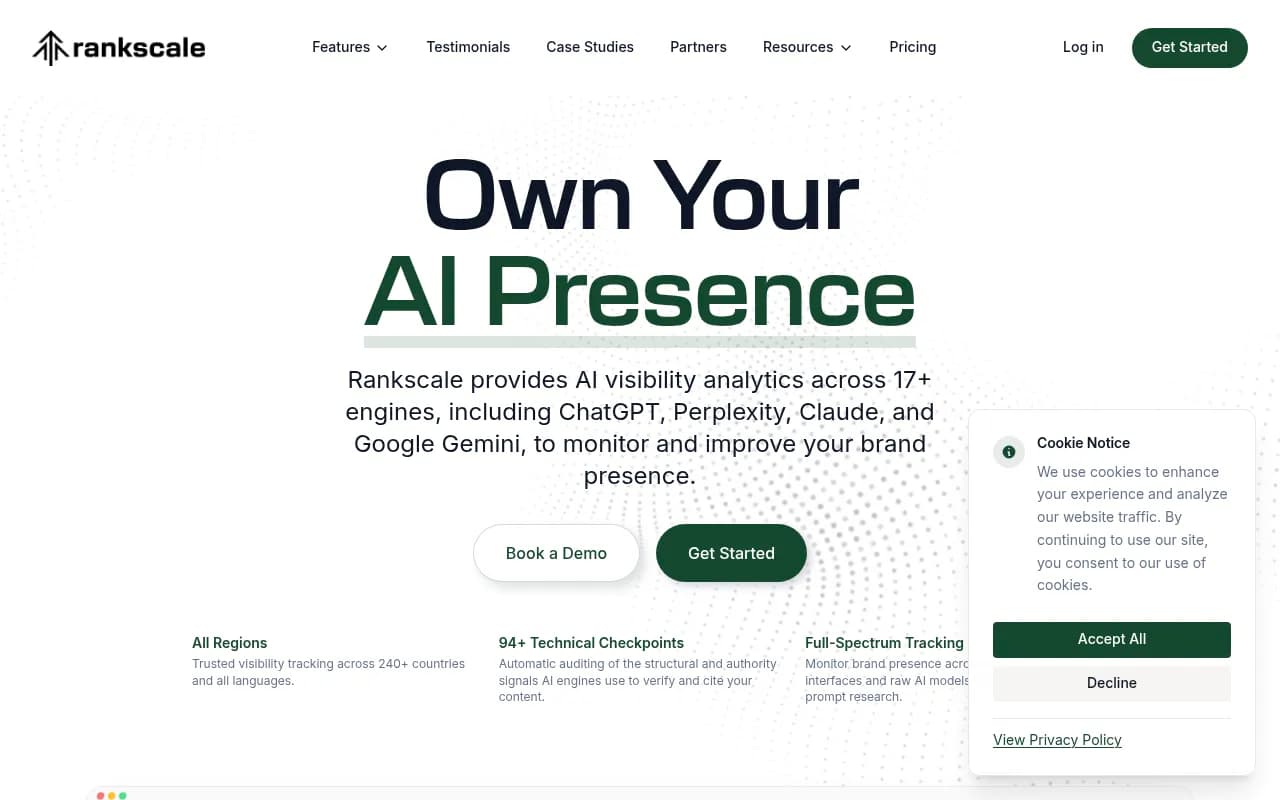
Rankscale -- focused on AI search rank tracking with a clean interface for teams that want straightforward monitoring.
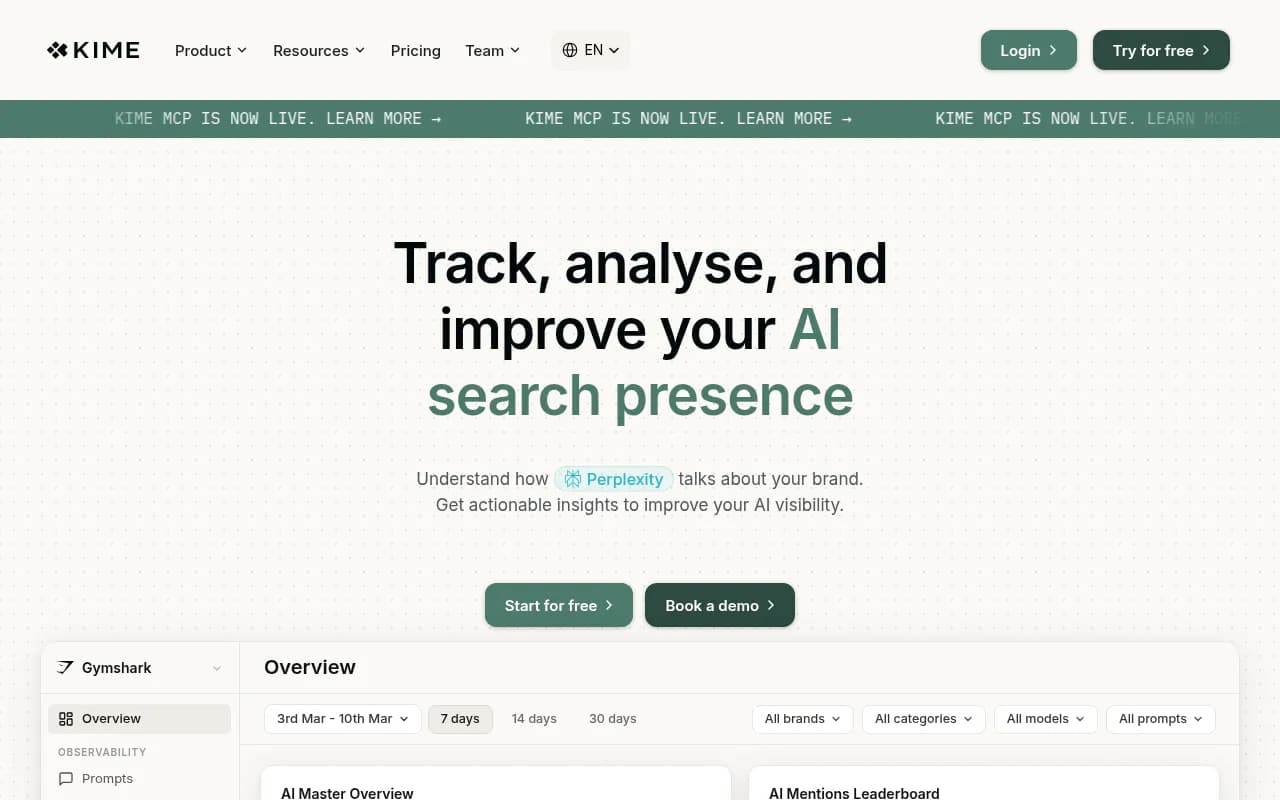
KIME -- AI visibility insights with a focus on actionable recommendations, worth evaluating for mid-market teams.
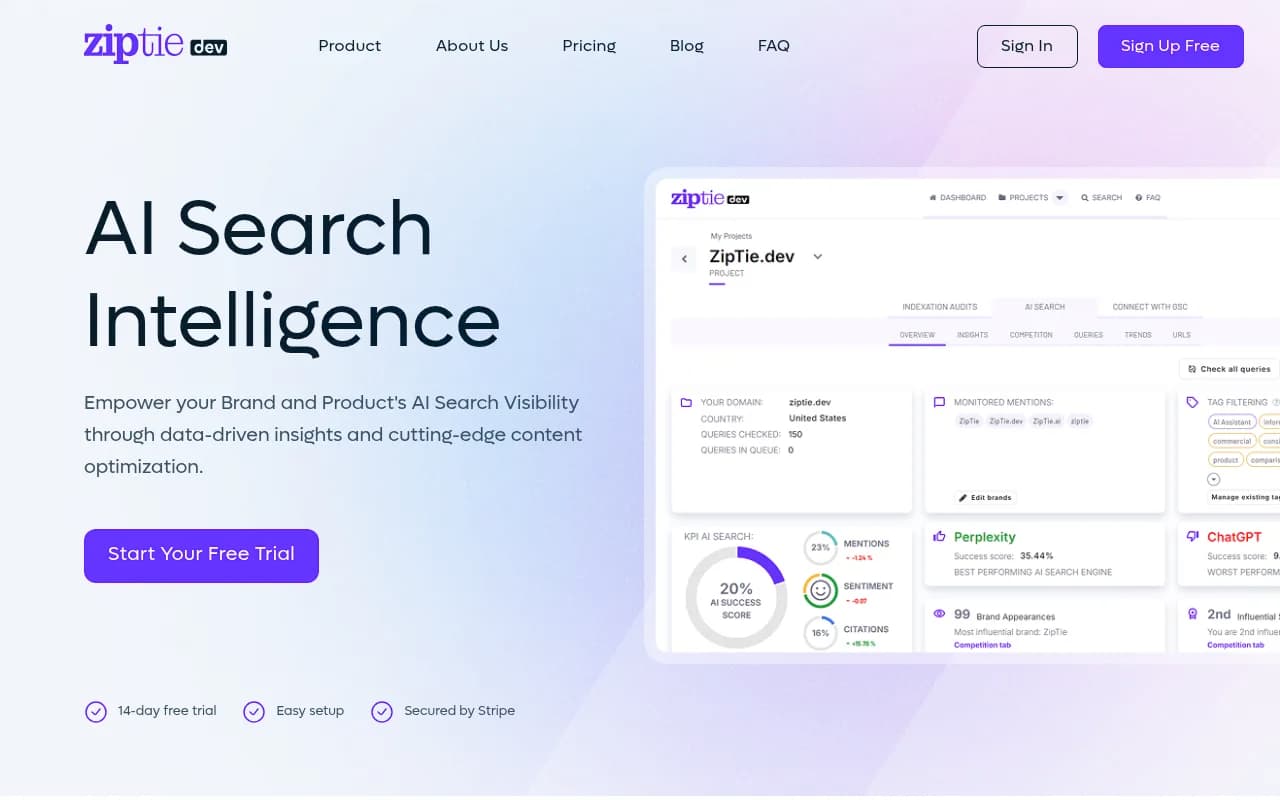
ZipTie -- a focused, no-frills AI visibility tracker that does one thing well.
Similarweb GEO Tools -- if you're already using Similarweb for competitive intelligence, their GEO tools add AI brand visibility measurement to that workflow.
The bottom line
AI search visibility is no longer optional to track. With AI-powered search accounting for a growing share of how people find products, services, and information, being invisible in those responses is a real business problem.
The good news is that the tooling has matured quickly. There are now solid options at every price point, from free tiers and low-cost monitors to full optimization platforms. The key is matching the tool to what you actually need to do -- and being honest about whether you need to just measure your visibility or actually improve it.
If you're starting from scratch, pick something that covers the AI models your audience uses, tracks competitors, and gives you enough data to understand where the gaps are. Then figure out how you're going to fill them.