Key takeaways
- Hall AI is a solid entry-level GEO monitoring tool, but it lacks the multi-client workspace architecture, white-label reporting, and content optimization features that agencies need at scale
- The best Hall AI alternatives for agencies in 2026 combine AI model coverage (ChatGPT, Perplexity, Gemini, Claude, Grok, etc.) with centralized client management and actionable optimization tools
- Monitoring alone isn't enough -- agencies need platforms that help them fix visibility gaps, not just report on them
- Promptwatch is the only platform in 2026 rated as a "Leader" across all GEO categories, with a full action loop from gap analysis to content generation to result tracking
- Pricing across the category ranges from ~$49/mo for basic trackers to $500+/mo for enterprise agency tiers
Why agencies are outgrowing Hall AI
Hall AI positions itself as a GEO platform for brands that want to understand how they appear in AI-generated answers. For a single brand with a small prompt set, it does the job. You can track mentions across a handful of AI models, get a basic visibility score, and see where competitors are showing up.
The problem is that agencies don't manage one brand. They manage ten, thirty, sometimes a hundred. And the workflow that works for a solo brand manager -- manually checking dashboards, exporting CSVs, assembling client reports -- falls apart completely at that scale.
Agencies running into Hall AI's limits tend to hit the same walls: no true multi-client workspace (you're often juggling separate accounts), limited white-label reporting options, and almost no content optimization capability. You can see that a client is invisible in ChatGPT for a key prompt. You just can't do much about it from inside the platform.
That gap is exactly what this guide addresses. The tools below were evaluated specifically for agency use: multi-client architecture, reporting flexibility, competitive intelligence depth, AI model coverage, and whether they actually help you fix visibility problems or just document them.
What to look for in a Hall AI alternative (agency checklist)
Before jumping into specific tools, here's the framework worth applying to any platform you evaluate:
Multi-client workspace. Can you manage all client brands from one login with clean per-client segmentation? This is the single biggest operational differentiator. Tools built for individual brands often bolt on "agency" features as an afterthought.
AI model coverage. The major surfaces to track in 2026 are ChatGPT, Perplexity, Google AI Overviews, Google AI Mode, Claude, Gemini, Grok, DeepSeek, Copilot, and Meta AI. Fewer models means more blind spots in your client reports.
White-label and reporting. Can you export branded reports? Schedule automated delivery? Share live dashboards with clients? The deliverable matters as much as the data.
Content optimization, not just monitoring. Monitoring tells you where you're invisible. Optimization helps you fix it. Agencies that can deliver both have a much stronger service offering.
Prompt intelligence. Volume estimates, difficulty scores, and query fan-outs help you prioritize which prompts to target first -- instead of guessing.
Pricing structure for agencies. Per-seat pricing that scales badly across 20+ clients is a red flag. Look for agency tiers, reseller programs, or flexible site/prompt limits.
The best Hall AI alternatives for agencies in 2026
Promptwatch
Promptwatch is the most complete option on this list. Where most tools stop at monitoring, Promptwatch runs a full action loop: find gaps, create content to fill them, then track whether that content gets cited.
The Answer Gap Analysis shows exactly which prompts competitors are visible for that your client isn't -- and what content is missing. Content Agents then generate articles, comparisons, and briefs grounded in real prompt data, citation patterns, and competitor analysis. After publishing, page-level tracking shows which pages AI models are citing, how often, and by which model. AI Crawler Logs show in real time when ChatGPT, Claude, or Perplexity crawls a client's site, which pages they hit, and when a crawled page moves to an actual citation.
For agencies, the Business plan ($579/mo) covers 5 sites with 350 prompts and 30 articles per month. Agency and enterprise pricing is available for larger client rosters. It monitors 10 AI models including ChatGPT, Perplexity, Google AI Overviews, Google AI Mode, Claude, Gemini, Grok, DeepSeek, Copilot, and Meta AI -- more than most competitors cover.
The data behind it is substantial: 4.5 billion+ citations, clicks, and prompts processed, with clients including Booking.com and Center Parcs. In a 2026 comparison of 12 GEO platforms, it was the only one rated "Leader" across all categories.
What makes it genuinely useful for agencies is the combination of Reddit and YouTube tracking (surfaces that directly influence AI recommendations), ChatGPT Shopping monitoring, and traffic attribution that connects AI visibility to actual revenue. Most competitors give you a visibility score. Promptwatch gives you a path from invisible to cited.
Profound
Profound is one of the more established names in the enterprise AI visibility space. It covers the major AI answer engines and has a reasonably strong competitive intelligence layer. The agency-focused features include multi-brand management and partnership programs for agencies that want to resell or white-label the service.
Where Profound is strong: answer engine insights, prompt volume data, and a clean interface that clients can actually understand. Where it falls short relative to Promptwatch: no Reddit or YouTube tracking, no ChatGPT Shopping monitoring, and content generation is more limited. It's also priced at the higher end, which can make the math tricky for agencies with smaller clients.
Still, if you're running an enterprise-focused agency and want a polished platform with good support, Profound is worth evaluating.
Search Party
Search Party is built specifically for agencies, which is its main selling point. The workspace architecture is genuinely agency-first: you can manage multiple client brands, segment reporting by client, and handle the operational side of AI visibility at scale.
The trade-off is depth. Search Party's prompt metrics are more limited than Promptwatch or Profound, and there's no content gap analysis or generation capability. It's a monitoring tool with good agency UX, not an optimization platform. For agencies that already have a content production workflow and just need better AI tracking, it's a reasonable fit. For agencies that want to offer GEO optimization as a service, it's not enough on its own.
Scrunch AI
Scrunch AI positions itself for both brands and agencies, with AI search monitoring across the major LLMs. It has decent competitive benchmarking features and a cleaner reporting layer than some of the more basic trackers.
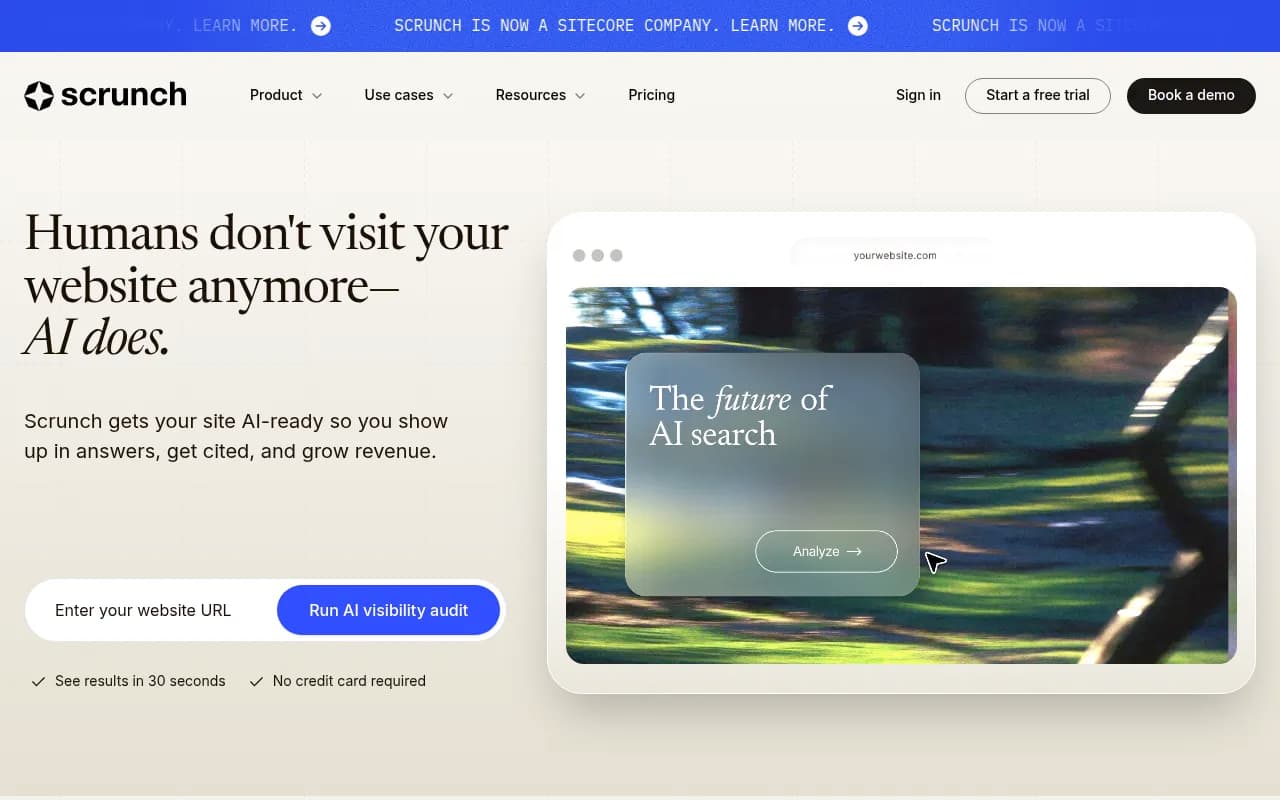
The main limitation is that Scrunch AI, like most tools in this category, is primarily a monitoring platform. There's no content generation, no crawler log access, and no Reddit/YouTube tracking. Pricing is also on the higher end relative to what you get. It's a solid choice if you specifically need strong competitive heatmaps and don't need the full optimization stack.
Peec AI
Peec AI is one of the more affordable options in the category, with a clean interface and basic AI visibility tracking across several LLMs. It includes some smart suggestions for improving visibility, which puts it slightly ahead of pure monitoring tools.
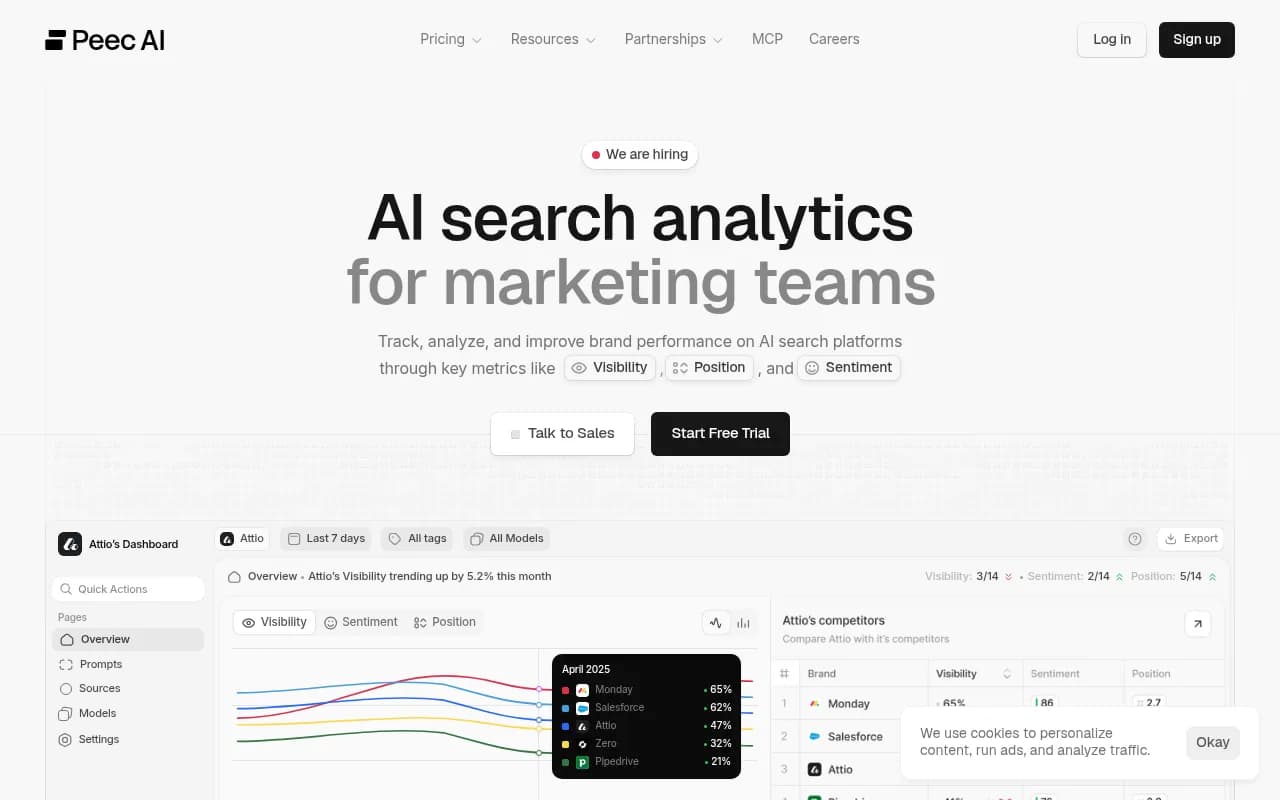
For agencies, the main issue is scale. Peec AI works well for managing a handful of clients but doesn't have the multi-client workspace depth or reporting flexibility that larger agencies need. No crawler logs, no content generation, no traffic attribution. Think of it as a good starting point for smaller agencies or as a supplementary tool for specific clients.
Otterly.AI
Otterly.AI is one of the most accessible entry points in the AI visibility space -- affordable, easy to set up, and good for agencies that are just starting to offer GEO services and need something to show clients quickly.
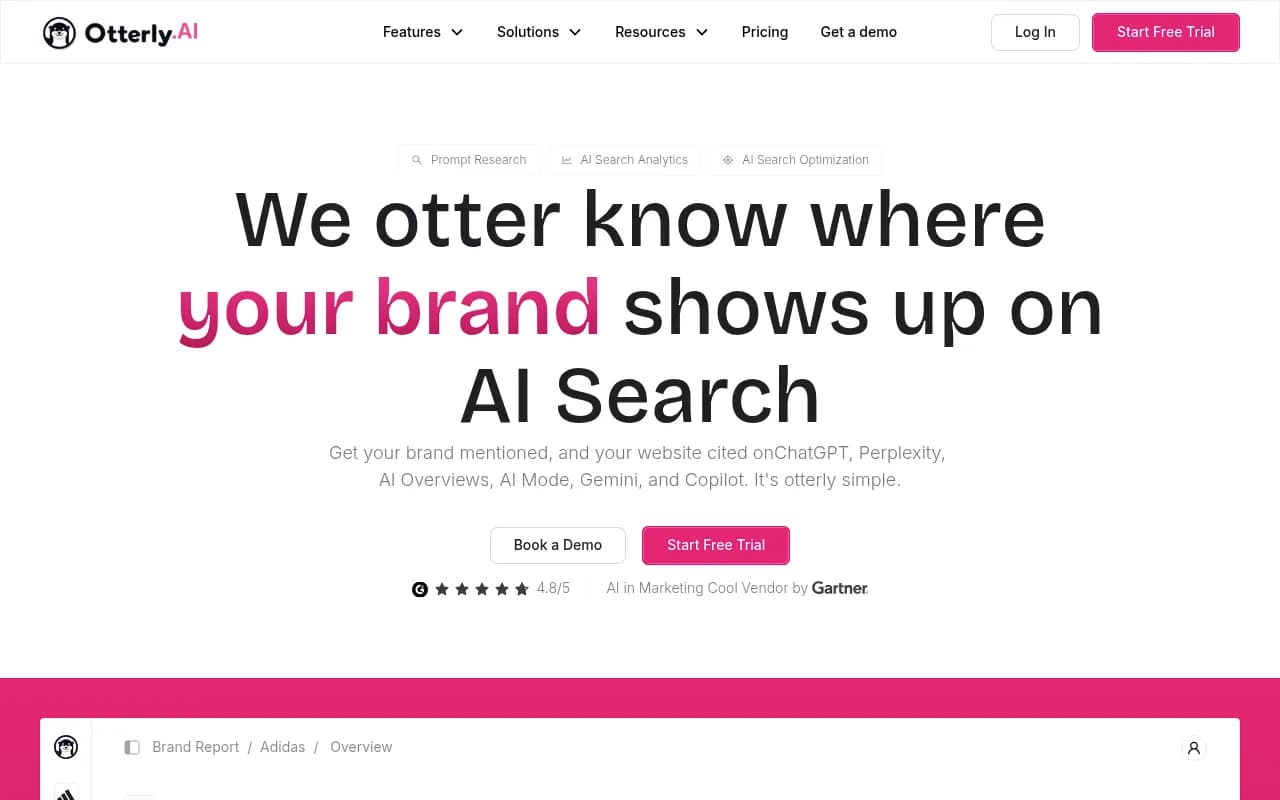
The honest assessment: it's monitoring-only. You can track brand mentions across AI models and generate basic reports, but there's no content optimization, no crawler data, no prompt intelligence beyond surface-level metrics. For agencies that want to move beyond "here's your visibility score" and actually improve client results, Otterly.AI will feel limiting pretty quickly.
AthenaHQ
AthenaHQ focuses on AI search visibility monitoring with a reasonably strong competitive intelligence layer. It's more monitoring-focused than optimization-focused, but the data quality is decent and the interface is clean.
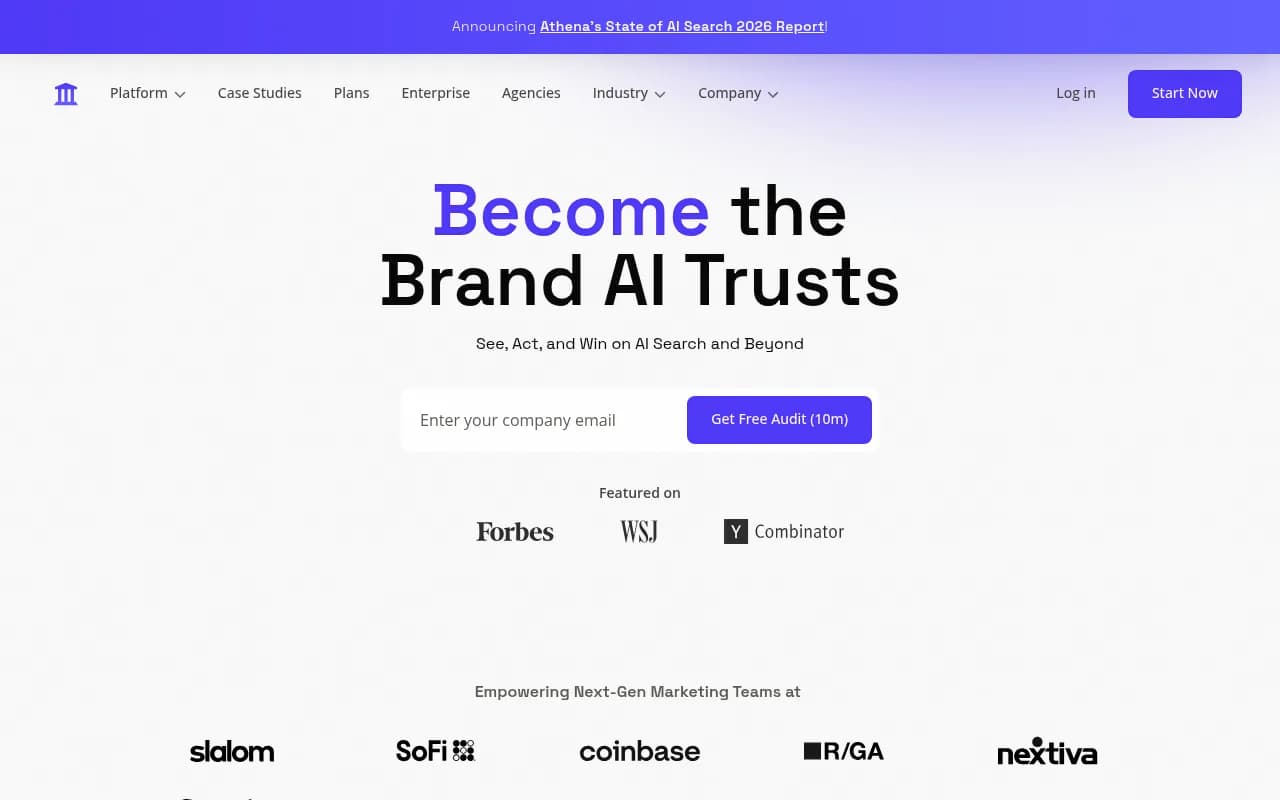
Like several others on this list, AthenaHQ lacks content generation and crawler log access. It's a solid monitoring tool for agencies that want competitive benchmarking across AI models, but it won't help you actually fix the gaps it surfaces.
SE Ranking
SE Ranking has been a reliable traditional SEO platform for agencies for years, and its AI visibility tracker is a meaningful addition. The agency-friendly pricing and multi-client management that SE Ranking is known for carries over to the AI visibility features.
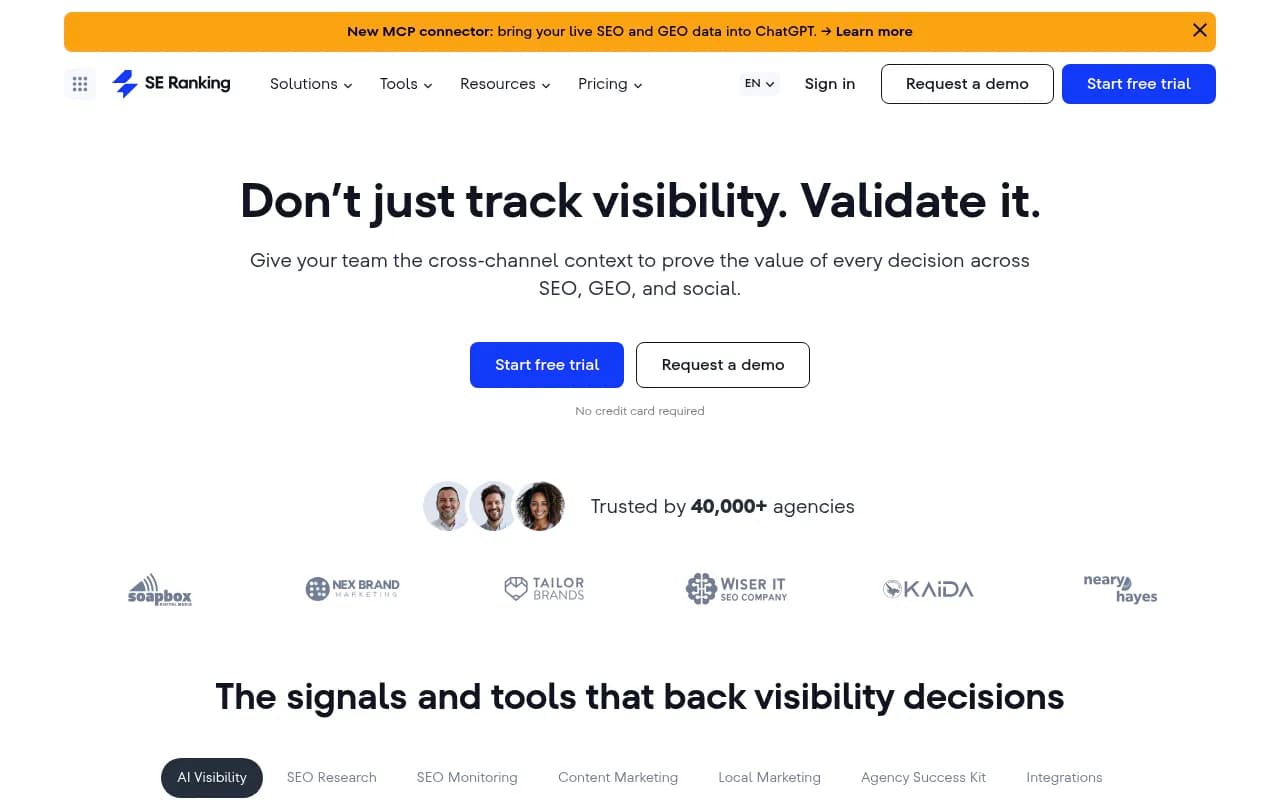
The AI visibility component is newer and less deep than dedicated GEO platforms. It's most useful for agencies that are already using SE Ranking for traditional SEO and want to add AI monitoring without switching platforms. If AI visibility is your primary focus, you'll want something more specialized.
Radarkit
Radarkit is a newer entrant focused on AI search and GEO visibility tracking. It covers the major LLMs and has some useful competitive tracking features.
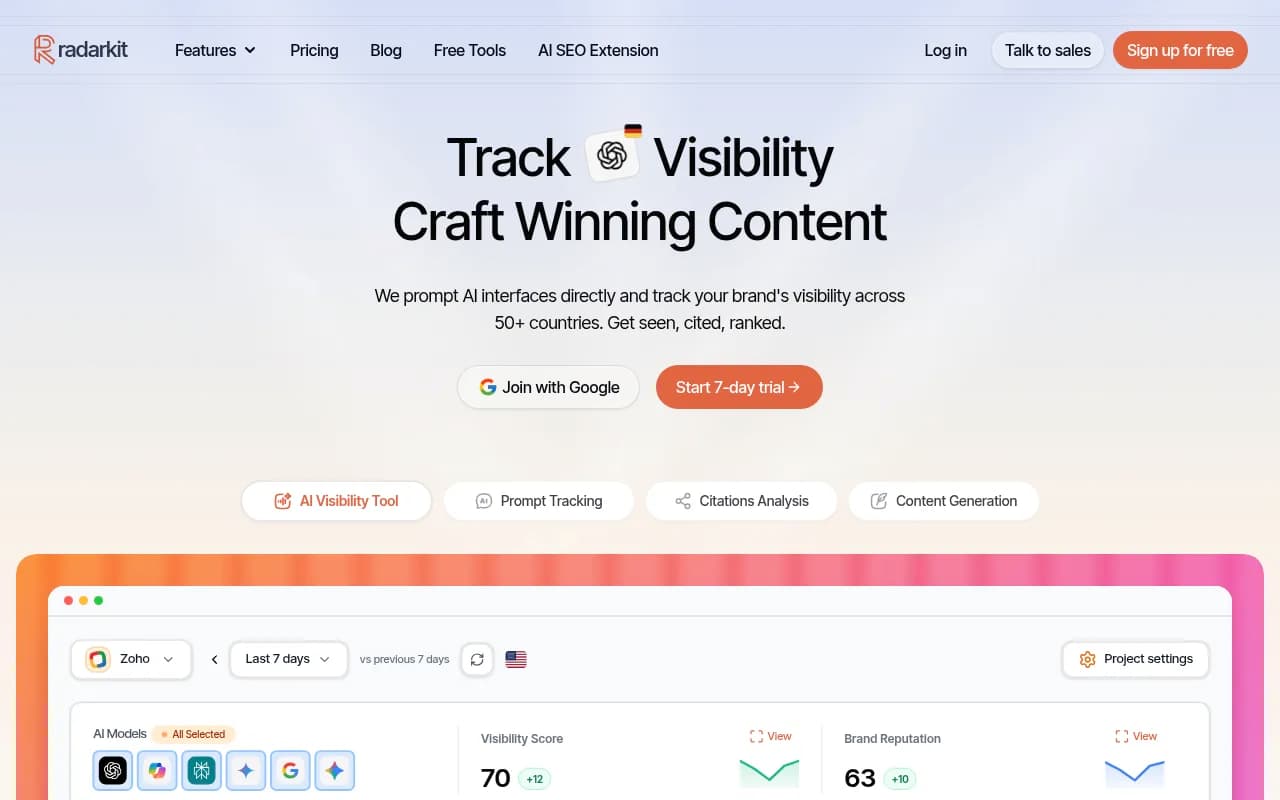
It's worth watching, but it's still maturing. The feature set is narrower than the established platforms, and the agency-specific features (multi-client management, white-label reporting) are less developed. Good for agencies that want to experiment with a lighter-weight tool alongside a more complete platform.
Feature comparison: Hall AI vs. the alternatives
| Tool | Multi-client workspace | AI models covered | Content generation | Crawler logs | Prompt intelligence | White-label reporting | Agency pricing |
|---|---|---|---|---|---|---|---|
| Hall AI | Limited | ~5 | No | No | Basic | No | No dedicated tier |
| Promptwatch | Yes | 10 | Yes (Content Agents) | Yes | Yes (volume + difficulty) | Yes | Yes (agency/enterprise) |
| Profound | Yes | 5-6 | Limited | No | Yes | Yes | Yes (partner program) |
| Search Party | Yes | 5-6 | No | No | Limited | Yes | Yes |
| Scrunch AI | Partial | 5-6 | No | No | Basic | Partial | Yes |
| Peec AI | Limited | 4-5 | No | No | Basic | No | Limited |
| Otterly.AI | Limited | 4-5 | No | No | Basic | No | Limited |
| AthenaHQ | Partial | 5-6 | No | No | Partial | Partial | Yes |
| SE Ranking | Yes | 3-4 | No | No | Basic | Yes | Yes |
| Radarkit | Partial | 4-5 | No | No | Basic | No | Limited |
Monitoring vs. optimization: the real gap Hall AI leaves
This is worth dwelling on because it's the core issue agencies face in 2026.
Most AI visibility tools -- Hall AI included -- are monitoring dashboards. They show you data. They tell you that your client is invisible in Perplexity for "best project management software for construction companies." They give you a score. They show you that a competitor is cited 3x more often.
Then they stop.
What they don't do is tell you what content is missing, help you create it, track whether AI crawlers have found it, or connect the dots between a new article and an improvement in citation frequency. That's the gap.
For agencies, this gap is a business problem. Clients don't pay for reports. They pay for results. If your AI visibility service is "here's a dashboard showing you're invisible," that's a hard sell. If it's "here's where you're invisible, here's the content we're creating to fix it, and here's the traffic attribution showing it's working," that's a service worth paying for.
The tools that close this loop -- Promptwatch being the clearest example -- are the ones that let agencies build a real GEO service offering, not just a monitoring add-on.
How to choose the right tool for your agency
The right answer depends on where your agency is right now.
If you're just starting to offer AI visibility services and need something affordable to show clients quickly, Otterly.AI or Peec AI get you moving without a big commitment. Expect to outgrow them.
If you're already running traditional SEO services and want to add AI monitoring without switching platforms, SE Ranking's AI visibility tracker is the path of least resistance.
If you're building a dedicated GEO practice and want to offer optimization (not just monitoring) as a service, Promptwatch is the most complete option. The combination of content gap analysis, Content Agents, crawler logs, and traffic attribution gives you a full service workflow -- from identifying what's missing to proving that your work moved the needle.
If you're managing enterprise clients with large budgets and want a polished platform with strong support, Profound is worth a serious look alongside Promptwatch.
The one thing to avoid: choosing a tool based on price alone and then being stuck with a monitoring dashboard that can't help you actually improve client results. The cheapest tool is rarely the most profitable one.
Pricing overview
| Tool | Starting price | Agency/multi-client tier |
|---|---|---|
| Promptwatch | $99/mo (Essential) | $579/mo Business; custom Agency/Enterprise |
| Profound | Custom (enterprise-focused) | Yes, partner program |
| Search Party | Custom | Yes |
| Scrunch AI | ~$200+/mo | Yes |
| Peec AI | ~$49/mo | Limited |
| Otterly.AI | ~$49/mo | Limited |
| AthenaHQ | Custom | Yes |
| SE Ranking | ~$65/mo (includes AI tracker) | Yes |
| Hall AI | ~$49/mo | No dedicated tier |
Prices reflect publicly available information as of mid-2026 and may change. Most platforms offer annual billing discounts of 15-25%.
Bottom line
Hall AI is a reasonable starting point for a single brand that wants basic AI visibility monitoring. For agencies managing multiple clients, it runs out of runway fast -- no real multi-client workspace, no content optimization, no crawler data, and no path from "you're invisible" to "here's how we fix it."
The alternatives above cover a wide range of needs and budgets. If you're serious about building a GEO practice that delivers measurable results for clients, the tools that combine monitoring with optimization are worth the higher price point. Showing clients a visibility score is table stakes. Showing them it improved -- and why -- is what builds long-term retainers.