Key takeaways
- Hall AI is a solid brand monitoring tool, but it stops at showing you data -- it doesn't help you create content to improve your visibility.
- Content teams need platforms that close the loop: find gaps, generate content, and track results.
- The best Hall alternatives in 2026 combine AI search monitoring with actual content generation or optimization workflows.
- Tools like Promptwatch, Jasper, Writer, and Frase each serve different parts of this workflow -- some do everything, others specialize.
- If you're choosing one platform, pick based on whether your bottleneck is visibility data, content output, or both.
Hall AI does one thing well: it shows you where your brand appears (or doesn't appear) in AI-generated answers. If you're a brand manager who needs a clean dashboard to report on AI visibility, it's fine. But if you're on a content team -- someone who actually has to do something with that data -- Hall leaves you stranded.
You can see that a competitor is getting cited in ChatGPT responses for a keyword you care about. Great. Now what? Hall won't tell you why, won't suggest what to write, and certainly won't draft the article for you.
That gap is exactly what this guide covers. Below are the platforms content teams are actually using in 2026 to move from "we have visibility data" to "we published content that's getting cited."

What content teams actually need from a Hall alternative
Before jumping into the list, it's worth being clear about what "better for content teams" means. There are three distinct jobs here:
- Knowing which prompts and topics you're invisible for (gap analysis)
- Creating content that addresses those gaps (generation or optimization)
- Tracking whether that content actually improved your AI visibility (attribution)
Hall handles a slice of job one. Most monitoring-only tools -- Otterly.AI, Peec.ai, AthenaHQ -- do the same. They're useful for reporting, but they don't move the needle on their own.
The alternatives below are organized by which of these jobs they cover, so you can pick based on where your team is actually stuck.
The best Hall AI alternatives for content teams in 2026
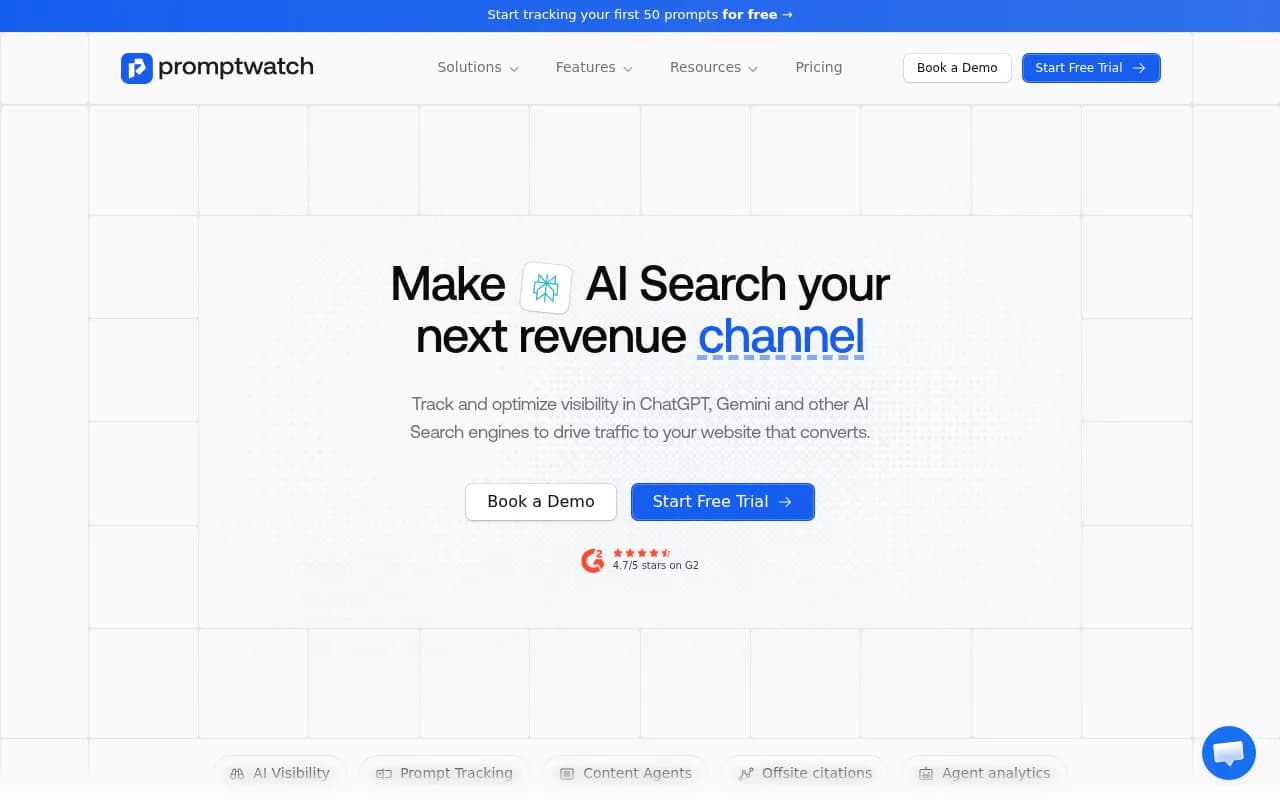
Promptwatch: the full loop in one platform
If your team needs all three jobs covered, Promptwatch is the most complete option available right now. It tracks your visibility across 10 AI models (ChatGPT, Perplexity, Claude, Gemini, Grok, DeepSeek, and more), but the monitoring is really just the starting point.
The Answer Gap Analysis shows you exactly which prompts competitors are being cited for that you're not. Not just "you're missing coverage in category X" -- it shows you the specific questions AI models are already answering with your competitor's content, so you know precisely what to write.
From there, Content Agents generate articles, listicles, comparisons, and briefs grounded in that prompt data. This isn't a generic AI writer -- it pulls in citation data, prompt volumes, competitor analysis, and brand guidelines to produce content engineered for AI search. After you publish, page-level tracking shows which articles are being cited, by which models, and how often. The crawler logs even show when AI agents visit your pages and when those visits convert to citations.
For a content team that's tired of getting a visibility report and then having to figure out the rest themselves, this closes the loop.
Jasper: purpose-built for marketing content at scale
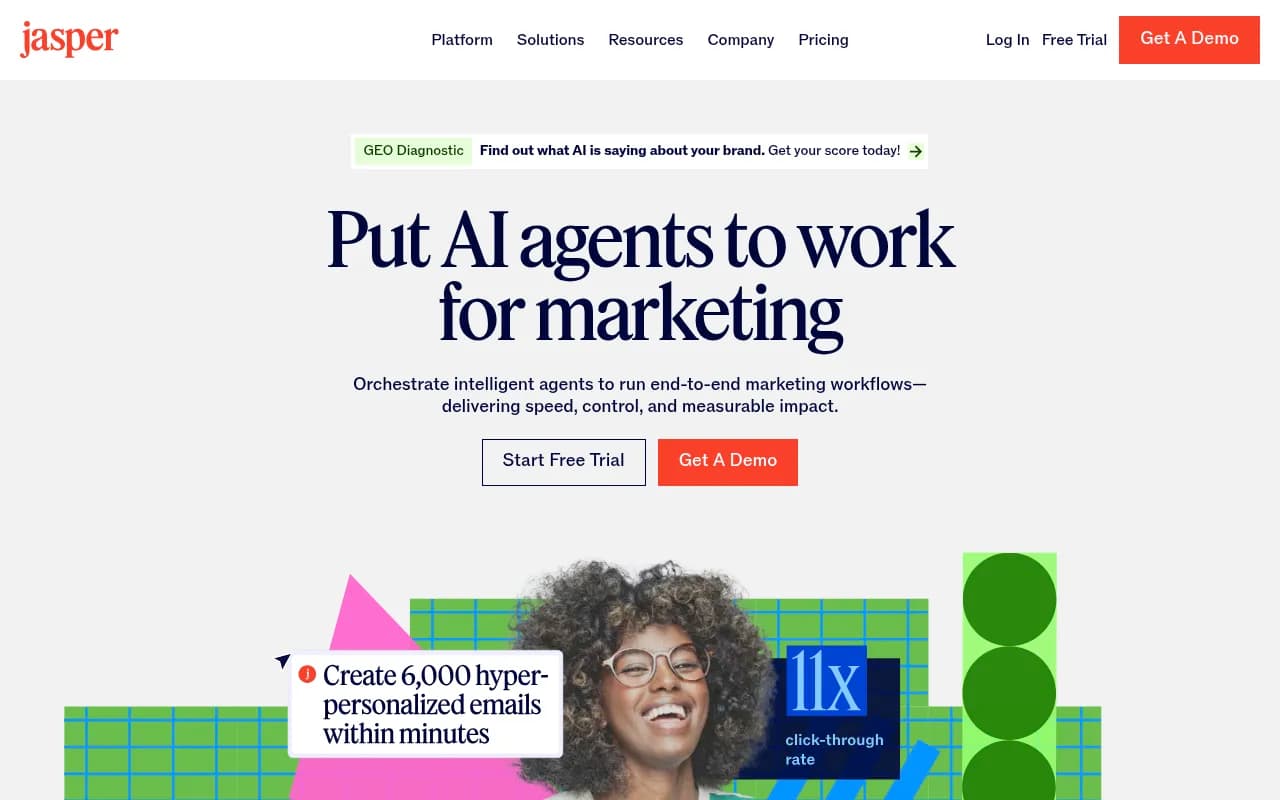
Jasper has been around long enough that most marketing teams have tried it at some point. What's changed in 2026 is how much better it's gotten at brand consistency. You can feed it your brand voice, style guides, and product information, and it applies that context across every piece of content it generates.
It's not an AI visibility tracker -- you won't get data on where you're invisible in ChatGPT. But if your team already knows what to write (from Hall, from Promptwatch, from your own research) and needs to produce it fast, Jasper is one of the fastest ways to go from brief to draft. It handles blog posts, landing pages, social copy, and email sequences without much hand-holding.
The limitation is that Jasper is a writing tool, not a strategy tool. It won't tell you what gaps exist in your AI search visibility. Pair it with a monitoring platform and it becomes genuinely powerful.
Writer: enterprise AI writing with real brand controls
Writer sits in a similar space to Jasper but skews more toward enterprise teams with strict brand and compliance requirements. The brand controls are more granular -- you can define terminology, tone rules, and forbidden phrases that the model actually enforces rather than just suggests.
For content teams at larger companies where every published piece needs to go through brand review, Writer reduces the back-and-forth significantly. It also has workflow features that let you build approval chains into the content process.
Like Jasper, it's a content generation tool rather than an AI visibility platform. But if your team's bottleneck is producing brand-compliant content quickly, it's worth a look.

Frase: content optimization grounded in real search data
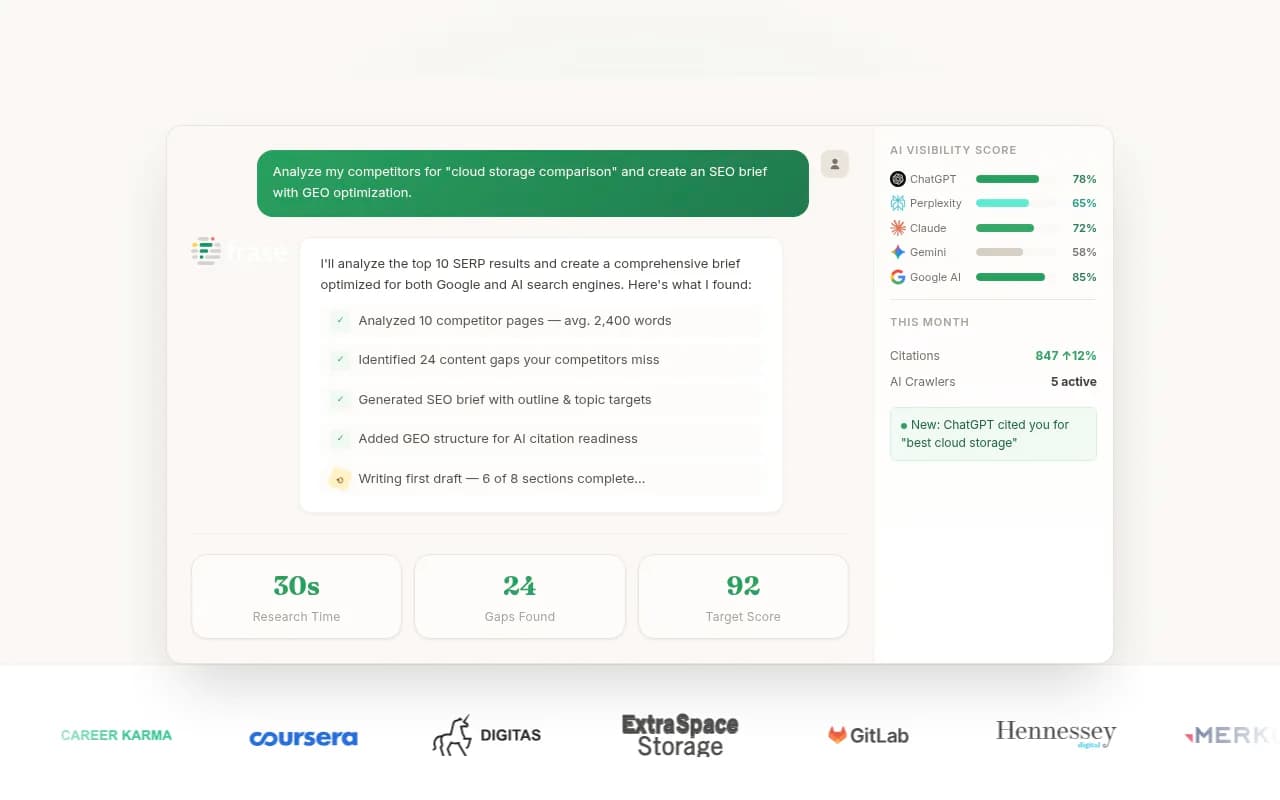
Frase takes a different approach. Instead of generating content from scratch, it helps you optimize existing content by analyzing what's actually appearing in search results and AI answers for a given topic. You get a content brief that shows which questions to answer, which subtopics to cover, and how your draft compares to what's already ranking.
For content teams that already have writers but want to make sure every piece is structured to answer the right questions, Frase fits naturally into the workflow. It's particularly useful for teams producing SEO content that also needs to perform in AI search, since the question-based structure it encourages is exactly what AI models tend to cite.
Writesonic GEO: monitoring plus content generation in one
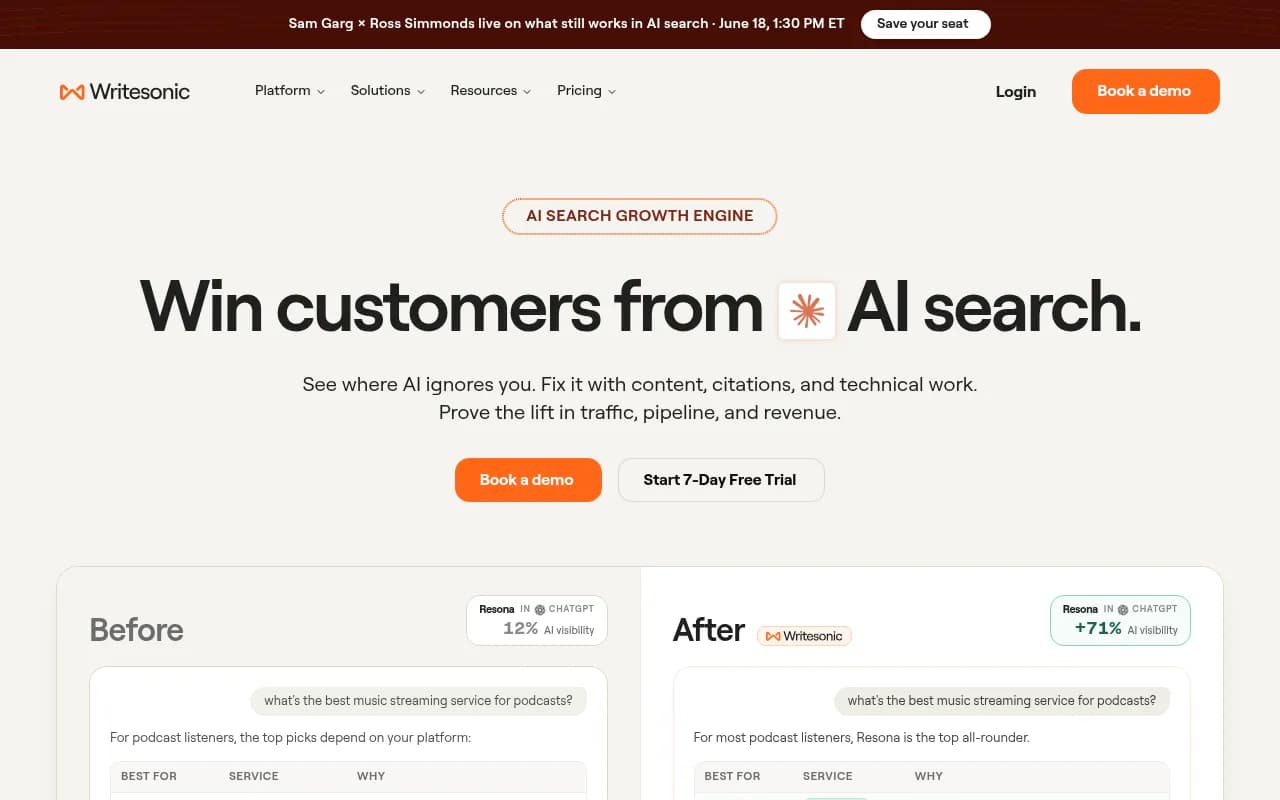
Writesonic has expanded beyond its original AI writing roots to include GEO (Generative Engine Optimization) features. The GEO module tracks how your brand appears in AI search engines and flags content gaps, while the writing tools let you act on those gaps without switching platforms.
It's not as deep as Promptwatch on the monitoring side -- fewer models tracked, less granular citation data -- but for smaller teams that want a single tool to handle both jobs without a complex setup, it's a reasonable middle ground.
Surfer SEO: content optimization for teams that care about structure
Surfer SEO is primarily an SEO content optimization tool, but its content editor has become a go-to for teams that want data-driven structure in their articles. You write inside the editor and get real-time feedback on which terms to include, how long sections should be, and how your content compares to what's currently ranking.
The AI search visibility features are less developed than dedicated GEO platforms, but Surfer is excellent at the structural side of content optimization -- making sure your articles are thorough enough to be cited. Pair it with a visibility tracker and it covers the "create content that ranks" part of the workflow well.

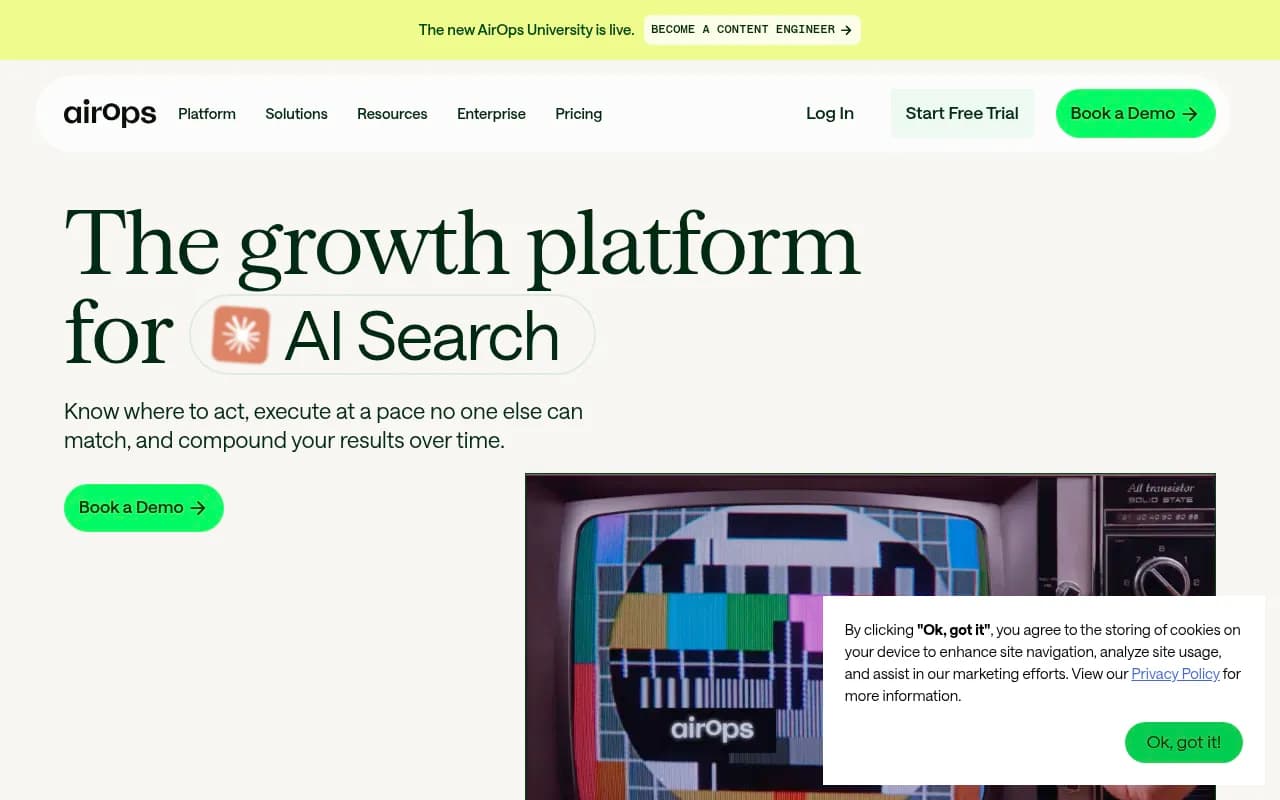
AirOps: AI content workflows for teams with complex processes
AirOps is worth mentioning for teams that have outgrown simple "generate an article" tools and need to build repeatable content workflows. You can chain together research, drafting, optimization, and review steps into automated pipelines that run on your own data.
It's more of a platform for building content systems than a tool you pick up and use immediately. But for agencies or in-house teams producing content at volume, the ability to build a custom workflow that pulls in prompt data, runs it through a generation step, and outputs a formatted draft is genuinely useful.
MarketMuse: content strategy and planning for editorial teams
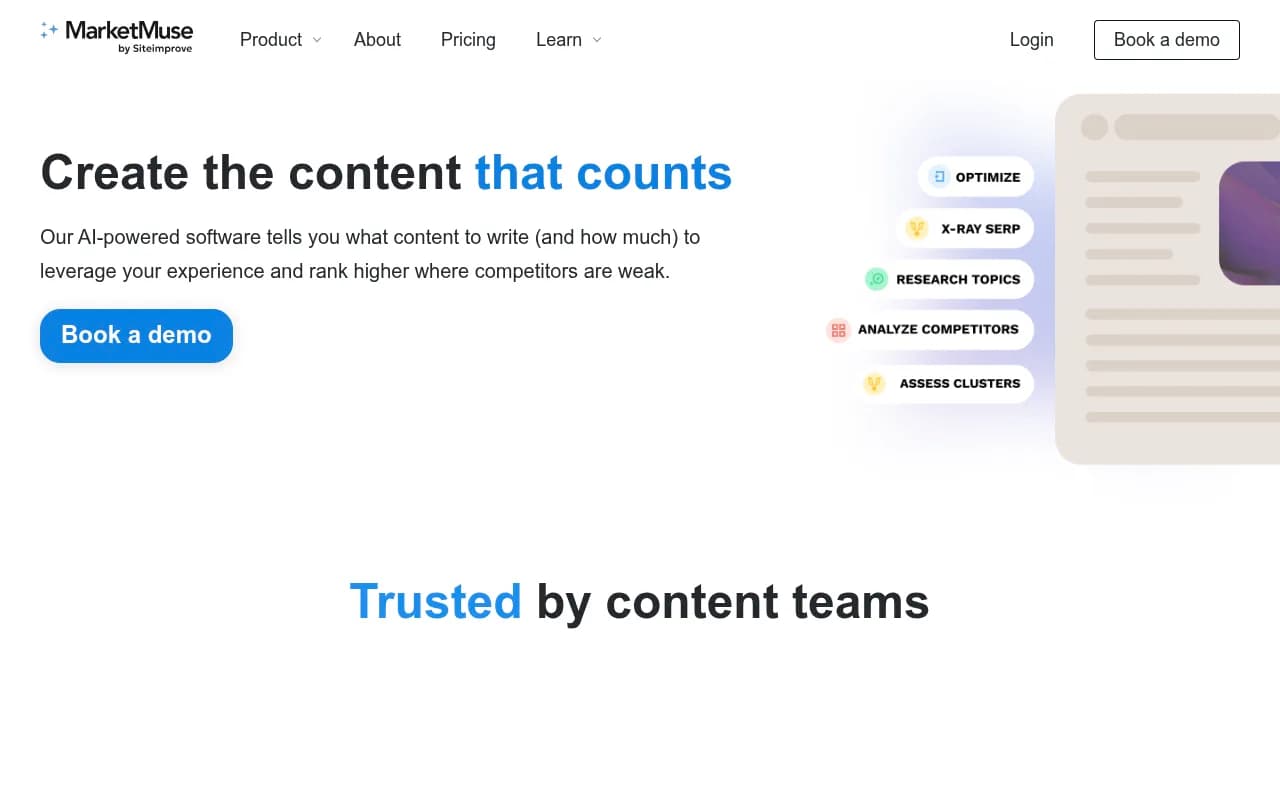
MarketMuse focuses on content strategy rather than content generation. It maps your existing content against topic clusters, identifies gaps, and scores how well your site covers a given subject area. The output is a content plan rather than a finished article.
For editorial teams that need to justify content investments to stakeholders, MarketMuse's topic authority scoring is useful. It gives you a data-backed argument for why you should write about X before Y. The actual writing still happens elsewhere, but the planning layer is solid.
How these tools compare
| Tool | AI visibility monitoring | Content generation | Content optimization | Best for |
|---|---|---|---|---|
| Hall AI | Yes | No | No | Brand monitoring only |
| Promptwatch | Yes (10 models) | Yes (Content Agents) | Yes (gap analysis) | Full-loop content teams |
| Jasper | No | Yes | Limited | Fast content production |
| Writer | No | Yes | Limited | Enterprise brand compliance |
| Frase | Limited | Partial | Yes | SEO-focused optimization |
| Writesonic GEO | Yes (basic) | Yes | Partial | Small teams, one tool |
| Surfer SEO | No | Partial | Yes | Structural content optimization |
| AirOps | No | Yes (workflows) | Partial | High-volume content pipelines |
| MarketMuse | No | No | Yes (strategy) | Editorial planning |
Which one should you actually pick?
The honest answer depends on where your team is stuck.
If you're stuck at "we don't know what to write to improve AI visibility," you need a monitoring platform with gap analysis. Hall gives you monitoring but not gap analysis. Promptwatch gives you both, plus the content generation to act on it. Writesonic GEO is a lighter-weight option if budget is a constraint.
If you're stuck at "we know what to write but can't produce it fast enough," Jasper or Writer will solve that problem. They're writing tools, not strategy tools, but they're fast and they produce usable drafts.
If you're stuck at "we're publishing content but it's not getting cited," Frase or Surfer SEO will help you structure your content better. AI models tend to cite content that directly answers specific questions -- both tools push you toward that structure.
If you're stuck at "we need to scale this across dozens of clients or hundreds of articles," AirOps lets you build the workflow once and run it repeatedly.
A note on the monitoring-only trap
One pattern worth watching out for: teams that invest in monitoring tools and then treat the data as the deliverable. A report showing that your AI visibility score went from 12% to 18% is not a content strategy. It's a number.
The tools that actually move content teams forward are the ones that connect visibility data to content action. That's still a relatively short list in 2026. Most platforms -- including Hall -- are built around the dashboard, not the workflow that follows it.
The question to ask any vendor is simple: "After you show me where I'm invisible, what do I do next?" If the answer is "export the data and figure it out," that's a monitoring tool. If the answer involves content briefs, generation, or optimization built into the same platform, that's a content tool.
For teams that want to track AI visibility and act on it without stitching together five different subscriptions, Promptwatch is the most direct path. For teams with specific bottlenecks -- writing speed, brand compliance, content structure -- the specialized tools above are worth evaluating on their own terms.
Either way, the goal is the same: content that actually appears in AI answers, not just a report showing that it doesn't.