Key takeaways
- Hall AI tracks brand visibility in AI search engines but lacks answer gap analysis — it won't tell you why competitors get cited instead of you
- The most useful alternatives in 2026 combine monitoring with content gap diagnosis: showing you which prompts you're invisible for and what information your pages are missing
- A content gap in AI search isn't just a missing keyword — it's missing information that causes AI models to reach for a competitor's page instead of yours
- Tools range from lightweight trackers to full optimization platforms; the right choice depends on whether you need monitoring, gap analysis, content generation, or all three
- Promptwatch is the only platform in this space that closes the full loop: find gaps, generate content, track results
Why Hall AI users start looking for alternatives
Hall is a clean, focused tool for monitoring how your brand appears in AI search engines. It tracks mentions across ChatGPT, Perplexity, and a handful of other models, and it gives you a readable dashboard to see where you're showing up.
The problem most teams run into: Hall tells you that you're not being cited. It doesn't tell you why, and it definitely doesn't help you fix it.
That gap matters more than it used to. Ahrefs published data in late 2025 showing that AI Overviews reduce clicks on the #1 organic result by 58%. If AI search is eating into your traffic and you can only see the symptom (low visibility) without a diagnosis (missing content), you're stuck.
The alternatives below go further. Some add answer gap analysis. Some generate content briefs based on what AI models are actually citing. Some track crawler behavior so you can see whether AI engines are even reading your pages. The right one depends on what you're actually trying to fix.
What answer gap analysis actually means in 2026
Before getting into the tools, it's worth being precise about what "answer gap analysis" means, because the term gets used loosely.
Traditional content gap analysis compares your keyword rankings against competitors. You find keywords they rank for that you don't, then create content to close those gaps. That's still useful for organic search.
Answer gap analysis for AI search is different. It asks: which questions are users prompting AI models with, where your competitors appear in the answer but you don't? And more specifically: what information is present on their page that's absent from yours, causing the AI to prefer them?
Forrester's 2026 research found that content providing unique "information gain" ranks three times higher in AI responses than content that rehashes existing consensus. So the gap isn't just topical — it's informational. You might have an article on the same subject as a competitor, but if theirs includes specific data points, structured comparisons, or entity coverage that yours doesn't, the AI cites them.
The tools that actually solve this problem don't just show you a list of prompts you're missing. They show you what's on the cited pages that isn't on yours.
The best Hall AI alternatives with answer gap analysis
Promptwatch
Promptwatch is the most complete option in this category. Where Hall shows you visibility scores, Promptwatch shows you the specific prompts your competitors are winning that you're not — and then helps you do something about it.
The Answer Gap Analysis feature maps competitor citations against your own content and surfaces the exact topics, angles, and questions AI models are answering from competitor pages but not from yours. That's the diagnostic layer most tools skip.
From there, Content Agents generate articles, listicles, and briefs grounded in real prompt data — not generic SEO templates. The briefs include citation data, prompt volumes, competitor analysis, and brand guidance. Once you publish, page-level tracking shows you when AI crawlers visit, when they start citing, and which models pick up the content first.
Promptwatch also tracks AI crawler logs in real time, which is genuinely useful for diagnosing why content isn't getting cited. If Perplexity's crawler is hitting your page but not citing it, that's a different problem than if it's not crawling at all.
Pricing starts at $99/month for the Essential plan (1 site, 50 prompts, 5 articles), $249/month for Professional (2 sites, 150 prompts, crawler logs), and $579/month for Business (5 sites, 350 prompts). Free trial available.

AthenaHQ
AthenaHQ focuses on AI search monitoring with decent prompt tracking across major models. It's more capable than Hall on the visibility side, with better prompt coverage and cleaner reporting.
The limitation is that it stays in monitoring territory. You get data on where you're visible and where you're not, but the platform doesn't generate content briefs or tell you what information is causing the gap. It's a better tracker than Hall, but it's still a tracker.
Good fit for teams that want richer monitoring data and are comfortable doing their own content diagnosis.
Profound
Profound is positioned at the enterprise end of the market. It tracks AI visibility across a wide range of models and offers solid competitive benchmarking — you can see how your brand stacks up against competitors across different AI engines and prompt categories.
The platform has strong reporting and is built for larger teams with multiple stakeholders. Where it falls short relative to Promptwatch is on the action side: Profound doesn't generate content or provide the kind of specific gap diagnosis that tells you what to write. It's a strong analytics tool, not an optimization platform.
Pricing reflects the enterprise positioning — expect custom quotes rather than self-serve tiers.
Peec AI
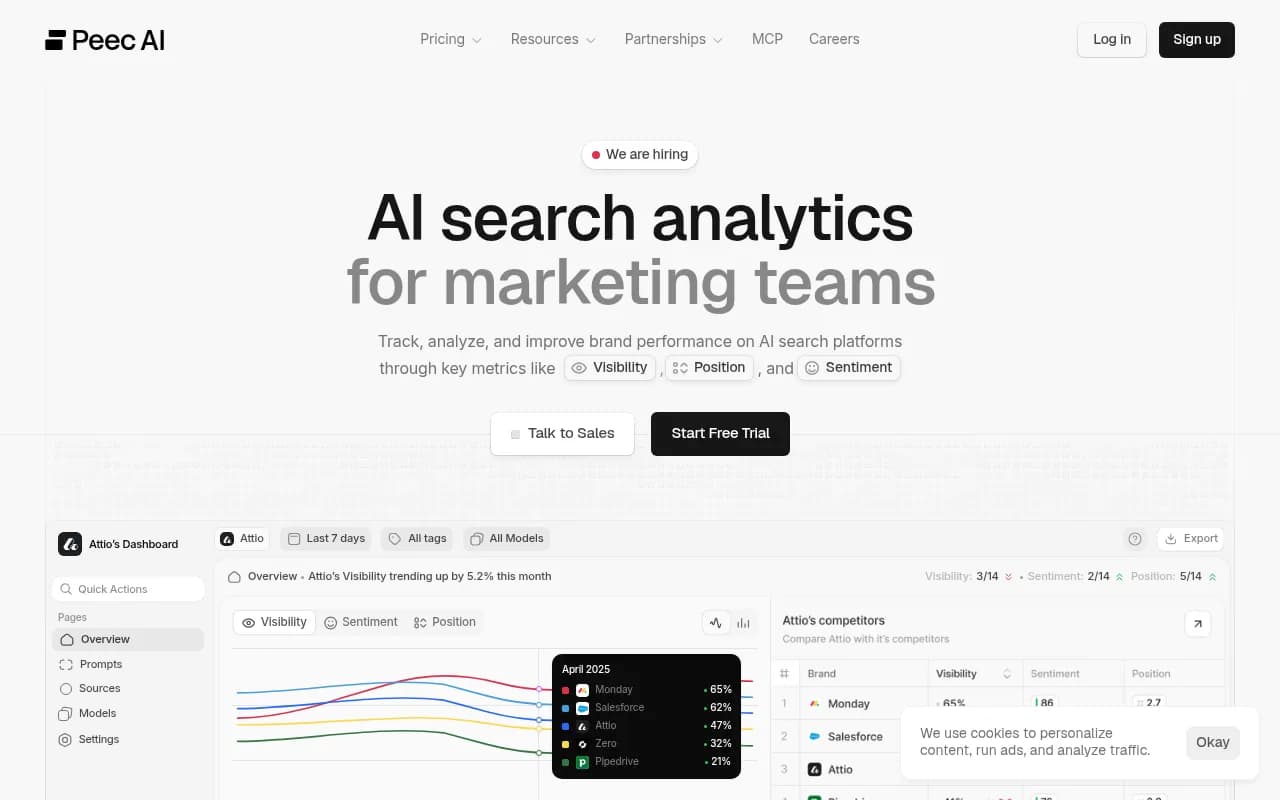
Peec AI is a lighter-weight monitoring tool that tracks brand mentions and visibility across AI search engines. It's more affordable than most options here and reasonably easy to set up.
The gap analysis capabilities are limited. Peec shows you where you're not appearing but doesn't get into why or what content would change that. It's a reasonable step up from Hall if you mainly want broader model coverage at a lower price point, but it won't give you the diagnostic depth that answer gap analysis requires.
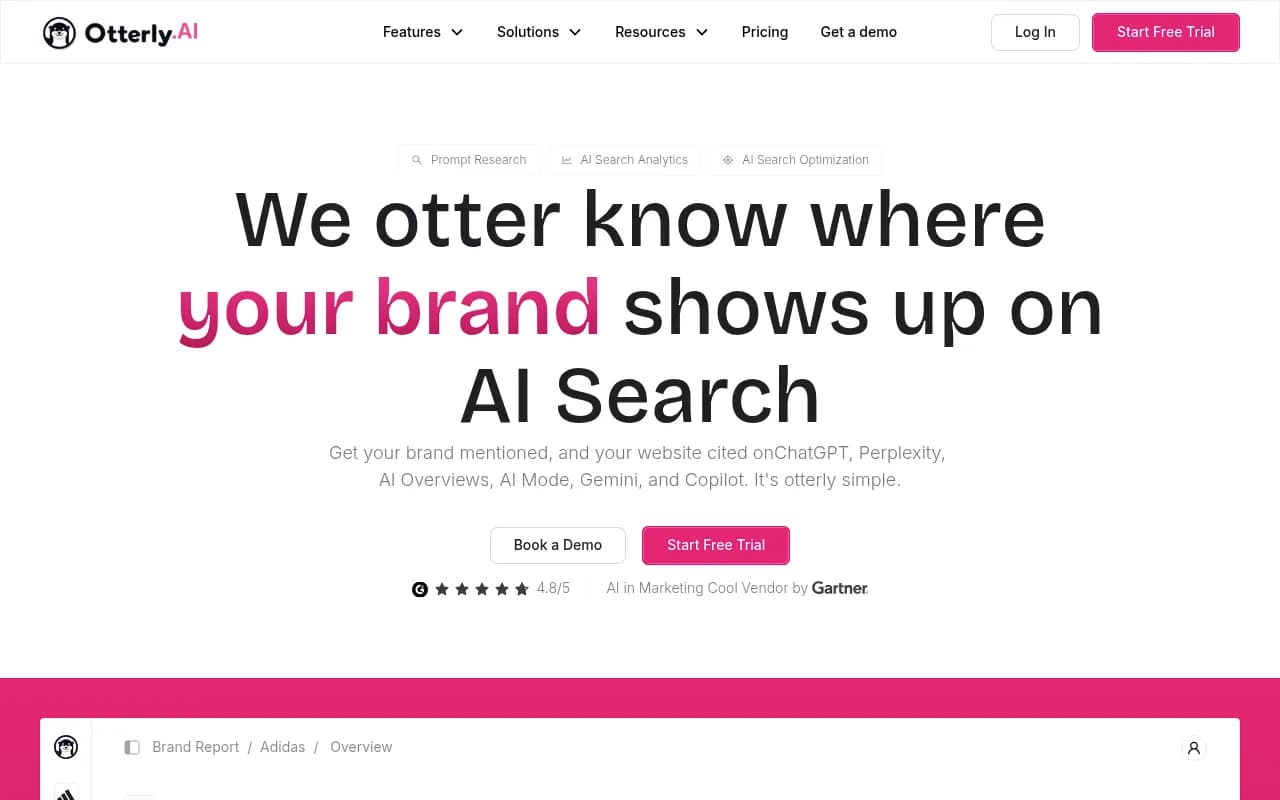
Otterly.AI
Otterly.AI is probably the most accessible entry point in this space. The interface is clean, setup is fast, and it covers the major AI search engines without a steep learning curve.
Like Peec, it's a monitoring tool at heart. You can track prompts, see where competitors appear, and get basic visibility scores. What you won't get is content gap diagnosis or generation. For small teams or solo marketers who just want to understand their AI visibility baseline, it's a solid choice. For teams that want to act on the data, you'll need something more.
Search Atlas
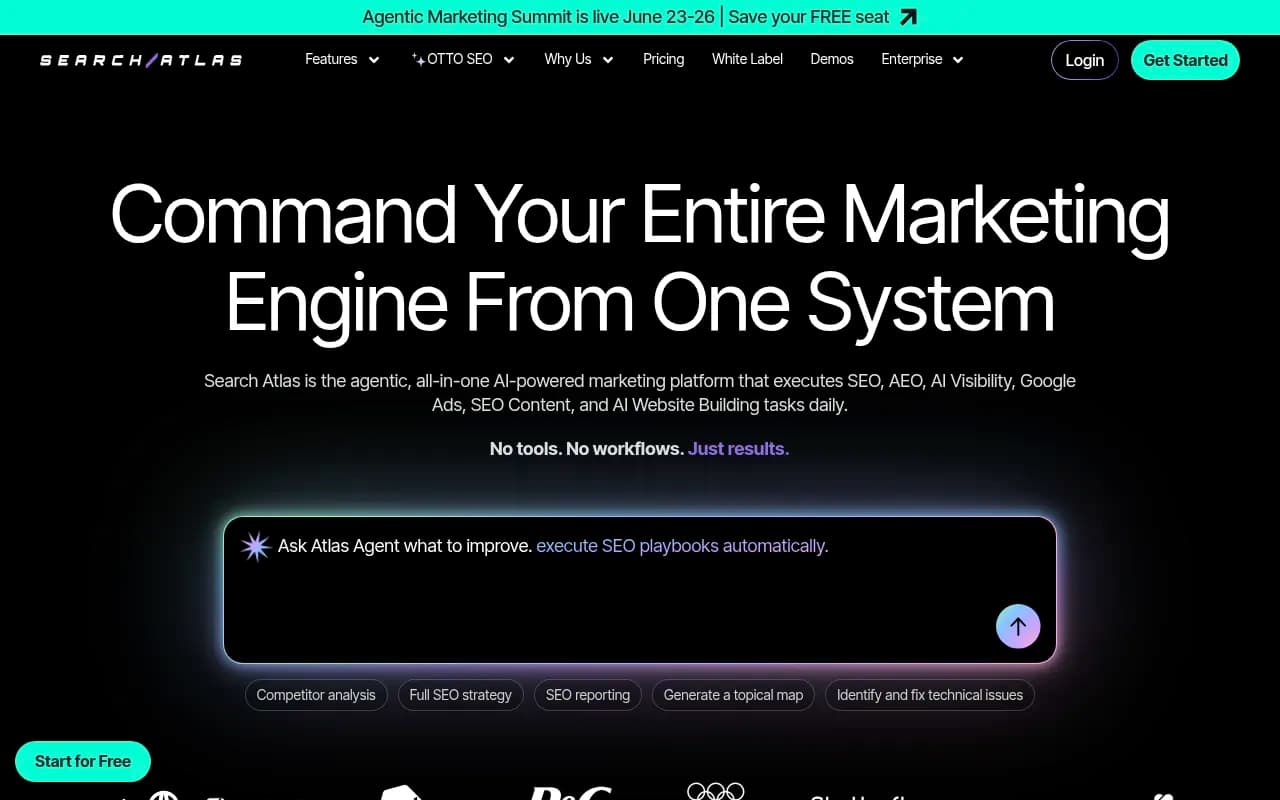
Search Atlas is an all-in-one SEO platform that has been adding AI search features. It covers traditional keyword research, content optimization, and increasingly, AI visibility tracking.
The content gap analysis in Search Atlas is more traditional SEO-flavored than AI-native. It's useful for identifying topic gaps relative to competitors, but it doesn't yet offer the prompt-level gap analysis that shows you which AI model responses you're missing. If you're running both traditional SEO and AI search programs and want one platform, it's worth evaluating. If AI gap analysis is your primary need, it's not the strongest fit.
MarketMuse
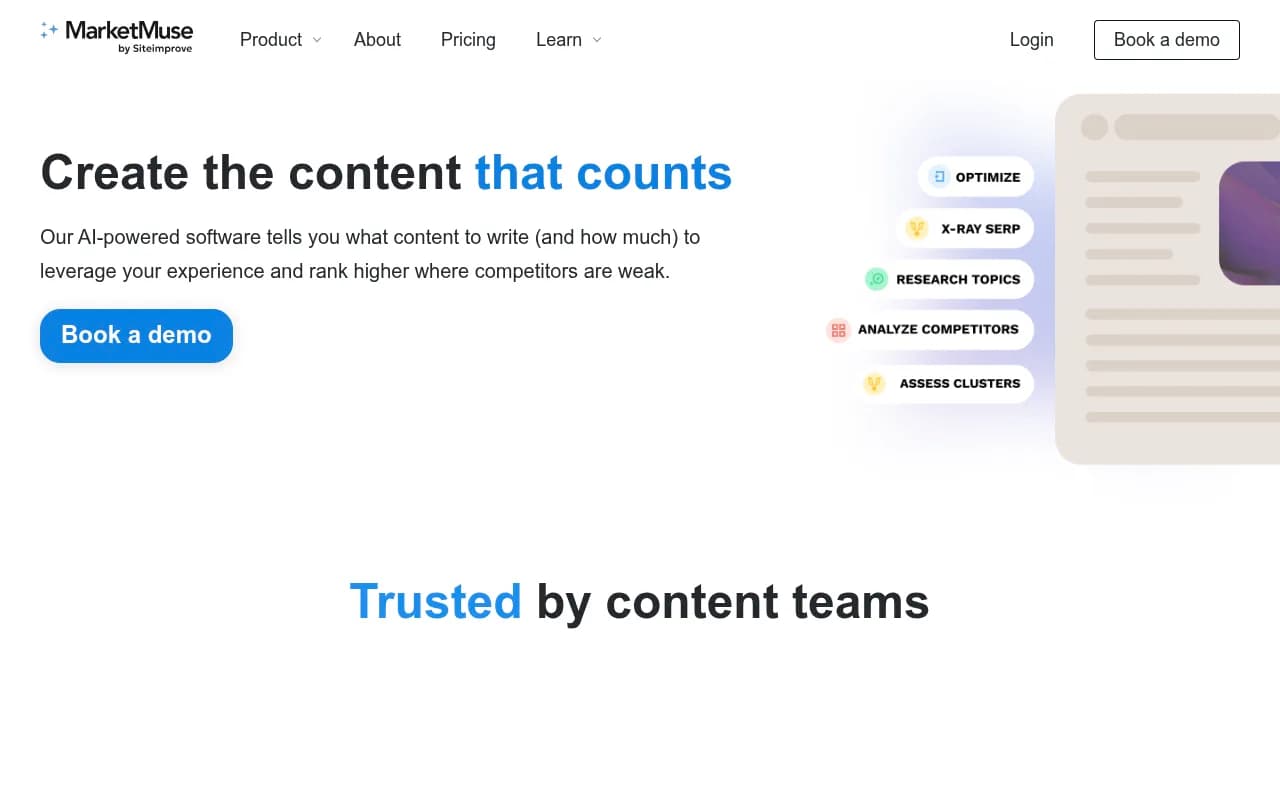
MarketMuse has been doing content gap analysis longer than most tools on this list. Its topic modeling approach identifies what information your content is missing relative to the competitive landscape — and that approach translates reasonably well to AI search, since AI models reward comprehensive, entity-rich content.
It doesn't track AI citations directly or show you which prompts competitors are winning. But if you want to improve the informational depth of your pages (which does help with AI visibility), MarketMuse's content briefs are genuinely detailed.
Scrunch AI
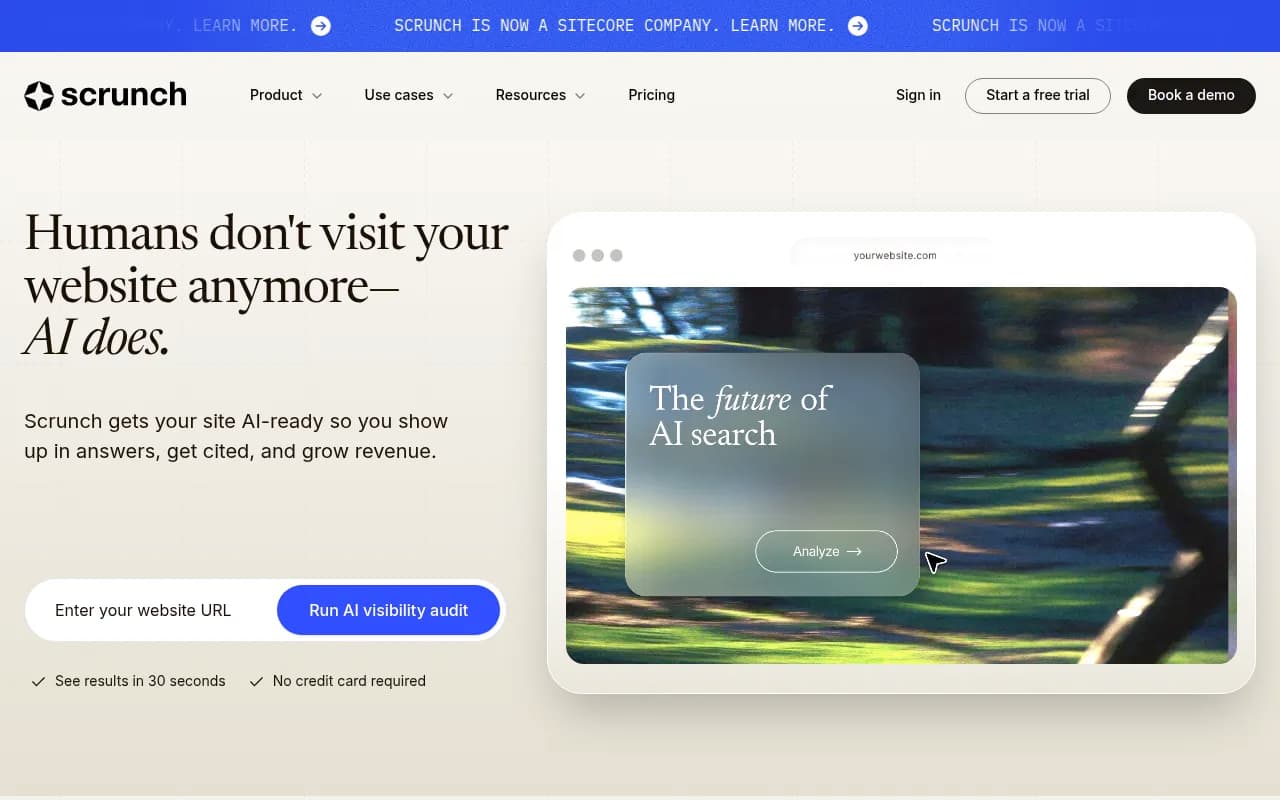
Scrunch AI is built for agencies and brands that need to monitor AI search visibility at scale. It covers multiple models, offers competitive benchmarking, and has decent reporting for client-facing work.
Like several others here, it sits more in the monitoring camp than the optimization camp. The gap analysis is at the prompt/topic level rather than the informational level — you can see which prompts you're not winning, but the platform doesn't diagnose what content changes would fix that.
Semrush AI Visibility Toolkit
Semrush added AI visibility tracking to its existing platform, which gives it an advantage for teams already using Semrush for traditional SEO. You can see AI visibility data alongside keyword rankings, backlink data, and site audits in one place.
The limitation is that Semrush's AI tracking uses fixed prompt sets rather than custom prompt monitoring. You're tracking visibility for prompts Semrush has pre-selected, not necessarily the prompts your actual customers are using. For answer gap analysis specifically, that's a meaningful constraint.
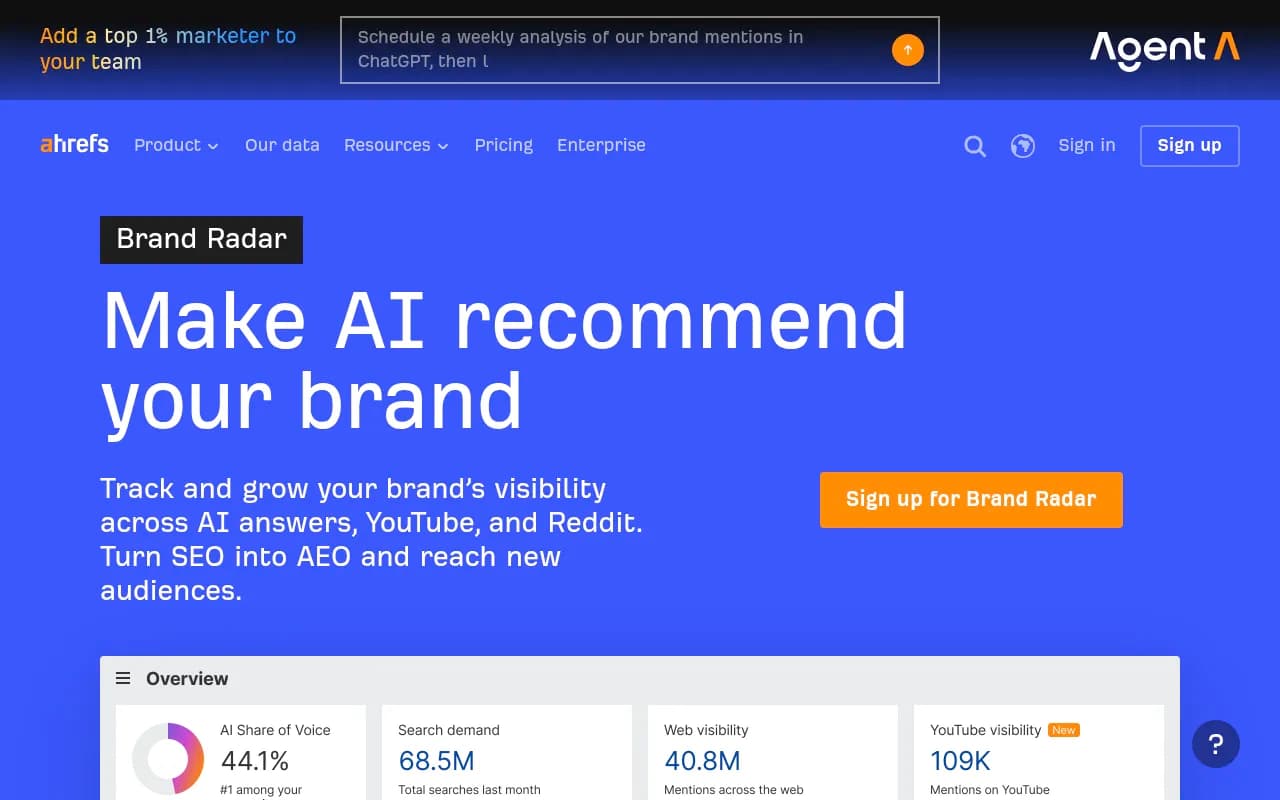
Ahrefs Brand Radar
Ahrefs Brand Radar tracks brand mentions across AI search engines and is a natural add-on for teams already in the Ahrefs ecosystem. The data quality is solid and it integrates cleanly with Ahrefs' existing keyword and content tools.
Similar to Semrush, the prompt set is fixed rather than custom, and there's no AI traffic attribution to connect visibility to actual site visits. It's a useful monitoring layer but not a gap analysis tool in the full sense.
Frase
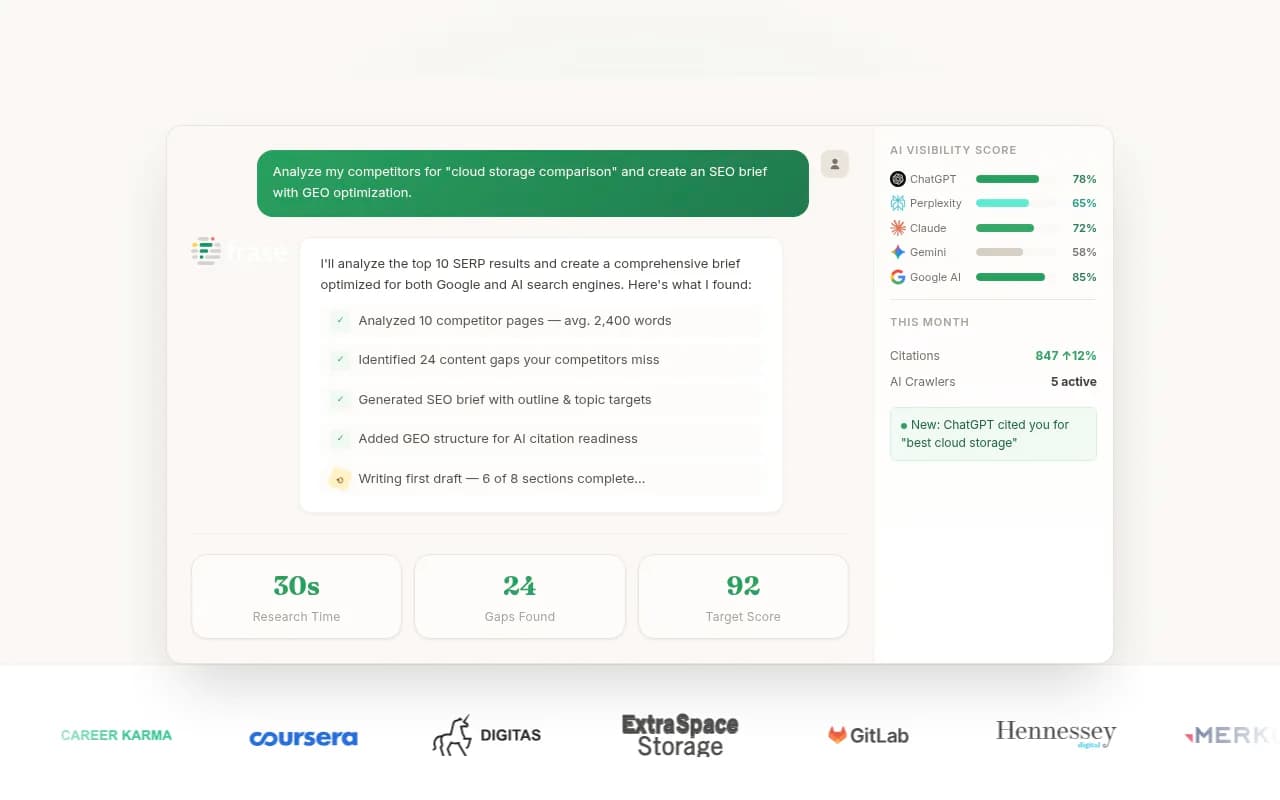
Frase is a content optimization tool that helps you build more complete, well-structured content based on what's ranking for a given query. It's not an AI search monitoring tool, but it addresses the same underlying problem: making sure your content covers the information that authoritative sources cover.
If your gap analysis work is pointing you toward specific content improvements (rather than net-new content), Frase is a practical tool for executing those improvements. It won't tell you which AI prompts you're missing, but it'll help you make existing pages more citation-worthy.
Comparison table
| Tool | Answer gap analysis | Content generation | AI crawler logs | Prompt customization | Best for |
|---|---|---|---|---|---|
| Promptwatch | Full (prompt + informational) | Yes (Content Agents) | Yes | Yes | Teams that want to find gaps and fix them |
| AthenaHQ | Prompt-level | No | No | Yes | Monitoring-focused teams |
| Profound | Prompt-level | No | No | Limited | Enterprise analytics |
| Peec AI | Basic | No | No | Limited | Budget monitoring |
| Otterly.AI | Basic | No | No | Yes | Entry-level monitoring |
| Search Atlas | Topic-level (SEO) | Partial | No | Yes | Combined SEO + AI tracking |
| MarketMuse | Topic + informational | Brief generation | No | No | Content depth improvement |
| Scrunch AI | Prompt-level | No | No | Yes | Agency reporting |
| Semrush AI Toolkit | Prompt-level (fixed) | No | No | No | Existing Semrush users |
| Ahrefs Brand Radar | Prompt-level (fixed) | No | No | No | Existing Ahrefs users |
| Frase | Informational (SEO) | Content briefs | No | No | Content optimization |
How to choose the right tool
The right tool depends on where you are in your AI search program.
If you're just starting out and want to understand your baseline visibility, Otterly.AI or Peec AI will get you there quickly and cheaply. They're monitoring tools, not gap analysis tools, but knowing where you stand is a reasonable first step.
If you're past the baseline stage and want to understand why competitors are getting cited instead of you, you need something with actual answer gap analysis. That means either Promptwatch (which also helps you act on the gaps) or MarketMuse (which focuses on content depth without the AI citation tracking).
If you're running an agency and need client-facing reporting with competitive benchmarking, Scrunch AI or Profound are worth evaluating. Both have the reporting infrastructure agencies need, even if they don't go as deep on content optimization.
If you're already embedded in the Semrush or Ahrefs ecosystem, their AI visibility features are worth turning on — just go in knowing the fixed prompt sets are a real limitation for gap analysis work.
And if you want one platform that covers monitoring, gap diagnosis, content generation, and result tracking, Promptwatch is the only option in 2026 that does all four without requiring you to stitch together separate tools.
The content gap that most teams miss
One thing worth saying directly: most teams doing AI search optimization are focused on the prompts they know about. They track branded queries, category queries, competitor comparison queries. That's a reasonable starting point.
The harder gap to find is the one you don't know exists. A user asks "what's the best way to handle X in [your industry]" and your competitor's blog post from 18 months ago gets cited because it has a specific data point or structured breakdown that your content doesn't. You never knew that prompt was driving citations. You never knew your content was missing that information.
That's what answer gap analysis is actually for. Not confirming the gaps you already suspect, but surfacing the ones you'd never think to look for. The tools that do this well — particularly those that analyze what's on cited pages rather than just which pages get cited — are genuinely useful in a way that basic monitoring dashboards aren't.
The Forrester finding about "information gain" is worth sitting with: content that adds something new to the conversation gets cited three times more often than content that restates what's already out there. If your content strategy is built around covering topics your competitors cover, you're optimizing for the wrong thing. The gap isn't topical. It's informational.
Final thought
Hall AI is a reasonable monitoring tool. If you're using it and it's giving you the visibility data you need, there's no urgent reason to switch. But if you're looking at your AI visibility scores and wondering what to actually do about them, Hall won't answer that question.
The alternatives above range from "slightly better monitoring" to "full optimization platform." Most teams doing serious AI search work in 2026 will end up needing something in the latter category — not because monitoring data isn't valuable, but because data without action doesn't move the needle.