Key takeaways
- Yext is a mature listings and knowledge management platform that has added AI search features, but its core DNA is still structured data and directory syndication.
- Searchable is a newer, AI-native tool focused specifically on tracking brand visibility inside generative AI engines like ChatGPT, Perplexity, and Google AI Overviews.
- For multi-location brands, the right choice depends on what problem you're actually trying to solve: local listings accuracy (Yext's strength) vs. AI citation tracking and GEO optimization (Searchable's pitch).
- Neither platform covers the full optimization loop on its own. Brands serious about AI search visibility should also consider platforms like Promptwatch that combine monitoring, content gap analysis, and AI content generation in one place.
- Pricing, feature depth, and AI model coverage differ significantly between the two. This guide breaks down exactly where each tool wins and where it falls short.
Why this comparison matters in 2026
The way customers find businesses has shifted faster than most marketing teams expected. ChatGPT processes around 2 billion queries daily. Google AI Overviews now reaches 2 billion monthly users. AI referral traffic grew 527% year-over-year in 2025, according to Digiday. And yet, only about 22% of marketers are actively tracking their AI visibility.
For multi-location and enterprise brands, this creates a specific problem: your presence in AI search isn't just one listing. It's hundreds or thousands of location-level signals, each of which might be cited (or ignored) differently by different AI models. A restaurant chain with 400 locations, a healthcare network with 80 clinics, a retail brand with stores across 12 countries -- each of these has a fundamentally different AI visibility challenge than a single-location business.
Yext and Searchable both claim to address this. But they come from very different starting points, and the gap between their approaches is wider than their marketing materials suggest.
What Yext actually does
Yext has been around since 2006. Its original product was a "PowerListings" network that pushed business data (name, address, phone, hours) to directories like Yelp, Google, and Apple Maps. Over the years it evolved into a broader "Digital Experience Platform" with a heavy emphasis on structured data, knowledge graphs, and search.
In 2024 and 2025, Yext added AI search monitoring features, positioning itself as a solution for brands worried about their presence in generative AI answers. The pitch is that if your structured data is clean and consistent across the web, AI models are more likely to cite you accurately.
That's not wrong, exactly. But it's also not the whole picture.
Yext's AI visibility features are largely an extension of its existing listings infrastructure. You get reporting on how your business appears in AI-generated answers, but the depth of that monitoring -- which prompts, which models, how often, with what sentiment -- is limited compared to platforms built specifically for this purpose.
Where Yext genuinely excels:
- Syndicating structured data to 200+ directories and publisher networks
- Managing listings at scale for brands with hundreds or thousands of locations
- Keeping NAP (name, address, phone) data consistent across the web
- Review management and reputation monitoring
- Its own search product for site search and help centers
Where Yext struggles for AI visibility:
- Prompt-level tracking across multiple AI models is thin
- No real content gap analysis or GEO optimization workflow
- AI monitoring feels bolted on rather than built in
- Pricing is enterprise-only and notoriously opaque (most users report $5,000-$50,000+ annually depending on location count)
What Searchable actually does
Searchable is a newer entrant, positioned specifically as an AI search visibility platform. Its focus is on tracking how brands appear in generative AI responses across ChatGPT, Perplexity, Google AI Overviews, Gemini, and other models.
The core product is a monitoring dashboard that shows you your brand's citation rate, share of voice, and sentiment across different AI engines. You can set up prompts relevant to your business, track how AI models respond to them over time, and compare your visibility against competitors.
For multi-location brands, Searchable offers location-level tracking -- the ability to see how individual locations or regions perform in AI search, not just the brand as a whole. This is genuinely useful for brands where local relevance matters (hospitality, retail, healthcare, financial services).
Where Searchable has an edge:
- AI-native design, not a legacy listings tool with AI features added
- Location-level AI visibility tracking
- Cleaner prompt management interface
- More affordable entry points than Yext for smaller enterprise teams
Where Searchable has gaps:
- No listings syndication or structured data management (you'd still need Yext or a similar tool for that)
- Content optimization and gap analysis are limited -- it shows you where you're invisible but doesn't help you fix it
- Smaller customer base and less proven at true enterprise scale
- AI model coverage is narrower than some competitors
Feature comparison
Here's a direct side-by-side of what each platform offers:
| Feature | Yext | Searchable |
|---|---|---|
| AI citation monitoring | Basic (added 2024-25) | Core product |
| Multi-location tracking | Yes (strong) | Yes (improving) |
| Listings syndication | Yes (200+ publishers) | No |
| Prompt management | Limited | Yes |
| Competitor visibility tracking | Limited | Yes |
| Content gap analysis | No | Partial |
| GEO content generation | No | No |
| AI crawler logs | No | No |
| Sentiment analysis | Basic | Yes |
| AI models covered | 3-4 | 5-6 |
| Review management | Yes | No |
| Site search product | Yes | No |
| Pricing transparency | Low (custom only) | Medium |
| Free trial | No | Yes |
The table tells a clear story: Yext is a broader platform with more non-AI features, while Searchable is narrower but more focused on the AI visibility use case. Neither one is a complete solution for brands that want to actually improve their AI search performance, not just measure it.
The multi-location challenge: where both tools fall short
Here's the thing that doesn't get said enough in these comparisons: tracking AI visibility at the location level is genuinely hard, and most platforms -- including both Yext and Searchable -- are still figuring it out.
When someone asks ChatGPT "best urgent care near downtown Denver," the AI isn't just pulling from your Google Business Profile. It's synthesizing information from Reddit threads, review sites, local news, health directories, and whatever content it found during training and crawling. Your structured data matters, but it's one input among many.
For a healthcare network with 80 clinics, you might be highly visible in AI search for some locations and completely absent for others -- and the reasons why are often opaque. Is it because those locations have fewer reviews? Less local press coverage? Weaker content on the location pages? A competitor with a stronger Reddit presence in that market?
Yext can tell you your listings are accurate. Searchable can tell you your citation rate is low. But neither platform gives you a clear path from "we're invisible in AI search for our Chicago locations" to "here's the content you need to create to fix that."
That gap -- between monitoring and action -- is where platforms like Promptwatch differentiate themselves. Promptwatch's Answer Gap Analysis shows exactly which prompts competitors are being cited for that you're not, and its Content Agents generate articles and briefs grounded in real prompt data to help you close those gaps.
Pricing reality check
Yext doesn't publish pricing publicly, which is always a yellow flag. Based on widely reported user experiences and G2 reviews, expect:
- Small business plans: $4-$19/month per location (basic listings only)
- Mid-market packages: $500-$2,000/month for multi-location with some AI features
- Enterprise contracts: $5,000-$50,000+/year depending on location count and feature set
The AI visibility features are generally only available at higher tiers, which means most Yext customers aren't actually getting meaningful AI search monitoring -- they're paying for listings management and getting AI visibility as a checkbox feature.
Searchable is more transparent but still positions itself as a premium product. Entry-level plans start around $200-$400/month, with enterprise pricing for multi-location brands negotiated separately. The free trial is a genuine advantage over Yext.
For context, purpose-built AI visibility platforms like Promptwatch start at $99/month for a single site with 50 prompts, scaling to $249/month for multi-site tracking with crawler logs and $579/month for larger brand portfolios. That's a meaningful price difference if AI visibility is your primary concern rather than listings management.
Which tool is right for your situation?
There's no universal answer here, but there are some clear patterns:
Choose Yext if...
- Your primary pain point is listings accuracy and NAP consistency across directories
- You have hundreds or thousands of locations and need centralized data management
- You're already using Yext for listings and want to add basic AI monitoring without switching platforms
- You need review management and site search in the same contract
Choose Searchable if...
- AI citation tracking is your primary goal and you already have listings management sorted
- You want location-level AI visibility data with a cleaner interface than Yext's AI features
- You need a more affordable entry point than Yext's enterprise pricing
- You want a free trial before committing
Consider alternatives if...
- You want to not just track AI visibility but actually improve it
- You need content gap analysis, AI content generation, or crawler log data
- You're managing multiple brands or client accounts
- You want coverage across 10+ AI models including ChatGPT, Claude, Perplexity, Gemini, Grok, DeepSeek, and Google AI Mode
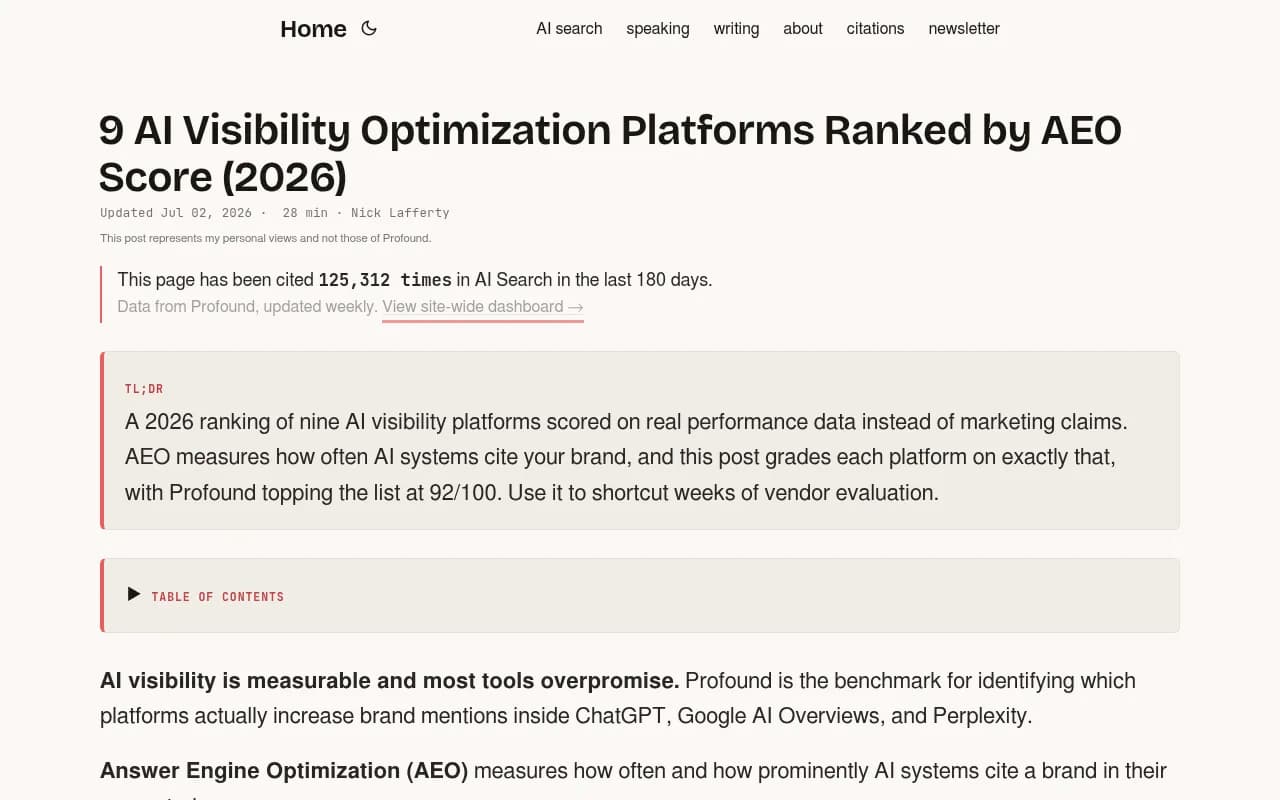
For teams that want the full picture -- monitoring, gap analysis, content creation, and traffic attribution -- there are platforms built specifically around that workflow. Promptwatch covers all 10 major AI models and is the only platform in a recent 12-tool comparison rated as a "Leader" across all categories. Tools like Profound, AthenaHQ, and Scrunch AI are also worth evaluating depending on your budget and use case.

What enterprise brands should actually be asking
If you're evaluating AI visibility tools for a multi-location or enterprise brand, the feature checklist matters less than the workflow question: what happens after you see the data?
Most platforms -- Yext's AI features, Searchable, and many others -- are monitoring dashboards. They show you a number. Your AI visibility score is 23%. Your competitor's is 41%. Now what?
The brands getting real traction in AI search in 2026 are the ones that have answered that "now what" question. They're identifying the specific prompts where they're invisible, creating content that directly answers those prompts, and tracking whether that content gets crawled and cited by AI models. That's a workflow, not a dashboard.
Before signing any contract, ask the vendor:
- Can you show me which specific prompts my competitors are being cited for that I'm not?
- Does your platform help me create content to close those gaps, or just show me the gap?
- Can I see when AI crawlers visit my site and which pages they read?
- How do you track whether new content I publish actually improves my AI citation rate?
If the answer to questions 2, 3, and 4 is "no" or "not yet," you're buying a monitoring tool, not an optimization platform. That might be exactly what you need -- but go in with clear eyes about what you're getting.
Other tools worth knowing about
The Yext vs. Searchable comparison doesn't happen in a vacuum. Here are a few other platforms that multi-location and enterprise brands frequently evaluate alongside these two:
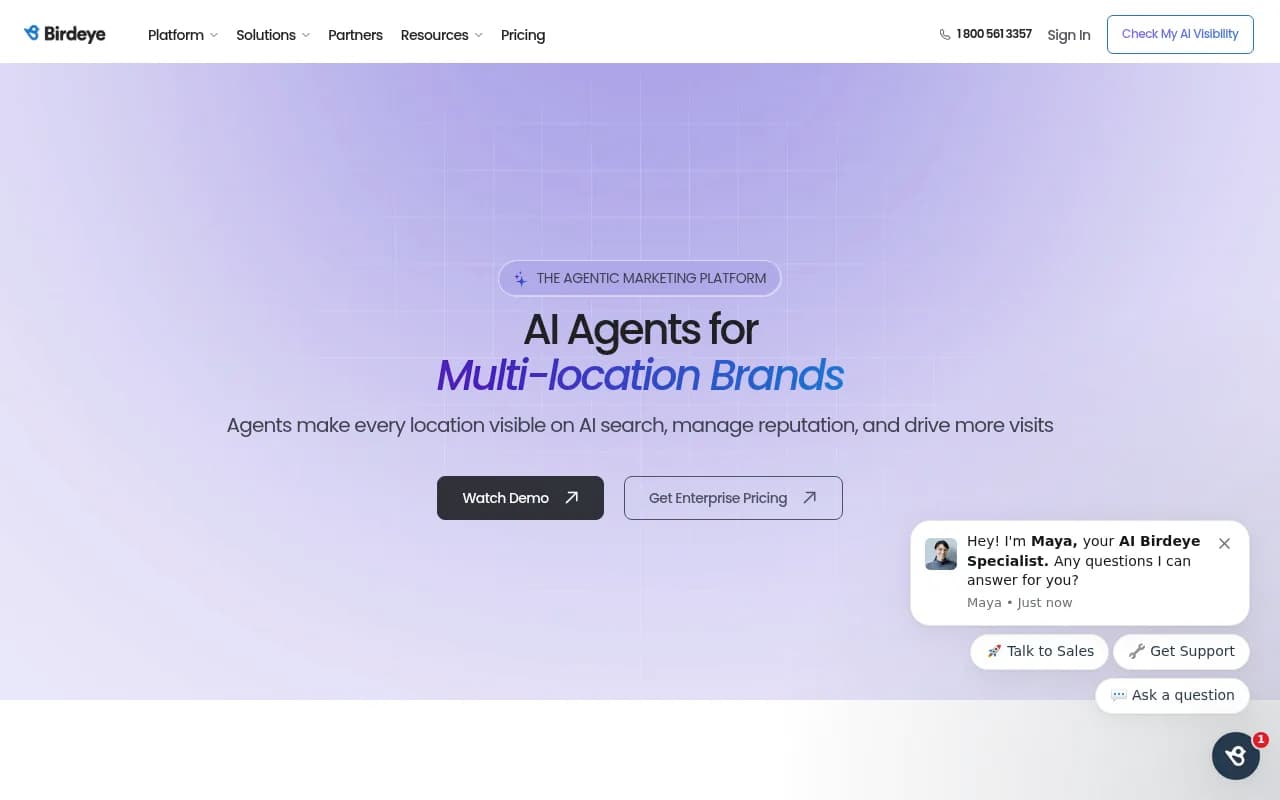
Birdeye Search AI is worth a look specifically for local AI visibility -- it combines review management with location-level AI tracking in a way that's genuinely competitive with Yext's local features.
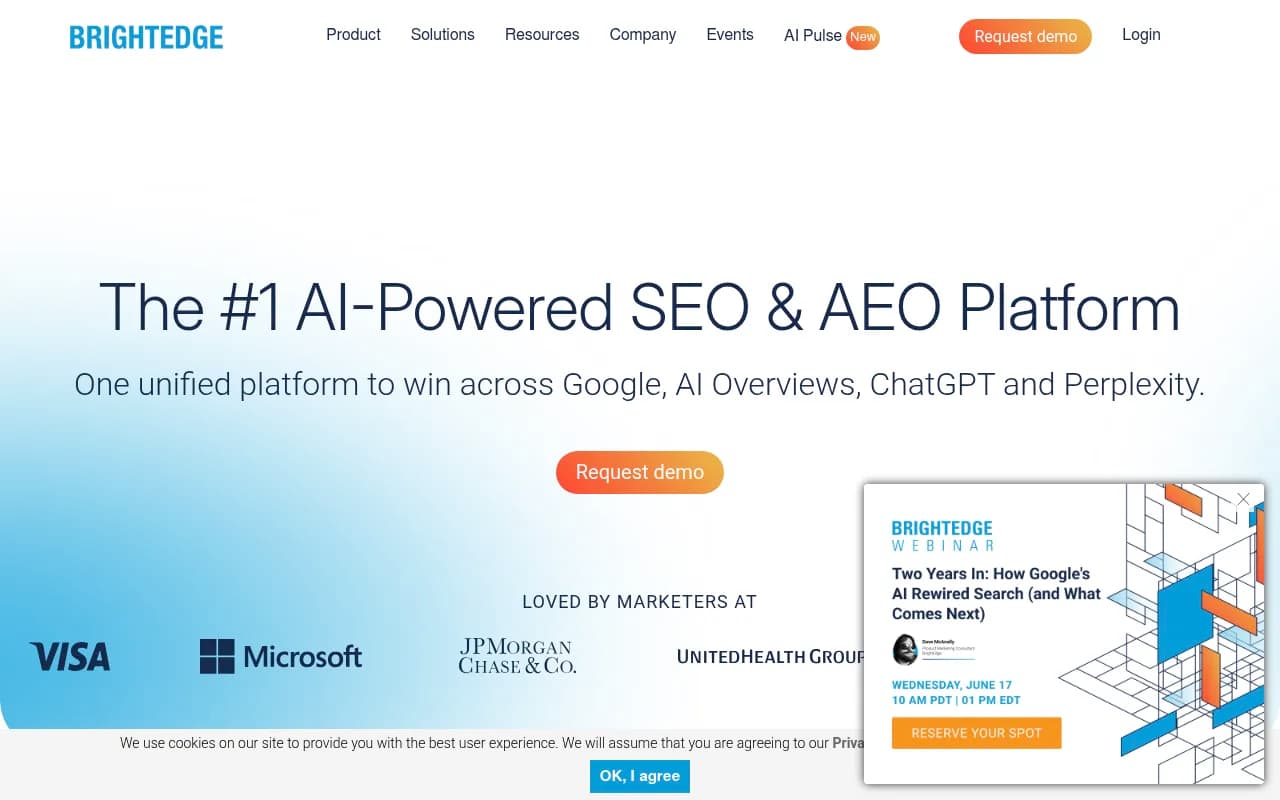
BrightEdge is the enterprise SEO platform most likely to already be in your tech stack if you're a large brand. Its AI search intelligence features have improved significantly, and the integration with existing SEO workflows is a real advantage.
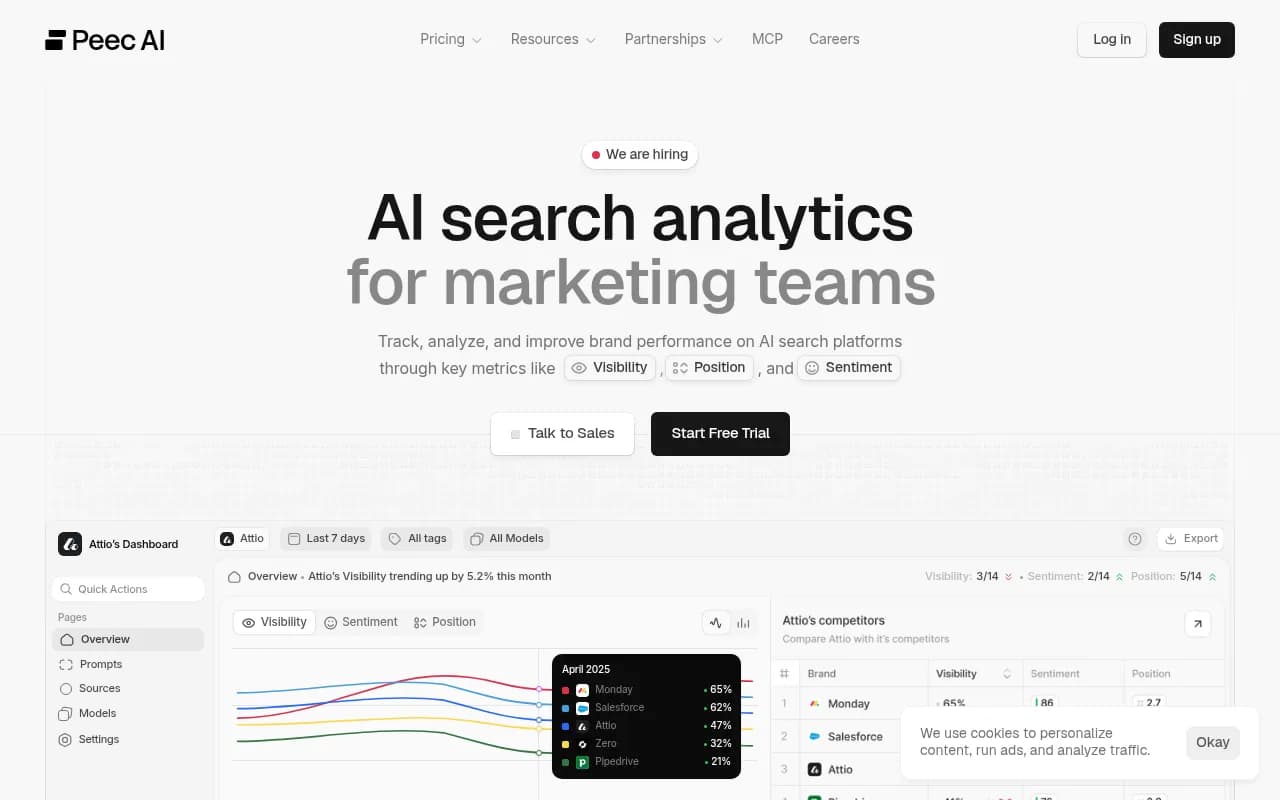
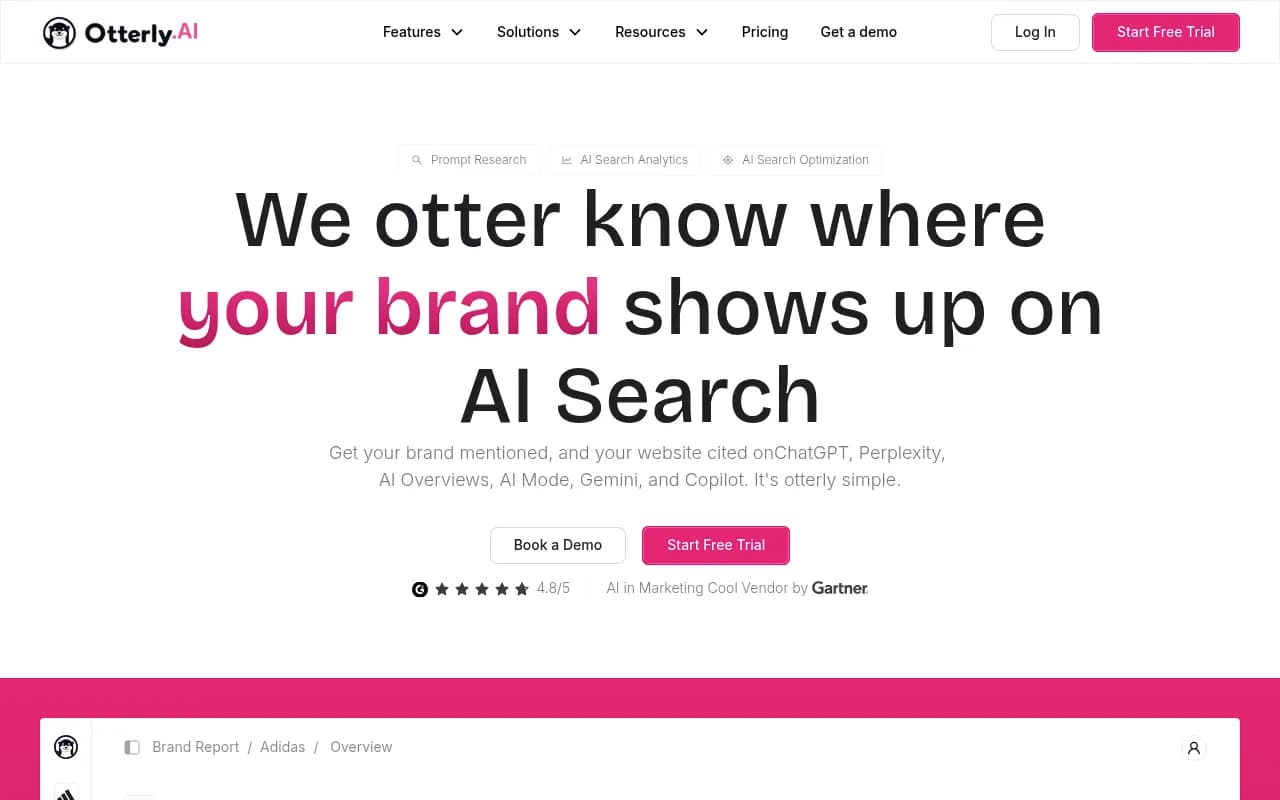
Peec AI and Otterly.AI are lighter-weight monitoring tools that work well for teams that want AI visibility data without the complexity or price of an enterprise platform.
SE Ranking has added AI visibility tracking that integrates cleanly with its existing rank tracking and site audit tools -- a solid option if you're already in their ecosystem.
The bottom line
Yext and Searchable are solving related but different problems. Yext is a listings management platform that has added AI visibility features. Searchable is an AI visibility monitoring platform that lacks listings management. If you need both, you'll likely end up using both -- or finding a different combination entirely.
For multi-location and enterprise brands in 2026, the more important question isn't Yext vs. Searchable. It's whether your AI visibility strategy stops at monitoring or extends into actual optimization. The brands that will win in AI search over the next 18 months are the ones building a repeatable process: find the gaps, create content that fills them, track whether it works. Pick tools that support that loop, not just the first step.