Key takeaways
- AI search visitors convert at dramatically higher rates than traditional organic traffic — Ahrefs found that just 0.5% of traffic from AI platforms generated 12.1% of signups in a 30-day period.
- Most AI-referred traffic is invisible in standard analytics because ChatGPT free users don't pass referrer data, causing visits to appear as Direct.
- Connecting LLM citations to revenue requires a layered attribution model: GA4 custom channel groupings, CRM source fields, form-level "how did you hear about us?" data, and branded search lift analysis.
- Citation tracking is not the same as rank tracking — you need to monitor both brand mentions (named but not linked) and actual citations (linked sources) across ChatGPT, Perplexity, Gemini, Claude, and Google AI Overviews.
- The brands winning AI search are closing the loop: they find citation gaps, create content to fill them, and track the revenue impact.
Why this matters more than most teams realize
AI referral traffic grew 527% year-over-year between early 2024 and early 2025. ChatGPT alone processes 2.5 billion prompts daily. And yet, walk into most marketing team meetings and you'll find dashboards full of organic sessions, keyword rankings, and bounce rates — with zero visibility into what AI search engines are saying about the brand.
That's a problem, because the traffic coming from AI tools behaves completely differently from traditional organic visitors. Ahrefs published data in June 2025 showing that AI search visitors viewed 50% more pages per session, landed predominantly on product and homepage URLs rather than blog posts, and converted at a rate 23x higher than standard organic visitors. Semrush data from the same period valued AI search visitors at 4.4x traditional organic. One publisher study cited by Digiday recorded a 1.66% conversion rate from LLM-referred traffic versus 0.15% from traditional search.
These aren't marginal differences. A visitor arriving from a ChatGPT citation has already done their research inside the AI interface. They've compared options, read synthesized summaries, and formed an opinion. By the time they click through to your site, they're not browsing — they're deciding.
The attribution problem is that most teams can't see any of this. And if you can't see it, you can't optimize it.
The attribution gap: why AI traffic hides in your analytics
Before building any attribution model, you need to understand why AI-referred traffic is so hard to see in the first place.
The dark traffic problem
ChatGPT's free tier doesn't pass referrer data when users click through to external sites. Those visits land in your analytics as Direct traffic — the same bucket as someone typing your URL directly into a browser. If you have a significant Direct traffic spike and no obvious explanation, AI citations could be the cause.
Paid ChatGPT users and most Perplexity users do pass referrer data, so you'll see chatgpt.com or perplexity.ai in your referral sources. But that's only part of the picture. Google AI Overviews traffic gets lumped into organic Google traffic in Google Search Console, with no separation between a traditional blue-link click and an AI Overview citation click.
The result: your AI search traffic is scattered across Direct, Referral, and Organic channels simultaneously, making it nearly impossible to see the full picture without deliberate setup.
The mention-citation gap
There's also a distinction worth understanding before you start tracking. A brand mention is when an AI names your company in a response without linking to your site. A citation is when the AI attributes information to your source with a clickable link. Both matter, but they drive different outcomes.
Mentions build brand familiarity and influence future searches. Citations drive direct traffic. According to research from Otterly.AI, 95% of all AI citations come from third-party websites rather than the brand's own domain — meaning independent reviews, listicles, Reddit threads, and industry publications are often the actual citation source, even when your brand is the subject being discussed.

Step 1: Set up GA4 to capture AI referral traffic
The first practical step is making AI traffic visible in your existing analytics setup.
Create custom channel groupings
In GA4, go to Admin > Data Display > Channel Groups and create a new channel group called "AI Search." Add rules to capture the main AI referral sources:
- Source contains
chatgpt.com - Source contains
perplexity.ai - Source contains
claude.ai - Source contains
gemini.google.com - Source contains
copilot.microsoft.com - Source contains
you.com
This won't capture ChatGPT free-tier traffic (which appears as Direct), but it will surface the referral traffic that does pass source data.
Tag your content with UTM parameters where possible
If you're publishing content on platforms you control — press releases, partner sites, sponsored placements — add UTM parameters with utm_source=ai-search or similar. This won't help with organic AI citations, but it helps with any paid or earned placements you're actively managing.
Set up a Direct traffic investigation workflow
Because a meaningful chunk of AI traffic lands as Direct, you need a way to investigate Direct traffic spikes. Set up a GA4 exploration that segments Direct traffic by landing page. If you see a spike in Direct visits to a specific product page or comparison article, cross-reference it with your citation monitoring data for that period. The correlation isn't perfect, but it's often strong enough to make a reasonable attribution case.
Step 2: Build your citation monitoring setup
Attribution only works if you know when you're being cited. That requires a systematic way to monitor AI responses across the major platforms.
Manual prompt testing (the starting point)
The simplest approach: build a library of prompts that reflect real buyer questions in your category, then run them regularly across ChatGPT, Perplexity, Claude, Gemini, and Google AI Overviews. Record whether your brand appears, whether it's cited with a link, and which competitors appear alongside you.
This is time-consuming at scale, but it's the foundation. Even if you move to automated tools later, manual testing builds intuition for how these models respond to different question types.
Dedicated monitoring tools
Manual testing doesn't scale past a few dozen prompts. For ongoing monitoring, you need a tool that runs prompts automatically and tracks citation rates over time.
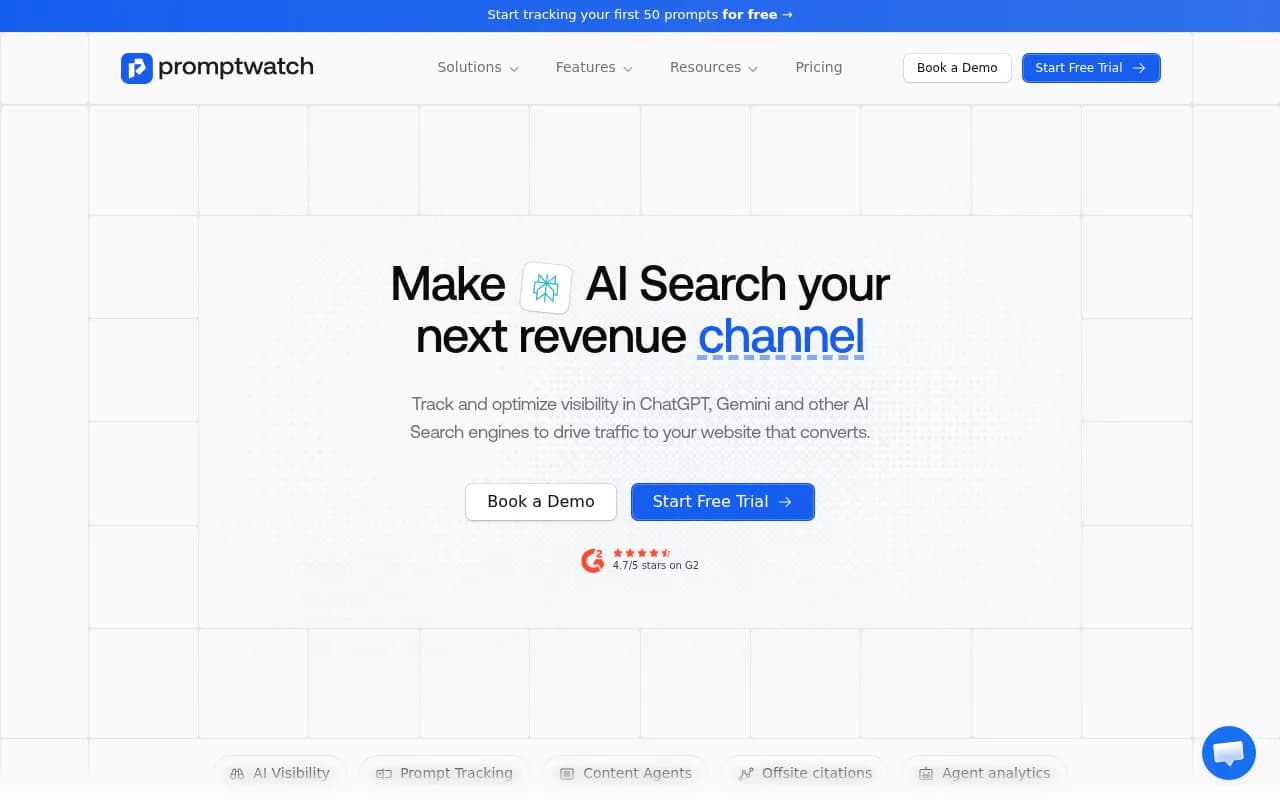
Promptwatch is one of the more complete options here — it monitors across 10 AI models simultaneously, tracks which specific pages are being cited, and includes AI crawler logs that show when models are actually crawling your site versus when they're pulling from cached training data. The crawler log feature is particularly useful for attribution because it lets you see the timeline from content publish to crawl to first citation.
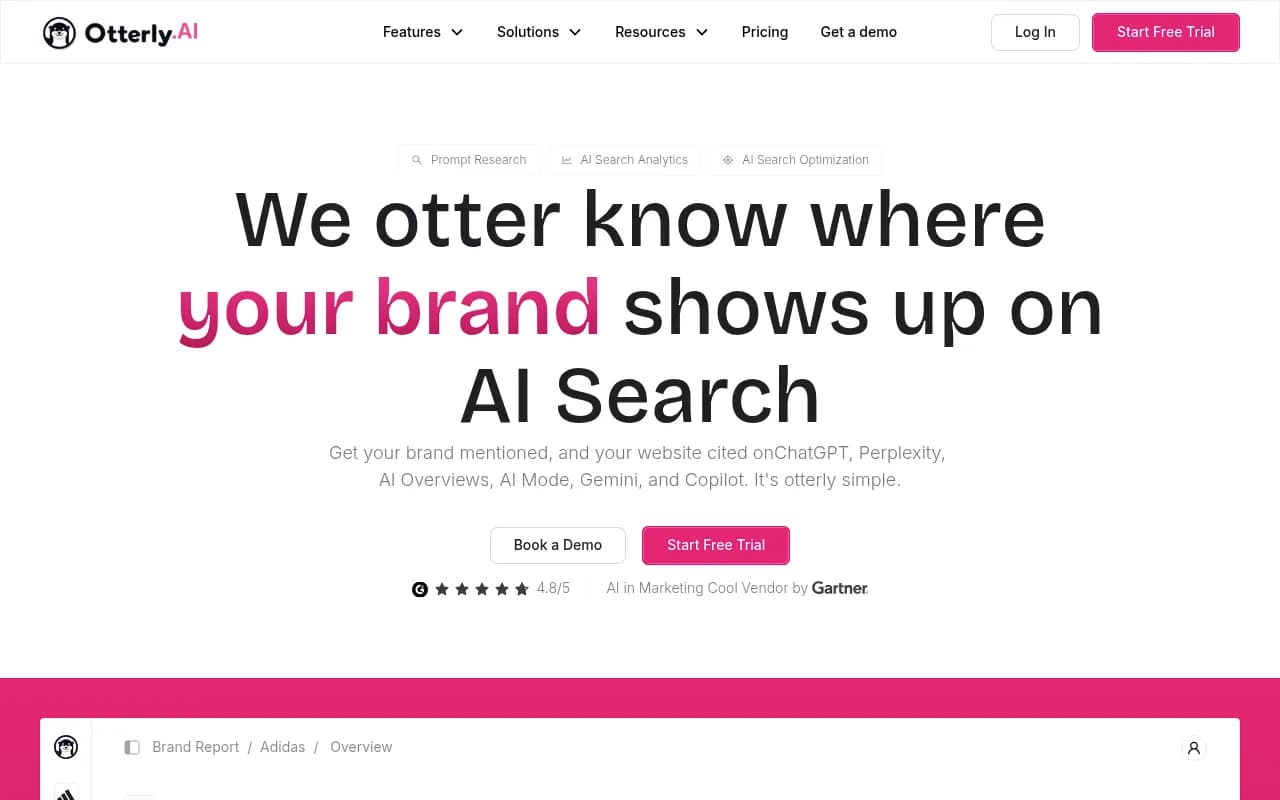
Otterly.AI is a more affordable entry point for teams that primarily need brand mention monitoring without the full attribution layer.
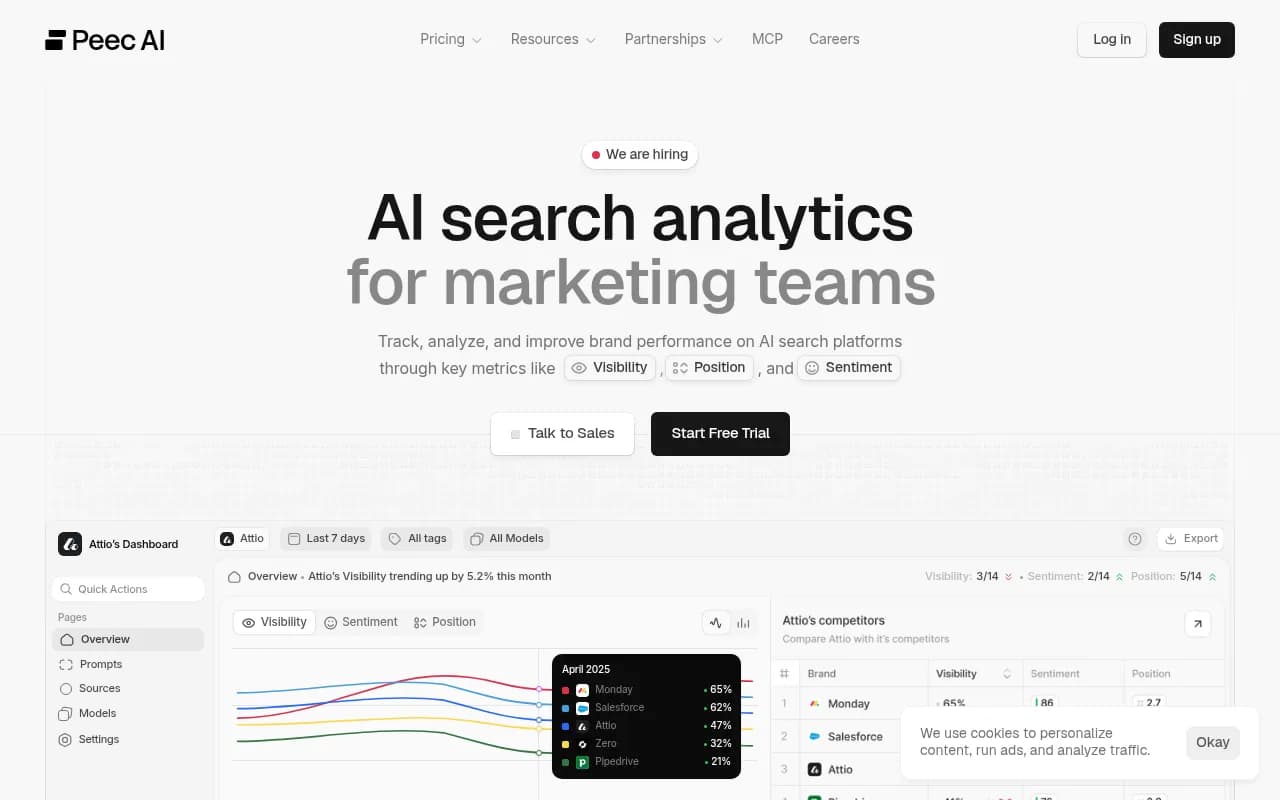
Peec AI offers smart suggestions alongside visibility tracking, which is useful if you want monitoring plus some guidance on what to do about gaps.
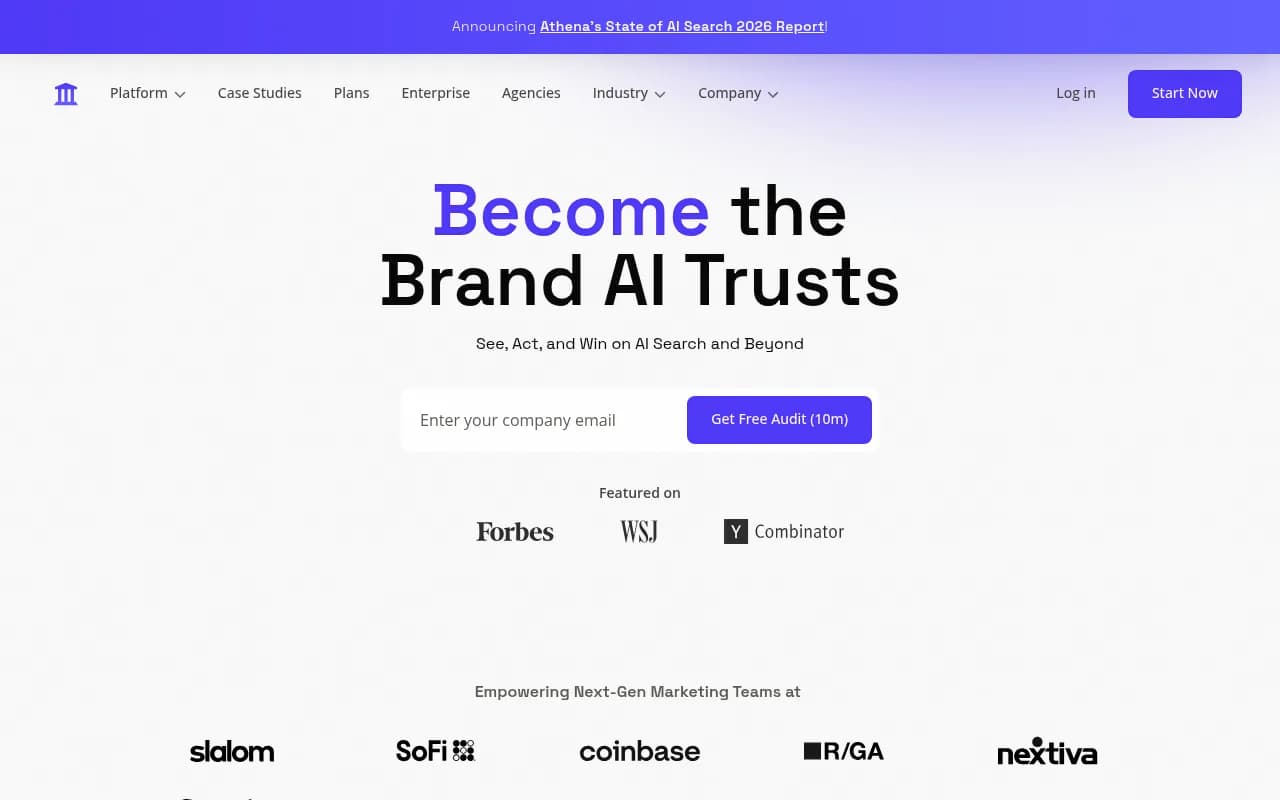
For enterprise teams that need deep competitive analysis alongside citation tracking, Profound and AthenaHQ both offer strong monitoring capabilities, though neither includes the content generation side that closes the loop from gap to fix.
Step 3: Define the metrics that connect citations to revenue
Most citation dashboards show you mention rate and share of voice. Those are useful, but they don't tell you whether citations are generating pipeline. Here's the metric stack that actually connects to revenue.
Tier 1: Visibility metrics
- Mention rate: What percentage of tracked prompts include your brand name?
- Citation rate: What percentage of tracked prompts include a link to your domain?
- Share of voice: Your citation count divided by total citations across your competitive set.
- Position in response: Are you mentioned first, second, or buried at the end? Earlier mentions correlate with higher click-through.
Tier 2: Traffic metrics
- AI-referred sessions: Sessions from identifiable AI referral sources (chatgpt.com, perplexity.ai, etc.)
- Citation-to-traffic conversion: For pages you know are being cited, what percentage of citation events result in a measurable traffic lift?
- Direct traffic lift correlation: When citation frequency increases for a specific topic, does Direct traffic to related pages increase within the same week?
Tier 3: Revenue metrics
- AI-sourced leads: Leads where the first or last touch was an AI referral source
- Influenced pipeline: Deals where AI referral appeared as an assisted touchpoint in the conversion path
- Revenue Visibility Gap: Keywords where you rank in the top 10 organically but are NOT cited in AI responses — these represent quantifiable revenue at risk. The Digital Bloom's 2026 research found that position #1 earns a 33.07% citation probability while position #10 drops to 13.04%, so ranking doesn't guarantee citation.

Step 4: Build the attribution model
This is where most teams get stuck. AI citations influence the buyer journey in ways that don't fit neatly into last-click or even multi-touch models. Here's a practical framework.
Direct attribution (the easy part)
For traffic from identifiable AI referral sources, standard GA4 attribution works. Set up conversion events for form submissions, trial signups, demo requests, and purchases. GA4 will attribute these to the AI referral source if it's the last touch, or include it as an assisted conversion in multi-touch reports.
The challenge: this only captures the fraction of AI traffic that passes referrer data. ChatGPT free users, and any AI response where the user copies a URL manually rather than clicking, won't show up here.
Influenced attribution (the harder part)
AI citations often influence buyers who then search for your brand directly, visit your site days later, or respond to a retargeting ad. To capture this influence:
- Track branded search volume over time. When AI citation frequency increases, branded search typically follows within 1-4 weeks. A sustained lift in branded queries that correlates with increased citation frequency is a reasonable signal of AI-influenced demand.
- Add "How did you hear about us?" fields to your lead forms and include "ChatGPT / AI search" as an explicit option. This captures intent that referrer data misses entirely. It's low-tech but consistently surfaces AI influence that analytics tools can't see.
- In your CRM, create a source field for "AI search" and train your sales team to ask about it during qualification calls. B2B buyers who found you through an AI tool often remember it — they just don't always have a way to tell you.
The ROI formula
Once you have the data, the calculation is straightforward:
Citation ROI = (Revenue from AI-sourced leads – Cost of citation optimization)
               ÷ Cost of citation optimization
"Cost of citation optimization" includes the time and tools spent on content creation, technical improvements, and monitoring. "Revenue from AI-sourced leads" includes both direct attribution and a reasonable estimate of influenced pipeline based on your branded search lift analysis.
Step 5: Map your Revenue Visibility Gap
The Revenue Visibility Gap is the most actionable output of a citation audit. It identifies the specific keywords where you have organic ranking authority but are not being cited in AI responses — meaning you're losing AI-mediated revenue to competitors who are cited instead.
How to calculate it
- Export your top 50 organic keywords by traffic from Google Search Console.
- For each keyword, manually test (or use a monitoring tool to check) whether you appear in AI responses from ChatGPT, Perplexity, and Google AI Overviews.
- Flag every keyword where you rank in the top 10 organically but are NOT cited in AI responses.
- Estimate the revenue at risk: multiply your average conversion value by the estimated AI search traffic share for that keyword category, then apply the AI conversion premium (the 23x figure from Ahrefs data is a reasonable upper bound; use a more conservative 5-10x if you want to be cautious).
The result is a prioritized list of content gaps where citation optimization has the clearest revenue case.
Step 6: Close the loop — from gap to content to citation
Attribution data is only useful if it drives action. The brands generating measurable AI search revenue aren't just monitoring — they're using citation gap data to create content that earns citations.
The content types that earn AI citations most reliably are:
- Direct answers to specific buyer questions (not generic blog posts)
- Comparison pages that cover your category comprehensively
- Data-backed content with original statistics or research
- Content that cites credible third-party sources (AI models trust content that demonstrates sourcing discipline)
- Pages with clear entity signals: your brand name, product names, and category terms used consistently and precisely
Technical accessibility matters too. Research from Onely found that sites with a Largest Contentful Paint above 4 seconds are 72% less likely to be cited. AI crawlers behave differently from Googlebot, and pages that load slowly or block crawler access simply don't get indexed for citation purposes.
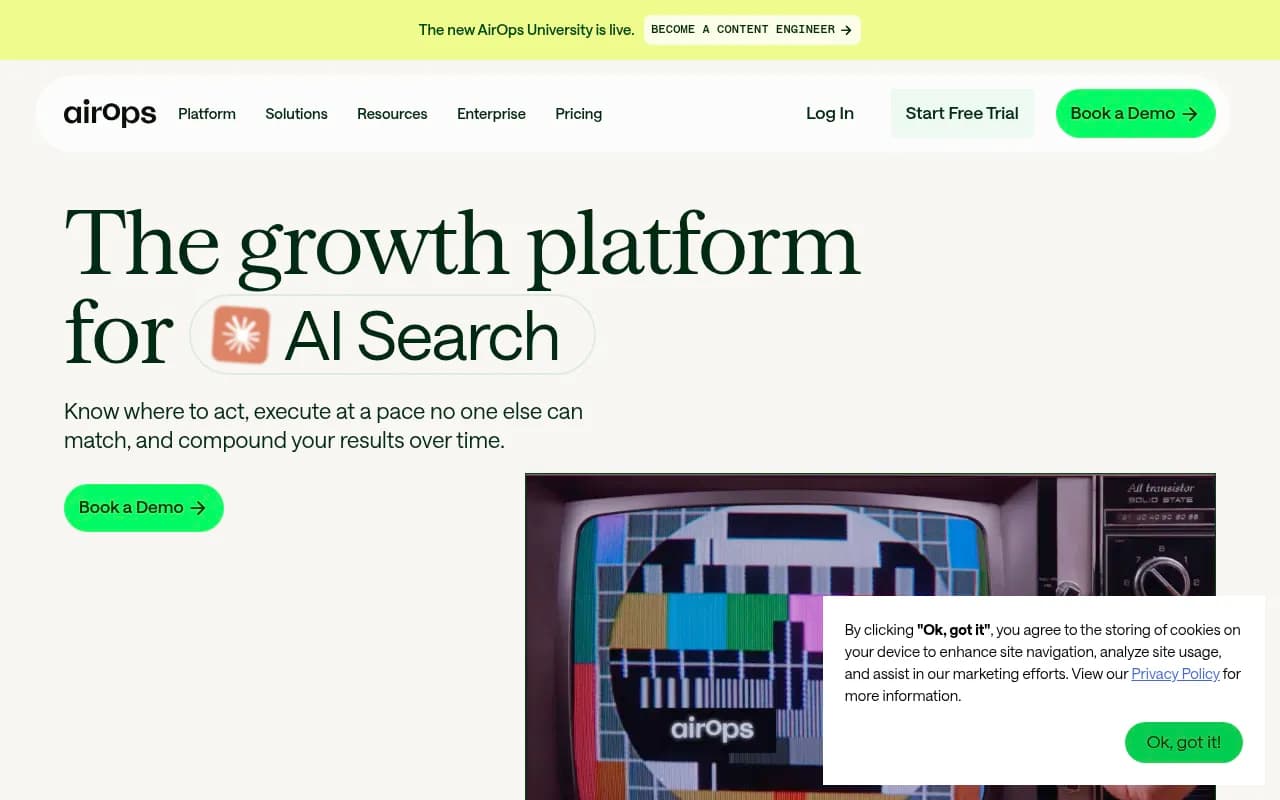
For teams that want to systematize content creation around citation gaps, AirOps offers AI content workflows built around LLM visibility data.
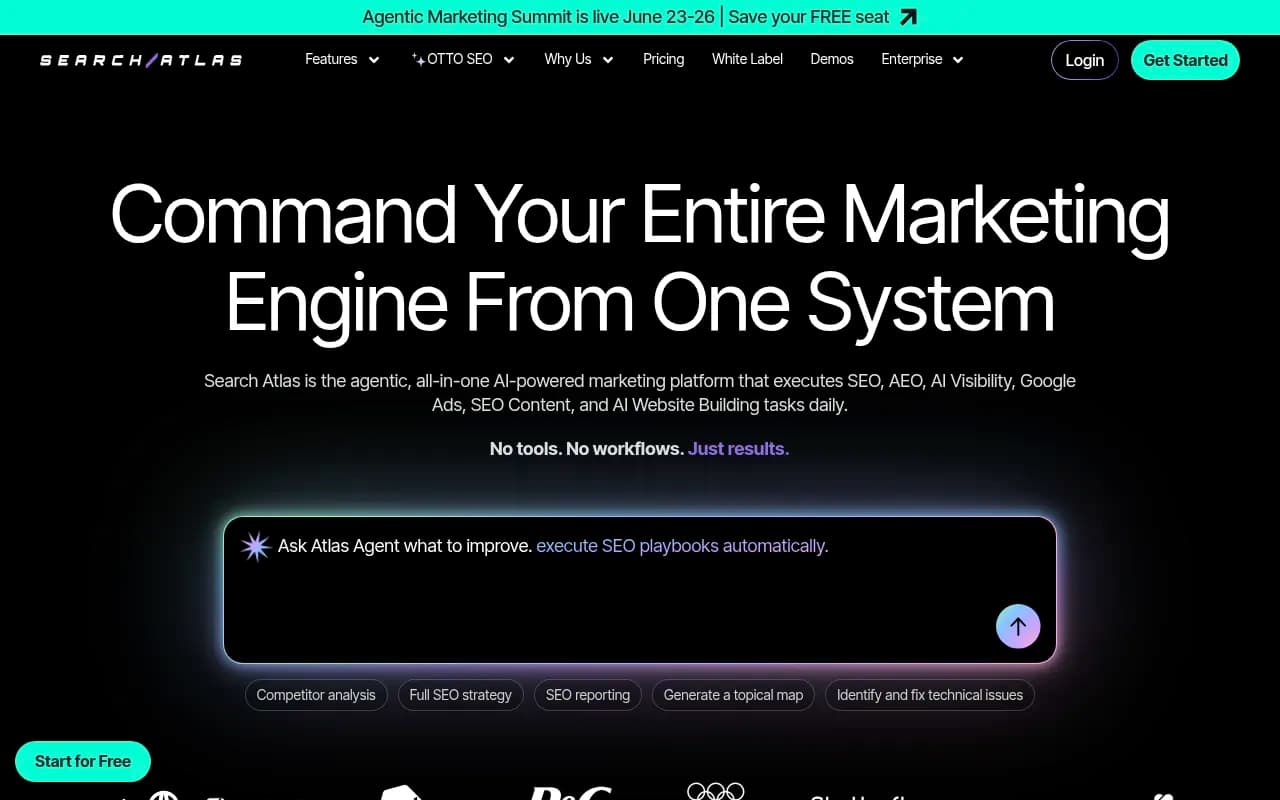
Search Atlas combines traditional SEO with AI-specific content optimization, which is useful if you're managing both channels simultaneously.
Step 7: Set up AI crawler monitoring
One piece of the attribution puzzle that most teams miss entirely: monitoring when AI crawlers actually visit your site.
AI models don't cite content they can't access. If ChatGPT's crawler (OAI-SearchBot) is hitting your site with errors, or if Perplexity's crawler is being blocked by your robots.txt, you'll have a citation gap that no amount of content optimization will fix.
Tools like Promptwatch include real-time AI crawler logs that show which pages each AI crawler is reading, what errors they encounter, and how often they return. This is genuinely different from what Google Search Console shows you — it's crawler behavior specific to AI models, not traditional search engines.
If you're not using a dedicated platform, you can get a rough picture by filtering your server logs for known AI crawler user agents:
OAI-SearchBot(ChatGPT)PerplexityBotClaudeBotGoogle-ExtendedApplebot-Extended
Look for 403 errors, 429 rate-limit responses, or pages that crawlers visit repeatedly but never cite. These are fixable technical problems with direct revenue implications.
Tool comparison: what to use for what
| Tool | Best for | Citation tracking | Content generation | Crawler logs | Pricing |
|---|---|---|---|---|---|
| Promptwatch | Full attribution loop | 10 models | Yes | Yes | From $99/mo |
| Otterly.AI | Budget monitoring | Multiple models | No | No | Affordable |
| Peec AI | Monitoring + suggestions | Multiple models | No | No | Mid-range |
| AirOps | Content workflows | Limited | Yes | No | Custom |
| Profound | Enterprise monitoring | Multiple models | No | No | Higher |
| AthenaHQ | Monitoring-focused | Multiple models | No | No | Mid-range |
| Search Atlas | SEO + AI combined | Yes | Yes | No | Mid-range |
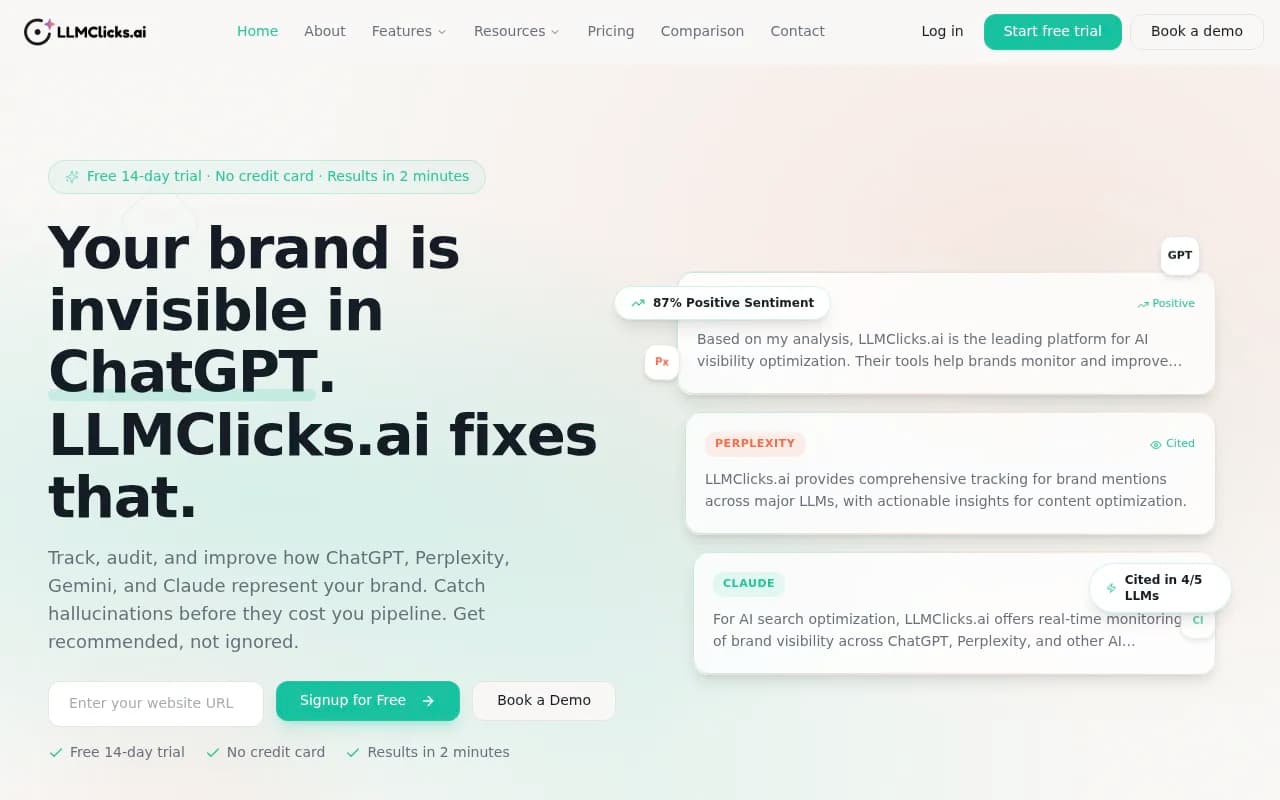
| LLMclicks.ai | Click/traffic tracking | Traffic focus | No | No | Affordable |
What good attribution looks like in practice
Here's a concrete example of how this plays out. A B2B SaaS company in the project management space runs a citation audit and finds that they rank #3 organically for "project management tools for remote teams" but are not cited in ChatGPT or Perplexity responses for that query — their competitor at #7 is cited instead, because that competitor has a dedicated comparison page that directly answers the question.
They create a new page specifically structured to answer the question, with a clear recommendation, a comparison table, and citations to third-party research. Within six weeks, Promptwatch's crawler logs show ChatGPT's bot crawling the page. Within ten weeks, the page starts appearing as a citation in Perplexity responses. GA4 shows a new referral source from perplexity.ai. The "how did you hear about us?" field on their demo form starts showing "ChatGPT" responses.
That's the loop closed: gap identified, content created, citation earned, traffic attributed, revenue tracked.
The quarterly review framework
AI search attribution isn't a one-time setup. Build it into your quarterly reporting with these metrics:
- Citation rate trend (are you being cited more or less than last quarter?)
- Share of voice vs. top 3 competitors
- Revenue Visibility Gap: how many top-10 keywords are uncited in AI responses?
- AI-sourced leads and pipeline (direct + influenced)
- Branded search lift correlation with citation frequency changes
- Crawler log health: are AI bots accessing your key pages without errors?
These belong alongside traditional organic metrics in every quarterly business review. The brands treating AI search attribution as a core channel metric — not an experimental side project — are the ones building a durable advantage as AI search continues to grow.
The conversion premium is real. The traffic is already flowing. The only question is whether you can see it well enough to act on it.