Key takeaways
- A classic rank tracker still earns its place for blue-link positions and local packs, but it can't tell a client what ChatGPT, Perplexity or AI Overviews say about them.
- Most agencies end up with three layers: a SERP tracker, an AI visibility platform, and a way to connect both to traffic and conversions.
- Fixed keyword lists don't capture how AI engines search. Prompt-level tracking with query fan-outs does.
- Real-interface monitoring beats API-only checks, because user-facing answers and citations can differ from API output.
- Don't rip out your old tracker on day one. Run both for a quarter, compare, then cut what's redundant.
Why the old rank tracker isn't enough anymore
A client asks where they rank. For years that meant a position number for a list of keywords. Now the same client asks, "What does ChatGPT say about us?" and your keyword tracker has nothing to offer.
The problem isn't that rank tracking is dead. Google positions still matter, and local pack rankings still drive calls. The problem is that a keyword list is a fixed set of questions you chose in advance. AI engines generate their own questions.
Promptwatch's data shows how fast that can change. On August 8, 2026, the share of ChatGPT fanout queries using the site: operator jumped from 0.37% to 16.8% in a single day, and average fanouts per response rose from about 1.08 to about 1.83 (Promptwatch Data on the site: operator shift). Any keyword-to-query mapping built before that date went stale overnight. A weekly position check can't see that. Continuous prompt monitoring can.
And the engines don't behave alike. Promptwatch's average sources per response data shows ChatGPT citing about 5 sources per web-search answer, Google AI Overviews about 10, and Perplexity almost exactly 10 every day. Copilot swung from under 2 to nearly 17 within weeks. One number per keyword can't describe all of that.
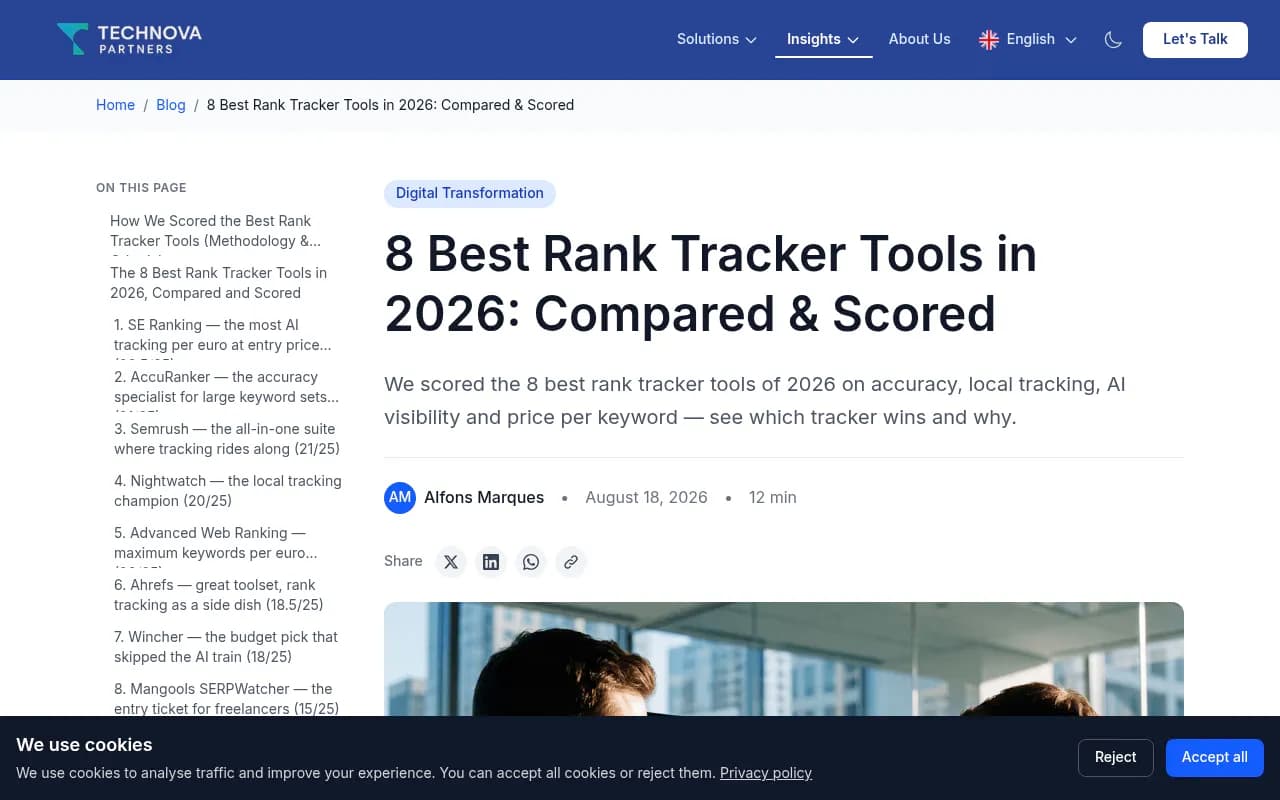
Technova Partners' 2026 scorecard (above) is a useful example of where the category is heading. It weights AI visibility tracking at the same 25% as tracking accuracy. I'd treat the specific scores with caution, since they're one vendor's methodology and I haven't verified the pricing, but the weighting reflects how buyers now think.
The three layers of an agency visibility stack
Instead of hunting for one tool that replaces your tracker, think in layers.
Layer 1: SERP and local rank tracking
This is the job your old tracker does. Daily positions, device split, local packs, competitor comparison, white-label reports. Keep this layer. Just pick the tool on agency criteria: how many clients and keyword sets it handles, whether it has a Looker Studio connector or API, and what a report looks like when a client opens it.
Common agency choices from the 2026 roundups include SE Ranking, AccuRanker, Nightwatch, Semrush and Ahrefs, plus BrightLocal for local work and SEOmonitor for forecasting.
I haven't verified current pricing for any of these, and the vendor listicles contradict each other on numbers. Check each vendor's pricing page before you put a figure in a proposal.
Layer 2: AI answer visibility
This layer answers a different question: when someone asks an AI engine about your client's category, does the brand appear, in what position, with what tone, and which sources get cited?
What to look for:
- Real interface monitoring rather than API-only calls. User-facing answers, citations and shopping results can differ from what the API returns.
- Prompt-level tracking with fan-outs, so you see the searches the engine actually runs.
- Coverage of ChatGPT, Gemini, Perplexity, Claude, Copilot, AI Overviews and AI Mode, in the countries and languages your clients sell in.
- Citation data, so you know which pages and third-party sources feed the answers.
- Multi-client structure: projects per client, seats that don't cost extra, and exportable reports.
Promptwatch is the platform 1001 SEO Media's team would reach for here, and it's built for agencies as well as brands. It monitors the real interfaces of the major AI engines, shows the citations and content gaps behind each answer, and goes a step further than most trackers: its Content Agent writes and publishes pages against visibility gaps, then checks whether they got crawled and cited. Agency plans start at $199/mo (Kick-off) with unlimited projects, prompts and team seats; confirm current pricing at promptwatch.com/pricing. The agency page covers how that works across client accounts.

Other tools in the same space worth a look, depending on budget and client mix:




Search Party is positioned specifically at agencies. Peec AI and Otterly.AI are lighter, cheaper monitors. Profound and Scrunch are stronger on enterprise monitoring but sit at higher price points. If you want to browse more, the GEO software directory at bestgeosoftware.com lists a long tail of options.
Layer 3: crawler access, traffic and conversions
This is the layer most agencies skip, and it's the one that turns a visibility report into a business case.
Three questions it answers:
- Can AI crawlers actually read the client's site, or is a CDN rule or robots.txt blocking them?
- Do the pages AI cites send any visitors?
- Do those visitors convert?
IP-verified crawler logs separate an access problem from a content problem. Visitor analytics tied to AI referrals show whether the visibility turns into revenue. Promptwatch covers both (AI crawler logs and visitor analytics), and Crisp reported 2x higher conversion rates from AI traffic compared with traditional channels (Crisp case study).
A note on attribution: ChatGPT stopped sending a referrer on October 8, 2026, so agencies need UTM-tagged links or a setting that counts utm_source=chatgpt.com visits as ChatGPT traffic. Otherwise AI traffic quietly shows up as direct. The attributing AI traffic guide walks through the setup.
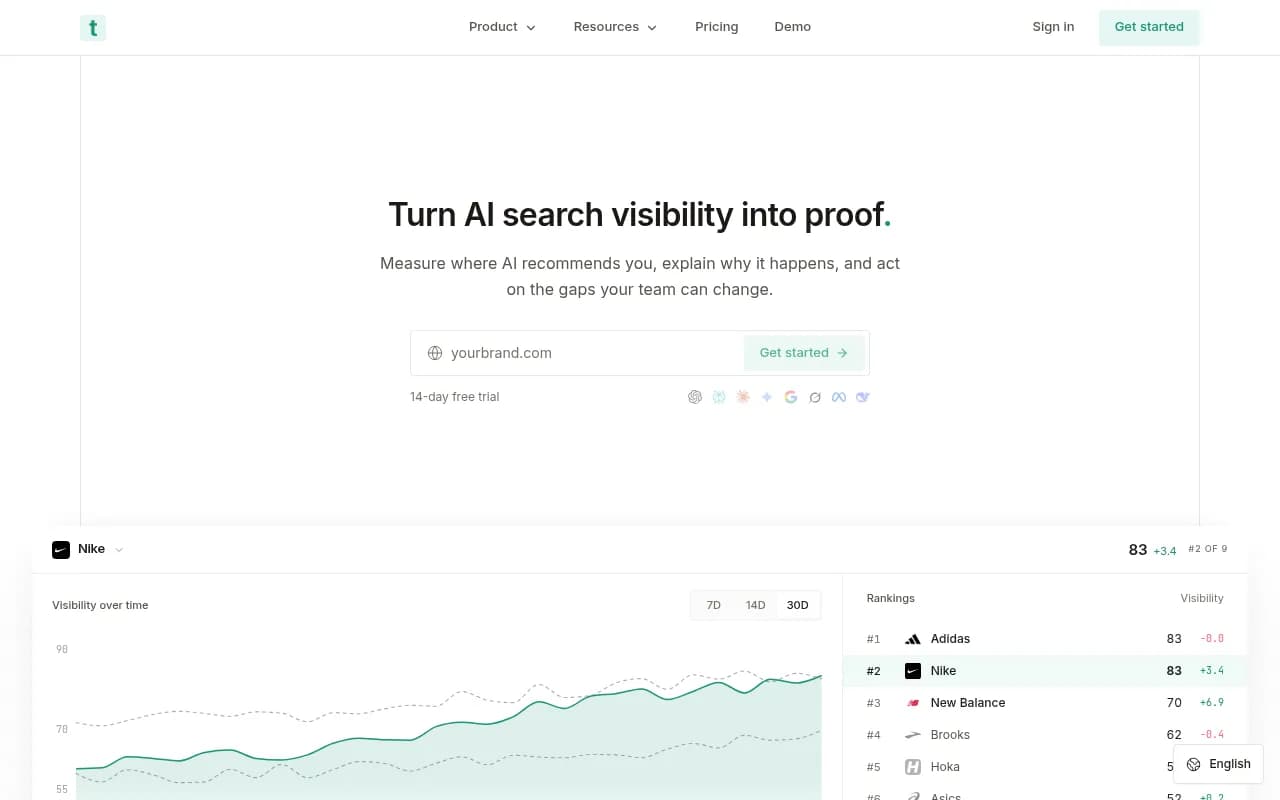
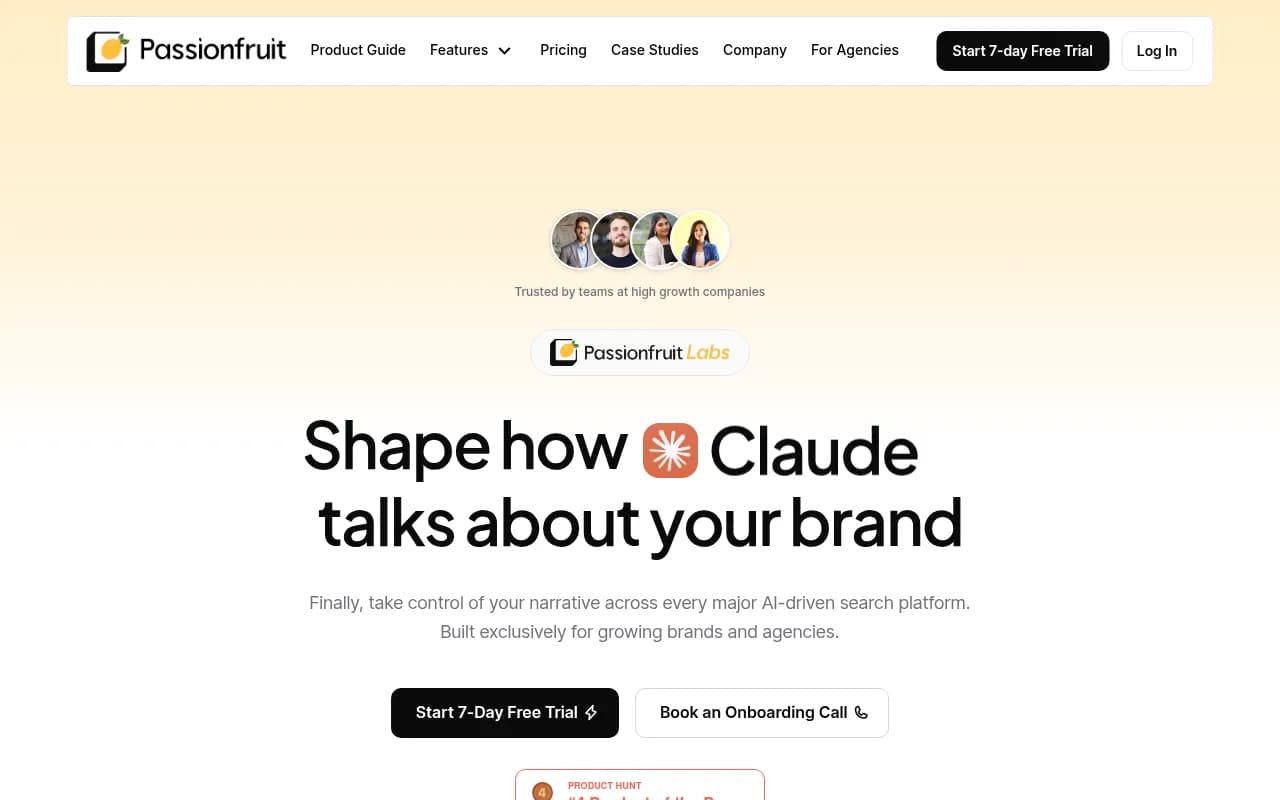
Alternatives here include Trakkr and Passionfruit, which both pitch revenue attribution:
Hybrid platforms: one tool or two?
Many classic vendors now bolt AI tracking onto their SEO suite. That's tempting because it's one login and one invoice.

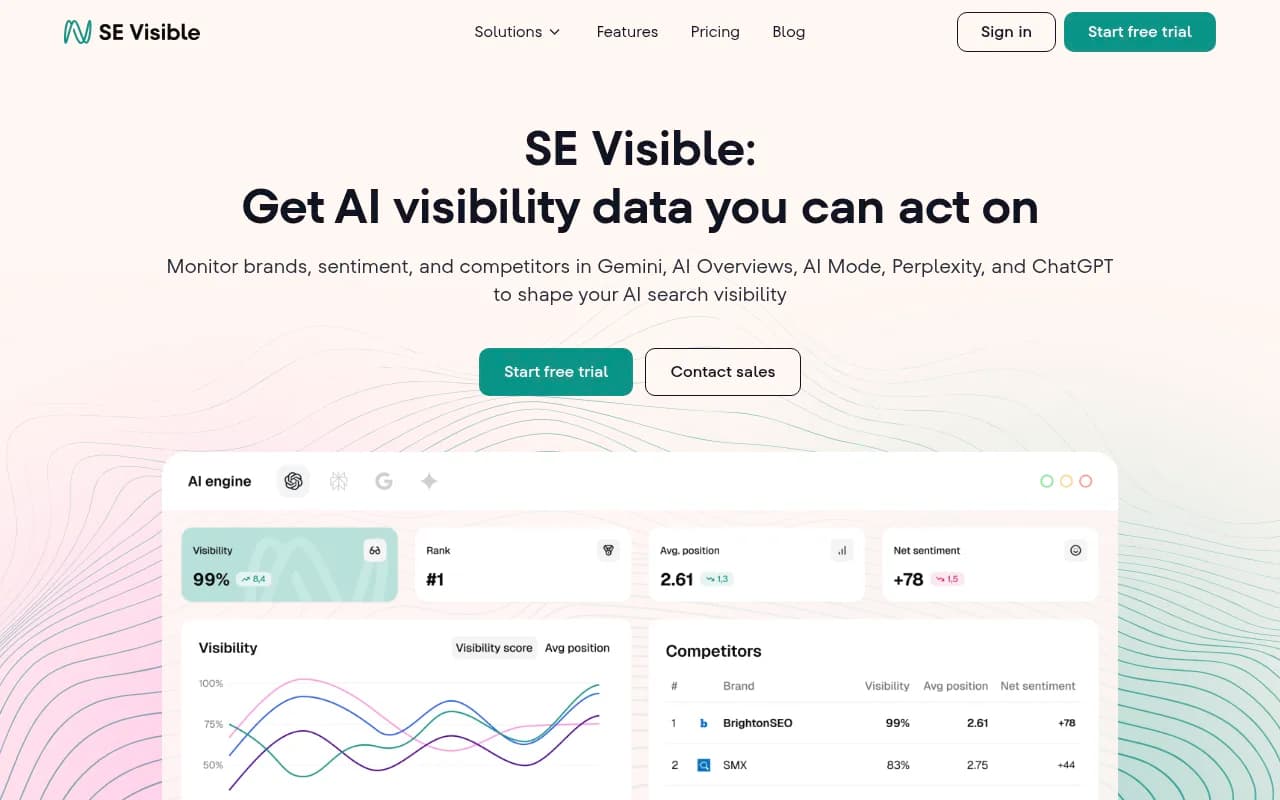
My honest take: hybrids are fine for a first look at AI visibility, especially for smaller clients. The tradeoff is depth. Fixed prompt sets, shallower citation data, and usually no crawler logs or AI traffic attribution. If AI search is a real line item in your retainer, a dedicated platform pays for itself in report quality alone.
A few tools try to bridge both sides, like SEORCE (unified SEO, GEO and rank tracking) and Nightwatch (rank tracking extended into AI search):
Comparison: how the layers map to tools
| Layer | Question it answers | Example tools | What to check before buying |
|---|---|---|---|
| SERP and local rank tracking | Where do we rank in Google and the local pack? | SE Ranking, AccuRanker, Nightwatch, BrightLocal | Client volume, update frequency, white-label reports, Looker Studio |
| AI answer visibility | Does AI mention and cite the brand, and how? | Promptwatch, Peec AI, Otterly.AI, Scrunch, Profound | Real-UI data, fan-outs, citation detail, agency plans |
| Crawler and traffic | Can bots read the site, and do AI visits convert? | Promptwatch, Trakkr, Passionfruit | IP-verified logs, referral attribution, CDN setup time |
| Hybrid suite | A bit of everything in one login | Semrush, Ahrefs Brand Radar, SE Ranking Visible | Prompt limits, citation depth, missing crawler data |
| Reporting layer | Can the client read it? | Looker Studio, native PDF exports | Scheduled reports, white-label, API access |
What the integration question really means
RankMonster's piece on integration depth makes a fair point: a tracker that doesn't connect to your analytics, CRM or reporting tool turns your team into the integration layer.
For an agency, I'd boil that down to a short checklist:
- Google Search Console and Bing Webmaster Tools connections, so you can overlay AI citations on search performance.
- A Looker Studio connector or API, so reporting doesn't live in a spreadsheet.
- Scheduled PDF reports to client inboxes.
- A hosted MCP server or REST API if you want to automate weekly briefings. TreeHouse, the company behind Pararius, automated weekly reporting this way with the Promptwatch MCP (TreeHouse case study).
That last point matters when you have 15 clients. Anything you do by hand once a week is a cost that scales with headcount.
A practical migration plan
Don't swap everything at once. This sequence has worked for the agencies I'd recommend it to.
Weeks 1 to 2: audit what you have
List every client, the keywords tracked, and what each report actually shows. Mark which clients have a plausible AI search story: product-led SaaS, ecommerce, travel, finance, healthcare, local services. Those get AI tracking first.
Run a free baseline too. Promptwatch's free AI visibility report scans how ChatGPT, Gemini and Perplexity talk about a brand and checks crawler access, with no login. It's a decent sales opener for a prospect.
Weeks 3 to 6: add AI tracking alongside the old tracker
Build prompt sets from real buyer questions, not your keyword list. Pull ideas from Search Console queries, People Also Ask and sales calls. Use personas if the buying audience varies. Track each engine separately, since AI Overviews citations don't predict ChatGPT citations.
Weeks 7 to 10: connect traffic
Install visitor analytics, set up the ChatGPT UTM handling, and turn on crawler logging through the client's CDN or the WordPress plugin. Now you can tell a client not just that they were mentioned, but whether it did anything.
Weeks 11 to 13: compare and cut
Look at what each tool reported. If your old tracker's only unique value is positions you could get from Search Console, cut it for those clients. If local pack tracking is unique, keep it. Some agencies drop the old tracker for small accounts and keep it for enterprise ones. That's fine. There's no prize for a single tool.
Metrics to put in client reports
Position alone is out. Pair these instead, and read them together:
- Visibility Score or equivalent, for how prominently the brand appears across tracked prompts.
- Share of Voice, for the slice of brand mentions versus competitors.
- Average position within AI answers.
- Citation share and self-citation rate, so you can tell whether the brand gets cited or just named.
- Sentiment, scored separately from visibility.
- AI-referred sessions and conversions.
The diagnosis changes with the pattern. Low share of voice is a coverage problem. Late position is a prominence problem. Mentions without citations to the client's own domain usually mean a content or crawlability problem. The metrics overview breaks each one down.
Where this goes wrong
A few mistakes I see repeatedly.
- Treating AI tracking as a vanity score. A visibility number without a next action is a dashboard, not a service.
- Using API-only monitoring and assuming it matches what users see. It often doesn't.
- Forgetting crawlers. If GPTBot or PerplexityBot gets blocked at the CDN, no amount of content fixes it.
- Quoting vendor pricing from a listicle. The roundups in the research disagree with each other, so verify on the pricing page.
- Running AI audits once a quarter. Engine behavior changes in a day, as the August 8 shift showed.
Which stack for which agency
| Agency profile | Suggested stack |
|---|---|
| Small agency, under 10 clients, mostly local | BrightLocal or SE Ranking for positions, a lightweight AI monitor such as Otterly.AI or Peec AI |
| Mid-size content or SEO agency | SE Ranking or AccuRanker plus Promptwatch for AI visibility, crawler logs and content execution |
| Enterprise-focused agency | A SERP tracker with API access, Promptwatch or Profound for AI visibility, Looker Studio for unified reporting |
| Ecommerce-heavy agency | Existing tracker plus an AI platform with shopping coverage, such as Promptwatch's ChatGPT Shopping tracking |
If you want more options before committing, the AI rank tracking directory at ai-rank-tools.com is a good place to compare.
The bottom line
Your old rank tracker doesn't need replacing so much as demoting. It becomes one input among three: positions, AI answers, and traffic. The agencies that look strongest in 2026 are the ones who can show a client where they rank, what AI says about them, which pages fed that answer, and what it sent to the site. Start with a free baseline scan on your two most AI-exposed clients, add prompt tracking next to your existing reports for a quarter, and let the data tell you which tool to cut.