Key takeaways
- No survey or study I could find measures which AI marketing tools get cancelled. Treat everything here as indirect evidence and informed judgment, not churn data.
- The most exposed tools are thin wrappers over a general LLM. Zapier's 2026 Jasper vs. Copy.ai review notes that brand voice and real-time search are now built into Claude and ChatGPT.
- Copy.ai was acquired in late 2025 and its team now works for Fullcast, so it is the clearest consolidation case.
- Tools that survive tend to own something a chatbot lacks: proprietary data, workflow, publishing, or measurement.
- Before you renew anything, check pricing pages yourself. I did not verify current prices for any tool named here.
A note on what this guide can and can't claim
Headlines about marketers dumping their AI stack make for good clicks. The reality is thinner. I looked for cancellation surveys, churn figures and vendor shutdown lists, and found none. What exists is a handful of signals: an acquisition, a few vendor repositioning moves, and a general shift in what the big chat assistants do out of the box.
So this is not a report of what thousands of marketers did. It is a reasoned look at where the pressure is, backed by the sources I could verify, with clear labels where I'm inferring.
One adoption stat is worth having in the background. A Nielsen post says nearly 90% of marketers now use AI in their workflows, though I only saw a snippet and could not verify the full source or date. If that's roughly right, the question isn't whether teams use AI. It's how many separate subscriptions they keep paying for.
Improvado's piece makes a related point from the other direction: AI is replacing repetitive work like basic drafts, ad copy and variations, not marketers. The same logic applies to tools. The repetitive, generic layer is what gets absorbed.
Why general assistants are eating the writing-tool layer
Two years ago, a dedicated AI copywriter gave you things a chat window did not: templates, saved brand voice, a research step. Now ChatGPT and Claude do most of that natively. Zapier's comparison says this directly about Copy.ai: its entry-level Chat plan is essentially a chat interface, and since brand voice and real-time search are built into Claude and ChatGPT, there's no real reason to use it if all you want is chat.
That is the pattern. If a tool's main value is a nicer box to type into, it's competing with a free or cheap tier of the thing it wraps.
The Copy.ai case
Copy.ai was acquired in late 2025, and per Zapier its team now works for Fullcast, with features being absorbed there. Zapier's author says plainly that you probably shouldn't sign up right now.
There is one remaining argument for the Chat plan, according to the same review: unlimited usage, 5 team members and a shared workspace, which can cost less than buying team seats from the big AI labs. If you already pay for it and use that shared workspace heavily, the math might still work. If you don't, that's a cancellation candidate.
The Jasper case
Jasper took a different route. Instead of staying a copywriter, it repositioned as an enterprise marketing platform. Zapier lists brand voice, audiences and a knowledge base, Canvas, 100+ prebuilt agents with Jasper Studio for building your own, Jasper Grid, a GEO Agent and Hub for auditing AI visibility, image pipelines, and a Translation Agent covering 27 languages.
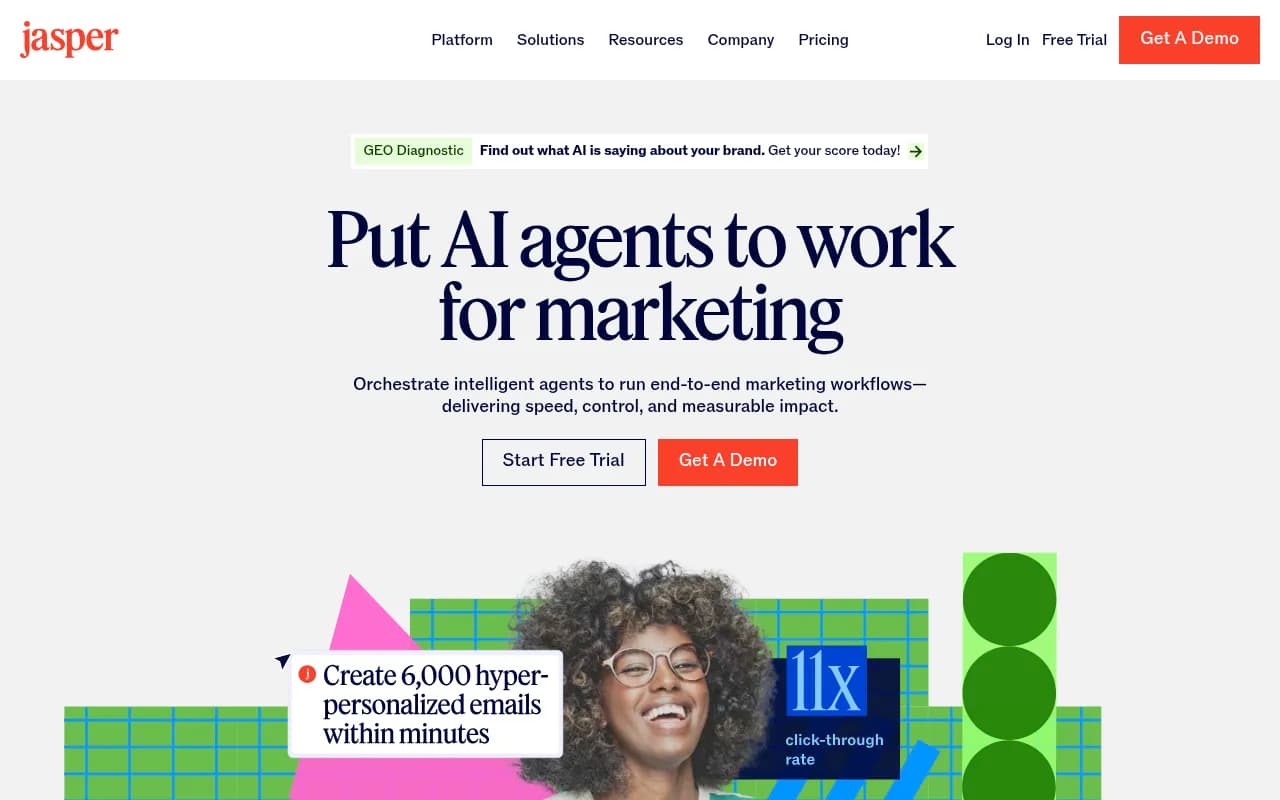
That's a real bet that the value is in workflow and governance, not text generation. Whether it pays off for you depends on team size. A competing vendor, OpenCraft AI, frames the cost difference this way: Jasper gets pricier as you add seats, Claude gets pricier as you use it more. Take that with salt, since OpenCraft sells a rival product, but the seat-versus-usage framing is useful when you do your own math.
My read: a solo marketer or a five-person team that mostly drafts blog posts and emails is the likeliest to cancel Jasper and go direct to a general assistant. A larger team that needs governed brand voice, approvals and translation at scale has a reason to stay.
Where cancellations are most likely
These are my judgments from the evidence above, not measured churn.
| Category | Why it's exposed | What teams tend to move to |
|---|---|---|
| Generic AI copywriters | Overlaps with chat assistants' built-in brand voice and search | ChatGPT or Claude team plans |
| Bulk article generators | Output looks the same as everyone else's; no grounding in what AI actually cites | Tools tied to search and citation data, plus human editing |
| Standalone AI visibility trackers that only report | Reporting without a path to fixing | Platforms that connect tracking to content and measurement |
| Overlapping SEO content scorers | Teams often pay for two or three | One scorer, consolidated inside an existing SEO suite |
| Tools built on a single scraped source | Source shuts down | Alternatives with documented data access |
The last row has a real example in the catalog. GummySearch, the Reddit audience research tool, closed in November 2025. Anyone who built a research workflow on it had to move whether they wanted to or not.

The bulk-article problem
This one deserves its own section, because bulk generators are where I'd expect the most regret. Tools like Article Forge, Autoblogging.ai and SEO Writing AI promise volume.


The issue is what gets cited. Promptwatch Data's report on ChatGPT content types (Sep 28 to Oct 4, 2026) found product pages are the most cited type at 22.4% of classified citations, and landing pages follow at 16.8%. Listicles are 13.6%, how-tos 8.7%, and comparisons 5.9%. For commercial prompts, product pages rise to 26.0% and landing pages to 20.6%. You can read the breakdown in the report on which content types ChatGPT cites most.
Here's my inference, and it is not in the report: buyers asking for the best tool for a job get answers built mostly from pages describing what companies sell, plus listicles and comparisons. A pile of generic, unspecific blog posts isn't the format that gets pulled in. Volume for its own sake looks like a poor trade, and I'd expect teams to notice when the traffic and citations don't show up.
The same data also shows how short-lived some content is. In Promptwatch's half-life study of ChatGPT citations, landing pages and docs stayed cited longest, while news lost half its pages within 36 days. Content you publish and forget has a shelf life.
What marketers are swapping to
Consolidating into an assistant plus one specialist
The simplest swap is dropping a writing wrapper and using ChatGPT or Claude directly for drafting, then keeping one specialist tool for the part a chatbot can't do. For content, that specialist is usually an optimizer or a research tool.
If you need on-page optimization grounded in search data, there are established options.
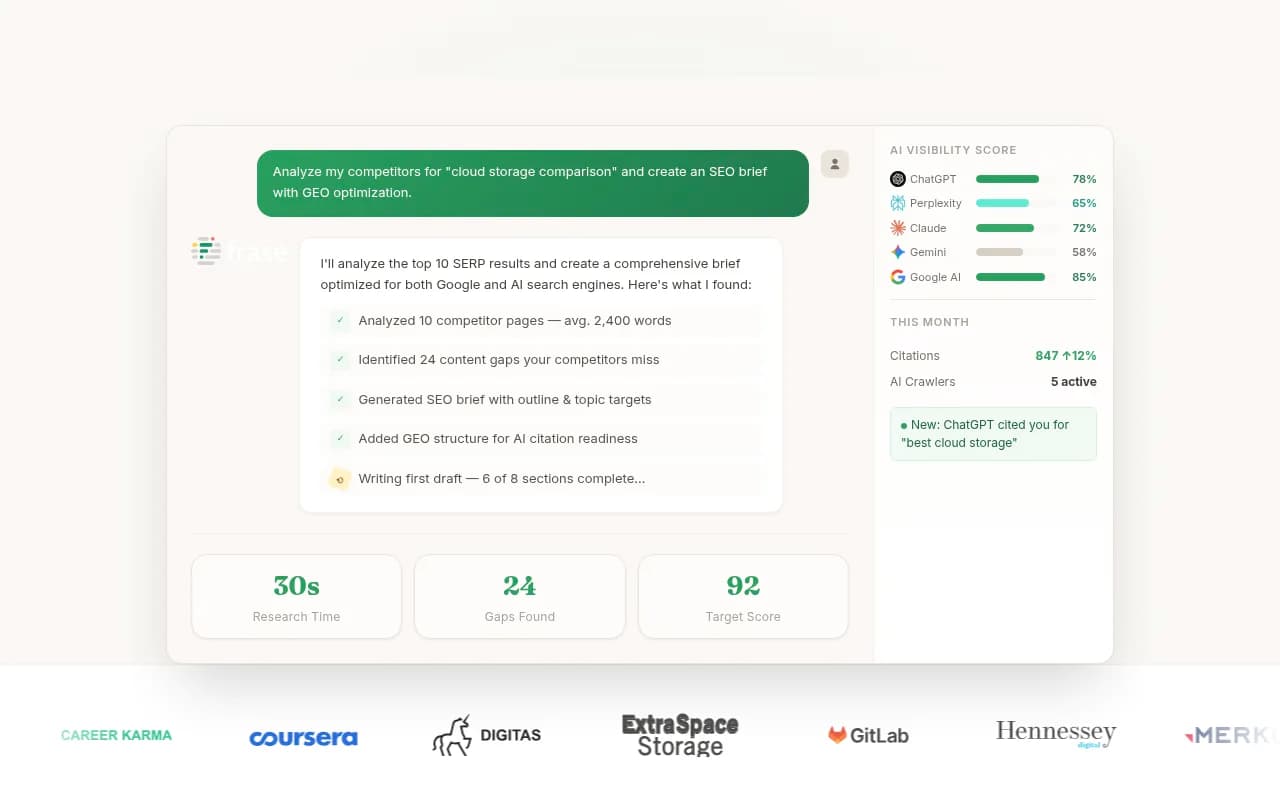
Pick one. Paying for three scorers that all tell you to add the same entities is a quiet budget leak.
Moving from monitoring-only to measurement plus action
The AI visibility category is crowded, and plenty of tools stop at telling you whether your brand was mentioned. If your tracker only produces a chart, the next question is what you do with it. Teams moving off those tools are looking for something that connects visibility to crawl behavior, traffic and content work.
Promptwatch is one platform in that group. Beyond prompt tracking it includes IP-verified AI crawler logs, visitor analytics for AI-referred traffic, content gap analysis and a Content Agent that can publish to Webflow, Framer or WordPress, so you can check whether a published page was crawled, cited and clicked.

Other trackers worth a look depending on budget and focus:




Otterly.AI and Peec AI sit toward the affordable monitoring end. Profound is aimed at enterprise. If you're comparing the broader field, the GEO software directory at bestgeosoftware.com lists many more.
Folding AI features into the suite you already pay for
Some teams cancel a standalone tool because their existing SEO suite added a comparable feature.

The Digital Marketing Institute makes a relevant point: most AI tools are not designed to replace existing platforms like CRM systems or marketing automation software. So the platforms you've built your stack around are the least likely to be cancelled. The ones sitting next to them are.
The catch with suite add-ons is depth. In my experience they tend to track a fixed set of prompts and offer less AI-specific data than dedicated platforms. That may be fine if AI search is a side concern.
Swap table: what to cancel, what to try
| If you're paying for | And mostly using it for | Consider |
|---|---|---|
| Copy.ai Chat plan | Chat and short drafts | ChatGPT or Claude team plan, unless you use the shared workspace heavily |
| Jasper | Blog posts and emails for a small team | A general assistant; keep Jasper only if you need governed brand voice at scale |
| A bulk article generator | Pumping out posts | Fewer, better pages built from citation and gap data |
| Two or more content scorers | Entity and keyword suggestions | One of Surfer, Clearscope or Frase |
| A tracker that only charts mentions | Weekly reports | A platform that ties visibility to traffic and content work |
| A tool dependent on one shuttered source | Reddit research | Check the closure notice, then rebuild on documented data access |
Verify pricing on each vendor's page before acting. I did not confirm current prices for Jasper, ChatGPT, Claude or the others.
A checklist before you renew anything
- List every AI subscription and who actually logged in last month.
- For each, write one sentence on what it does that ChatGPT or Claude can't. If you can't, flag it.
- Check whether the vendor was acquired, sunset or repositioned in the past year. Copy.ai is the example here.
- Compare seat-based versus usage-based pricing for your team size.
- Ask whether the output is measurable. Content that can't be traced to crawls, citations or traffic is hard to defend at budget time.
- Look for overlap inside your existing suites before adding another point solution.
For a wider view of how tools in this space compare, the software directory at surferstack.com is a decent place to browse.
What I'd actually do
I'd cancel anything whose entire pitch is a prettier interface to a model I already pay for. I'd think twice before cancelling anything that owns data, publishing or measurement, because those are hard for a chatbot to replicate. And I'd be suspicious of any tool measuring success in articles published rather than pages cited or visitors converted.
The honest limit of this guide is the evidence. One acquisition, one repositioning and a closed research tool don't make a stampede. If you run a team and have real cancellation data, yours is better than anything I found. Audit your own stack with the checklist above, and cut what a general assistant already does.