Key takeaways
- Profound withdrew its $99 Starter and $399 Growth brand plans in mid-September 2026. Brands now choose between a free 7-day trial and custom Enterprise pricing. Many "Profound alternative" posts still quote the old numbers.
- The sorting question is not "which tool tracks the most engines." It is who in your company turns a finding into a changed page.
- Under about $100 a month, look at Otterly, Peec AI, and Rankscale. Around $250 to $300, look at Scrunch and AthenaHQ. If you want tracking plus execution in one place, Promptwatch is the one that goes furthest past monitoring.
- Several of the comparison sources behind this guide are vendors that sell competing products. Treat their pricing as a starting point and confirm on the vendor's own page.
Why a decision tree instead of another top-10 list
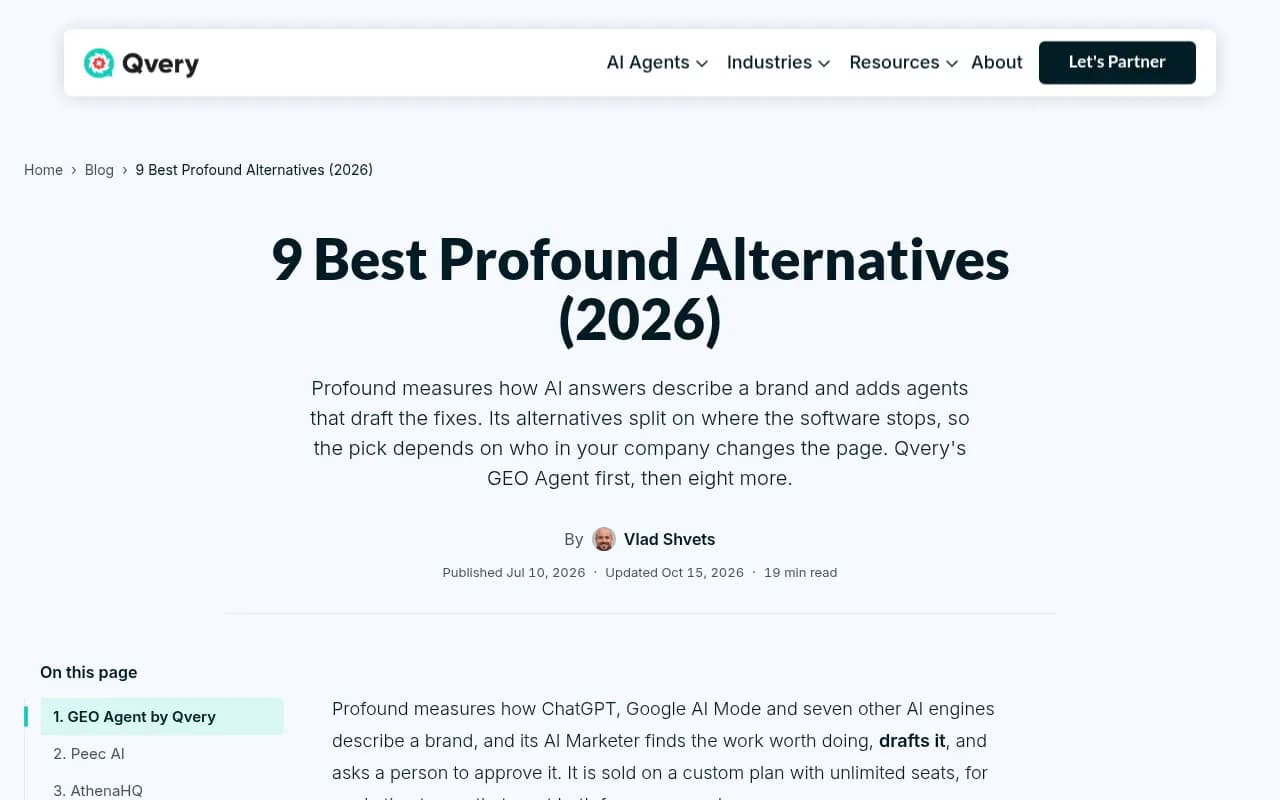
I read through a pile of "best Profound alternatives" posts while putting this together. Almost all of them are ranked lists, and almost all of them are written by a vendor that sits somewhere in the list. Qvery ranks its own GEO Agent first. Demand-Genius ranks itself first. AirOps puts AirOps first. Finseo puts Finseo first. That is normal for this genre, but it makes the rankings close to useless for deciding anything.
A decision tree is more honest. You answer a few questions about money, headcount, and what you want done, and the field shrinks to two or three tools worth a trial.
One caveat before you start. Profound changed its pricing in September 2026, and a lot of the content online has not caught up.
What changed with Profound in September 2026
Profound announced a $180M Series D at a $1.8B valuation on September 15, 2026, and repositioned around an "AI Marketer" agent that finds work, drafts it, and asks a person to approve it. Around the same time its brand self-serve plans disappeared. According to GeoToolbox, an archived copy dated September 14 still listed the $99 Starter (ChatGPT only, 50 prompts) and the $399 Growth plan, and both were gone by late September.
What is left for brands, as checked on October 14, 2026:
- A free 7-day trial running 50 prompts daily on ChatGPT, Gemini, and Google AI Overviews, with limited credits and no exports or API.
- Custom-priced Enterprise, with up to nine engines, API, SSO/SAML, and SOC 2.
- For agencies, Growth at $99 a month plus $399 a month per full client workspace, so the cheapest published cost for one client is $498 a month.
Enterprise cost estimates of $2,000 to $5,000+ a month circulate, but they come from a competitor (Maintouch). Profound does not publish them. Treat them as a rumor with a plausible shape.

On Reddit, price is the first thing people raise. In the Qvery write-up, 11 of 28 independent comments that judged Profound were about cost, and one user said they could only get about 10 articles out of the plan they were paying for. Users who run campaigns through its agents tend to be happier. That split matters for the tree below: Profound is built for teams that will use both the measuring and the agents every week.
Step 1: decide what you actually need the tool to do
The most useful framing I found came from Qvery's piece: each tool stops at a different point. Some stop at the measurement. Some stop at recommendations. Some draft content. A few publish.
Pick the first sentence that describes you.
- "I need to know where we show up and I have people who will fix things." You need a measurement tool.
- "I know where we are weak but nobody has time to write the fixes." You need measurement plus content execution.
- "I need to prove AI traffic turns into revenue." You need visitor analytics and attribution, not just mention counts.
- "I run this for many clients." You need workspaces, white-label reports, and per-client pricing that does not explode.
Then move to budget.
Step 2: sort by budget
Prices below come from the vendors' published pages as reported by the research sources. Two sources disagree on Otterly and Peec (Qvery says $38 and $95, GeoToolbox says $29 and about 85 euros), so confirm before you buy.
| Monthly budget | Tools worth a look | What you get | Where it stops |
|---|---|---|---|
| Under $60 | Otterly.AI, Ahrefs Brand Radar (from about $50), LLM Pulse (about 49 euros) | Prompt tracking, basic reporting | Measurement and light recommendations |
| $60 to $150 | Peec AI, Rankscale ($99 Pro) | Multi-engine tracking, unlimited seats on some plans | Suggestions, no real content production |
| $150 to $400 | Scrunch Core ($250), AthenaHQ (about $295), Profound agency tier | Deeper reporting, audits, some drafting | Few pages optimized per month, Google AI Mode often on custom plan |
| $400 and up | Promptwatch Business ($579), Profound Enterprise (quote), AirOps (quote) | Execution, crawler logs, attribution, publishing | Higher commitment and onboarding |
Under about $100 a month
This tier is for a small team that wants a dashboard and will do the fixing by hand.
Otterly.AI is the cheapest way in. The catch from Qvery's table is that Google AI Mode is an add-on.

Peec AI has unlimited seats and a clean interface. It tracks ChatGPT, Perplexity, Google AI Overviews, and DeepSeek on its published pages, and it has raised $29M according to the Timsoulo write-up. Its focus is simplicity, which is a compliment and a limit.

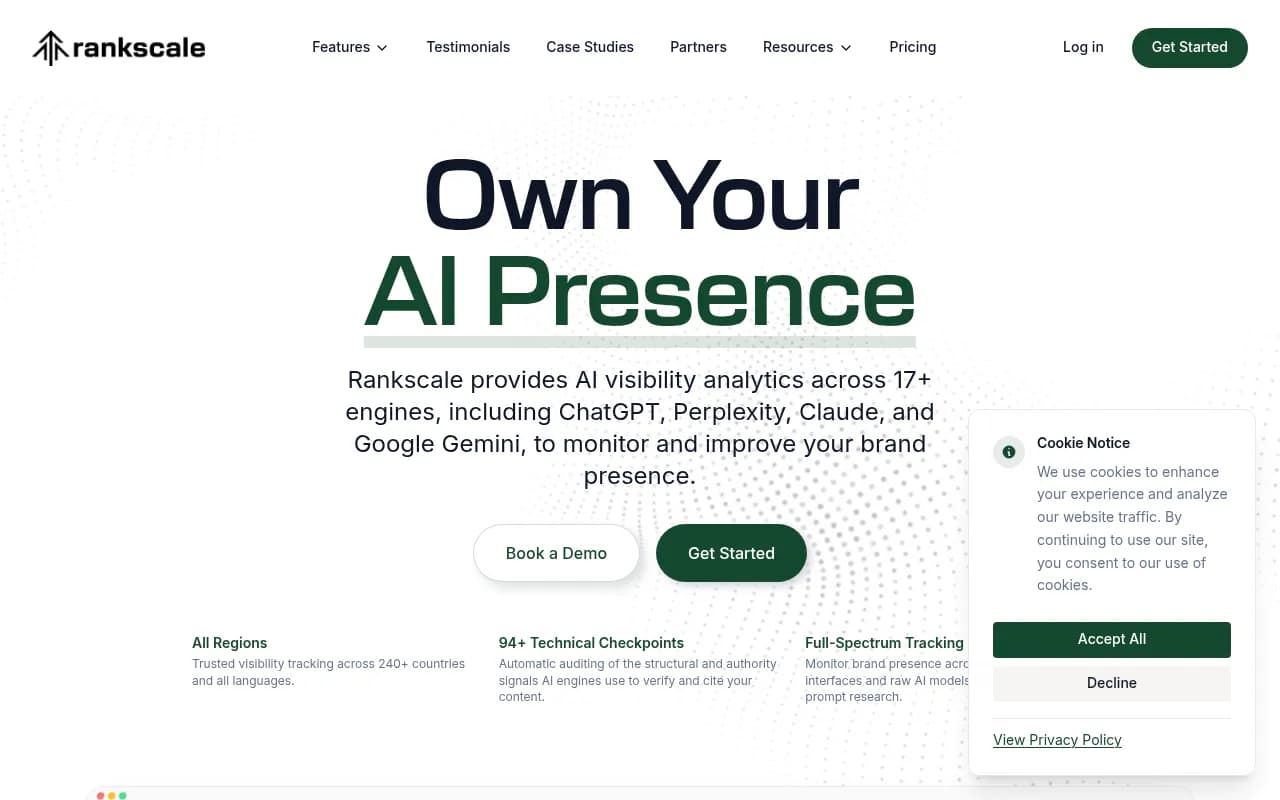
Rankscale is the one I would look at first if you need wide coverage. Pro at $99 a month tracks nine engines with unlimited seats and 50 page audits a month. It bills in credits, roughly a quarter of a credit per query, and you set how often each question runs. A weekly schedule gives you a seventh of the data a daily one does, so the headline price hides a real tradeoff.
Worth a look for ecommerce: Goodie AI covers Amazon Rufus shopping visibility.

Around $250 to $300 a month
Scrunch Core is $250 a month with 125 prompts, four engines, five seats, five site audits, and one page optimization a month. Google AI Mode sits on the custom plan along with the API and SAML. Demand-Genius reports 500+ customers and SOC 2 Type II, and Scrunch's strength is bot-traffic diagnostics and agent-ready pages. Reporting requires some API comfort.

AthenaHQ lands around $295 a month with unlimited logins, and it drafts content inside the product. Omnia's write-up calls it the closest analog to Profound's reporting depth without the full enterprise price.

If you already pay for an SEO suite
If your marketing runs on Ahrefs or Semrush, use what is already in your plan before buying something new. Ahrefs Brand Radar lets you analyze any entity without per-entity fees, and it is strong at showing which external sources (review sites, YouTube, Reddit) shape your AI reputation.

The tradeoff: these are SEO suites adding AI tracking. Expect fixed prompt sets and shallower AI-specific data, with no crawler logs.
Step 3: sort by team size
| Team | Main need | Reasonable pick |
|---|---|---|
| Solo marketer or founder | Cheap, fast, low setup | Otterly, Peec AI, or Promptwatch's free Explore plan to try it |
| Small in-house team (2 to 5) | Tracking plus a content workflow | Rankscale, AthenaHQ, Promptwatch Essential or Professional |
| Content-heavy mid-market team | Turning gaps into published pages | Promptwatch Business, AirOps |
| Enterprise with procurement | SSO, SOC 2, support, governance | Profound Enterprise, Scrunch custom, Promptwatch Enterprise, Conductor |
| Agency | Multi-client workspaces, white-label | Promptwatch Agencies (Kick-off $199, Growth $399, Scale $799), Profound agency tier |
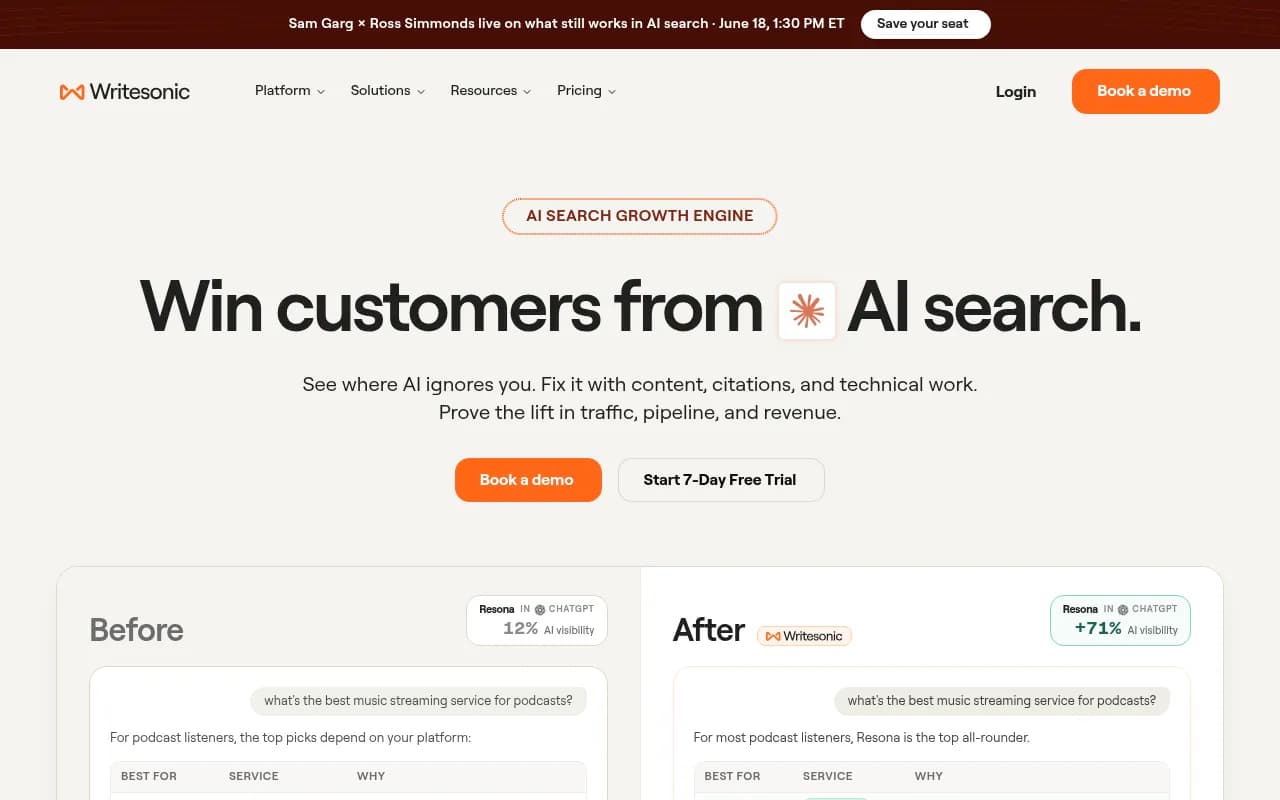
Seats matter more than people expect. Scrunch Core caps at five licenses and Writesonic Starter gives you one. If a content writer, an SEO, and a developer all need to log in, check that before you fall for a headline price.
Step 4: sort by goal
This is the branch that changes the answer most.
Goal: measure and report
Cheap trackers are fine here. Otterly, Peec, Rankscale, and Ahrefs Brand Radar all cover it. One thing worth remembering from Promptwatch Data's average sources per response report: ChatGPT cites about five sources per web-search answer, while Google AI Overviews and Perplexity each cite about ten. Each engine has a different number of citation slots, so track them separately instead of assuming one predicts another.
Goal: fix content gaps
This is where most monitoring tools stop. If nobody on your team writes the fixes, measurement alone will give you a nicer chart of the same problem. Promptwatch is built around closing that loop: its content gap analysis maps your pages against the prompts AI answers, the Content Agent plans, writes, and publishes to WordPress, Webflow, or Framer, and published pages are then tracked through crawls, citations, and AI traffic. The Business plan at $579 a month includes the Content Agent and 10 AEO articles.

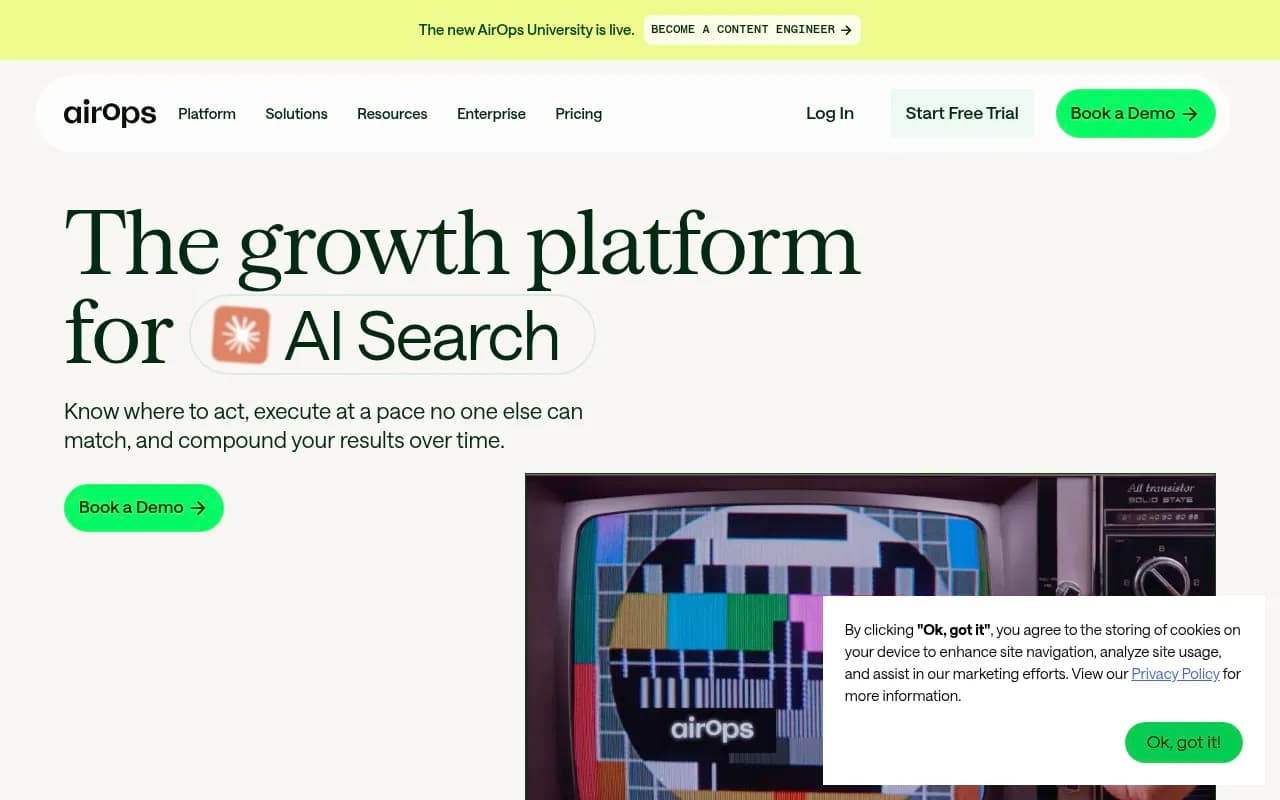
AirOps takes a similar approach from the content-workflow side and is sales-led. Writesonic GEO leads with drafted articles but puts Google AI Mode on a custom plan. Profound's own AI Marketer drafts and asks for approval, but you need an Enterprise conversation first.
Goal: prove revenue
Mention counts do not convince a CFO. Look for visitor analytics and crawler logs. Promptwatch tracks AI-referred traffic and conversions, and its case studies include Crisp (2x higher conversion from AI traffic than other channels) and TreeHouse, where AI search reached about 25% of organic conversions after fixing crawler access. Trakkr and Passionfruit also pitch revenue attribution, and so does Finseo, which is ranked first in its own comparison post, so read that one with the usual salt.
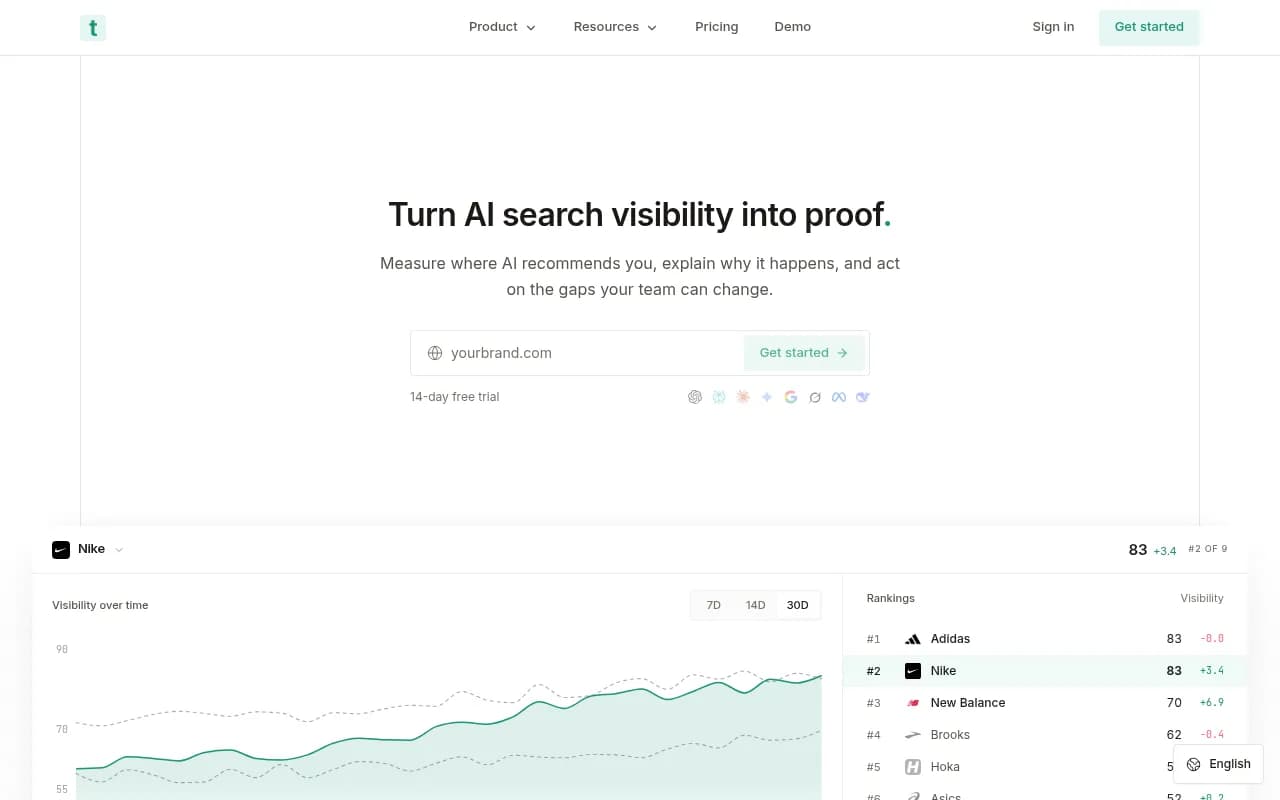

Goal: technical control of how bots see your site
Scrunch is the tool to price here, because of its bot-crawling diagnostics. Promptwatch's IP-verified AI crawler logs cover GPTBot, ClaudeBot, PerplexityBot, and others, and filter out spoofed bots. For a sense of why this matters, Promptwatch Data's AI crawler traffic report shows weekly verified requests from OpenAI, Anthropic, Google, Perplexity, and Mistral between June 8 and September 6, 2026, and its Meta-WebIndexer report shows one crawler going from about 2% to nearly 38% of tracked requests in under a month. Crawler behavior shifts fast.
Goal: AI answers as an ad or shopping channel
Evertune is built around running ChatGPT ads, at about $60 a month billed yearly per Qvery. Promptwatch has an AI Shopping and Ads Radar on its Business plan. For ecommerce catalogs specifically, Ranketta, Yotpo Discover, and Alhena AI are worth a look.

Goal: local or multi-location
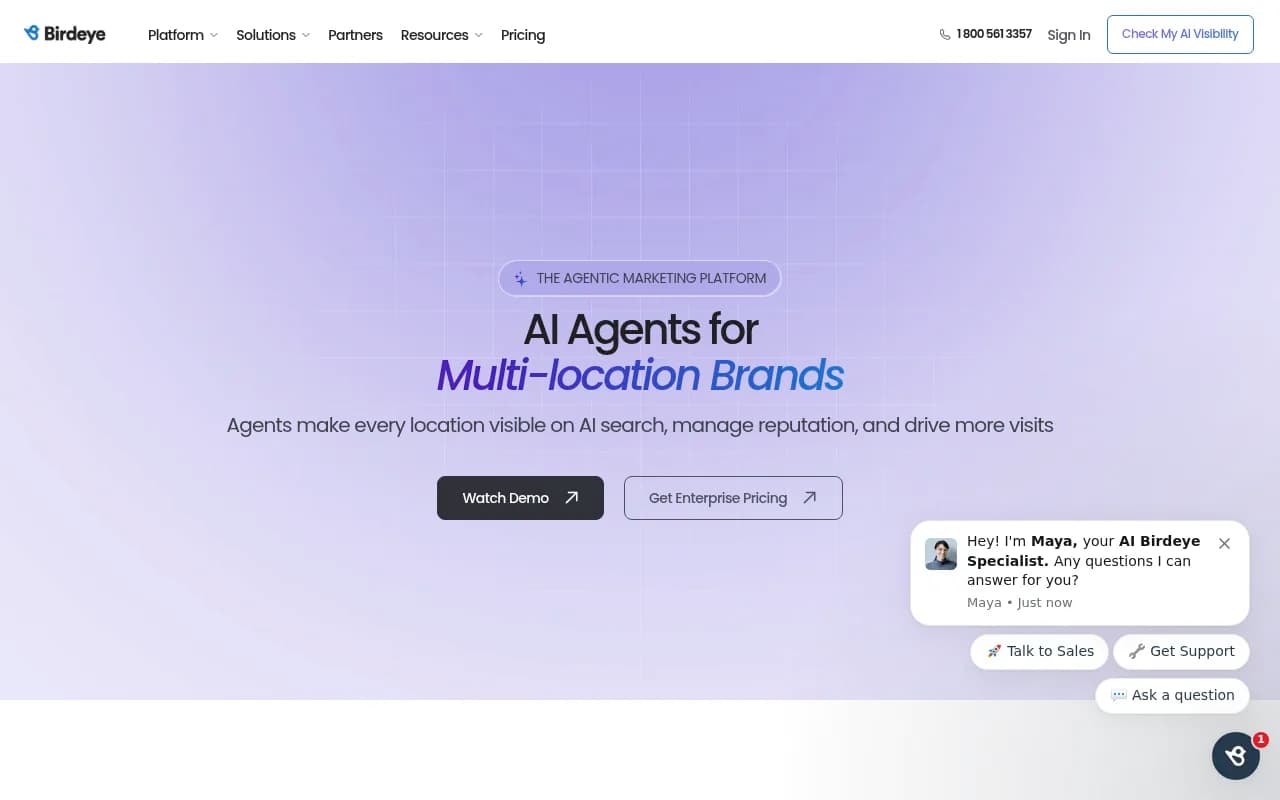
Birdeye Search AI and BrightLocal track location-level visibility. Promptwatch lets you pin a monitor to exact coordinates so ChatGPT and Google's AI surfaces answer as if asked from that spot.
The decision tree
Read it top to bottom and stop at the first line that fits.
- Do you need SSO, SOC 2, and a procurement-friendly vendor, and will you use both measuring and agents weekly? Start with Profound Enterprise and Promptwatch Enterprise (ISO/IEC 27001 certified), plus Scrunch if bot diagnostics matter.
- Are you an agency? Price Promptwatch Agencies against Profound's $498-a-month-per-client floor. Check how each charges as your client count grows.
- Do you already live in Ahrefs or Semrush? Try their AI features first.
- Is your budget under $100 a month and your team able to write its own fixes? Pick from Otterly, Peec AI, and Rankscale. Choose Rankscale for engine coverage, Otterly for price, Peec for simplicity.
- Is writing the bottleneck? Pick Promptwatch (Professional or Business), AthenaHQ, or AirOps.
- Do you need to tie AI traffic to revenue? Prioritize tools with visitor analytics and crawler logs, such as Promptwatch, Trakkr, or Scrunch.
- Still stuck? Run two trials for a week with the same 30 prompts and compare what each tells you to do next, not just what each reports.
A short migration checklist
Demand-Genius suggests a 30-day switch. I would compress it:
- Week 1: export your current prompts, competitors, and baseline visibility. Profound's trial has no exports, so save screenshots.
- Week 2: run the same prompt set in the new tool in parallel and compare engine coverage.
- Week 3: check seats, exports, API access, and whether Google AI Mode is actually on your plan.
- Week 4: cut over, and set a recurring review where someone owns turning findings into page changes.
Traps to avoid
- Quoting $99 or $399 as Profound's brand price. Those plans are gone.
- Trusting a vendor's ranking of itself. Qvery, GeoToolbox, Maintouch, and Trakkr all sell something in this space.
- Buying on engine count alone. Nine engines checked weekly can tell you less than four checked daily.
- Skipping the Google AI Mode check. It is on a custom plan or add-on for several of the cheaper-looking options.
- Forgetting that most tools stop at monitoring.
If you want a second opinion on the shortlist, the GEO software directory at bestgeosoftware.com lists more options, and an agency like 1001 SEO Media can run the evaluation for you if your team has no time. Whichever way you go, confirm current pricing on each vendor's own page before you commit.