Key takeaways
- The AI visibility market is consolidating through acquisitions: Adobe closed its Semrush deal on April 28, 2026, HubSpot closed XFunnel on December 1, 2025, and Sitecore bought Scrunch in June 2026.
- I found no verified shutdowns of AI visibility tools. The real pressure is on pricing and packaging, not on vendors disappearing.
- Profound reportedly removed its $99/month Starter tier in October 2026. Verify that on its pricing page before you plan around it.
- Monitoring alone is becoming a commodity. What matters is what a tool does after it finds a gap, and whether it can prove the fix worked.
- Buy monthly, test with your own prompts, and ask every vendor what happens to your data and contract if they get acquired.
Where the market stands in November 2026
Eighteen months ago this category barely existed. Now Gartner has published a Market Guide for Answer Engine Visibility Tools (March 2026, per ThriveStack's research), and ThriveStack counts more than 50 vendors across seven segments. That is too many. Markets with 50 vendors and a handful of real moats do not stay that way for long.
The demand side is real. G2's 2026 survey, cited by BrandVelocity, found 51% of B2B decision-makers start software research in tools like ChatGPT more often than Google, up from 29% the year before. In that survey 69% said they picked a different vendor than planned because a chatbot recommended it. So buyers are not going away. The vendors competing for your budget might.
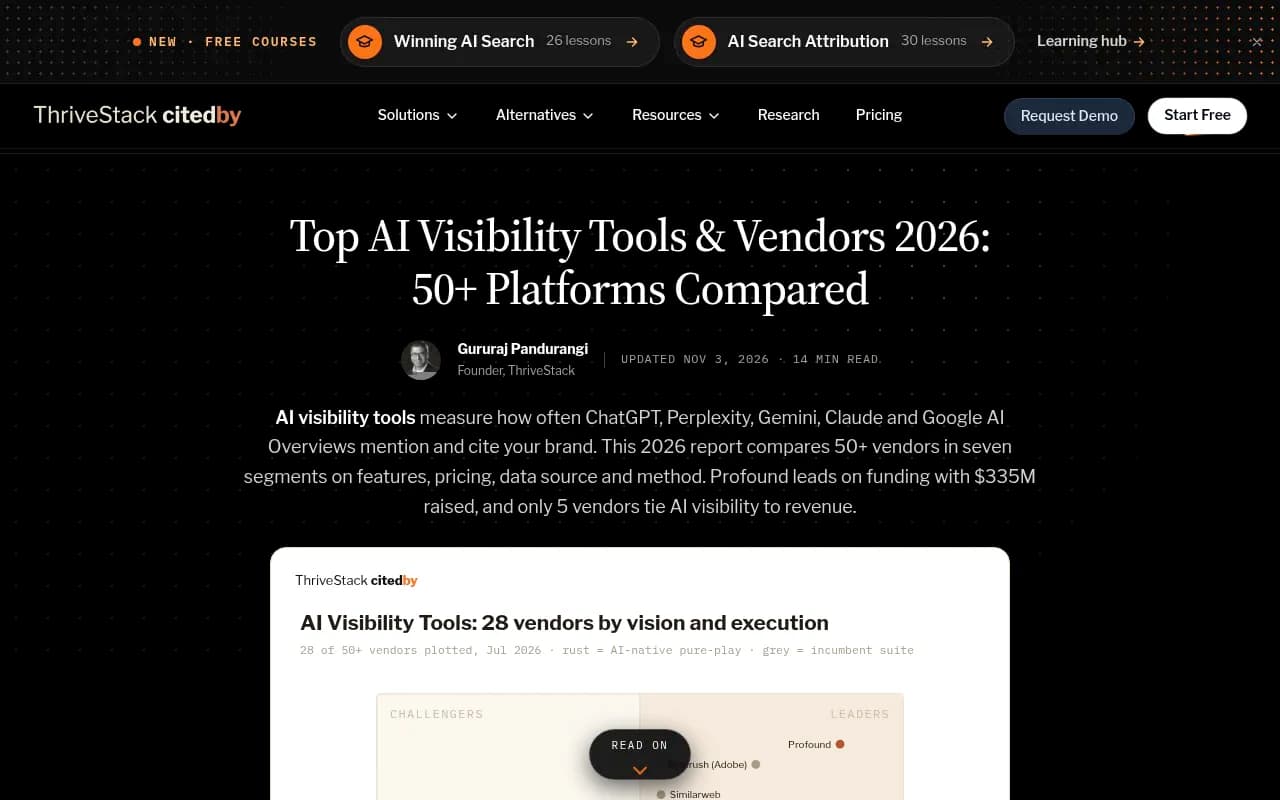
The ThriveStack report above is worth skimming for the segment breakdown, with the caveat that ThriveStack sells its own product in this space and says so in its disclosure.
The consolidation wave so far
The deals follow a pattern: incumbents with distribution buy measurement they did not want to build.
| Deal | Acquirer | Timing | What it signals |
|---|---|---|---|
| Semrush | Adobe | Announced Nov 19, 2025, closed Apr 28, 2026, about $1.9B equity value | SEO suites are becoming part of enterprise experience stacks |
| XFunnel | HubSpot | Announced Oct 31, 2025, closed Dec 1, 2025 | HubSpot AEO went generally available April 14, 2026 inside Marketing Hub |
| Scrunch | Sitecore | June 2026 | First notable AI-native pure-play bought by a DX platform |
Source for the deal dates and figures is Deepak Gupta's analysis of who is buying and building AI visibility. His thesis is that buying beats building because measurement infrastructure takes about 18 months to construct. That is one analyst's opinion, though the deal timing is consistent with it.
Other platforms built natively instead. Wix launched an AI Visibility Overview in July 2025, and Cloudflare, Squarespace and Optimizely have their own versions. Webflow AEO for Enterprise is in private beta.
The tools involved all have catalog entries here:

There is also a standalone Adobe LLM Optimizer inside Adobe Experience Cloud, which Adobe positions for enterprises consolidating vendors.
What about shutdowns?
The title of this guide mentions shutdowns, so let me be straight: I could not confirm any. Rumors travel fast in this space, and several sources I read mixed up pricing changes with closures. A tool that quietly disappears into a suite (XFunnel is the clearest example, now essentially rebuilt as HubSpot AEO) is not the same as a shutdown, but for a customer on an annual contract it can feel the same. Your risk is a forced migration, a repackaged plan or a sunset of the standalone product.
The nearest analogue in our own catalog is GummySearch, the Reddit research tool that closed in November 2025. It was a different category, but it shows how a loved tool can vanish on a few months' notice.
Pricing is where the pressure shows
Profound is the loudest example. Industry-lens reports it removed its $99/month Starter tier in October 2026, leaving a free trial and custom-priced Enterprise. Justin McKelvey's comparison, with prices re-read on November 18, 2026, describes Profound as retiring Starter and Growth plans in September and now selling credits consumed by Agent runs, with a self-serve Agency Growth plan at 400 credits per month per client workspace. The two sources disagree on the month. Industry-lens also notes its evidence was event posts, not a pricing page. Treat the details as unsettled and check directly.

Entry prices elsewhere, per McKelvey and industry-lens (verify all of them, they move monthly):
| Tool | Reported entry price | Notes |
|---|---|---|
| Otterly.AI | $29/month | 20 prompts; Claude, AI Mode and Gemini are paid add-ons |
| GetIntel | $29/month | 25 buyer questions checked daily |
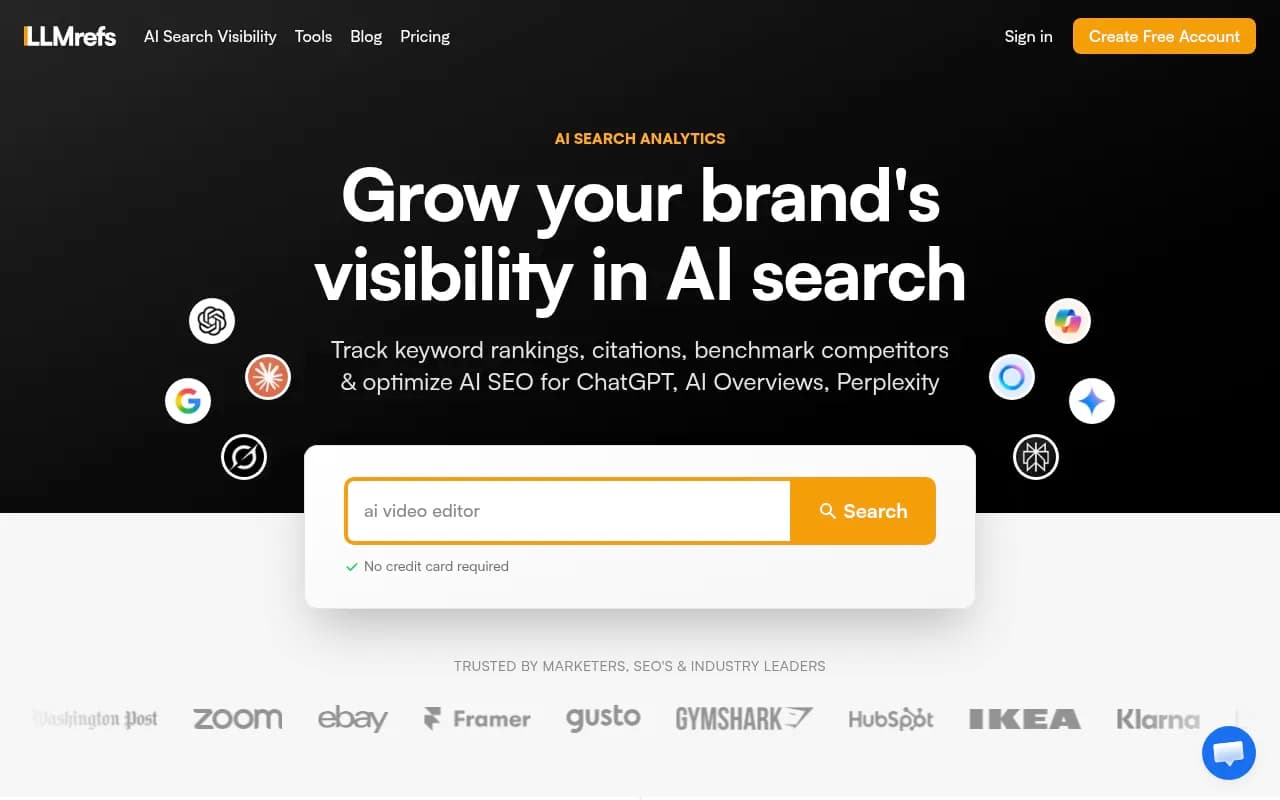
| LLMrefs | $79/month flat | 500 prompts across all engines |
| Peec AI | from $95/month | 50 prompts on 3 models at that price |
| Semrush AI Toolkit | $99 per domain | Sensible if you already pay for Semrush |
| Scrunch | $250/month | Adds page audits |
| Promptwatch Essential | $95/month | 50 prompts, all models, daily tracking, Agent Chat |
That Otterly detail matters. A $29 headline price that excludes the engine you care about is not $29. Always price the exact engine list you need.


Product moves worth noticing
Vendors are not standing still. October 2026 changelog items from industry-lens:
- Otterly rebuilt Brand Reports around sentiment and position and added a Brand Profiling tab.
- Knowatoa added period-over-period comparison to its MCP analytics tools.
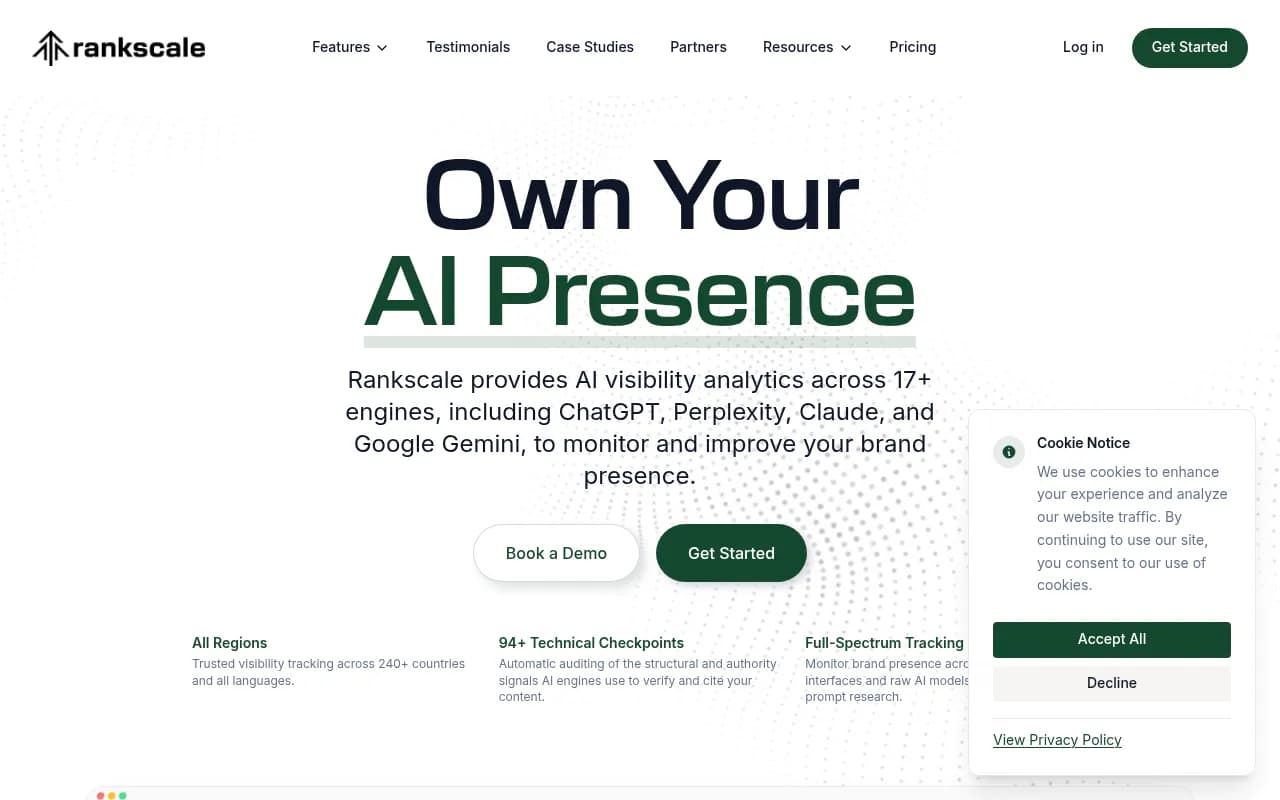
- Rankscale added ChatGPT follow-up forms, local results tracking across 6 engines, and AI visit tracking through a read-only Cloudflare connection.
- Profound announced a partner kickoff with Accenture, Publicis, Omnicom and VaynerMedia, a sign that it is pointed squarely at enterprises and agencies.

The direction is clear. Pure monitoring is being absorbed into suites at one end and pushed toward traffic attribution, MCP access and agent workflows at the other.
What this means for different buyers
If you are on an annual contract with a standalone vendor
Ask three questions now. What happens to my plan if you are acquired? Can I export every historical response and citation? Is there a price-lock or termination right on change of control? Prompt history is the asset here. If you cannot export it, you cannot compare vendors a year from now.
If you already pay for Semrush, Ahrefs or HubSpot
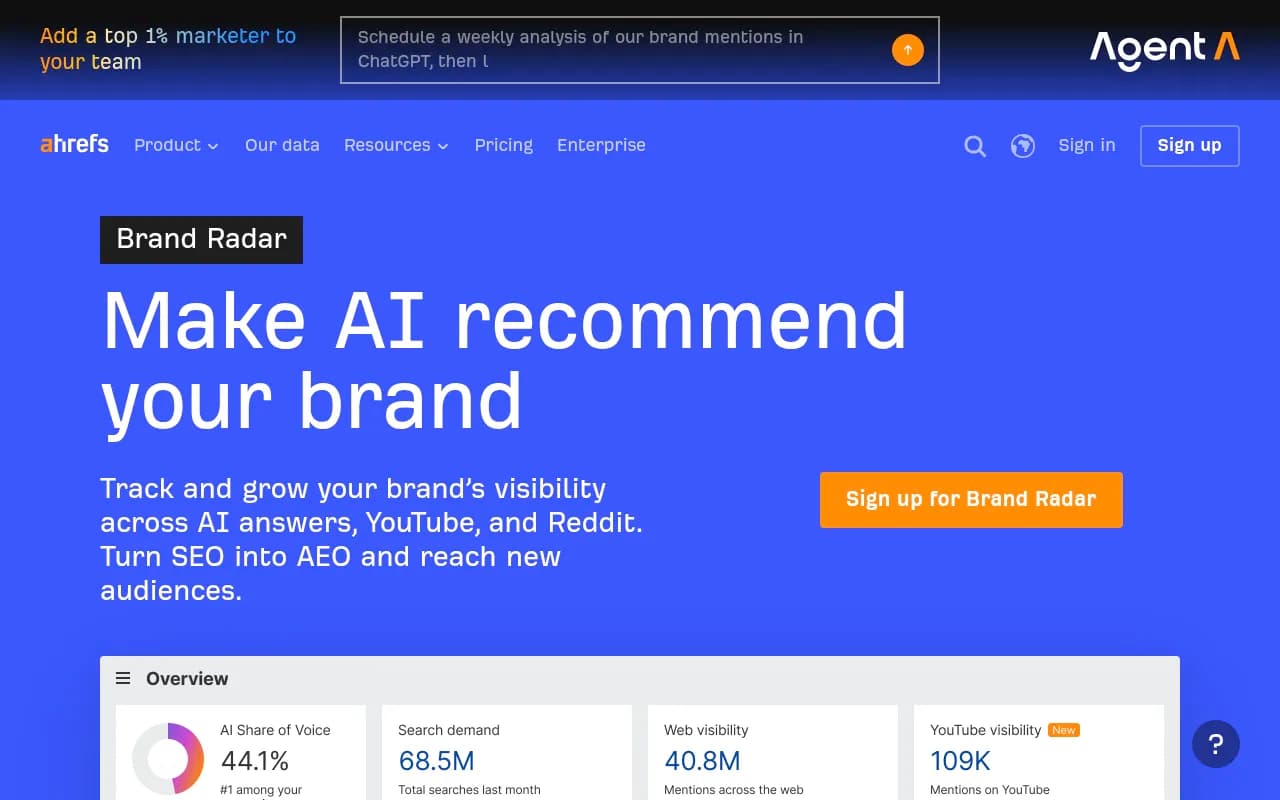
Try the bolt-on first, as McKelvey suggests. The catch is depth. Suite add-ons tend to use fixed prompt sets and shallow AI-specific data, and most lack AI crawler logs or traffic attribution. Fine for a baseline, thin for decisions.
If you are an agency
Check prompt and domain limits before adding a second client, not just the headline price. Per-client workspaces get expensive quickly on credit-based plans. Agency-specific plans with unlimited projects are a better fit than stretching a brand plan across clients.
If you are a small team
Start cheap. A $29 to $79 tracker plus a manual audit will teach you more than an enterprise contract. McKelvey's line is blunt but fair: the dashboard should be the smallest line item in your AI visibility budget.
The question that matters: what happens after the gap
Most tools can run questions through ChatGPT, Perplexity, Gemini and AI Overviews and tell you if you were named. BrandVelocity's buying guide puts it well: the difference is in what comes next. Does the tool read the sources behind each answer, help draft the fix, and show on the next run whether it worked?
This is where I would spend my evaluation time. Tools I would put in the action-oriented group include Promptwatch, which couples tracking with crawler logs, content generation, CMS publishing and visitor analytics so the loop from gap to published page to measured result sits in one product. It also tracks real interfaces rather than only APIs, which matters because user-facing answers and citations can differ from API output.

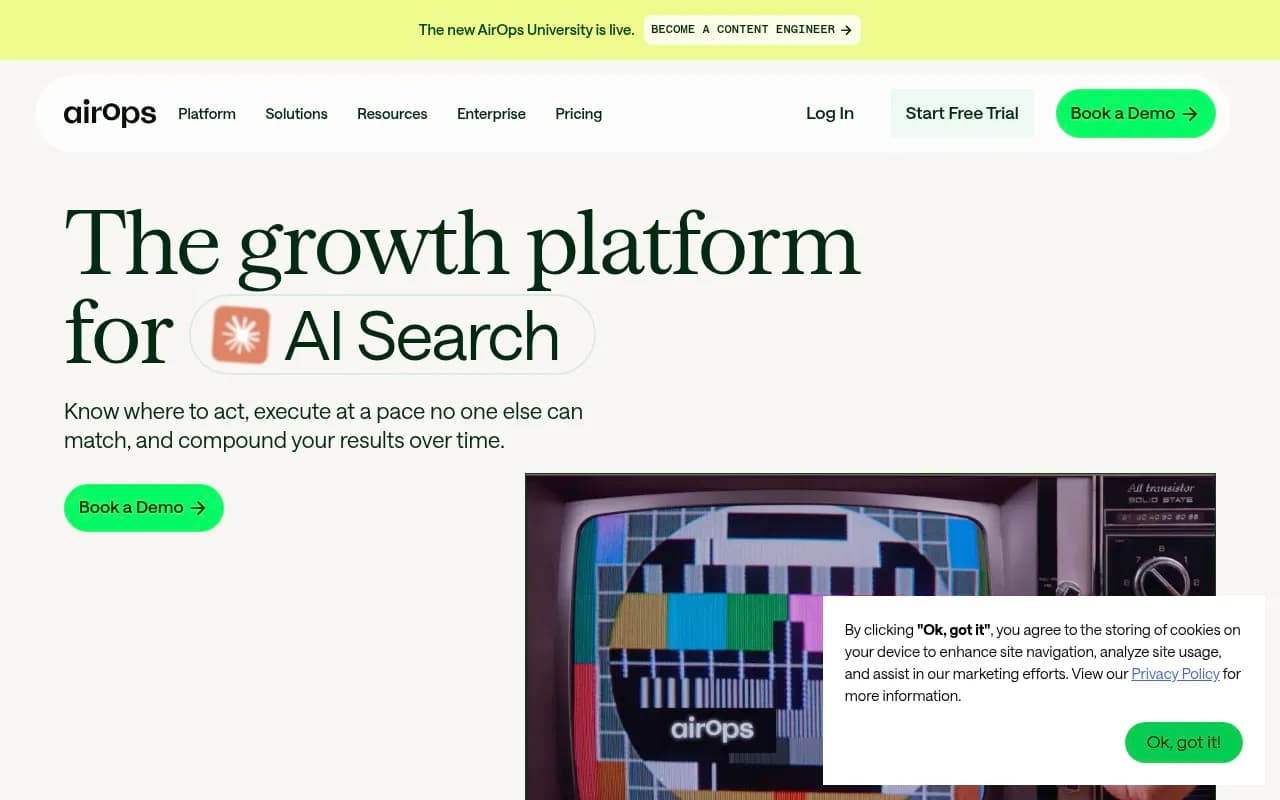
Other tools pitching execution on top of monitoring include Scrunch (agent-ready pages), AirOps (content workflows), Relixir and Addlly AI (GEO content automation), and ReachLLM. Whether they close the loop in practice is exactly what a trial should test.

Read your dashboards with engine differences in mind
A "citation" does not mean the same thing on every engine. Promptwatch's Average Sources Per Response data shows ChatGPT citing about 5 sources per web-search answer, Google AI Overviews about 10, and Perplexity almost exactly 10 every day. Copilot swung from under 2 to nearly 17 sources within weeks before settling low. So judge Copilot on monthly trends, and use Perplexity as a steadier test bench: if your pickup changes there, it is more likely your content than engine noise.
A broader view of how citations shift is in Promptwatch Data. For example, the ChatGPT citation drop after GPT-5.3 showed average citations per response falling across models around March 4, 2026. A tool that does not log model versions will blame you for a change that was the engine's.
A buyer's test plan that survives vendor churn
Shadow's evaluation guide offers a practical sequence, which I would adapt like this:
- Write 25 to 50 prompts across informational, discovery, comparison and validation intent. Include the close-to-decision questions, such as "best tool for a 100-person SaaS company."
- Name five to ten competitors yourself. Do not accept an inferred list unchecked.
- Require ChatGPT, Perplexity, Google AI Overviews or AI Mode, and Claude or Gemini.
- Repeat high-priority prompts three to five times, since answers vary.
- Compare dashboard records against what you see in the live interface.
- Run one recommendation end to end: publish a fix, then see whether the next run shows movement.
- Export your data before you sign anything long.
BrandVelocity also suggests checking security certifications, how pricing scales, and who you will actually work with. Worth adding: whether the vendor can track your markets. A monitor pinned to the wrong country or language tells you nothing.
What to expect next
The ThriveStack prediction is two to four more pure-plays absorbed by martech or DX incumbents within twelve months, using Adobe and Sitecore as the price anchor. I did not verify that independently and it is a forecast, not a fact. But the logic is sensible. Independent trackers with thin differentiation and no distribution are the obvious targets. Consider that a 30% usage figure from Straight North's September 2026 GEO survey (only seen as a snippet) suggests paid platform adoption is still a minority. That is room to grow, and also room for a lot of vendors to fail to reach scale.
Compare this to observability tooling, where LogicMonitor's research found 84% of organizations consolidating or considering it. Different market, same pressure: buyers tire of managing overlapping tools. I expect AI visibility to follow, with teams wanting one platform that measures, acts and reports.
Practical next steps
- Audit what you already pay for. Your SEO suite may have a baseline AI module.
- Pick a monthly plan, not annual, for any vendor you have not tested on your own prompts.
- Verify every price on the vendor's own page. Several figures above came from third-party comparisons that move monthly.
- Browse the wider field in the GEO software directory and the AI rank tracking tools directory if you want options beyond the names here.
- Keep your own copy of prompts, responses and citations so switching costs stay low.
The market will look different by this time next year. The buyers who come through it well will be the ones who own their data, test on their own questions, and paid for fixes rather than just dashboards.