Key takeaways
- Ranketta is a strong fit for agencies with e-commerce and D2C clients (plans for 3 to 25 client sites, white-label from Starter). Agencies with a broader roster often need more engines, content execution or cheaper per-client pricing.
- The best alternatives split into three groups: full AI visibility platforms with agency plans, monitoring-first tools with white-label reports, and SEO suites that bolt AI tracking onto reporting you already use.
- Before you sign, check whether white-label covers ongoing client reports or only pitches. This is the most common trap on agency pricing pages.
- Divide the monthly answer allowance by your client count. That number is what each client's report actually rests on.
- Report each AI engine separately. Promptwatch Data shows the number of citation slots differs by engine, so one blended score hides real differences.
Why agencies look beyond Ranketta
Ranketta does one thing well. It tracks which products AI recommends across answers and shopping surfaces, then enriches titles, GTINs and attributes and exports a corrected feed to Amazon, Google Merchant Center, Heureka and Zbozi. If half your roster is Shopify stores, that is a real advantage.
But most agencies are not all e-commerce. A B2B SaaS client, a law firm and a regional dental group do not have product feeds. For them, the e-commerce layer is dead weight, and what matters is prompt coverage, citation sources, content execution and reports a client can read without a walkthrough.
A note on sources: the most detailed public comparison of agency tools is published by Ranketta itself, and it ranks Ranketta first. Treat its framing as vendor material. Its evaluation criteria are still sensible, so I have borrowed them: multi-client management, client-ready reporting, product-level visibility where relevant, what happens after a finding, and defensible data.
What an agency needs from an AI visibility tool
Single-brand tools break on agency work in predictable ways. There are no isolated client workspaces, the reports need explaining, and the numbers stop at the finding.
Here is the checklist I would use.
- Unlimited or cheap client seats, so clients can log in without eating your license count.
- Isolated projects per client, plus pitch projects for prospects.
- White-label PDFs or a client portal on the plan you are actually buying.
- A data pipe you control: Looker Studio, API or CSV export.
- Per-engine reporting, because the engines behave differently. According to Promptwatch Data on average sources per response, ChatGPT cites about 5 sources per web-search answer, while Google AI Overviews and Perplexity cite about 10. Copilot swung from under 2 to nearly 17 within a few weeks. A single blended visibility number hides all of that.
- Something that happens after the finding: recommendations, content, or at least a prioritized to-do list.
The alternatives at a glance
| Tool | Best for | White-label / reporting | Acts on findings |
|---|---|---|---|
| Promptwatch | Agencies that want tracking plus execution | White-label PDFs on Enterprise, scheduled PDFs, Looker Studio, API and MCP | Action Board, Agent Chat, content gap analysis, crawler logs |
| Peec AI | Pure multi-client monitoring | Pitch projects, unlimited users on brand plans | Scored recommendations, no content writing |
| Profound | Enterprise rosters | Agency Mode with isolated client workspaces | Agents draft and publish content |
| Scrunch AI | Partner-program economics | Prospecting license for pitches | AXP serves AI-ready pages |
| AthenaHQ | Multi-brand with certification | Pitch workspaces | Action Center, CMS publishing |
| Otterly.AI | Lightweight entry point | Unlimited workspaces and seats from Standard | GEO audit, exportable recommendations |
| Nightwatch | Many small sites on one plan | White-label reports, Looker Studio, API | Rank tracking extended into AI |
| SE Ranking | Full SEO suite plus white label | Agency Pack with client seats | Scheduled reports with AI summaries |
| Semrush | Teams already inside Semrush | White-label in My Reports | No product or SKU module |
Pricing changes often. I have not verified current tiers for several of these, so check each vendor's pricing page before you quote a client.
Full platforms for agencies
Promptwatch
Promptwatch is the option I would look at first if you want to go past monitoring. It tracks ChatGPT, Gemini, Claude, Perplexity, Google AI Overviews, AI Mode, Copilot and others from the real interfaces, then ties that to crawler logs, visitor analytics and content gaps. Agency plans have unlimited projects, pitch projects, prompts and team seats.

The agency tiers are Kick-off at $199/mo, Growth at $399/mo and Scale at $799/mo. All of them include crawler logs, visitor analytics, site audits, Brand Narrative, Ads Radar, custom reports, and API and MCP access. Scale adds tracking every 12, 6 or 1 hours, local GEO/SEO targeting, Fact Check and an audit log.
Two caveats worth being straight about. Agency plans do not include the Content Agent, AEO articles or a Knowledge Base. And a white-label dashboard and client portal are Enterprise features. If you want those, you go to Enterprise or talk to the team. Confirm everything at promptwatch.com/pricing.
Where it beats Ranketta for non-store clients is the diagnosis. Crawler logs tell you whether AI bots can even read a client's pages, which separates an access problem from a content problem. The Action Board turns that into a prioritized list your team can assign. Monks, an agency, uses the Answer Gap Report to build content roadmaps for enterprise clients. For more detail see the agency solution page, Promptwatch vs Peec and Promptwatch vs Profound. You can start with the 7-day free trial on monthly billing, or run the free AI visibility report on a prospect before a pitch.
Profound
Profound is the enterprise pick. Agency Mode gives each client an isolated workspace, with pitch workspaces too, and the Enterprise tier tracks up to nine answer engines. Its agents draft and publish content to the CMS. The tradeoff is price, and its product tracking leans on ChatGPT Shopping.

AthenaHQ
AthenaHQ offers multi-brand management, pitch workspaces, GEO certification, an Action Center and CMS publishing. It tracks products at product, category and brand level and can send approved product copy to Shopify, though it does not export a feed.

Monitoring-first tools with agency features
Peec AI
Peec AI is the cleanest answer if your main need is monitoring across many clients. It has credit-based agency plans, pitch projects and an Agency Partner Program, and unlimited users on every brand plan. It scores recommendations but does not write or publish content, so you need another way to execute.

Scrunch AI
Scrunch pays up to 20% commission on referred customers and gives agencies a free prospecting license for pitches. Its AXP serves an AI-ready version of pages to AI bots, which is an unusual approach. If you want vendor economics as part of the deal, this is the one to ask about.

Otterly.AI
Otterly is a lightweight entry option. Unlimited workspaces and seats start on the Standard plan, and it covers shopping cards and ads tracking. It has a GEO audit and exportable recommendations but no catalog import. Good for a first client or two.

Geoptie
Geoptie is positioned as the affordable multi-client option, with white-label reporting and free GEO audit tools. It suits smaller agencies that find the bigger platforms overpriced for a handful of clients.
Trakkr
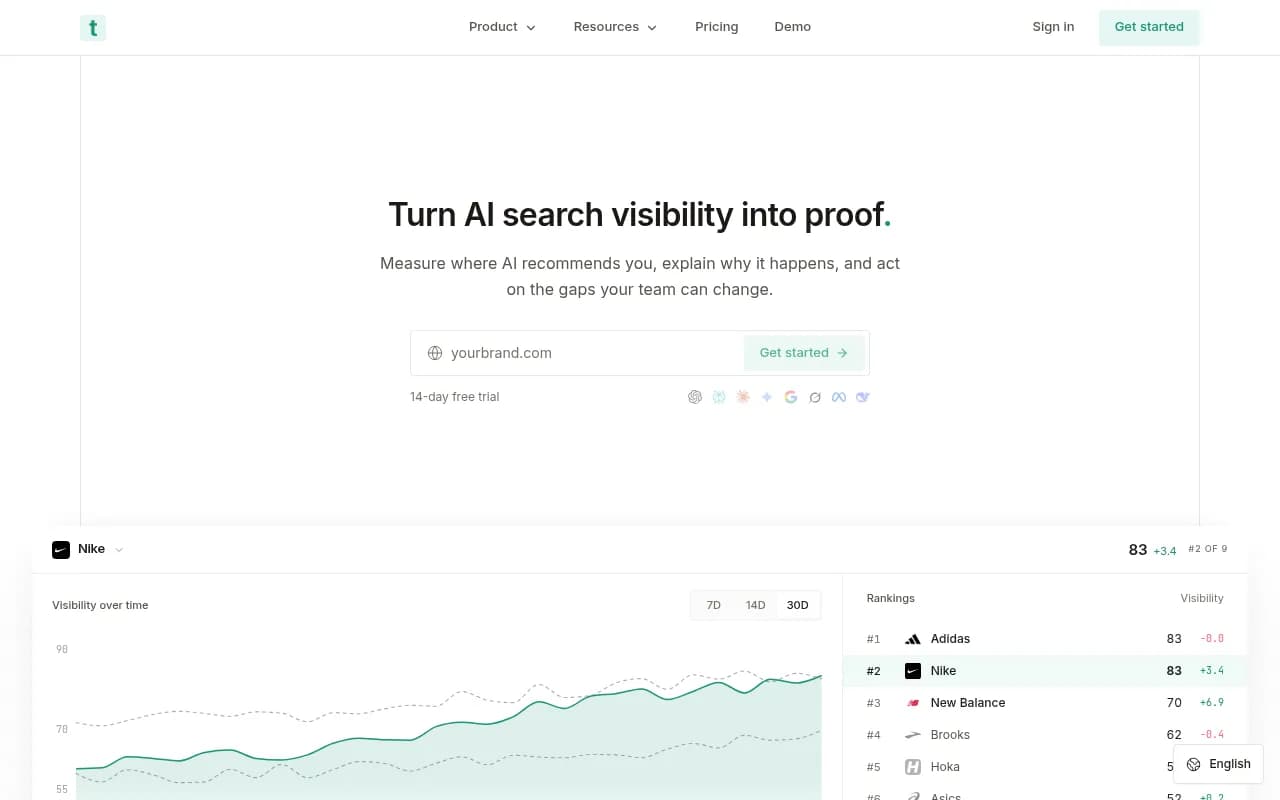
Trakkr focuses on tracing AI visitors to revenue, which helps when a client's only question is where the leads came from. One of the Reddit comments in a Qvery roundup puts it well: that is the only thing most business owners understand.
SEO suites with white-label reporting
If your clients already get monthly SEO reports, adding AI visibility to the same pipeline can be easier than introducing a new tool.
Nightwatch
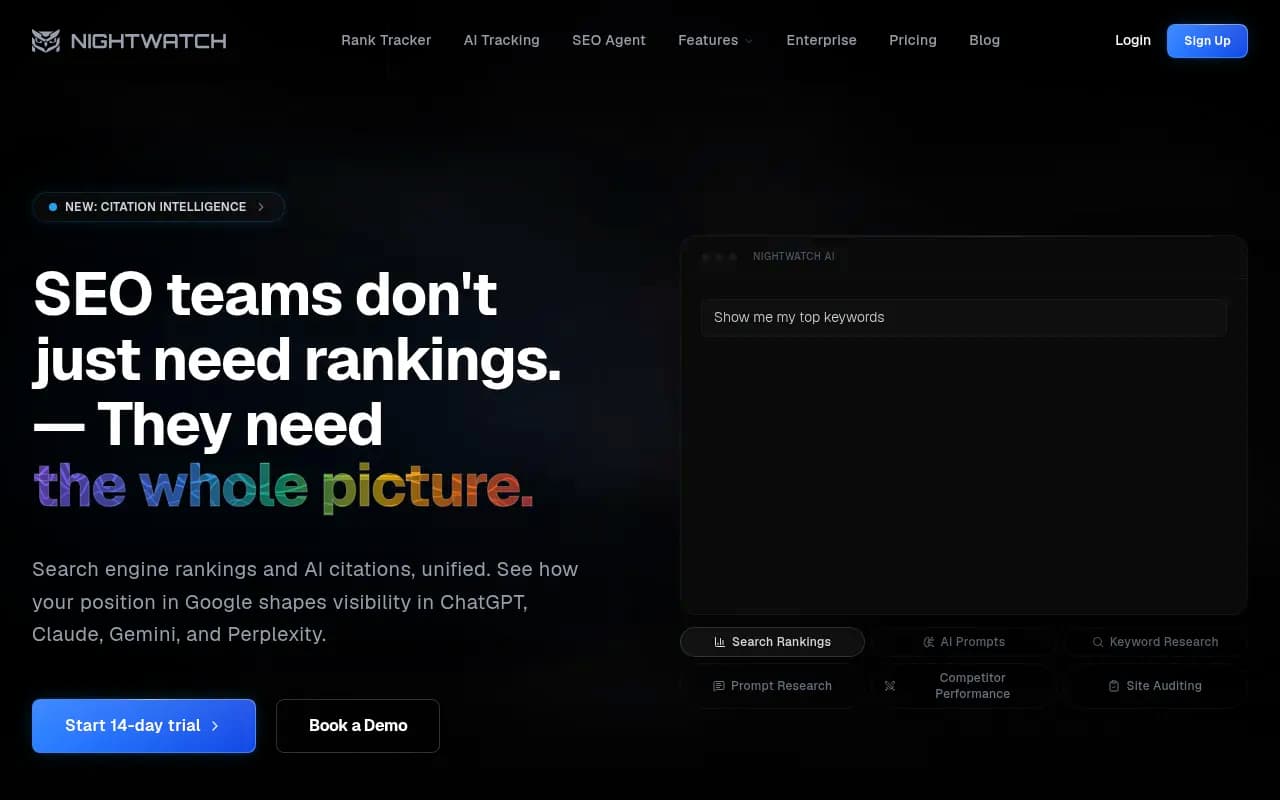
Nightwatch counts websites rather than clients. According to Qvery's roundup, the Professional plan at 159 EUR a month holds 25 websites with white-label reports, unlimited user seats, Looker Studio and the API. That is a lot of capacity for the money.
SE Ranking
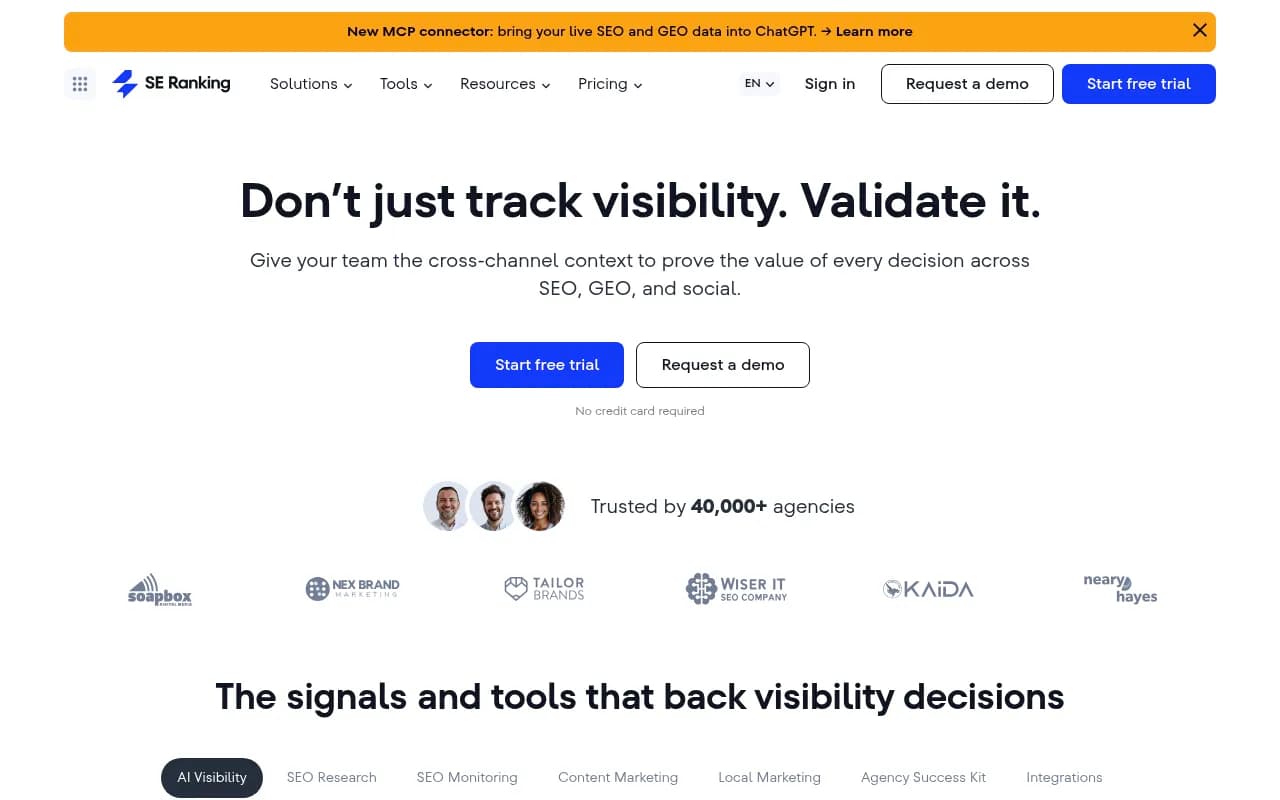
The Agency Pack adds white label for the platform and reports, 30 client seats and unlimited scheduled reports with AI summaries, for $69 a month on annual billing only, per the same roundup. Data leaves through Data Studio, export and API.
Semrush
Semrush lists white-label reporting in My Reports for its AI Visibility Toolkit, with exports as Excel, CSV, Sheets or PDF. It has no product or SKU module, and the AI data is shallower than that of dedicated platforms.
Ahrefs Brand Radar is worth a mention only if you already live in Ahrefs. It is an add-on with no agency mode.

Do the per-client math
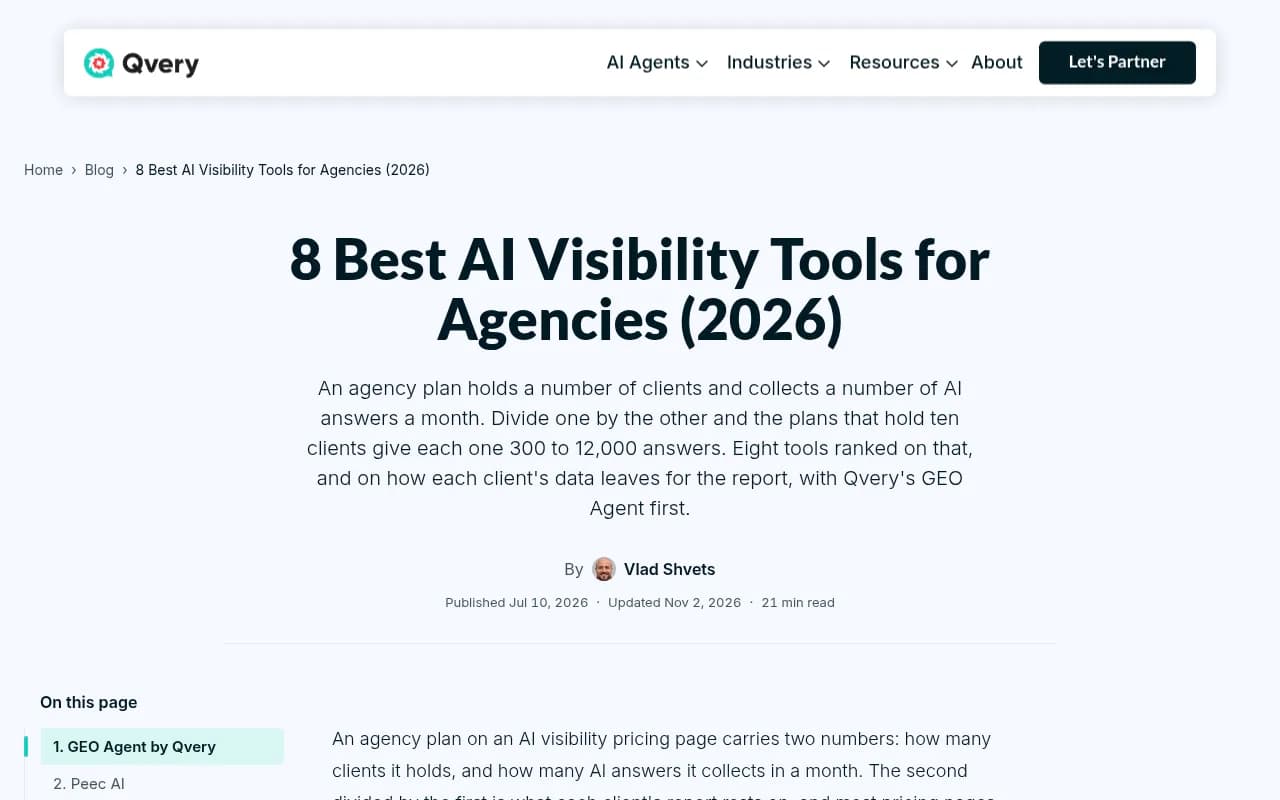
Qvery makes a point I think is underrated. An agency plan has two numbers on it: how many clients it holds, and how many AI answers it collects each month. Divide the second by the first. For a roster of ten, Qvery found the result ran from 300 answers a month per client to 12,000, a forty-fold gap. Qvery makes one of the tools on its list, so read its framing with that in mind, but the arithmetic holds regardless of who wrote it.
A report built on 300 answers a month for one client is thin. Run the math for every plan on your shortlist before you compare feature lists.
Reporting stacks that sit next to the tracker
Some trackers have weak white-label. The fix is a reporting pipe you control: Looker Studio or an API feeding your own client dashboard.
| Reporting tool | Notes |
|---|---|
| AgencyAnalytics | 80+ integrations, white-labeled portal, custom domain and email. Fits agencies with roughly 10 to 30 clients |
| Whatagraph | 80+ integrations, dedicated client workspaces with permissions |
| DashThis | Fast to set up, prebuilt marketing KPI templates |
| Looker Studio | Free, but no native scheduling, white-label or multi-client management without workarounds |
These details come from Basedash's 2026 comparison of client reporting tools, which is also the source for the Looker Studio limits.
The practical setup: pick a tracker that exports through Looker Studio or an API, then let your existing reporting platform handle branding, scheduling and the client portal. Promptwatch, Nightwatch, SE Ranking and Ranketta all support at least one of those pipes.
How to choose
If your roster is mostly stores
Stay with Ranketta, or at least trial it. Feed export is its specialty and the others mostly do not match it. A brand tracker can say a client appears in 40% of AI answers while individual products rarely make the shortlist, and that gap is exactly what Ranketta targets.
If you want to fix things, not just report them
Promptwatch or Profound. The difference is cost and scale: Profound is built for enterprise rosters, Promptwatch has lower agency entry points and adds crawler logs and visitor analytics so you can see whether AI traffic converts.
If you need cheap monitoring across many small clients
Peec AI, Otterly, Geoptie or Nightwatch. Pair them with Looker Studio or AgencyAnalytics for the client-facing layer.
If clients already live in an SEO suite
SE Ranking or Semrush keep everything in one login, at the cost of shallower AI data.
What to ask on every demo
- Does white-label cover ongoing client reports, or only pitches?
- How many answers per month does the plan collect, and across how many engines?
- Does data come from real interfaces or only APIs? User-facing answers and citations can differ.
- Can I export to Looker Studio or an API on this plan, or only a higher one?
- What happens after a finding: nothing, a recommendation, or finished content?
- Is there a partner or referral program, and what does it pay?
If you want to browse beyond this list, the GEO software directory covers more tools by category.
Bottom line
Ranketta is the right call for e-commerce-heavy agencies, and that is where its design shows. For everyone else, pick on two things: how much data each client's report rests on, and whether the tool helps you act. Run a trial with two real clients, not a demo account, and see which report you would actually send.