Key takeaways
- Hall AI is a solid entry point for AI search monitoring, but its feature set and pricing may not be the best fit for solo consultants who need more than a basic dashboard
- Most AI visibility platforms are built for agencies or enterprise teams -- freelancers need tools that are affordable, easy to set up solo, and ideally include some content optimization, not just monitoring
- The best alternatives in 2026 combine prompt tracking with actionable output: content briefs, gap analysis, or citation insights
- Budget-conscious freelancers can get meaningful AI visibility coverage for $50-150/month if they pick the right tool for their actual use case
- A few tools (including free tiers) let you start tracking before you commit to a paid plan
If you're a solo consultant or freelancer trying to figure out where you show up in ChatGPT, Perplexity, or Google's AI answers, you've probably run into a frustrating pattern: most of the tools built for this are priced like you have a marketing team and a CFO to approve the invoice.
Hall AI is one of the more accessible options in the AI visibility space -- it's clean, focused, and doesn't require an enterprise sales call to get started. But "accessible" is relative. When you're running a one-person operation, even a $99/month tool needs to earn its place in your stack. And if Hall doesn't quite fit your workflow, your budget, or the specific AI models you care about, there are better options worth knowing about.
This guide is specifically for freelancers and solo consultants. Not agencies. Not enterprise teams. People who need to know if their name, their service, or their niche expertise is showing up when potential clients ask AI tools for recommendations -- and who want to do something about it when it isn't.
 The AI visibility platform space has expanded rapidly -- there are now 28+ tools competing for this use case, with wildly different pricing models and feature sets.
Why AI visibility actually matters for solo consultants
Here's the scenario playing out right now: a potential client needs a freelance UX researcher, a B2B copywriter, or a supply chain consultant. Instead of Googling, they open ChatGPT and type something like "who are the best freelance [your specialty] consultants?" or "recommend a consultant for [specific problem]."
If you're not in the answer, you don't exist for that client.
This isn't hypothetical. AI search is eating into traditional Google traffic fast, and the consultants and freelancers who get cited in AI responses are the ones who've built the right kind of content, earned the right citations, and made themselves legible to AI models.
The problem is that most tools built to help with this were designed for brands with content teams, not solo operators. Profound's enterprise tier, Scrunch AI's agency focus, AthenaHQ's monitoring-only approach -- these are built for teams. The pricing reflects that.
So the question is: which tools actually work for a one-person operation?
What to look for when you're flying solo
Before getting into specific tools, it's worth being clear about what actually matters for freelancers vs. agencies:
- Affordable entry point (ideally under $150/month, or a meaningful free tier)
- Simple setup -- you don't have a dev team to integrate webhooks or configure crawler logs
- Coverage of the AI models your clients actually use (ChatGPT and Perplexity are usually the priority)
- Some form of actionable output -- not just a dashboard showing you're invisible, but guidance on what to do about it
- Low prompt minimums -- you probably need to track 10-30 prompts, not 500
With that in mind, here's how the main alternatives to Hall AI stack up.
The best Hall AI alternatives for freelancers in 2026
Otterly.AI -- best for pure monitoring on a tight budget
Otterly.AI is one of the most straightforward tools in this space. You set up prompts, it monitors how you show up across AI engines, and you get a clean dashboard. No complexity, no agency-tier pricing.
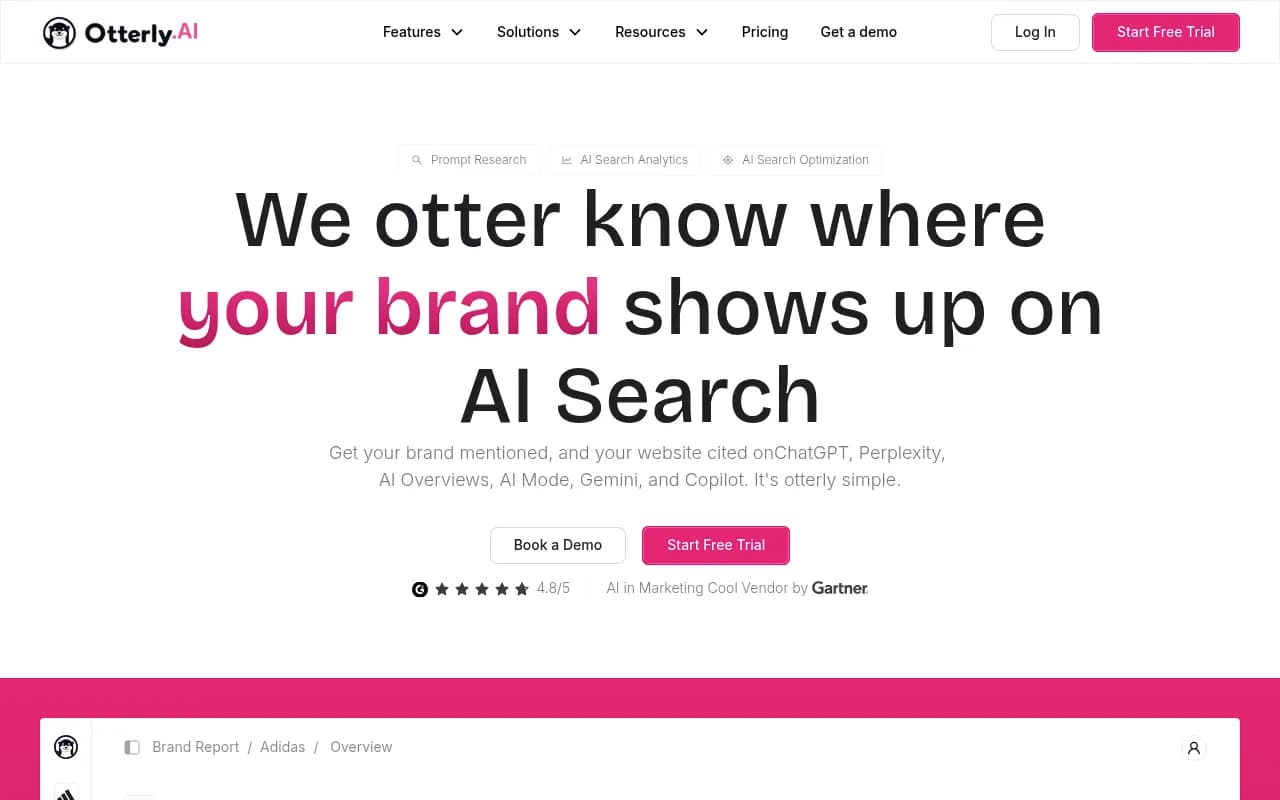
It's monitoring-only -- there's no content generation or gap analysis built in. But if you just need to know whether you're getting cited and by which models, Otterly is a solid starting point. The pricing is accessible enough that you can run it alongside other tools without it dominating your budget.
The limitation: you'll know you're invisible, but you'll need to figure out what to do about it yourself.
Peec AI -- clean interface, transparent pricing
Peec AI has one of the cleaner dashboards in this category, and its pricing is genuinely transparent -- no "contact sales" for basic features. At around €89/month for 25 prompts and 3 AI engines, it's a reasonable fit for a solo consultant who wants to track a focused set of queries without overcomplicating things.
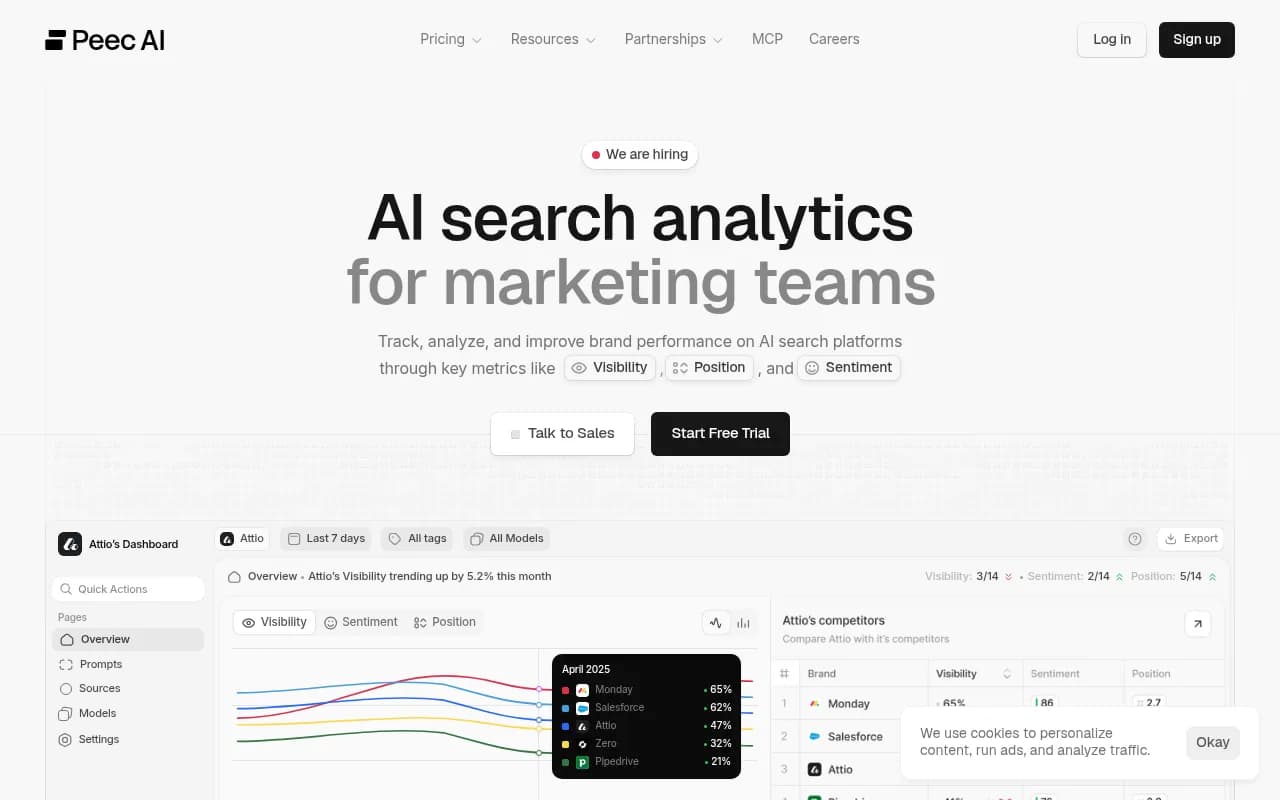
The model coverage is more limited than some competitors (3 engines vs. the 10+ that broader platforms cover), but for most freelancers, ChatGPT, Perplexity, and Google AI Overviews are the ones that matter most anyway.
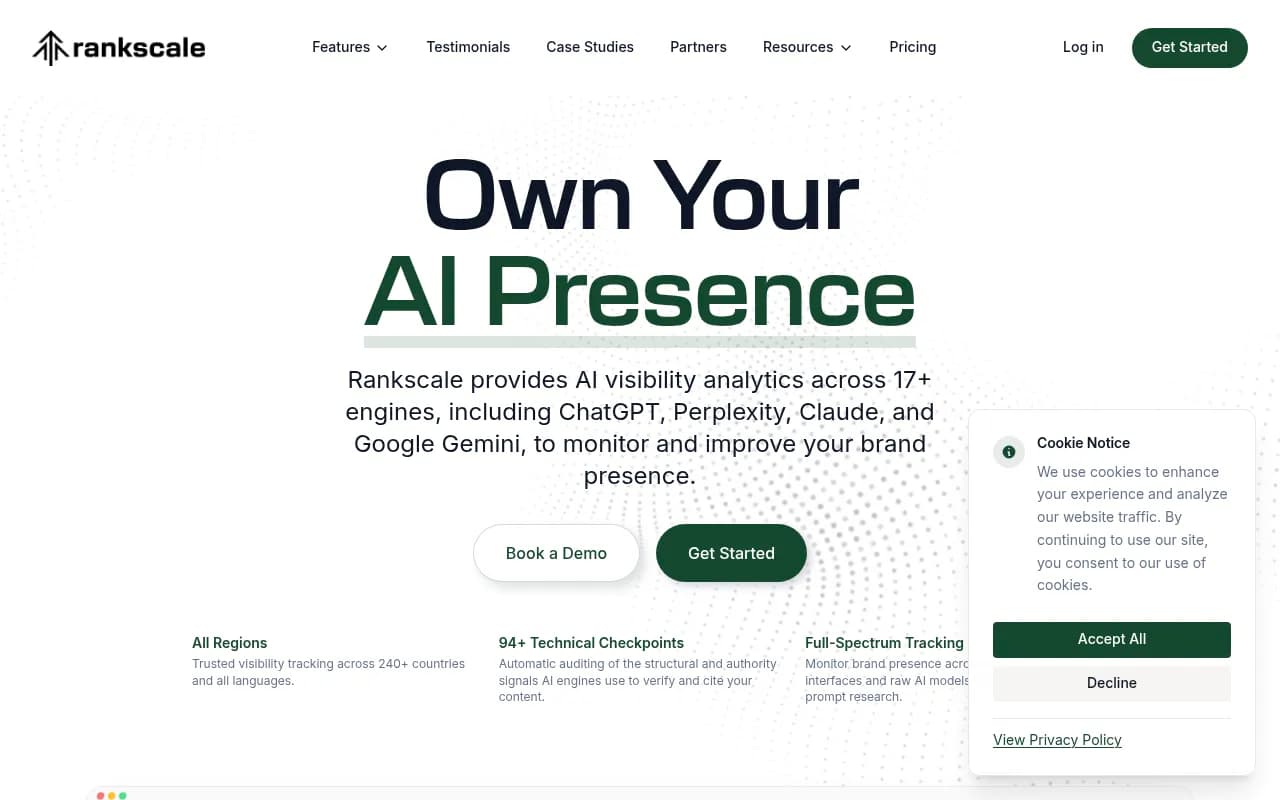
Rankscale -- lightweight tracking with good prompt data
Rankscale focuses on AI search rank tracking and monitoring without the enterprise overhead. It's a good fit if you want to understand how your visibility changes over time across different prompts.
ZipTie -- focused and no-frills
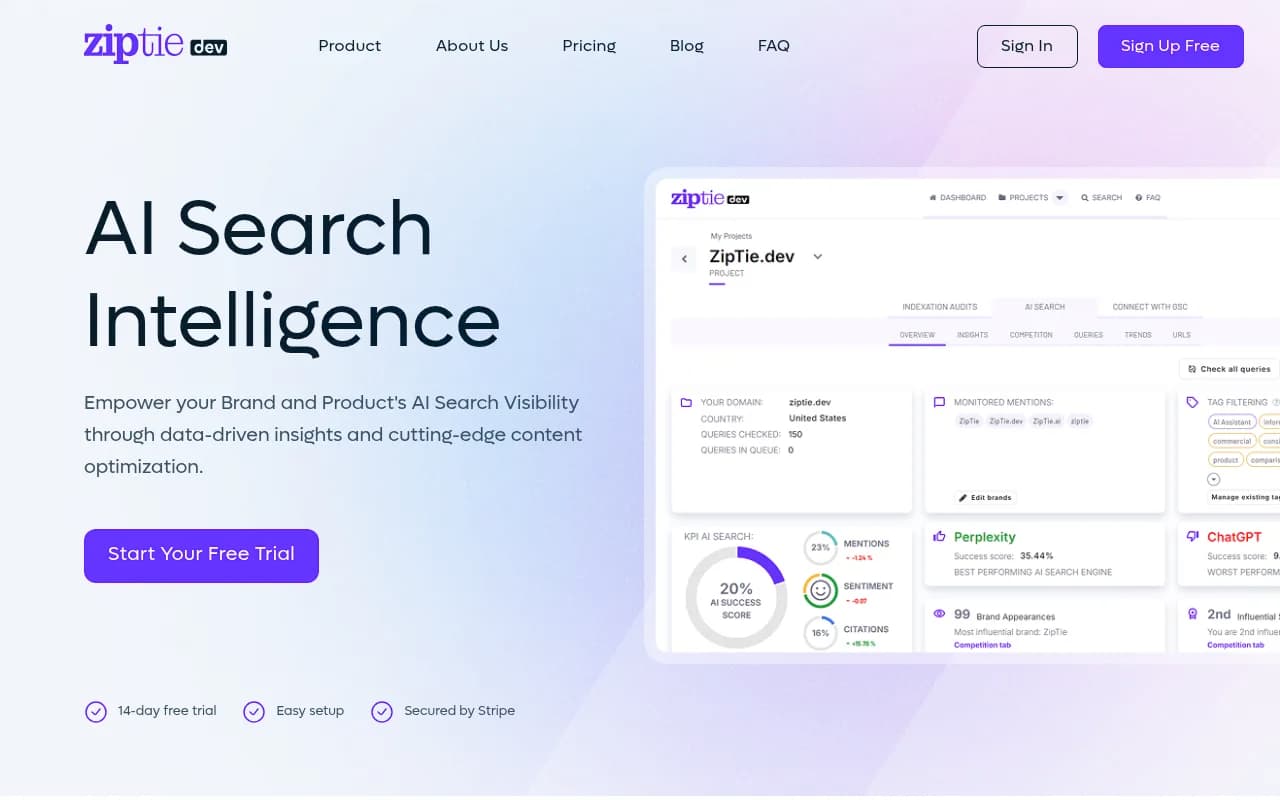
ZipTie is a deliberately focused AI search visibility tool. It doesn't try to be an all-in-one platform, which actually makes it easier to use as a solo operator. If you want something that does one thing well -- tracking your visibility in AI search -- without paying for features you'll never use, ZipTie is worth a look.
Writesonic GEO -- monitoring plus content generation
This is where things get more interesting for freelancers who want to actually improve their visibility, not just measure it. Writesonic's GEO module combines AI search monitoring with content generation tools, so you can identify gaps and then create content to fill them without switching platforms.
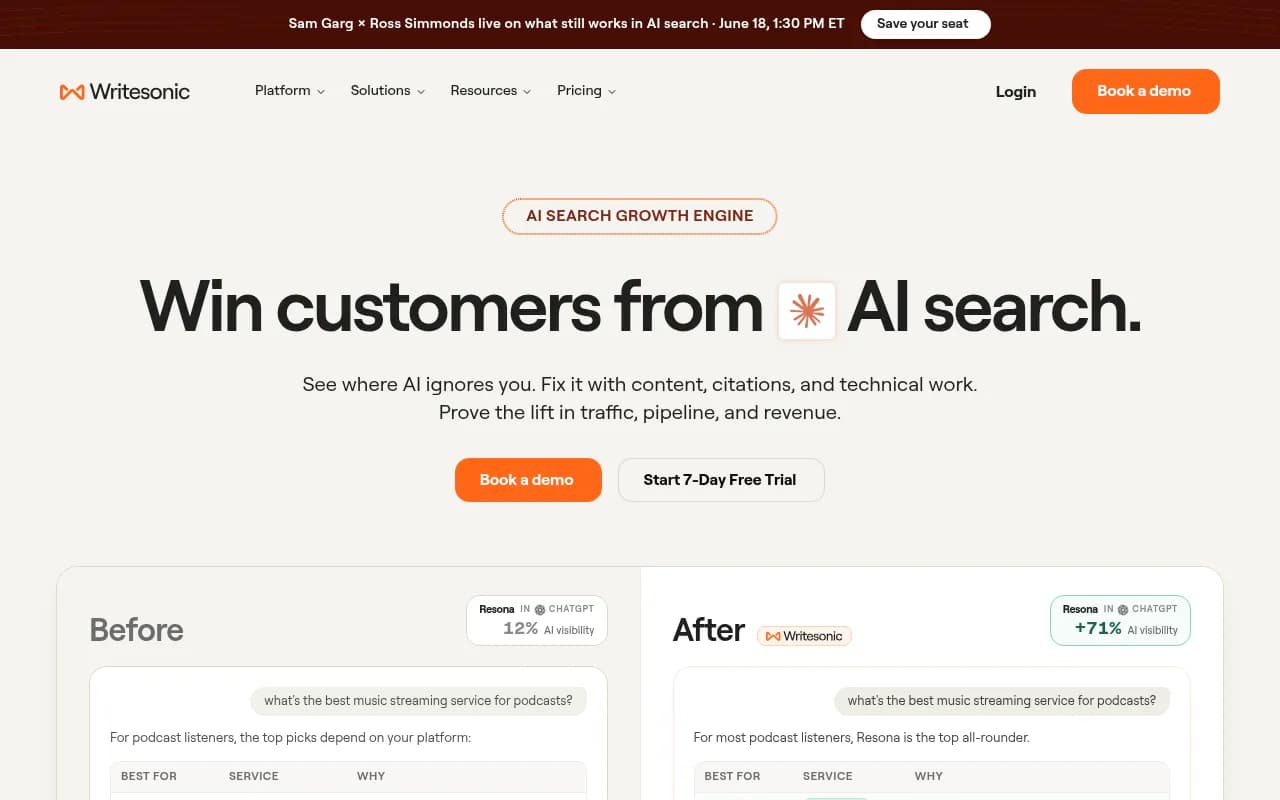
The content generation quality varies (as it does with most AI writing tools), but having both functions in one place at a reasonable price point is genuinely useful for a solo operator who doesn't want to manage five different subscriptions.
SE Ranking -- solid all-rounder with AI visibility built in
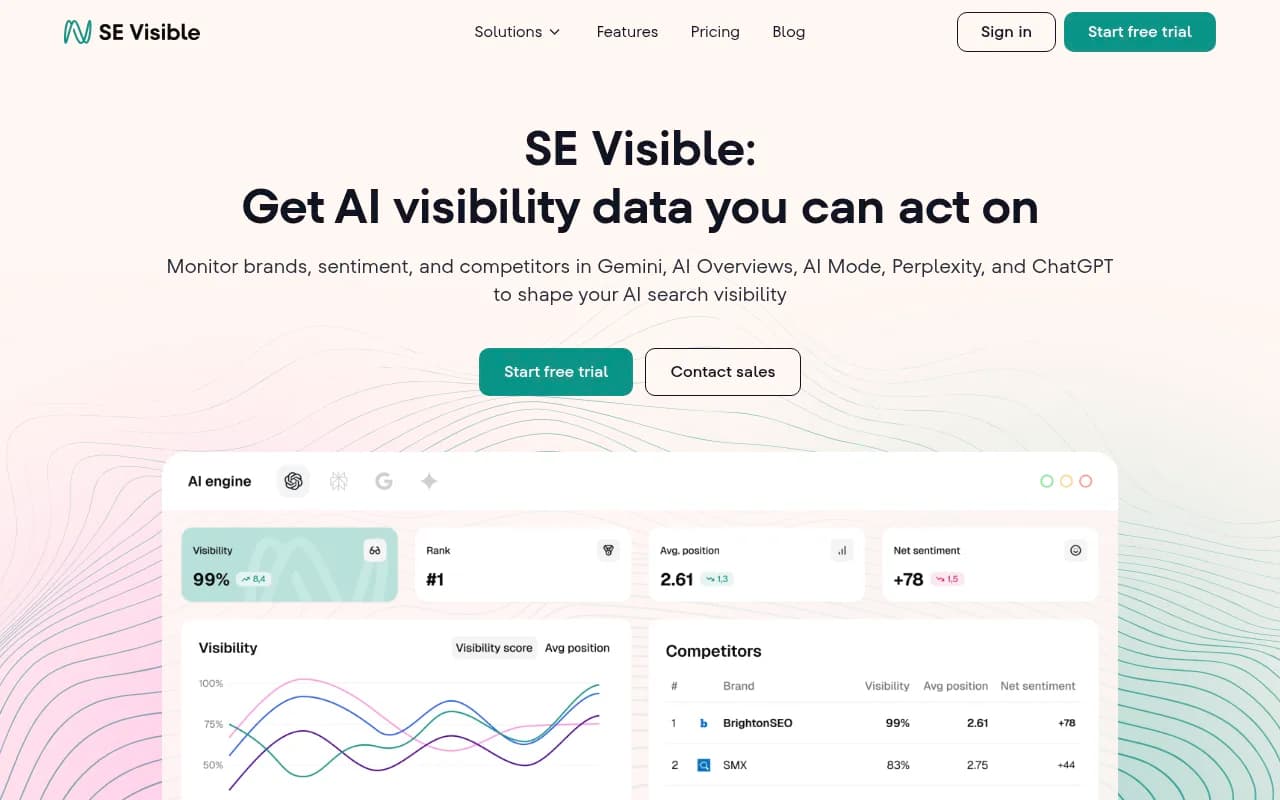
SE Ranking has been a reliable mid-market SEO tool for years, and its AI visibility tracking layer is a natural extension of that. If you're already paying for an SEO tool and want AI monitoring without adding another subscription, SE Ranking is worth checking.
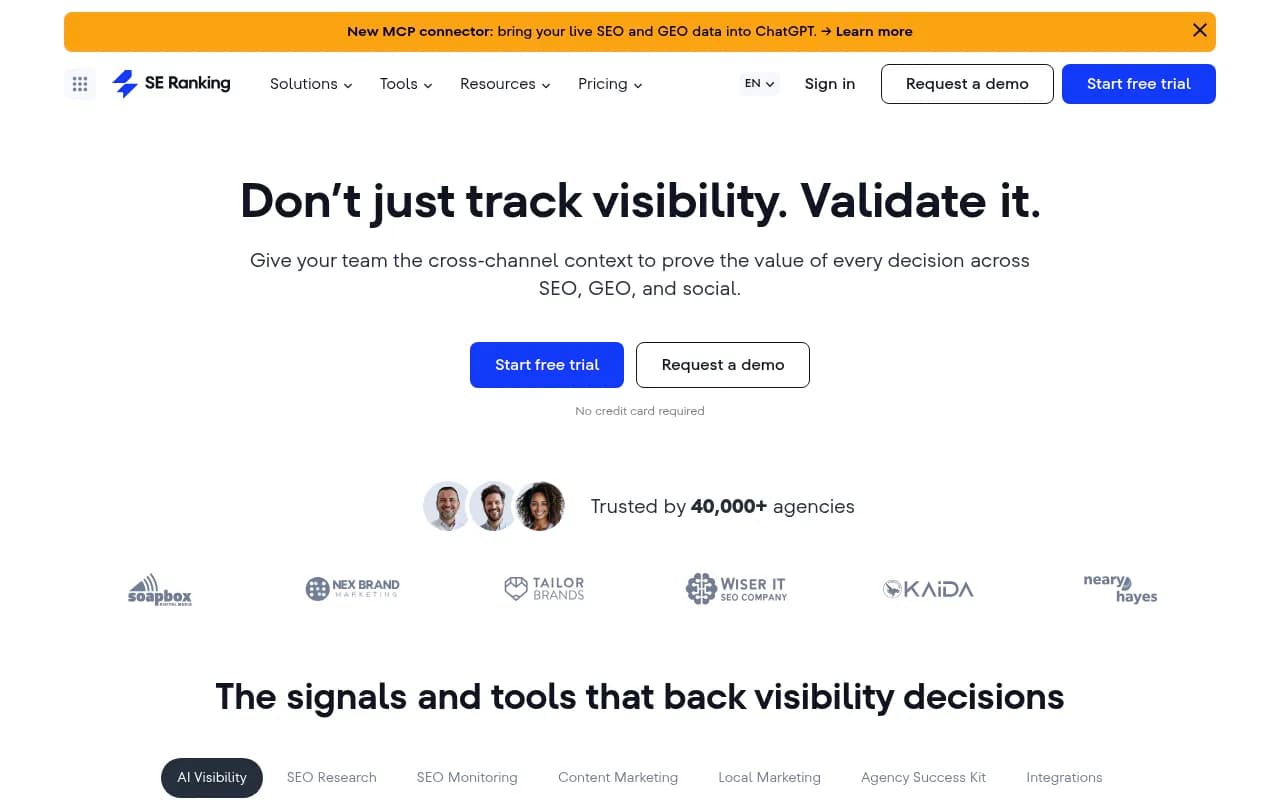
The AI visibility features aren't as deep as dedicated GEO platforms, but for a freelancer who needs both traditional SEO tracking and AI search monitoring, consolidating into one tool makes financial sense.
Ahrefs Brand Radar -- best for data quality over dashboard polish
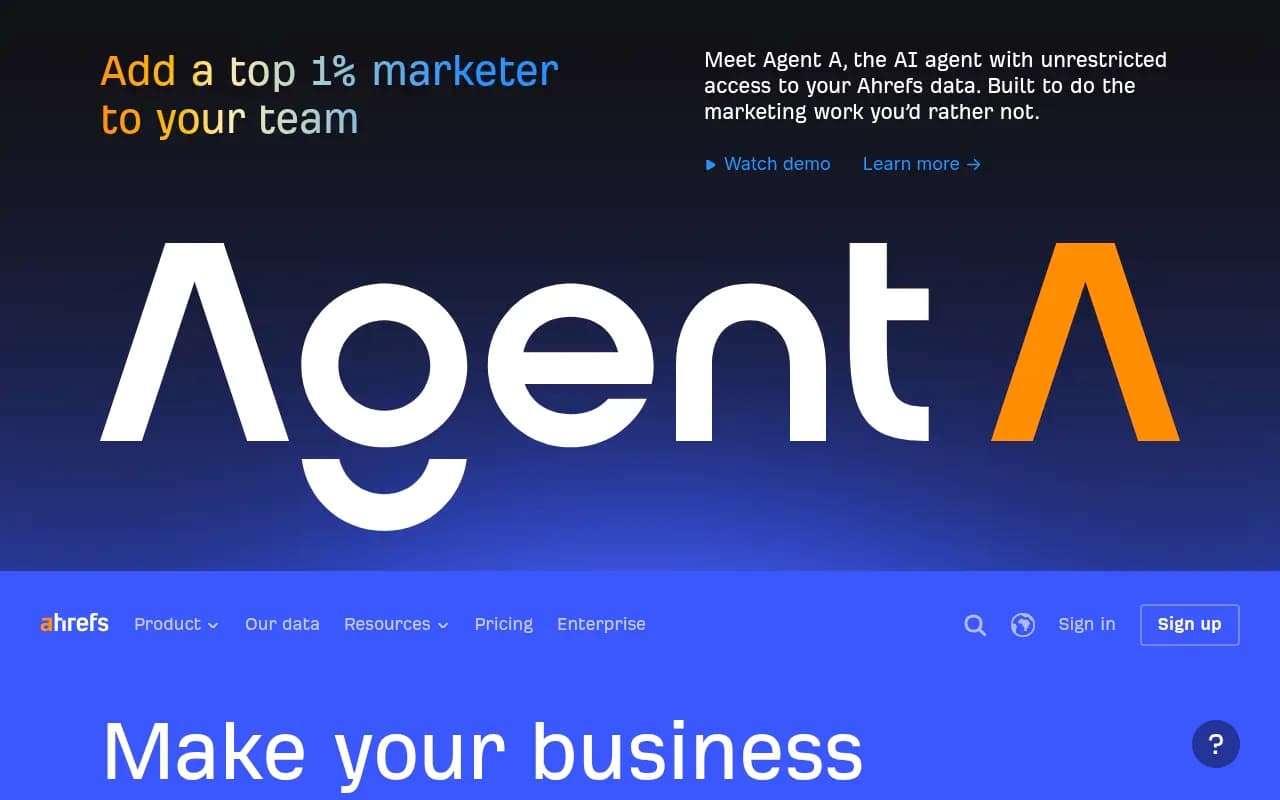
Ahrefs Brand Radar takes a different approach to the data problem that most AI visibility tools quietly ignore. Most platforms fabricate their own prompts and run them -- you're seeing how AI responds to questions that may never have been asked by a real human. Brand Radar uses real search data (243M+ prompts from actual "People Also Ask" queries with measurable search volume) as its foundation.
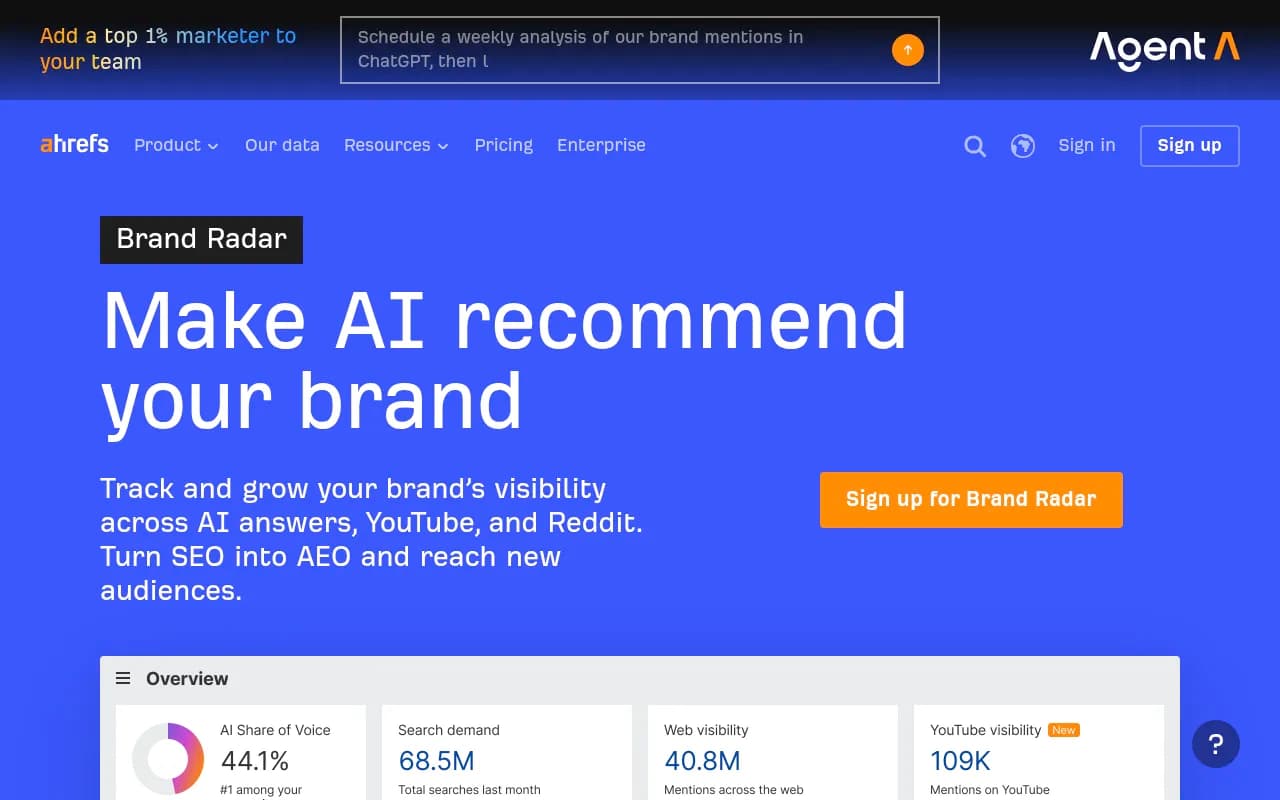
For a solo consultant, this matters because you want to know if you're visible for queries real clients are actually asking -- not hypothetical ones a tool invented. The pricing starts at $50/month for 2,500 checks, which is accessible. If you're already an Ahrefs user, this is an obvious add-on.
Frase -- content optimization with AI search awareness
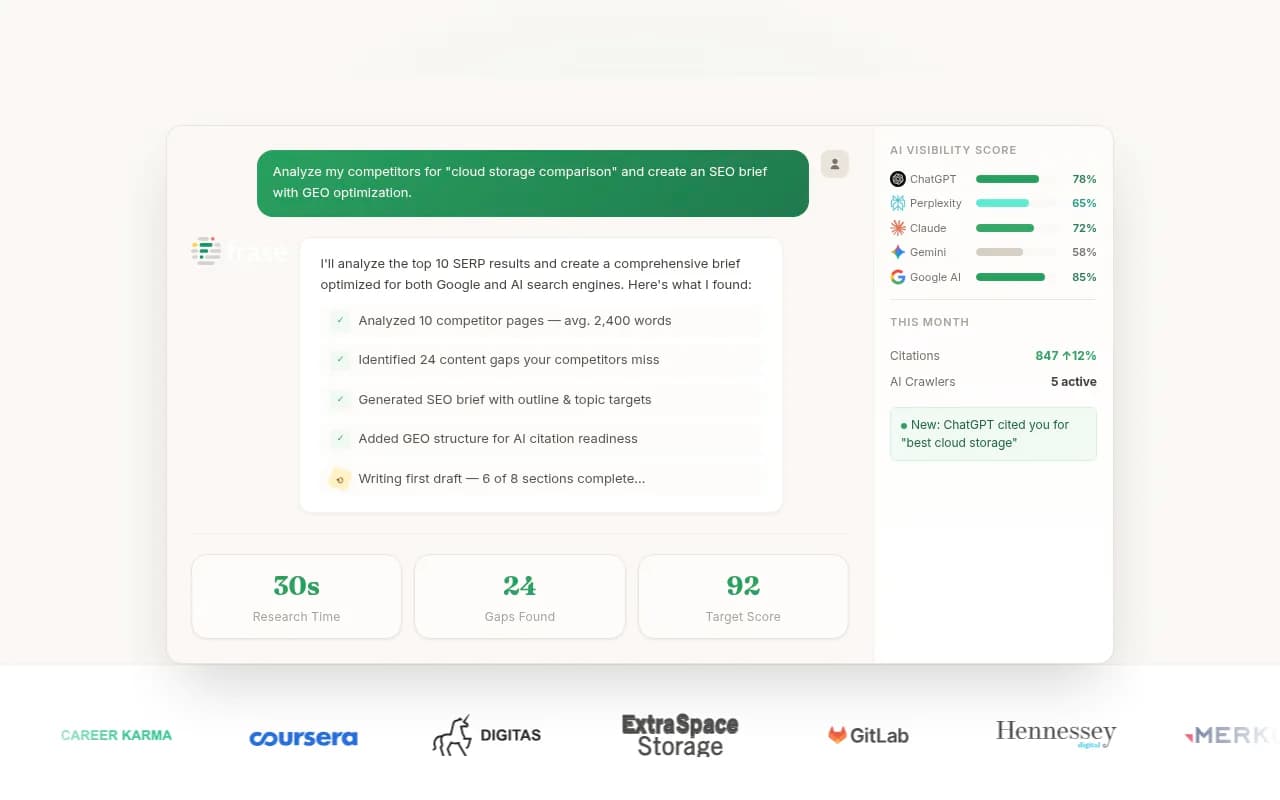
Frase sits more on the content optimization side than pure AI visibility monitoring, but for freelancers who produce content as part of their consulting work, it's a useful tool. It helps you understand what questions your content should answer and how to structure it for AI discoverability.
LLMrefs -- query insights for citation optimization
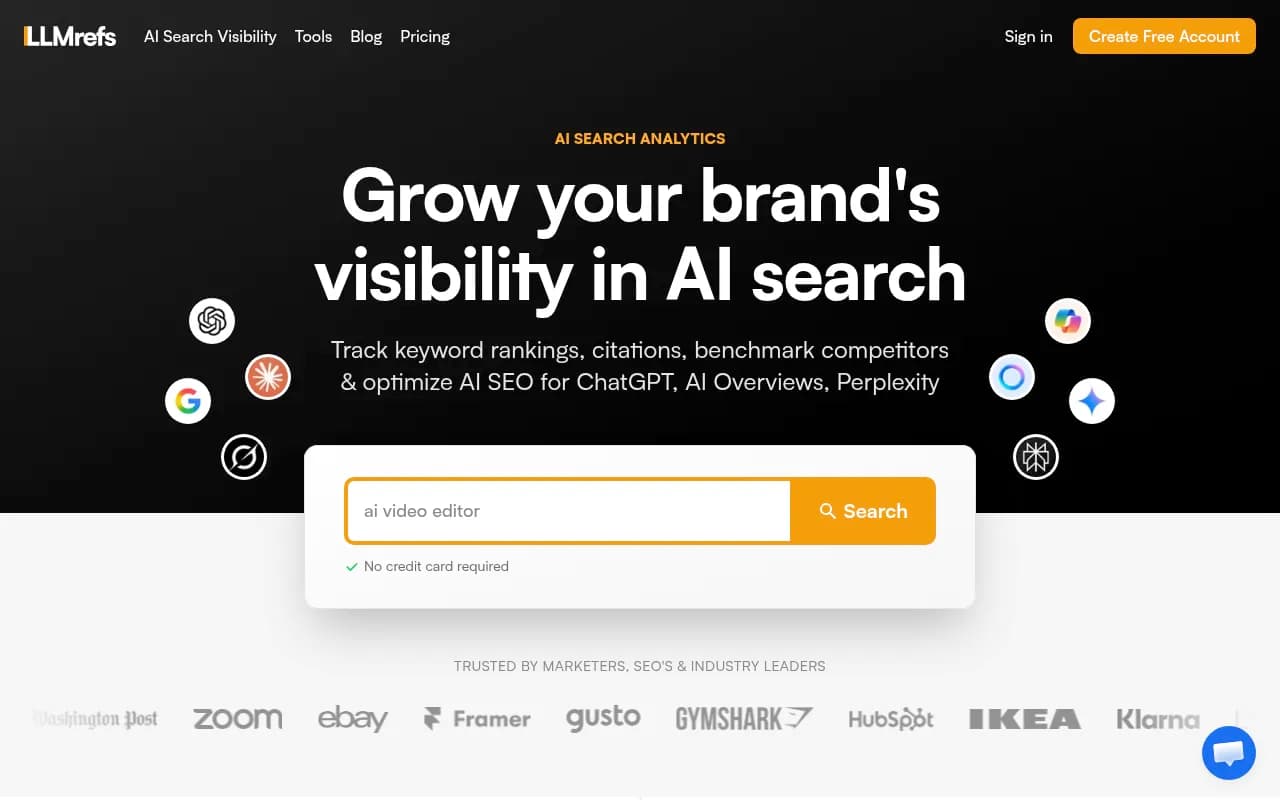
LLMrefs focuses specifically on understanding which queries lead to citations in LLM responses. For a solo consultant trying to figure out which content to create or optimize to get cited by ChatGPT or Perplexity, this kind of query-level insight is more actionable than a generic visibility score.
Promptwatch -- best if you want to actually fix your AI visibility, not just measure it
Most tools in this space show you a dashboard and leave you to figure out the rest. Promptwatch is different in that it's built around an action loop: find the gaps, create content to fill them, track the results.
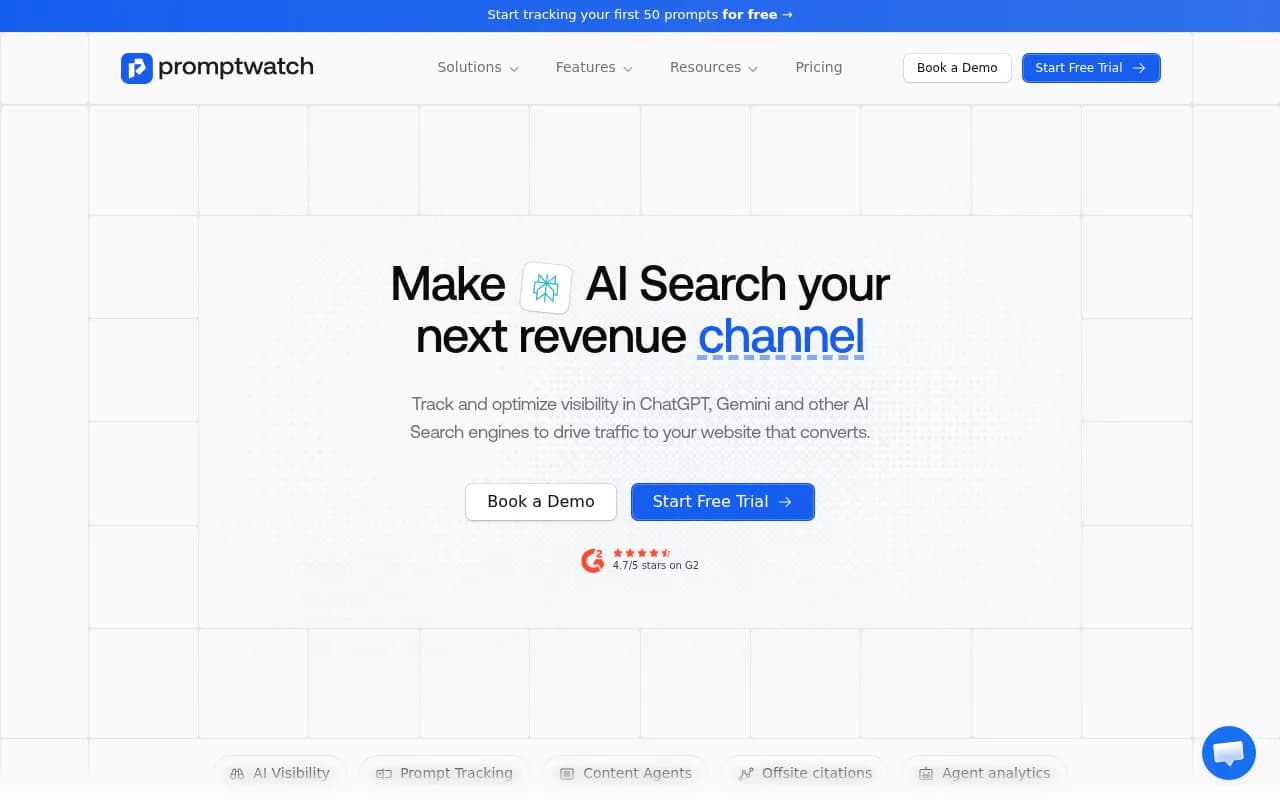
For a solo consultant, the Essential plan at $99/month covers one site, 50 prompts, and 5 AI-generated articles per month. That's a meaningful amount of coverage for a one-person operation. The Answer Gap Analysis shows you exactly which prompts competitors are visible for that you're not -- and the Content Agents generate articles grounded in real prompt data to help you close those gaps.
It also monitors 10 AI models (ChatGPT, Perplexity, Google AI Overviews, Claude, Gemini, Grok, DeepSeek, Mistral, Copilot, and Meta AI), which is broader coverage than most alternatives at this price point.
The distinction worth noting: if you just want to know where you stand, there are cheaper monitoring-only options. But if you want to actually move the needle on your AI visibility, having the content generation and gap analysis built into the same platform saves a lot of time and tool-switching for a solo operator.
Comparison table: Hall AI alternatives for freelancers
| Tool | Starting price | AI models covered | Content generation | Best for |
|---|---|---|---|---|
| Hall AI | Varies | Limited | No | Basic monitoring |
| Otterly.AI | Low / free tier | 3-5 | No | Budget monitoring |
| Peec AI | ~€89/mo | 3 | No | Clean dashboard, solo use |
| Rankscale | Low | Multiple | No | Lightweight tracking |
| ZipTie | Low | Focused | No | No-frills visibility |
| Writesonic GEO | Mid | Multiple | Yes | Monitor + create |
| SE Ranking | Mid | Multiple | No | SEO + AI visibility combo |
| Ahrefs Brand Radar | $50/mo | 6 AI indexes | No | Real prompt data quality |
| Frase | Mid | N/A | Yes | Content optimization |
| LLMrefs | Low | Multiple | No | Citation query insights |
| Promptwatch | $99/mo | 10 | Yes (5 articles/mo) | Full action loop |
What most freelancers actually need (and what they don't)
A common mistake is buying a tool based on its feature list rather than your actual workflow. Here's a more honest breakdown:
You probably don't need:
- Crawler log analysis (useful, but complex to set up solo and more relevant at scale)
- 500+ prompt tracking (you likely have 10-30 queries that actually matter for your niche)
- Multi-seat team features
- Amazon Rufus shopping tracking (unless you're in e-commerce consulting)
You probably do need:
- Coverage of ChatGPT and Perplexity at minimum
- Some way to understand why you're not being cited, not just that you aren't
- A path to creating or optimizing content based on what you find
- Pricing that doesn't require a business case to justify
The freelancers who get the most out of these tools are the ones who start narrow -- pick 10-15 prompts that represent how a real client would ask for someone with your expertise, track those consistently, and then create one or two pieces of content per month specifically designed to answer those questions better than anyone else.
That's a workflow you can run solo, and it doesn't require an enterprise subscription to execute.
A practical starting point for solo consultants
If you're just getting started with AI visibility and don't want to commit to a paid tool yet, here's a simple approach:
- Write down 10 prompts that represent how a potential client would ask an AI for someone like you. Be specific -- "best freelance B2B SaaS copywriter for fintech" is more useful than "freelance copywriter."
- Run those prompts manually in ChatGPT, Perplexity, and Google's AI Mode. Screenshot the results. Note who's getting cited and why.
- Look at the pages that are getting cited. What do they have that your site doesn't? More specific content? Third-party mentions? A clearer niche signal?
- Pick one tool from the list above to automate this tracking so you're not doing it manually every week.
- Create one piece of content per month that directly answers a prompt you're not currently visible for.
That's it. The tools make step 4 easier and more consistent, but the strategic thinking in steps 1-3 is what actually drives results.
 The broader AI tools landscape for freelancers has expanded significantly -- AI visibility is just one piece of a larger toolkit that solo operators are building in 2026.
The bottom line
Hall AI is a reasonable starting point for AI search monitoring, but it's not the only option -- and depending on your budget and what you actually want to do with the data, it may not be the best one.
For pure monitoring on a tight budget, Otterly.AI or Peec AI are worth trying first. For real prompt data quality, Ahrefs Brand Radar is hard to beat. For a tool that combines monitoring with content generation so you can actually act on what you find, Promptwatch or Writesonic GEO give you more for your money as a solo operator.
The worst outcome is paying for a dashboard that shows you're invisible and then doing nothing about it. Pick a tool that gives you a clear next step, not just a score.