Key takeaways
- Ahrefs is still the best tool for traditional SEO tasks: backlink analysis, keyword research, site audits, and rank tracking in Google's organic results.
- Dedicated GEO tools are built specifically to track and improve how your brand appears in AI-generated answers from ChatGPT, Perplexity, Gemini, and similar engines.
- Ahrefs Brand Radar exists, but it's limited: fixed prompts, no AI traffic attribution, and no content optimization loop.
- If AI search is already sending you traffic (or stealing it from you), a dedicated GEO platform will give you far more actionable data than Ahrefs can.
- The honest answer for most teams in 2026: you probably need both, but for different jobs.
There's a stat worth sitting with before we get into the comparison. Ahrefs' own 2026 data shows that only 38% of AI Overview citations come from pages ranking in Google's top 10 -- down from 76% in earlier measurements. That's not a rounding error. That's a structural shift in how visibility works.
If you've spent years optimizing for Google's blue links, that number should make you uncomfortable. It means the rules changed, and the tools you've been using may not be built for the new game.
This guide is about figuring out where Ahrefs still wins, where dedicated GEO tools have a genuine edge, and how to think about the decision for your specific situation.
What we're actually comparing
Before getting into features, it's worth being precise about what each category of tool is trying to do.
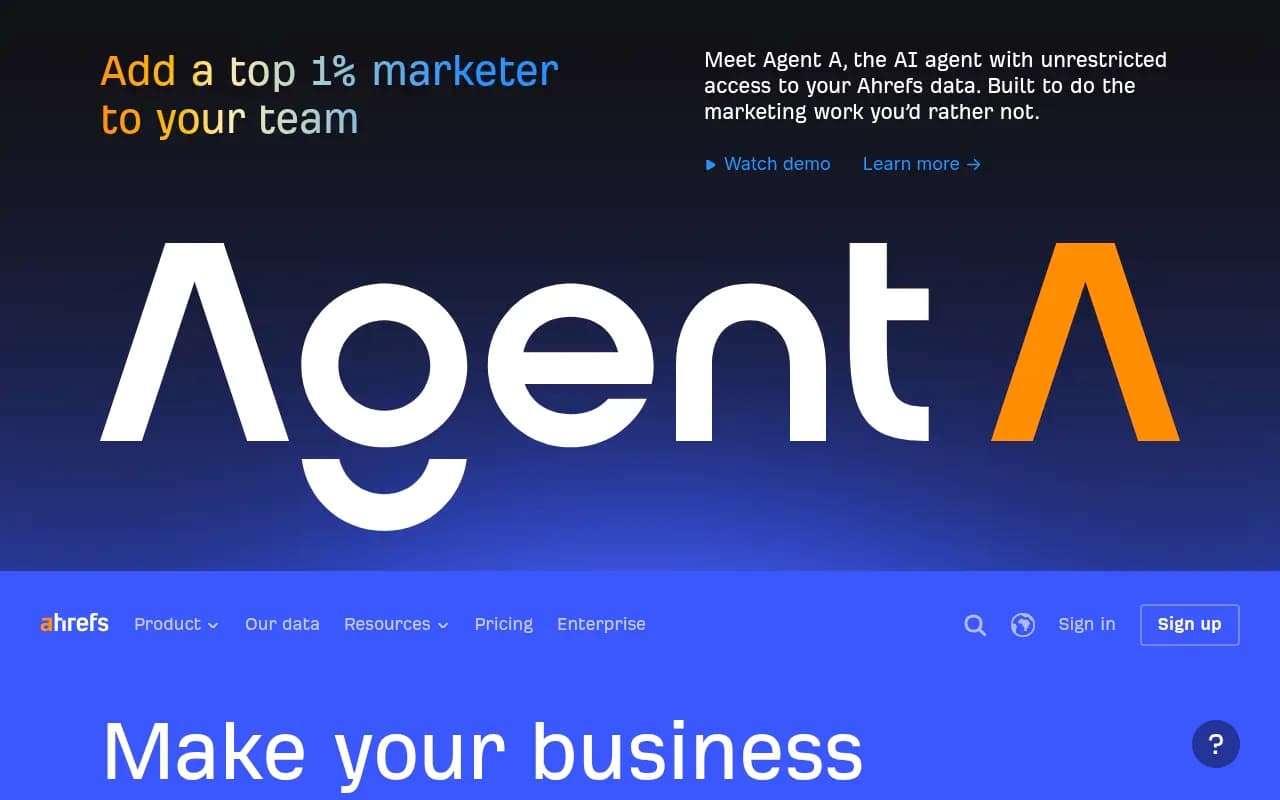
Ahrefs is a traditional SEO platform that has added some AI search monitoring features. Its core strengths are backlink analysis, keyword research, site audits, and organic rank tracking. The AI search piece, called Brand Radar, is a newer addition -- but it's not the center of the product.
Dedicated GEO tools (Generative Engine Optimization platforms) are built from the ground up to track how AI search engines respond to queries, which brands they cite, and what content gaps exist. They're narrower in scope but much deeper on the AI search side.
The comparison isn't really "which tool is better." It's "which tool is better for which job."
Where Ahrefs still wins
Let's be honest: Ahrefs is excellent at what it was built to do.
Backlink analysis
Ahrefs has one of the largest backlink indexes in the industry. If you want to understand your link profile, find toxic links, spy on competitor backlinks, or identify link-building opportunities, nothing beats it. GEO tools don't touch this at all.
Keyword research for traditional search
The Keywords Explorer in Ahrefs is genuinely powerful. Volume estimates, keyword difficulty scores, SERP analysis, parent topic clustering -- it's mature, well-calibrated data built over years. If you're planning content for Google's organic results, this is still the right tool.
Site audits and technical SEO
Ahrefs' Site Audit crawls your site and flags technical issues: broken links, slow pages, missing meta tags, crawl errors. This is foundational SEO work that GEO tools don't cover.
Rank tracking in Google
If you need to track where your pages rank for specific keywords in Google's traditional search results, Ahrefs does this well. Daily updates, SERP feature tracking, competitor comparisons -- it's solid.
Semrush is the other all-in-one platform worth mentioning here. It has its own AI Visibility Toolkit, which is more developed than Ahrefs' Brand Radar in some respects -- but it also uses fixed prompts, which limits how much you can customize what you're tracking.
Where dedicated GEO tools win
Here's where the comparison gets interesting.
Tracking real AI search behavior
Ahrefs Brand Radar monitors AI search, but it uses a fixed set of prompts. You can't define the specific queries your customers are actually typing into ChatGPT or Perplexity. That's a meaningful limitation.
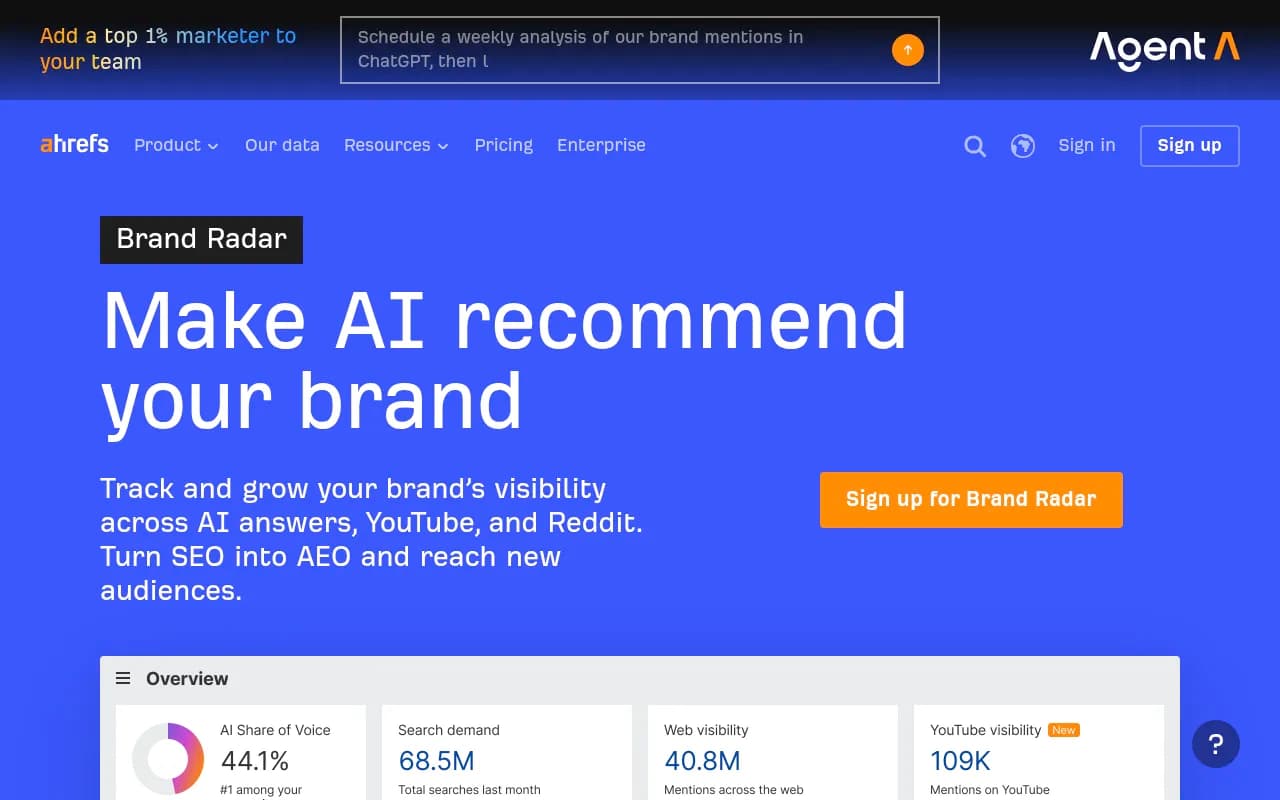
Dedicated GEO platforms let you define your own prompt sets, track responses across multiple AI engines simultaneously, and see exactly what each model says about your brand versus competitors. That's a fundamentally different level of control.
Content gap analysis for AI visibility
This is where the gap between traditional SEO tools and GEO tools is widest. Ahrefs can tell you which keywords you're not ranking for in Google. It can't tell you which questions ChatGPT is answering for your competitors but not for you -- or what content you'd need to create to change that.
Dedicated GEO platforms built around an optimization loop (find gaps, create content, track results) are doing something Ahrefs simply isn't designed for.
Promptwatch is one example of a platform that closes this loop: Answer Gap Analysis shows which prompts competitors are visible for that you're not, Content Agents generate articles grounded in that gap data, and page-level tracking shows when AI models start citing your new content.

AI crawler logs and indexing visibility
Some GEO platforms show you real-time logs of AI crawlers (ChatGPT's bot, Perplexity's crawler, Claude's agent) hitting your website -- which pages they read, how often they return, and when a page moves from "crawled" to "cited." Ahrefs has no equivalent of this.
If an AI model is ignoring a key page on your site, you'd never know from Ahrefs. A GEO platform with crawler log access can tell you exactly what's happening.
Multi-model monitoring
Ahrefs Brand Radar monitors AI search, but the depth of multi-model coverage varies. Dedicated GEO tools are built to track responses across ChatGPT, Perplexity, Gemini, Claude, Grok, DeepSeek, Copilot, and more -- simultaneously, with per-model breakdowns. That matters because different AI engines cite different sources, and your visibility can vary dramatically between them.
Traffic attribution from AI search
Some GEO platforms connect AI visibility to actual website traffic and revenue. Ahrefs tracks organic search traffic from Google. It doesn't attribute traffic arriving from AI search engines. As AI search grows as a channel, this attribution gap becomes more expensive to ignore.
Feature comparison table
| Feature | Ahrefs | Dedicated GEO tools |
|---|---|---|
| Backlink analysis | Excellent | None |
| Keyword research (Google) | Excellent | Limited or none |
| Site audit / technical SEO | Excellent | None |
| Google rank tracking | Excellent | None |
| AI search monitoring | Basic (fixed prompts) | Core feature, custom prompts |
| Multi-model AI coverage | Limited | 8-12 models typically |
| Content gap analysis for AI | No | Yes |
| AI content generation | No | Yes (on some platforms) |
| AI crawler logs | No | Yes (on some platforms) |
| AI traffic attribution | No | Yes (on some platforms) |
| Reddit / YouTube insights | No | Yes (on some platforms) |
| ChatGPT Shopping tracking | No | Yes (on some platforms) |
| Pricing (entry level) | ~$129/mo | $99-$249/mo typical |
The honest middle ground
Most marketing teams in 2026 aren't choosing between traditional SEO and GEO. They're trying to do both, because both channels matter.
The question is whether you can get enough GEO capability from Ahrefs' Brand Radar feature, or whether you need a dedicated platform.
Here's a practical way to think about it:
Stick with Ahrefs Brand Radar if:
- AI search is a small fraction of your traffic and you're not seeing competitors outrank you in AI answers
- You're primarily focused on Google's traditional organic results
- Budget is tight and you need one tool to cover everything
- You're just starting to explore AI search monitoring and want to dip a toe in before committing
Add a dedicated GEO tool if:
- You're already losing traffic to AI search and need to understand why
- Competitors are showing up in AI answers for queries where you should be visible
- You want to create content specifically optimized for AI citation, not just Google ranking
- You need to track AI crawler behavior on your site
- You're running a brand that depends on being recommended by AI assistants (e-commerce, travel, SaaS, local services)
Several dedicated GEO tools are worth evaluating depending on your needs:
Profound is one of the more enterprise-oriented options, with strong analytics and multi-model coverage.
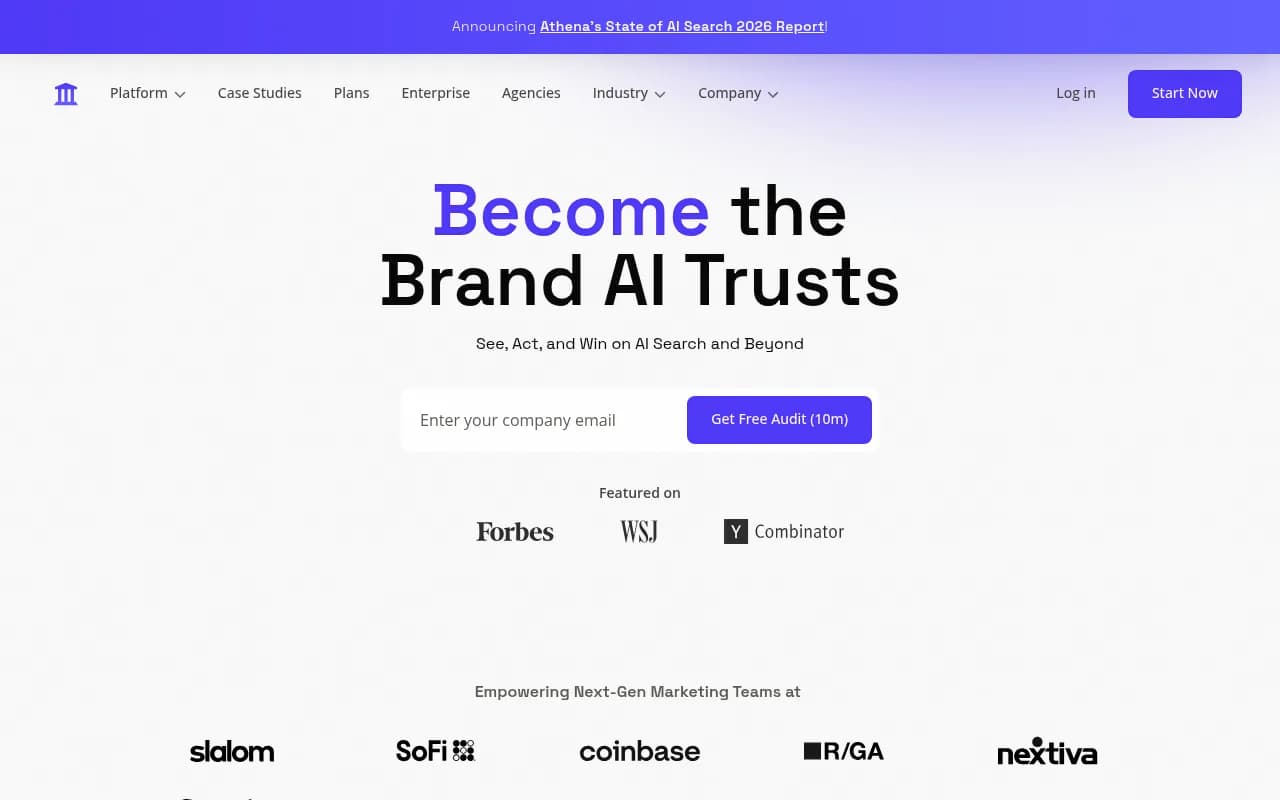
AthenaHQ is monitoring-focused and works well for teams that want clean dashboards without the complexity of a full optimization platform.
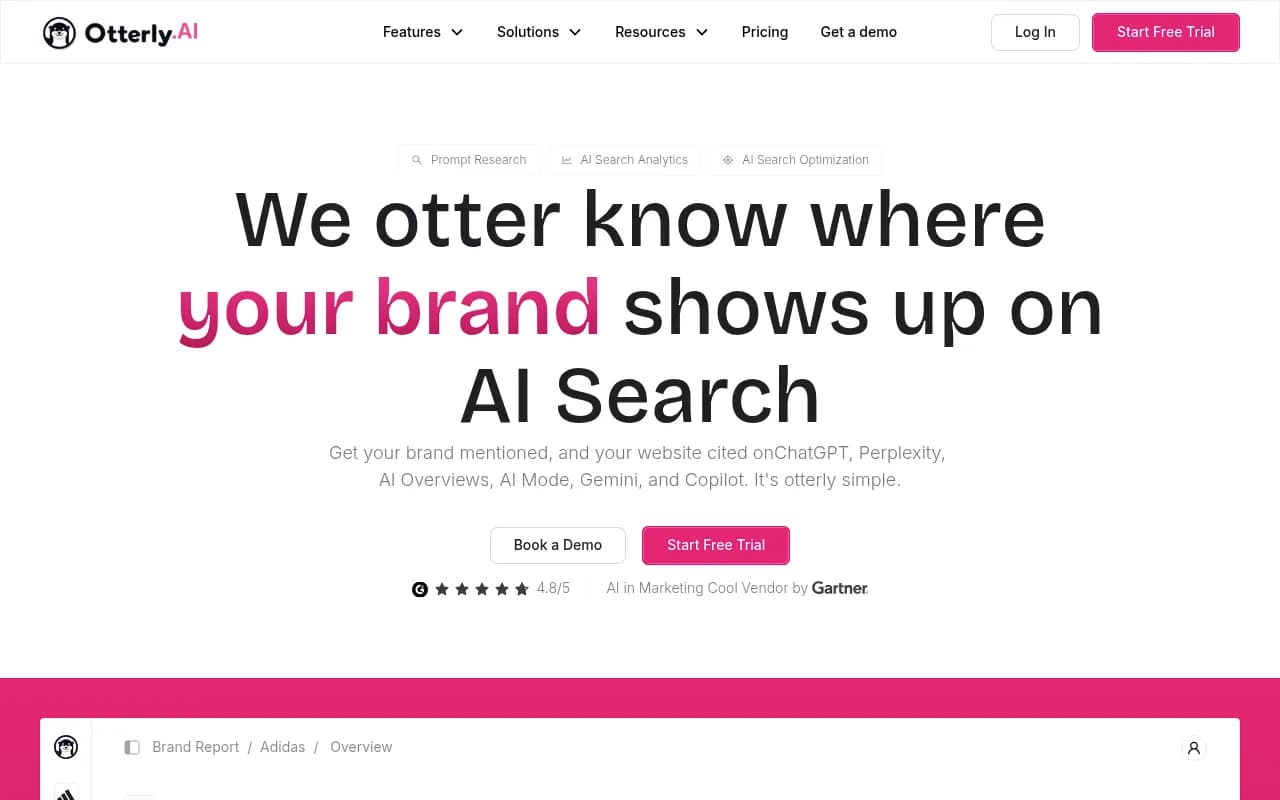
Otterly.AI is a more affordable entry point if you're just getting started with AI brand monitoring.
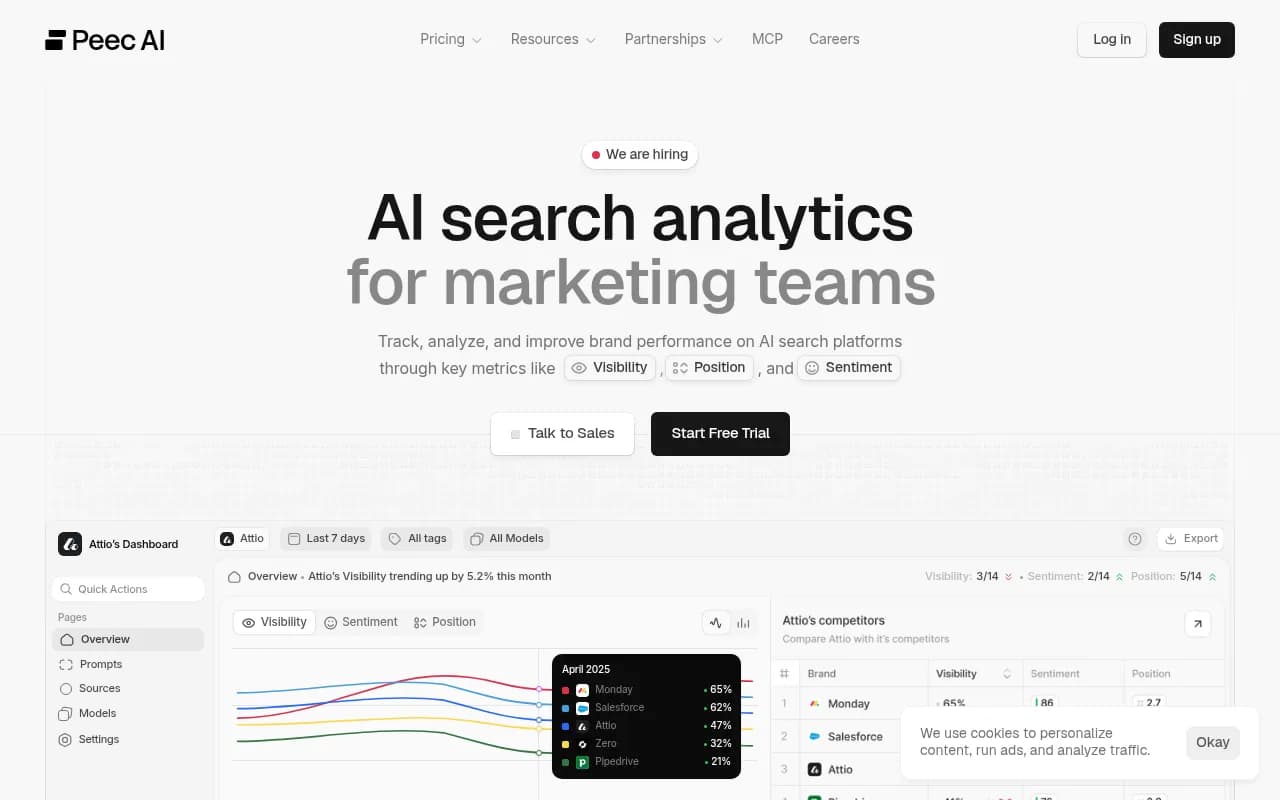
Peec AI offers AI visibility tracking with suggestions, sitting between basic monitoring and full optimization.
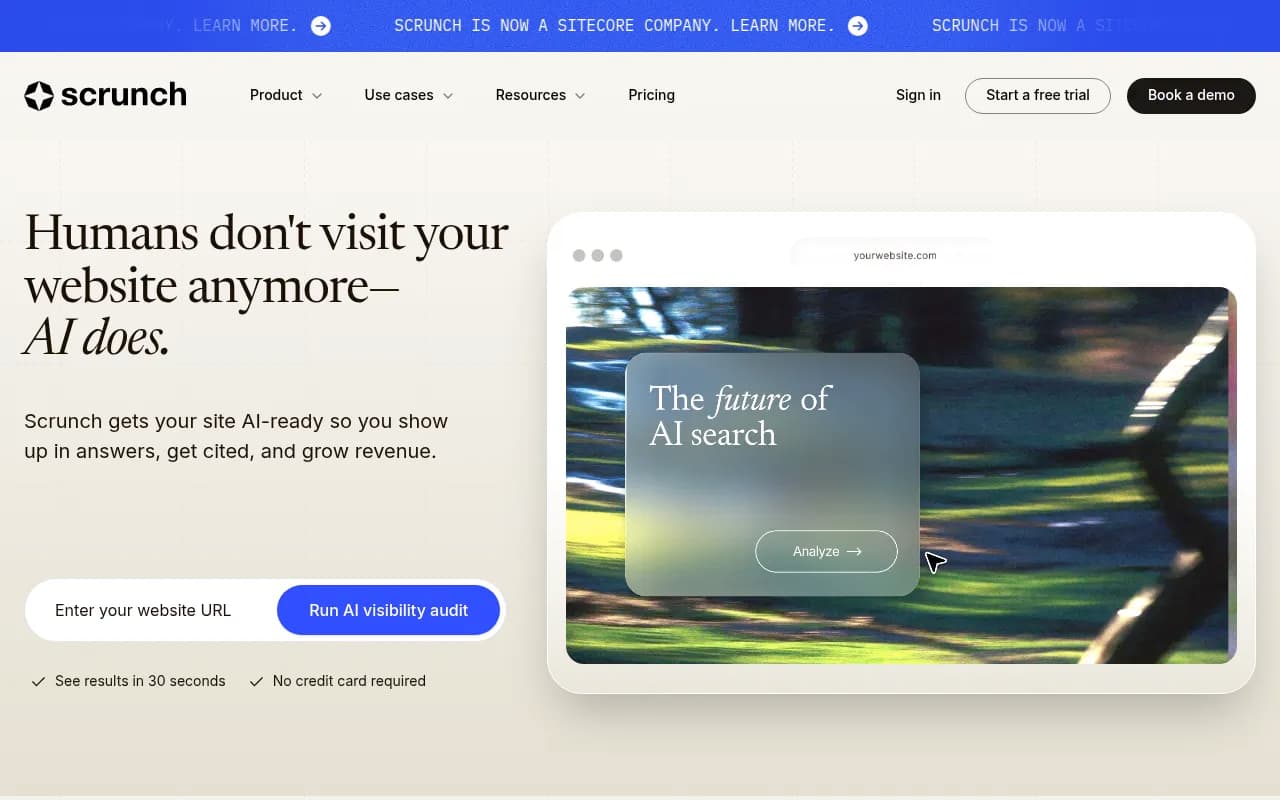
Scrunch AI is worth a look for agencies managing multiple brands across AI search channels.
What the data is telling us
The 38% figure from Ahrefs' own research is worth returning to. If less than 40% of AI Overview citations come from top-10 Google results, then ranking well in Google is no longer a reliable proxy for AI visibility. These are increasingly separate games.
That doesn't mean traditional SEO is irrelevant. Google's organic results still drive enormous traffic, and the technical foundations of good SEO (fast pages, clean structure, authoritative content) still matter for AI search too. But the optimization strategies diverge. Getting cited in a Perplexity answer requires different thinking than ranking for a keyword in Google.
The tools that help you do one job aren't necessarily the tools that help you do the other.
A note on the broader GEO tool landscape
If you're evaluating dedicated GEO platforms, it's worth understanding that they vary a lot in what they actually do. Some are monitoring-only dashboards -- they show you data about AI citations but don't help you act on it. Others are built around an optimization loop that takes you from "here's where you're invisible" to "here's the content that will fix it" to "here's proof it worked."
The monitoring-only tools are fine for awareness. But if you're serious about improving AI visibility, you want a platform that closes the loop.
A few other tools worth knowing about in this space:
Search Party is agency-oriented and covers AI search visibility across multiple clients.
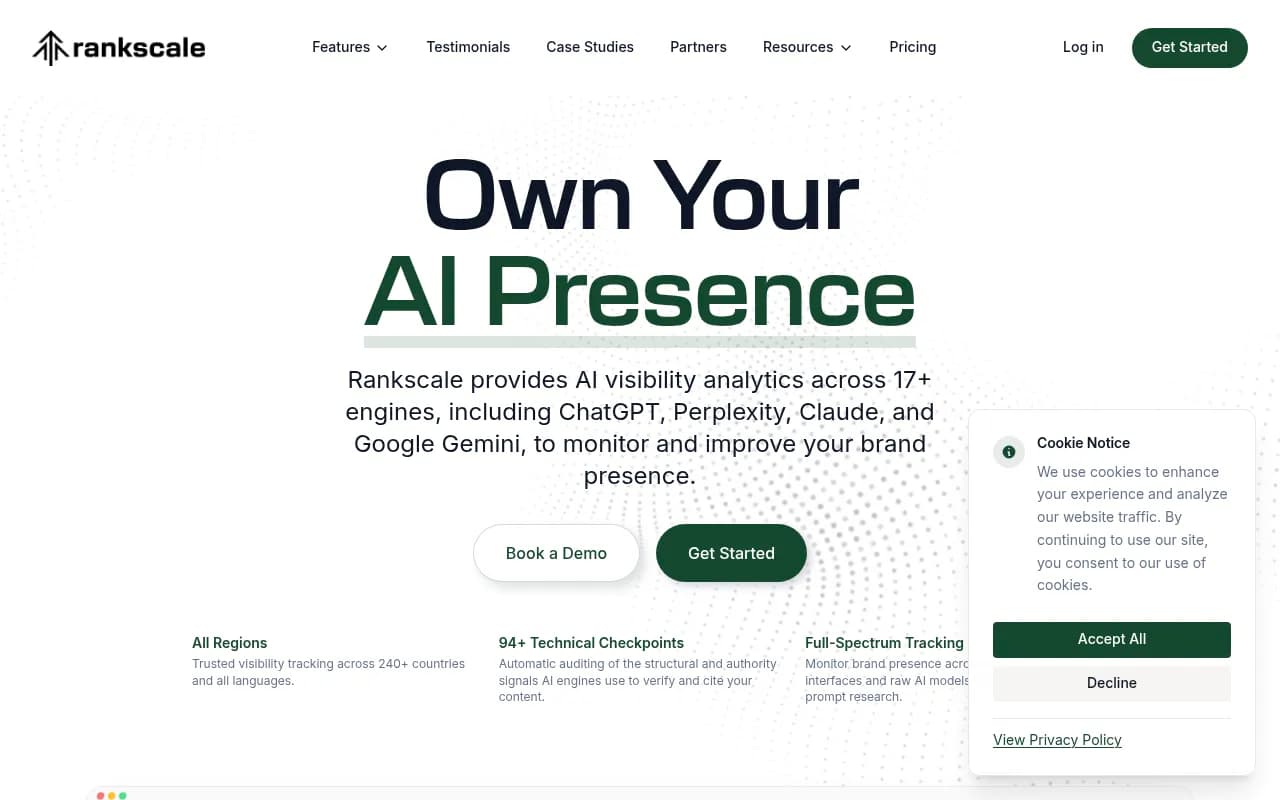
Rankscale focuses on AI search rank tracking with a clean interface.
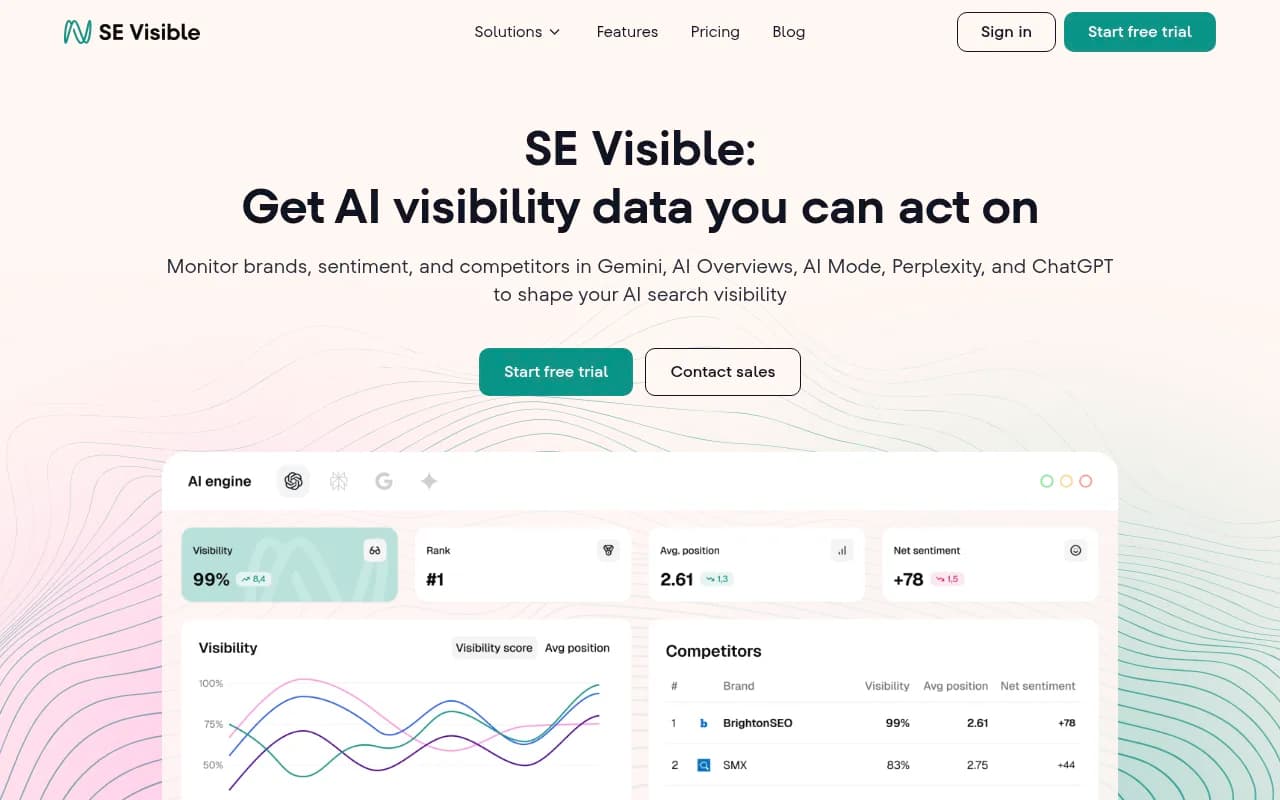
SE Ranking's Visible product extends SE Ranking's traditional SEO data into AI search monitoring.
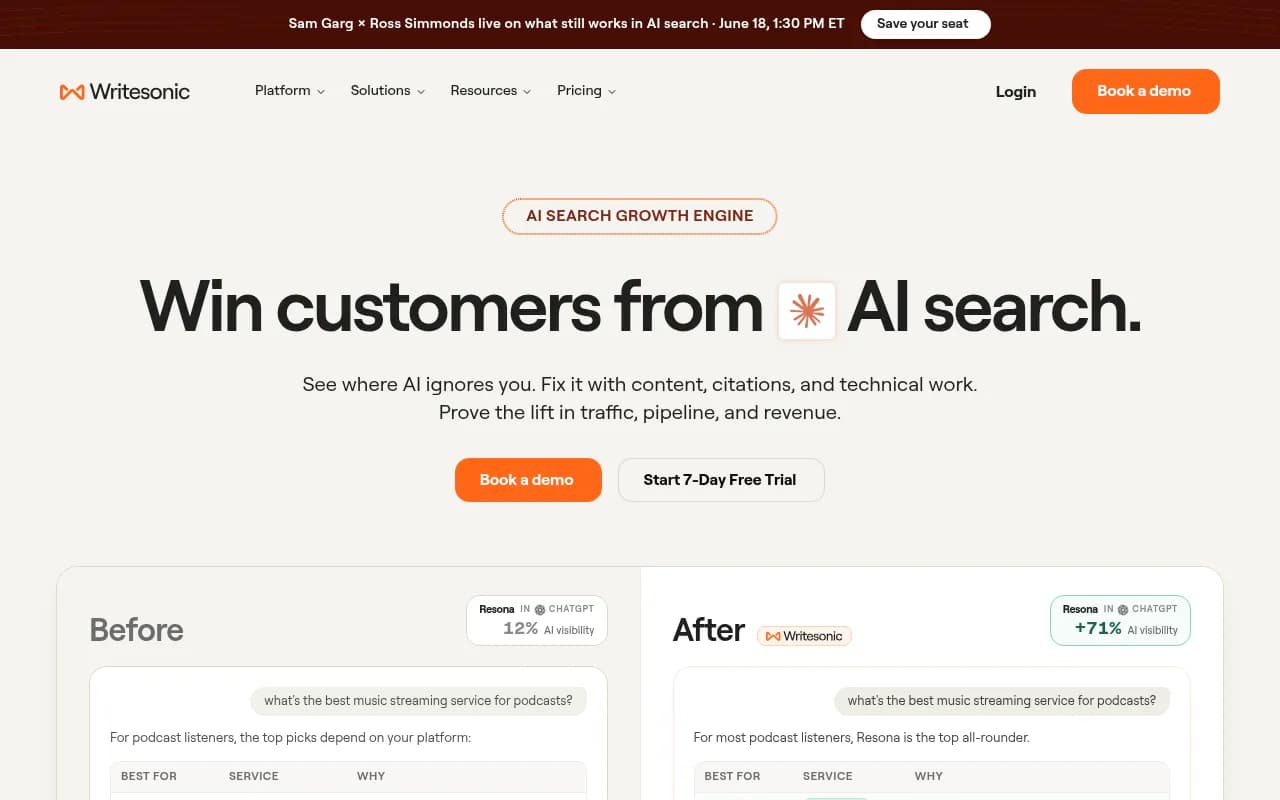
Writesonic GEO combines AI search monitoring with content generation, similar in concept to the optimization loop approach.
The bottom line
Ahrefs is not going anywhere. For traditional SEO work -- backlinks, keywords, site audits, Google rank tracking -- it's still one of the best tools available. If that's the majority of what you need, it's hard to argue against it.
But Ahrefs Brand Radar is not a GEO platform. It's a monitoring feature with fixed prompts and no optimization loop. If AI search is a meaningful part of your traffic picture (or you want it to be), you're going to hit the ceiling of what Ahrefs can tell you pretty quickly.
The teams getting ahead in 2026 aren't treating AI search as a footnote to their SEO strategy. They're tracking it separately, optimizing for it specifically, and using tools built for that job. Whether that means adding a dedicated GEO platform alongside Ahrefs, or consolidating into a platform that handles both, depends on your budget and how much AI search already matters to your business.
What's clear is that the "one tool for everything" answer is getting harder to defend when the everything keeps expanding.