Key takeaways
- AirOps is a capable content workflow tool, but its template-based model breaks down when teams need editorial flexibility, brand governance, or genuine GEO visibility tracking.
- The market has split into two categories: content generation platforms (AirOps-like) and GEO/AI visibility platforms. Many teams need both, but they're often sold as one.
- Before switching, get clear on whether your gap is in content production, AI search monitoring, or the full loop from gap analysis to content creation to citation tracking.
- For teams that need to track and improve visibility in AI search engines like ChatGPT, Perplexity, and Google AI Overviews, dedicated GEO platforms go far beyond what AirOps offers.
- The best choice depends on team size, workflow complexity, and whether you're optimizing for traditional SEO, AI search, or both.
AirOps built a real following by making programmatic content feel manageable. The pitch was simple: connect your data, pick a template, and scale content production without hiring a dozen writers. For a certain kind of team with standardized content formats and a tolerance for workflow configuration, it delivered.
But 2026 is a different environment. AI search engines now shape how buyers discover products before they ever reach a Google result. ChatGPT, Perplexity, Google AI Overviews, and Gemini are answering questions that used to drive organic traffic, and the brands showing up in those answers aren't necessarily the ones with the best SEO. They're the ones with the right content, structured the right way, answering the right questions.
AirOps doesn't track any of that. It generates content. Whether that content earns citations in AI responses is invisible to it.
That's the gap driving most searches for AirOps alternatives in 2026. This guide breaks down what to look for, what questions to ask before you switch, and which platforms are worth serious consideration.
Why teams are looking beyond AirOps
The complaints that surface most often aren't about AirOps being bad. They're about it being the wrong tool for where content strategy is heading.
Template rigidity is the most consistent friction point. AirOps works well when your content fits its templates. Custom editorial workflows, multi-stage review processes, nuanced brand voice guidelines -- the tool starts fighting you. Teams end up spending more time managing the system than creating content.
The AI output quality is the other recurring issue. Generic-sounding drafts that drift from brand voice and require heavy editing before they're usable. That's not a dealbreaker for high-volume, low-stakes content like product descriptions or location pages. It's a real problem for anything that needs to represent your brand in a competitive space.
The structural problem is workflow fragmentation. AirOps handles generation reasonably well, but it doesn't connect to the full content pipeline: planning, briefing, review, publishing, optimization, performance tracking. Teams stitch together multiple tools to cover what they need, and the seams show.
And then there's the GEO gap. AirOps has no mechanism for tracking whether your content is being cited by AI models, which prompts are driving AI-generated answers in your category, or where competitors are showing up that you're not. For teams where AI search visibility is now a strategic priority, that's a significant missing piece.
The two types of platforms you're actually choosing between
Before evaluating specific tools, it helps to understand the market has split into two distinct categories. Conflating them leads to bad buying decisions.
Content workflow platforms (AirOps, Jasper, Writer, Writesonic) focus on generating and managing content at scale. Their value is in production speed, brand consistency, and workflow automation. They don't typically track AI search visibility.
GEO and AI visibility platforms (Promptwatch, Profound, AthenaHQ, Peec AI, Otterly.AI) focus on monitoring and improving how brands appear in AI-generated answers. Their value is in citation tracking, prompt analysis, gap identification, and optimization. Some of them also generate content; most don't.
A few platforms are trying to bridge both. That's where the most interesting buying decisions happen.
The question to answer before you start evaluating tools: is your primary gap in content production, or in AI search visibility? The answer shapes everything else.
What to look for in an AirOps alternative
End-to-end workflow coverage
Does the tool support the full pipeline, or just one stage? A tool that handles research and generation but not optimization or tracking will leave you with the same fragmentation problem you have now.
GEO readiness
Can it tell you which prompts are driving AI-generated answers in your category? Does it track citations across ChatGPT, Perplexity, Google AI Overviews, and other models? Can it identify gaps between what AI models are saying and what your content covers? These questions separate genuine GEO platforms from traditional SEO tools with a GEO badge.
Brand governance
With AI-generated content now standard, the question isn't just "can it generate content?" but "can it generate content that consistently sounds like us?" Look for brand voice controls, style guide integration, and approval workflows.
Pricing transparency
AirOps has been criticized for opaque pricing that makes it hard to forecast costs as usage scales. Alternatives that publish clear tier pricing are easier to budget for.
Actionability, not just monitoring
A lot of tools will show you data about your AI visibility. Fewer will tell you what to do about it. The most valuable platforms close the loop: find the gaps, help you create content to fill them, then track whether it worked.
The platforms worth considering
For GEO and AI search visibility
If your primary need is understanding and improving how your brand appears in AI-generated answers, this is the category to focus on.
Promptwatch is the most complete platform in this space. It tracks visibility across 10 AI models (ChatGPT, Perplexity, Google AI Overviews, Claude, Gemini, Grok, DeepSeek, Copilot, Meta AI, Mistral), identifies which prompts competitors are visible for that you're not, and then helps you create content to close those gaps. The distinction that matters: most GEO tools show you data and stop there. Promptwatch connects monitoring to action -- answer gap analysis, AI-powered content generation grounded in real prompt data, and page-level citation tracking that shows you when new content starts earning citations.
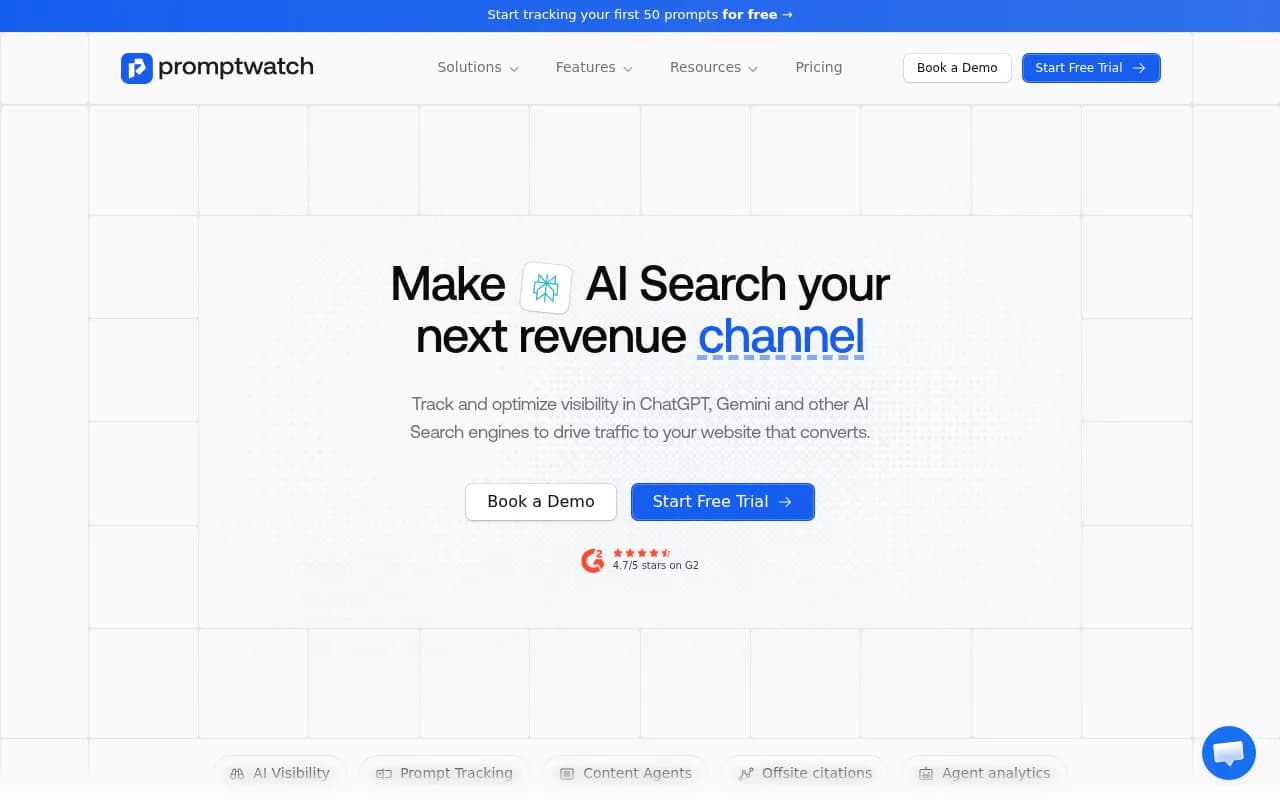
For teams that want to understand the full picture of AI crawler behavior, Promptwatch's crawler logs show exactly which pages AI agents are reading, how often they return, and when a page moves from crawled to cited. That's a level of diagnostic detail most platforms don't offer.
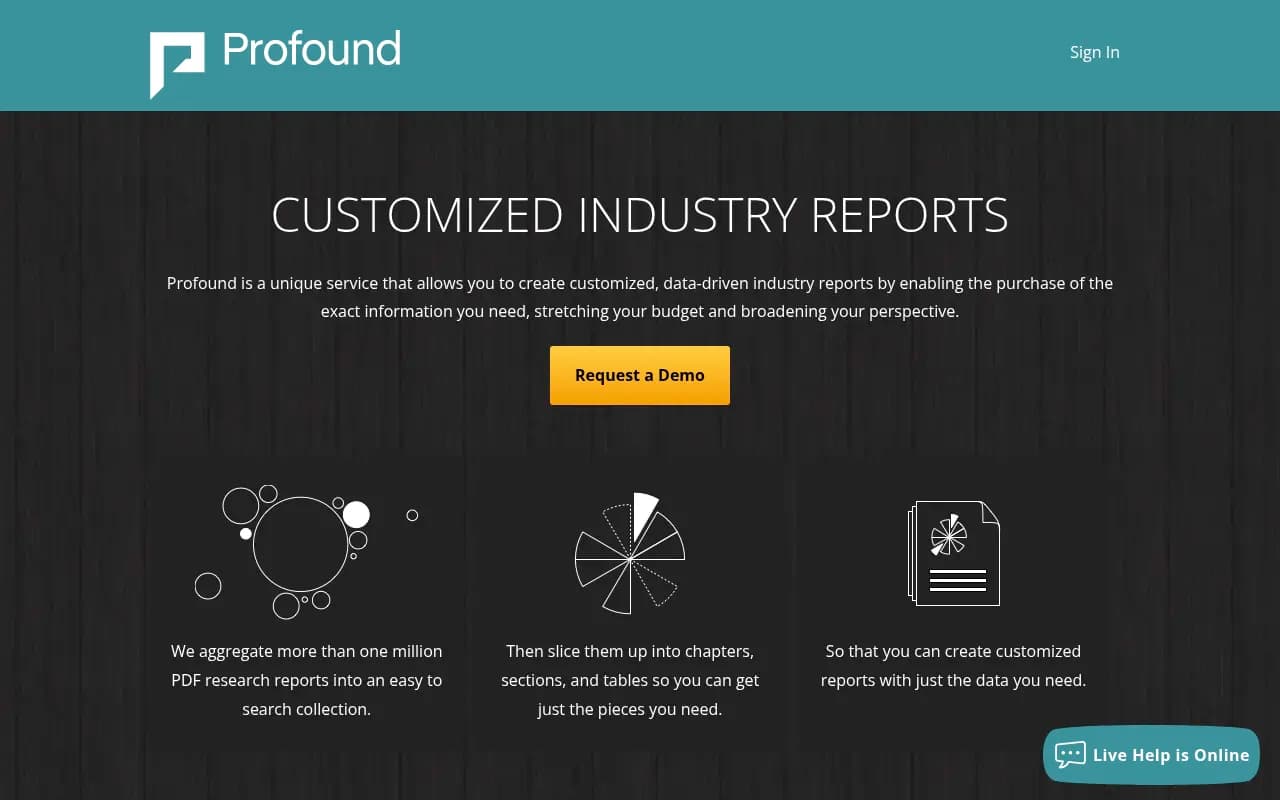
Profound is another strong option for enterprise teams. It has solid AI search monitoring and analytics, though at a higher price point and without the content generation capabilities.
AthenaHQ focuses on AI search monitoring and is worth evaluating if your primary need is visibility tracking rather than content creation. It doesn't have content optimization or generation tools.

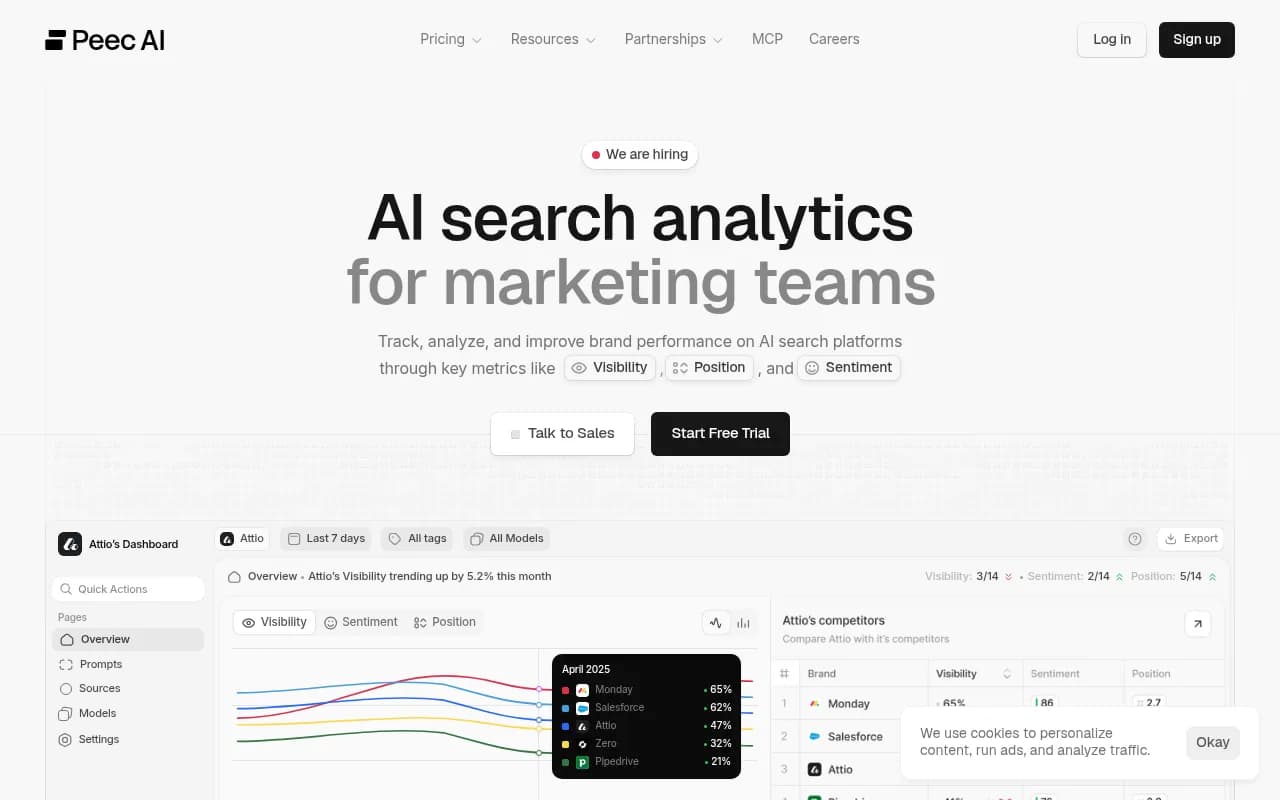
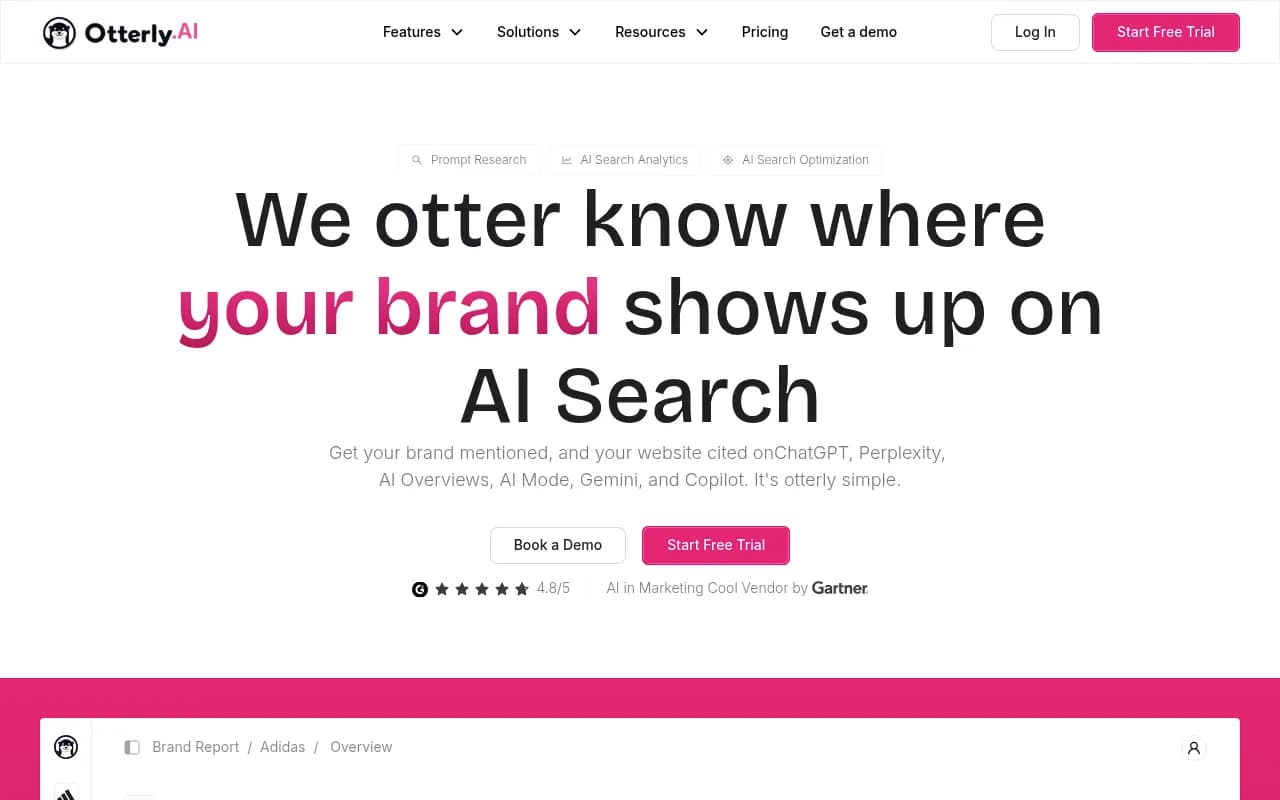
Peec AI and Otterly.AI are both more affordable entry points into AI visibility monitoring. They're monitoring-focused, which means they'll show you where you stand but won't help you improve.
For content generation and SEO workflows
If your primary gap is in content production quality, brand consistency, or SEO-grounded content creation, these platforms are more relevant.
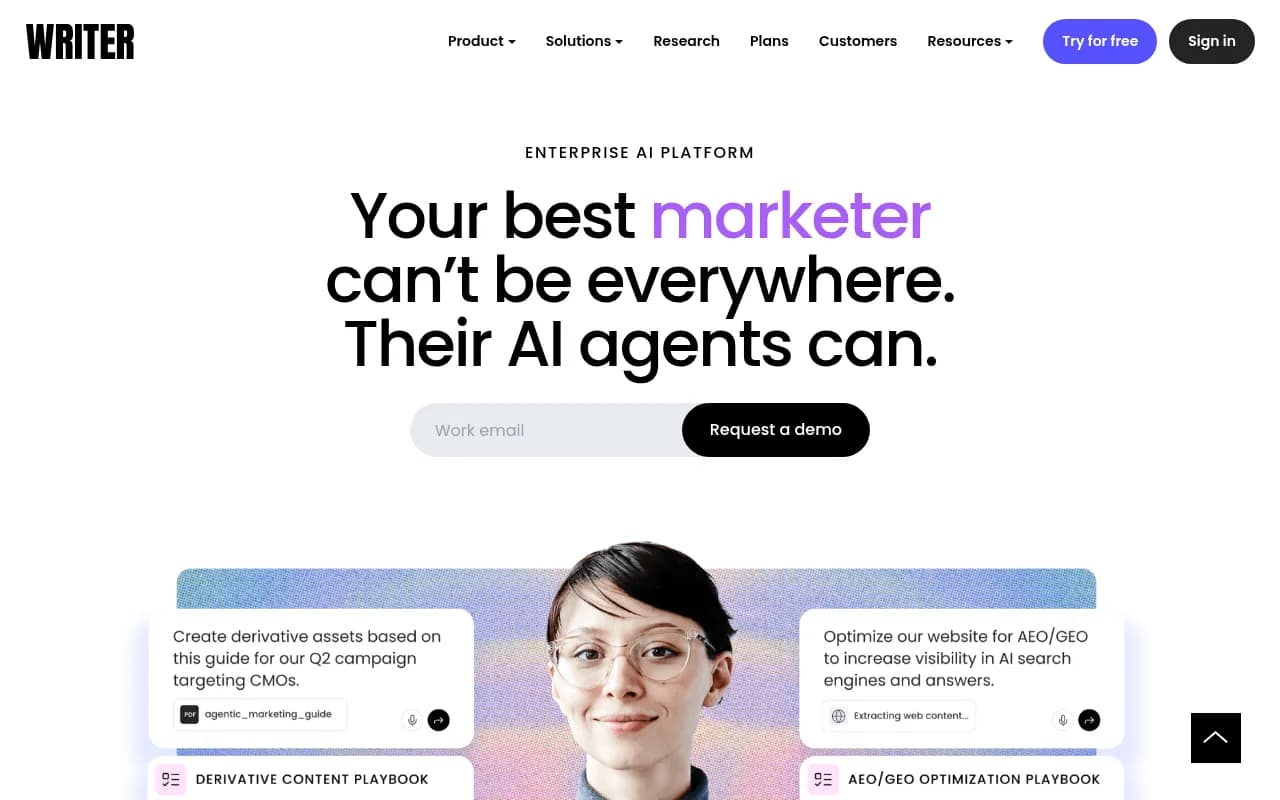
Writer is the most serious enterprise content platform in this category. It has genuine brand governance controls, style guide enforcement, and compliance features that AirOps lacks. For larger teams where consistency and brand safety matter, it's a meaningful upgrade.
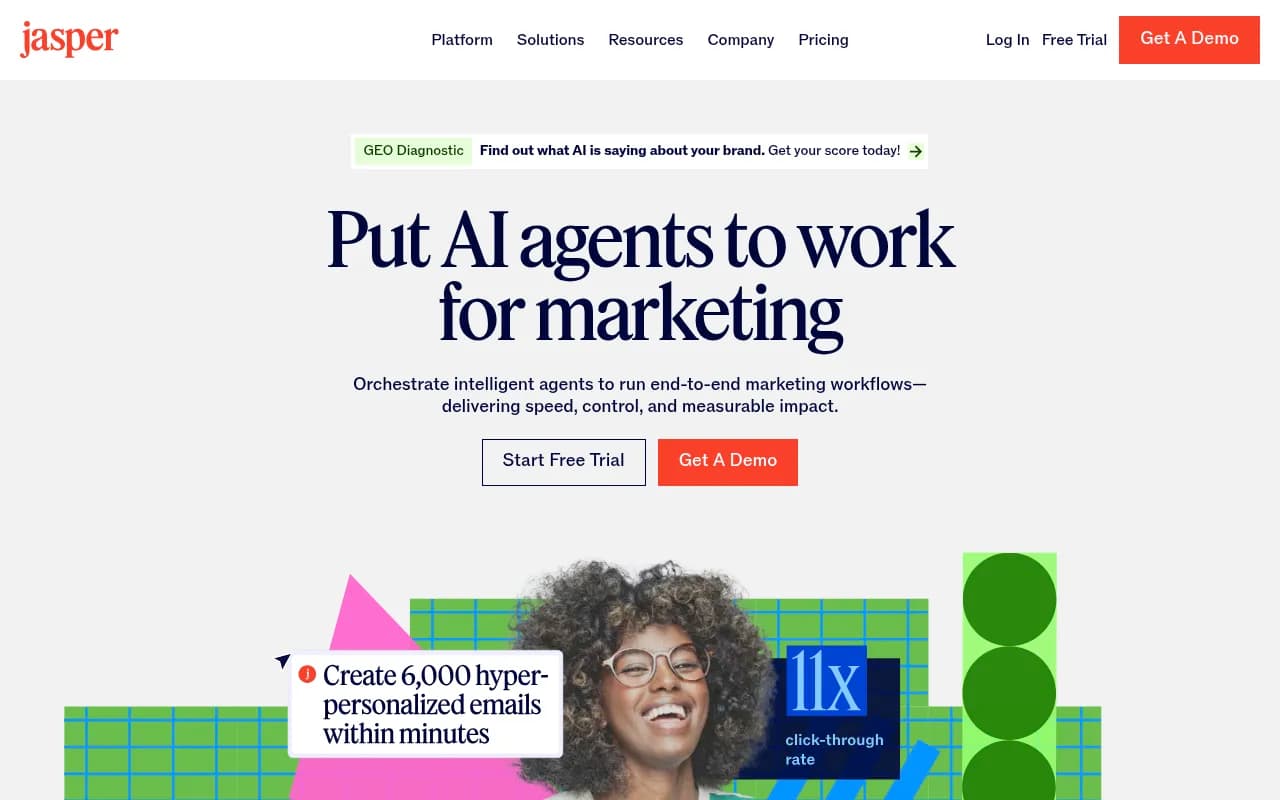
Jasper is the most widely used AI writing platform and has improved significantly in 2025-2026. It's better suited to marketing teams that need flexible content generation across formats rather than structured SEO workflows.
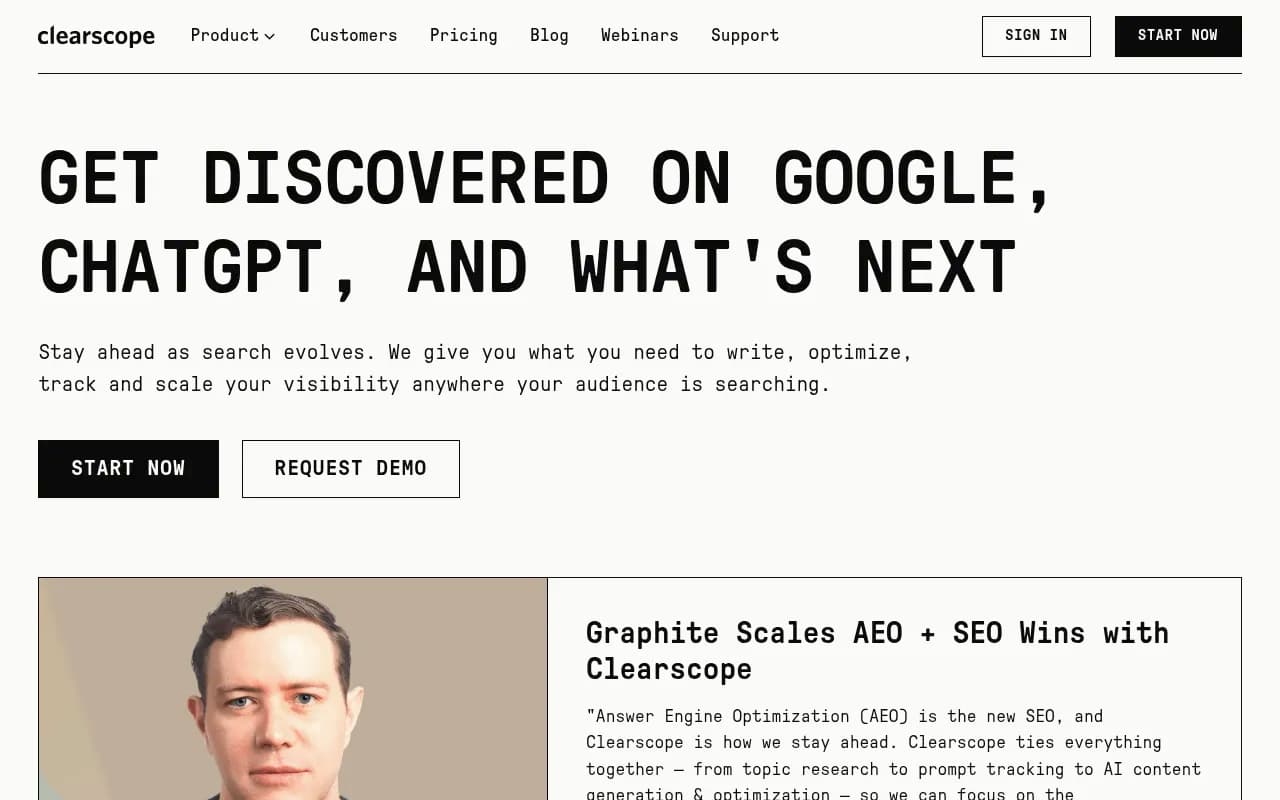
Surfer SEO and Clearscope are both strong for SEO-grounded content optimization. They're not AirOps replacements in the workflow sense, but if your core need is content that ranks in traditional search, they're more focused tools.

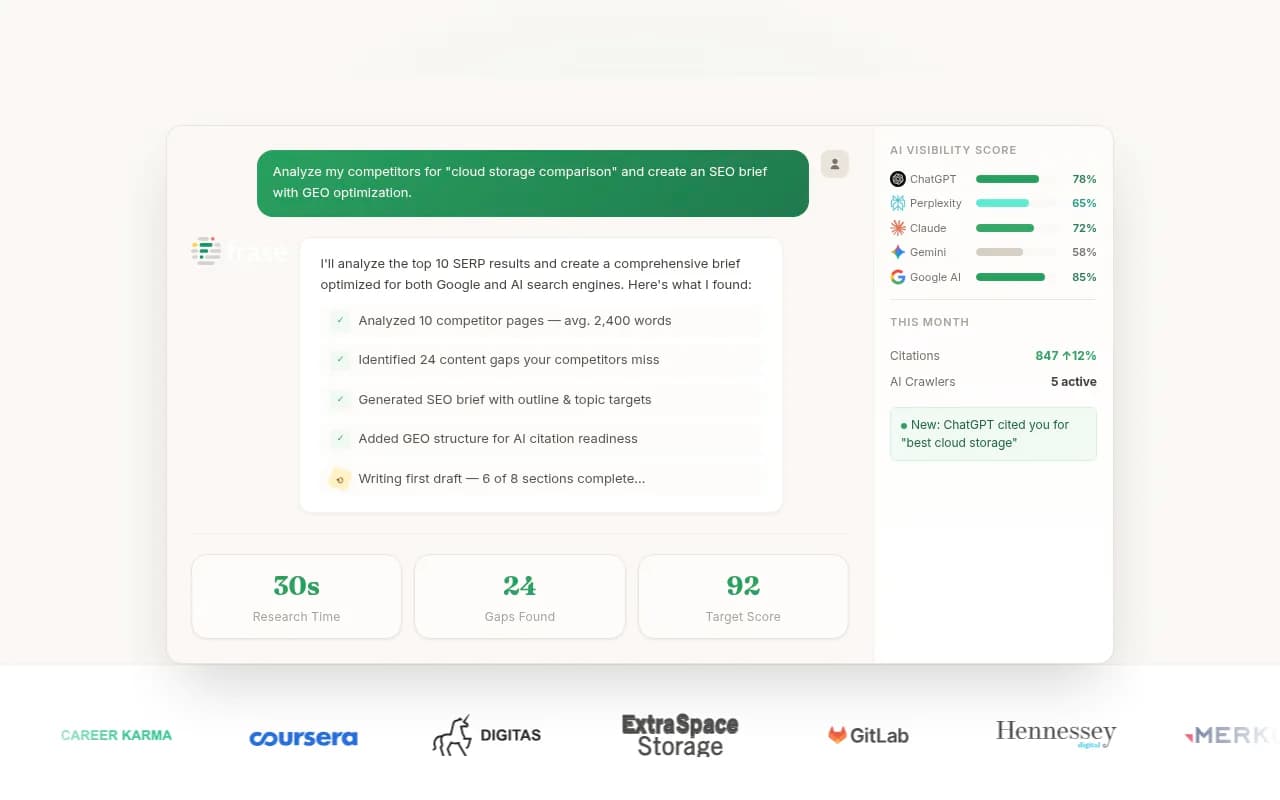
Frase sits in the middle -- content research, briefing, and optimization with some AI generation. It's a good fit for teams that want to improve content quality without building complex workflows.
For all-in-one SEO and AI visibility
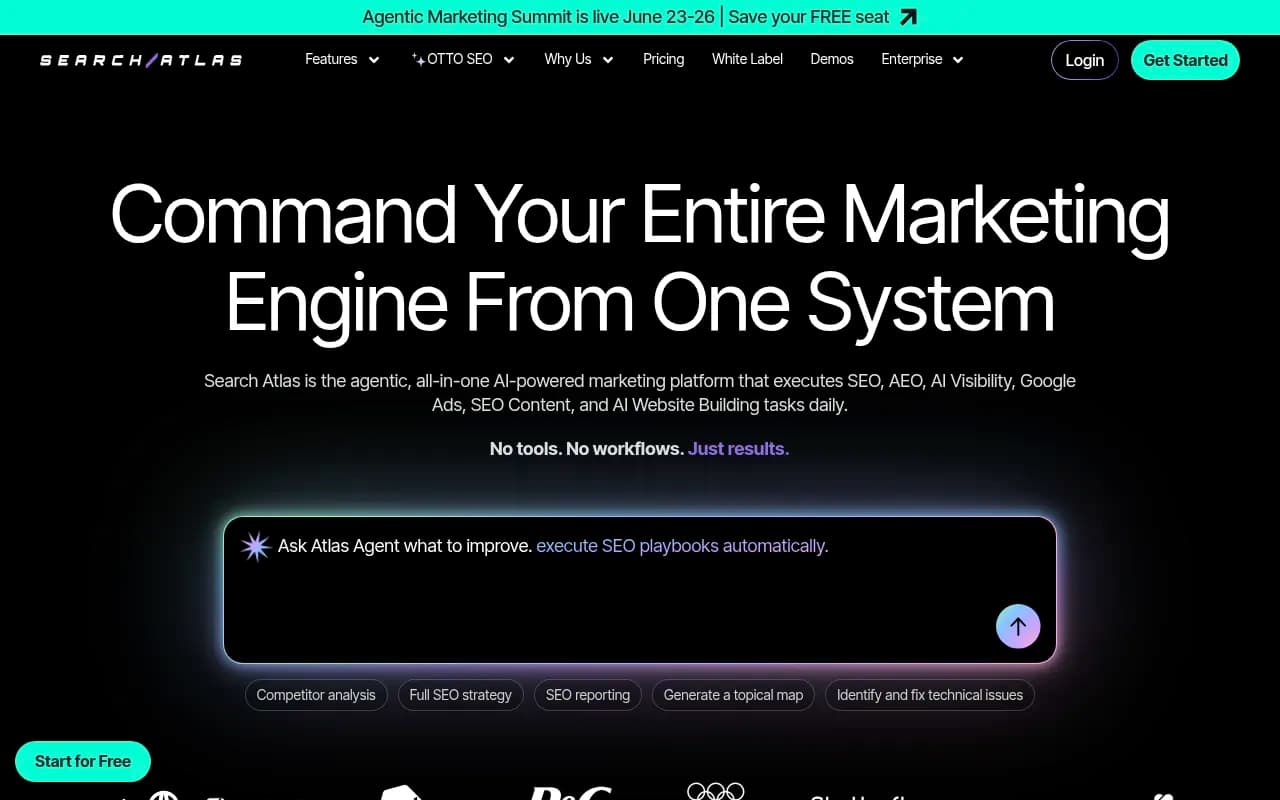
Search Atlas is worth considering if you want traditional SEO capabilities alongside some AI visibility features in a single platform. It covers keyword research, content optimization, and rank tracking.
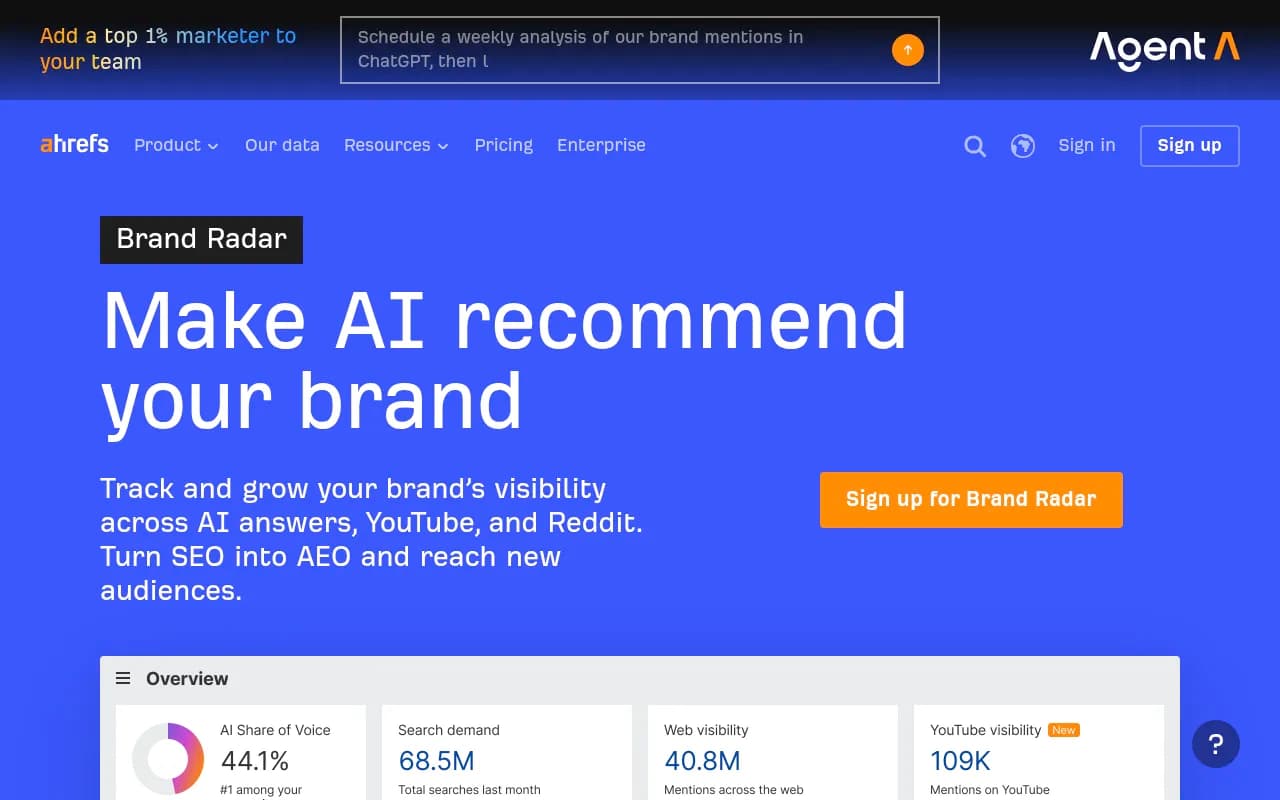
Semrush and Ahrefs are the established players here. Both have added AI visibility features -- Semrush's AI Visibility Toolkit and Ahrefs' Brand Radar -- but these are additions to traditional SEO platforms rather than purpose-built GEO tools. They use fixed prompt sets rather than tracking real user queries, and neither offers AI traffic attribution.
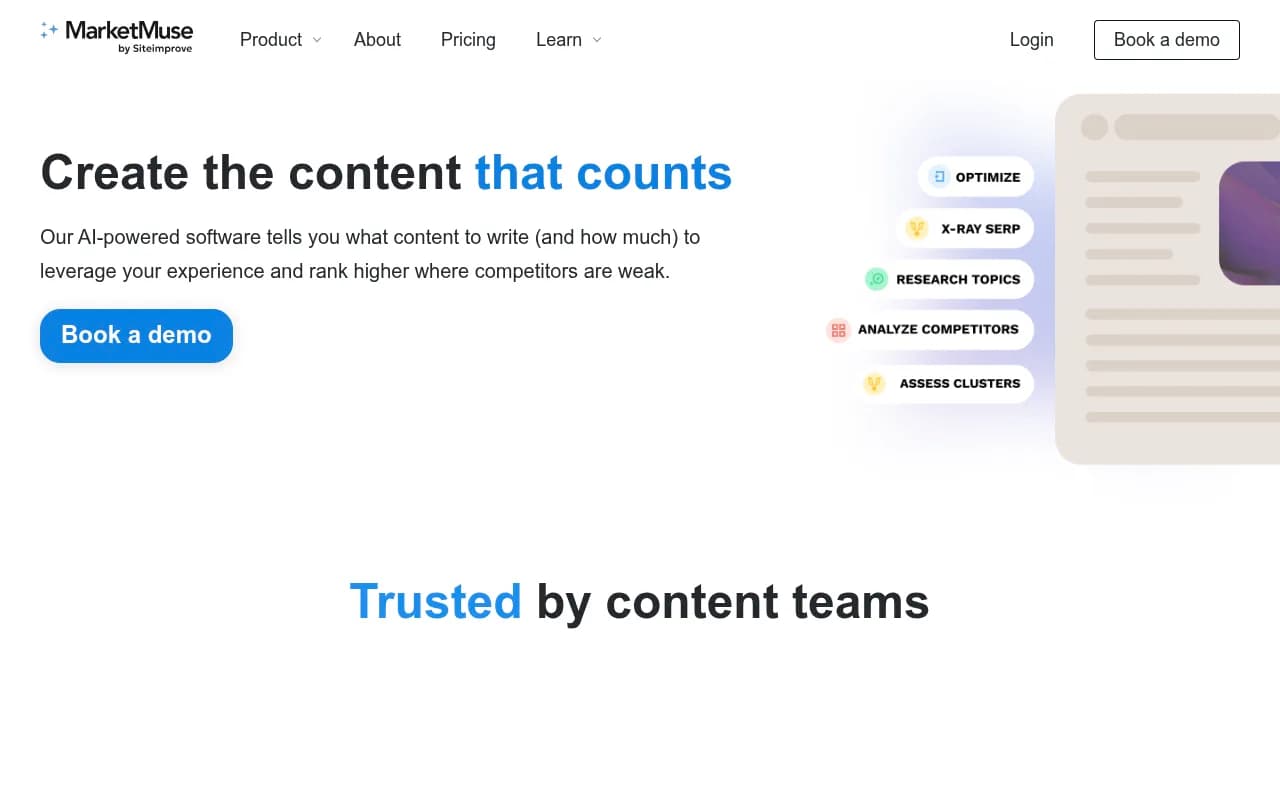
MarketMuse is strong for content strategy and planning -- particularly useful for understanding topical authority and content gaps in traditional SEO. Less relevant if GEO is your primary concern.
Comparison table: AirOps vs. key alternatives
| Platform | Primary focus | Content generation | GEO/AI visibility | Crawler logs | Pricing transparency |
|---|---|---|---|---|---|
| AirOps | Content workflows | Yes (template-based) | No | No | Limited |
| Promptwatch | GEO + content optimization | Yes (gap-driven) | Yes (10 models) | Yes | Clear tiers ($99-$579/mo) |
| Profound | AI search visibility | No | Yes | No | Higher, enterprise |
| AthenaHQ | AI search monitoring | No | Yes | No | Moderate |
| Writer | Enterprise content | Yes (brand-governed) | No | No | Enterprise pricing |
| Jasper | AI writing | Yes (flexible) | No | No | Clear tiers |
| Surfer SEO | Content optimization | Partial | No | No | Clear tiers |
| Search Atlas | All-in-one SEO | Yes | Partial | No | Clear tiers |
| Semrush | Traditional SEO + AI add-on | No | Partial (fixed prompts) | No | Clear tiers |
| Frase | Content research/optimization | Yes (limited) | No | No | Clear tiers |
Questions to ask before you switch
Switching platforms is a real cost -- migration, retraining, workflow rebuilding. Before committing, work through these questions.
What's the actual problem? Is it content quality, production speed, brand consistency, AI search visibility, or all of the above? Different answers point to different tools. Don't buy a GEO platform when your real problem is editorial workflow, and don't buy a content platform when your real problem is that competitors are showing up in AI answers and you're not.
What does your current stack already cover? If you have a solid content production workflow, you might only need to add AI visibility monitoring on top. If you're starting from scratch, an all-in-one platform makes more sense.
How much setup are you willing to do? AirOps has a steep learning curve. Some alternatives (Jasper, Frase) are much faster to get started with. Others (Profound, enterprise Writer) require more onboarding. Be honest about your team's capacity.
What does success look like in 90 days? If you can't answer this, you'll struggle to evaluate any platform. Define whether you're measuring content output, citation rates, AI visibility scores, or traffic from AI search engines.
Does the vendor publish pricing? Opaque pricing is a red flag for any tool at this stage of the market. If you can't find a number without talking to sales, factor in the time cost of that process.
The case for separating content creation from GEO tracking
One pattern worth considering: the best-performing teams in 2026 aren't necessarily using one platform for everything. They're using a focused content tool for production and a dedicated GEO platform for visibility tracking and optimization.
This isn't about buying more software. It's about recognizing that content generation and AI search optimization are genuinely different problems. A tool optimized for one rarely does the other well.
The exception is platforms that have genuinely built both capabilities with real depth -- not as an afterthought feature, but as core product. Promptwatch's content agents, for example, are grounded in actual prompt data and citation analysis, not generic SEO signals. That's a meaningful difference from a content platform that adds "AI visibility" as a checkbox.
How to run your evaluation
A structured evaluation saves time and prevents post-purchase regret.
Start by mapping your current workflow gaps. Write down every point where your team loses time, produces inconsistent output, or lacks visibility. Then group those gaps by category: production, quality, governance, or AI visibility.
Run trials in parallel where possible. Most platforms in this space offer free trials. Test the same content task across two or three tools and compare output quality, time to completion, and how much editing the output needs.
Check the data sources. For GEO platforms specifically, ask how they collect data. Do they track real user-facing AI responses, or just API outputs? API outputs can differ significantly from what users actually see in ChatGPT or Perplexity. This matters for the accuracy of your visibility data.
Talk to the support team before you buy. The quality of onboarding and support is often the difference between a tool that gets adopted and one that sits unused. A 30-minute call before purchase tells you a lot.
The bottom line
AirOps made sense for a specific moment in content marketing: when the goal was volume, the format was standardized, and AI search wasn't a strategic concern. That moment has passed for most growth-focused teams.
The replacement isn't necessarily one platform. It's a clearer understanding of what you actually need -- content production, AI visibility tracking, or both -- and choosing tools built specifically for those jobs.
If AI search visibility is now part of your mandate, start there. The gap between what competitors are getting cited for and what your content covers is measurable, and closing it is where the real leverage is in 2026.