Key takeaways
- Google AI Overviews and ChatGPT pull from fundamentally different signals -- what gets you cited in one often won't work in the other.
- AI Overviews appear in roughly 47-64% of all Google searches in 2026, and sites that haven't adapted are seeing 20-40% traffic drops on informational queries.
- ChatGPT heavily favors high-authority publishers (sites with 32,000+ referring domains are 3.5x more likely to be cited), while AI Overviews still lean on traditional Google ranking signals.
- A dual strategy -- optimizing for both platforms simultaneously -- is no longer optional for brands that depend on organic visibility.
- A handful of GEO platforms now track both environments, but only a few close the loop from monitoring to actual content creation.
Most SEO advice in 2026 treats "AI search" as one thing. It isn't. Google AI Overviews and ChatGPT are built on different architectures, pull from different sources, and respond to different content signals. If you're running the same optimization playbook for both, you're almost certainly invisible somewhere that matters.
This guide breaks down exactly how the two platforms diverge, what each one actually wants from your content, and which tools are built to handle both without making you manage two completely separate workflows.
How Google AI Overviews and ChatGPT actually work (and why it matters)
Before getting into tactics, it helps to understand the mechanical difference between these two systems.
Google AI Overviews are a live retrieval system. When someone searches, Google fetches real-time results, synthesizes them using its Gemini models, and surfaces a summary at the top of the SERP. The key word is "live" -- AI Overviews are grounded in Google's current index. That means traditional ranking signals (E-E-A-T, backlinks, structured data, page authority) still matter. If your page doesn't rank in the top 10 organically, it's unlikely to appear in an AI Overview for that query. The connection between organic rank and AI Overview citation is weakening slightly, but it hasn't broken.
ChatGPT is a different animal. Its base models are trained on a large static corpus, and when ChatGPT Search is enabled, it does pull live web results -- but the citation logic is different. ChatGPT leans heavily on domain authority and publisher reputation. According to SE Ranking research, sites with over 32,000 referring domains are roughly 3.5x more likely to be cited by ChatGPT than lower-authority sites. Reddit, licensed media, and high-DR publishers dominate ChatGPT citations in a way they don't always dominate Google's organic results.
The practical implication: the overlap in citations between ChatGPT and Google AI Overviews is surprisingly small. Ahrefs' AEO course (published April 2026) put it bluntly -- if you're treating AI search as one bucket and optimizing for it the same way everywhere, you're likely invisible somewhere that matters.
What Google AI Overviews actually want from your content
Traditional SEO signals still apply -- but they're not enough
AI Overviews don't ignore your organic rankings. Content that already ranks well in Google's top 10 has a meaningful head start. But ranking alone isn't sufficient anymore. The synthesis layer means Google is looking for content that can be cleanly extracted and assembled into an answer. A page that ranks #2 but is structured as a wall of prose will often lose out to a page ranked #5 that uses clear headers, bullet points, and direct answers.
Structured data and entity signals
Schema markup has become more important, not less. FAQ schema, HowTo schema, and Article schema all help Google understand what your content is about and how to extract specific answers. Entity authority -- being consistently associated with a topic across multiple trusted sources -- also matters. If Google's Knowledge Graph recognizes your brand as an authority on a subject, that association carries into AI Overviews.
E-E-A-T at the page level
Google's E-E-A-T (Experience, Expertise, Authoritativeness, Trustworthiness) signals are baked into how AI Overviews select sources. Author credentials, first-hand experience signals, and clear sourcing all help. For health, finance, and legal queries -- categories where AI Overviews appear most frequently -- this is non-negotiable.
Answer-first formatting
AI Overviews favor content that answers the query in the first 100-150 words, then expands. The synthesis model is looking for a clean "answer block" it can lift. If your introduction spends three paragraphs on context before getting to the point, you're making the model work harder than it needs to.
What ChatGPT wants from your content
Domain authority is the primary filter
This is the biggest difference. ChatGPT's citation behavior is heavily influenced by domain-level authority signals. A well-written article on a low-authority domain will frequently lose to a mediocre article on a high-DR publisher. This isn't entirely fair, but it's the reality. Building referring domains -- through digital PR, guest publishing, and earning links from established outlets -- is a direct lever for ChatGPT visibility.
Brand mentions and offsite presence
ChatGPT's training data and live search both pick up on brand mentions across the web. Reddit threads, YouTube videos, review sites, and third-party listicles all contribute to how ChatGPT perceives your brand's authority on a topic. A brand that's mentioned frequently in relevant Reddit discussions is more likely to surface in ChatGPT answers than a brand with a technically superior website that nobody talks about offsite.
Content that reads like a trusted source
ChatGPT favors content that sounds like it comes from a credible publisher. That means clear attribution, specific data points, named authors, and a tone that matches what you'd find in a respected industry publication. Generic, keyword-stuffed content doesn't just fail to rank -- it actively signals low quality to the model.
Topical depth over breadth
ChatGPT tends to cite sources that go deep on a specific topic rather than covering many topics shallowly. A site that has 50 detailed, well-researched articles on one subject will often outperform a site with 500 thin articles across many subjects.
The content strategy divergence in practice
Here's where it gets concrete. The same piece of content, optimized the same way, will perform differently across these two platforms -- and sometimes the optimization for one actively hurts you in the other.
| Signal | Google AI Overviews | ChatGPT |
|---|---|---|
| Traditional organic ranking | High importance | Moderate importance |
| Domain authority (referring domains) | Moderate | Very high |
| Structured data / schema | High | Low to moderate |
| E-E-A-T signals | High | Moderate |
| Answer-first formatting | High | Moderate |
| Offsite brand mentions (Reddit, YouTube) | Moderate | High |
| Topical depth | Moderate | High |
| Content freshness | High (live retrieval) | Variable |
| Author credentials | High | Moderate |
The divergence is real. A content strategy that chases AI Overview citations (structured data, E-E-A-T, answer-first formatting, organic ranking) is different from one that chases ChatGPT citations (domain authority, offsite presence, topical depth, publisher-quality writing).
The brands winning in both are running dual tracks: a technical SEO and content structure track for AI Overviews, and a digital PR and authority-building track for ChatGPT. That's more work, which is exactly why purpose-built GEO tools have become valuable.
The GEO tools that handle both platforms
Not all GEO tools are created equal. Some monitor one platform, some monitor several but stop at data, and a few actually help you act on what they find. Here's how the landscape breaks down.
Full-stack platforms (monitor + optimize + create)
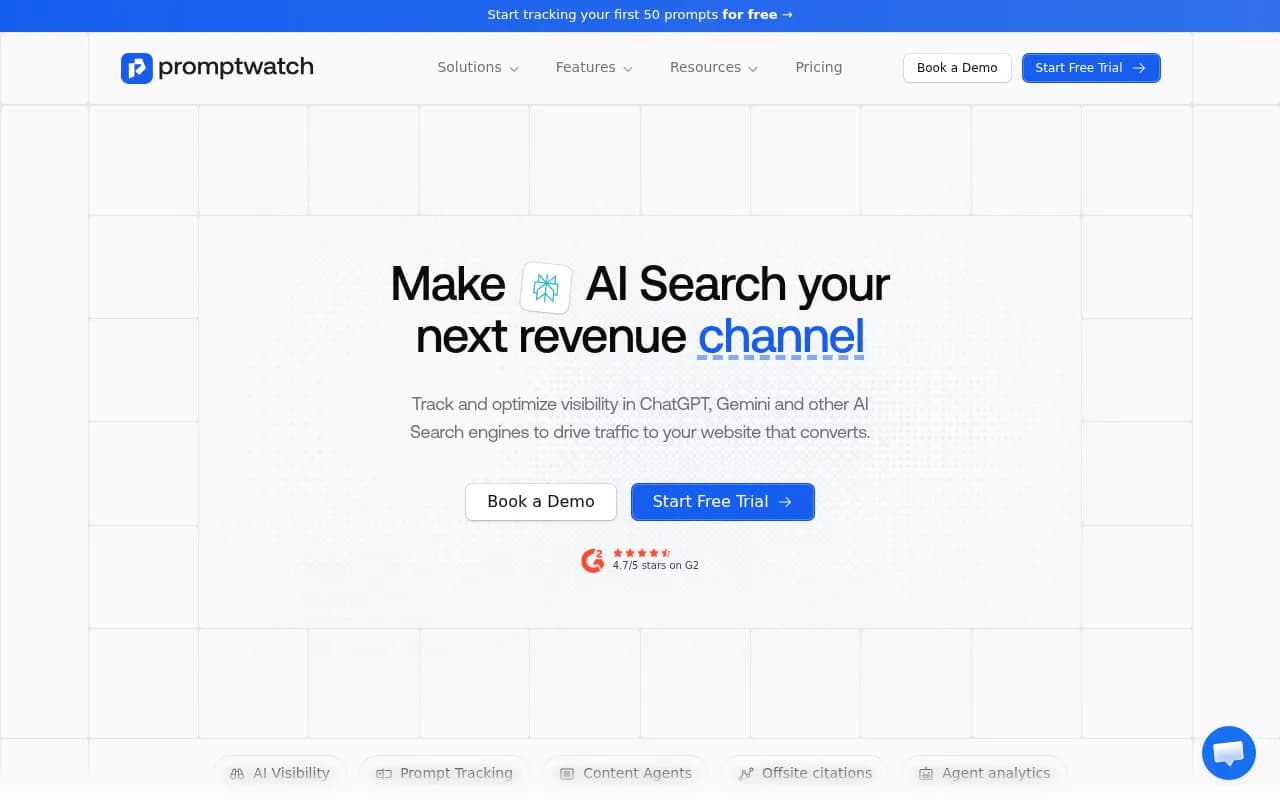
Promptwatch is the most complete option for teams that need to cover both Google AI Overviews and ChatGPT without running two separate workflows. It monitors 10 AI models including ChatGPT, Google AI Overviews, Google AI Mode, Perplexity, and Gemini, and it doesn't stop at showing you where you're invisible. The Answer Gap Analysis identifies specific prompts where competitors are being cited but you're not, and Content Agents generate articles and briefs grounded in that gap data. The AI Crawler Logs feature shows which pages ChatGPT and other AI crawlers are actually reading -- useful for diagnosing why a page that ranks well in Google still isn't getting cited by ChatGPT.
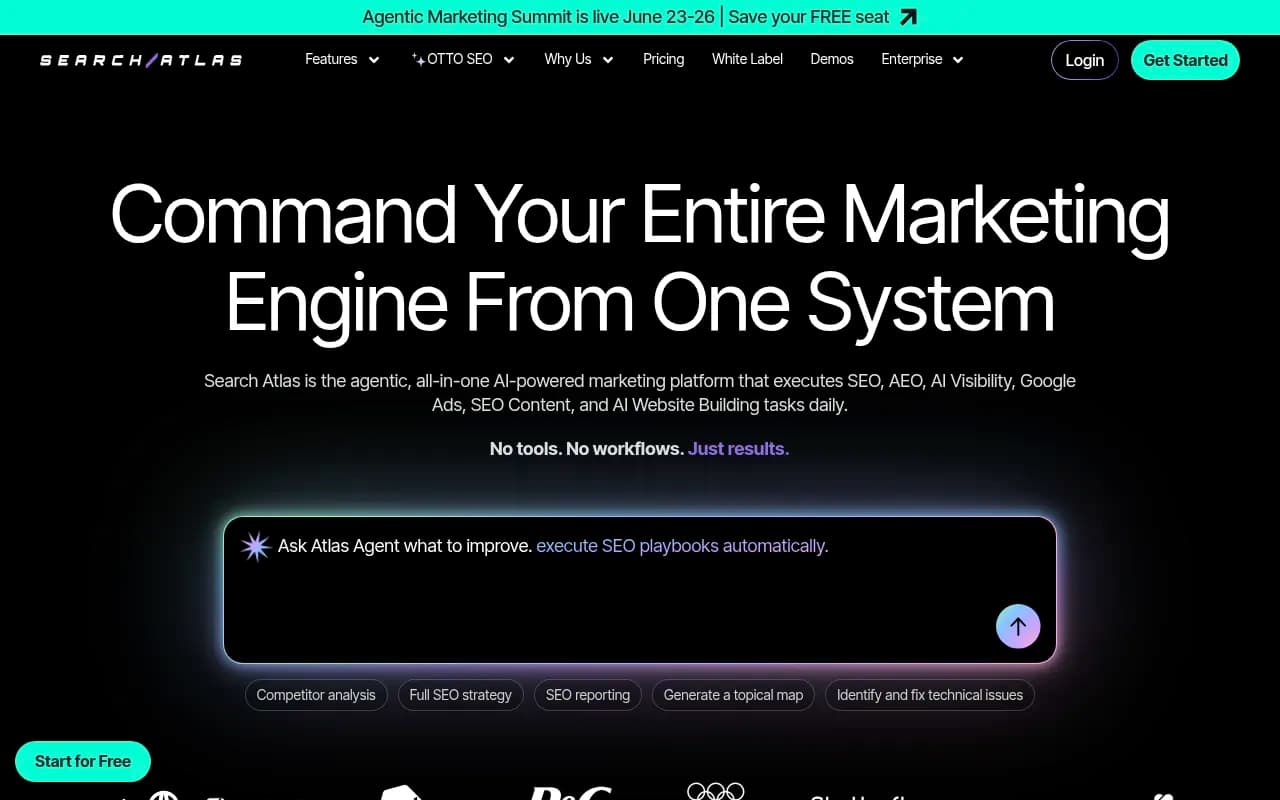
For teams that want content optimization alongside monitoring, Search Atlas combines traditional SEO tools with AI visibility tracking and content creation workflows.
Monitoring-focused platforms
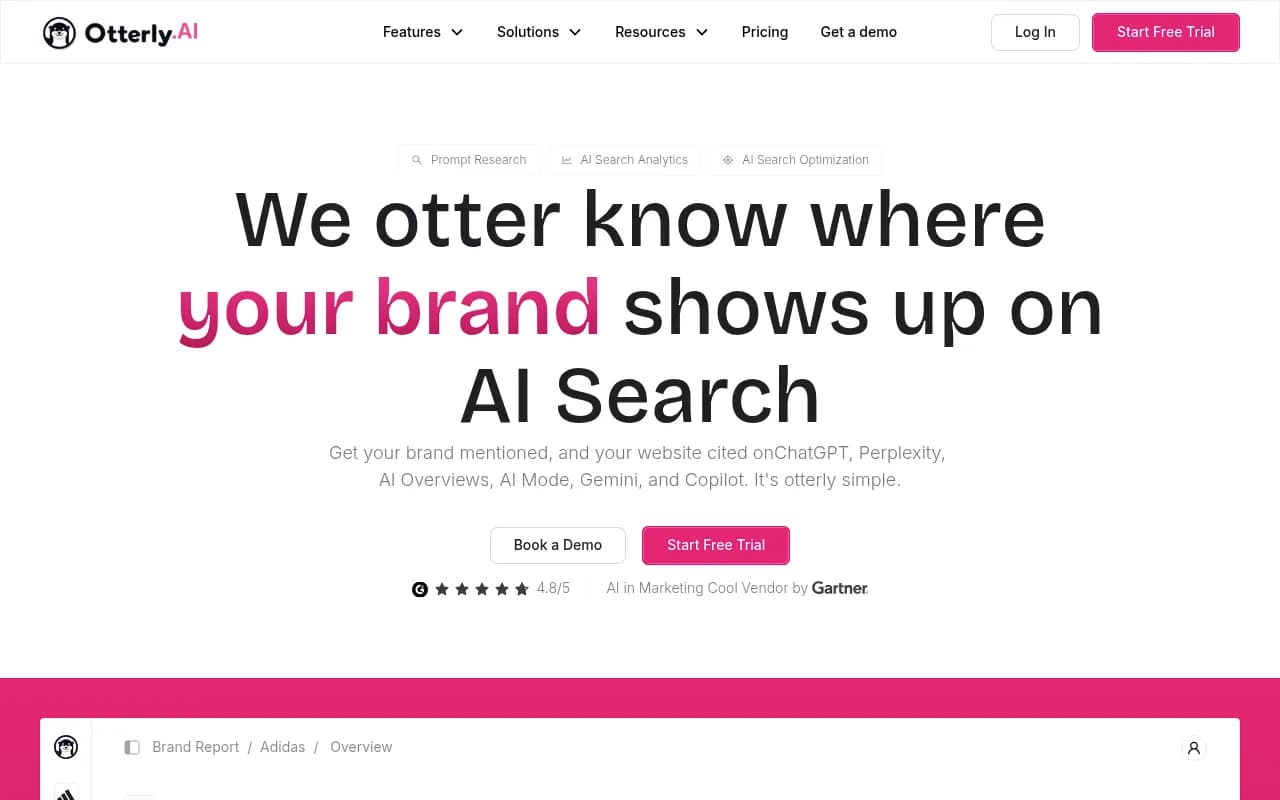
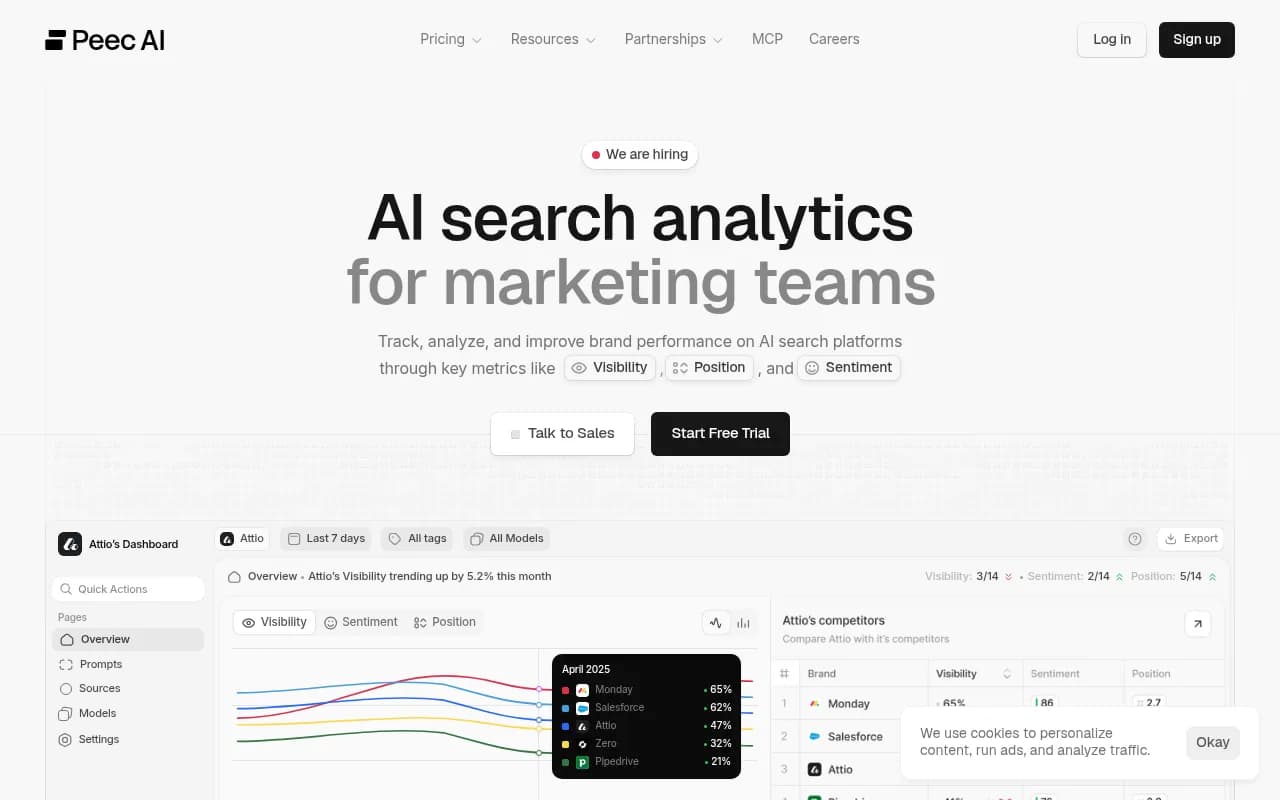
Otterly.AI and Peec AI both offer solid brand monitoring across multiple AI platforms at accessible price points. They're good for teams that primarily want to track citation frequency and brand mentions without needing built-in content generation.
AthenaHQ focuses on AI search monitoring with a clean interface, though it's more monitoring-oriented than optimization-oriented.
Scrunch AI covers brand and agency monitoring across AI search platforms with good multi-client support.
Traditional SEO tools extending into AI search
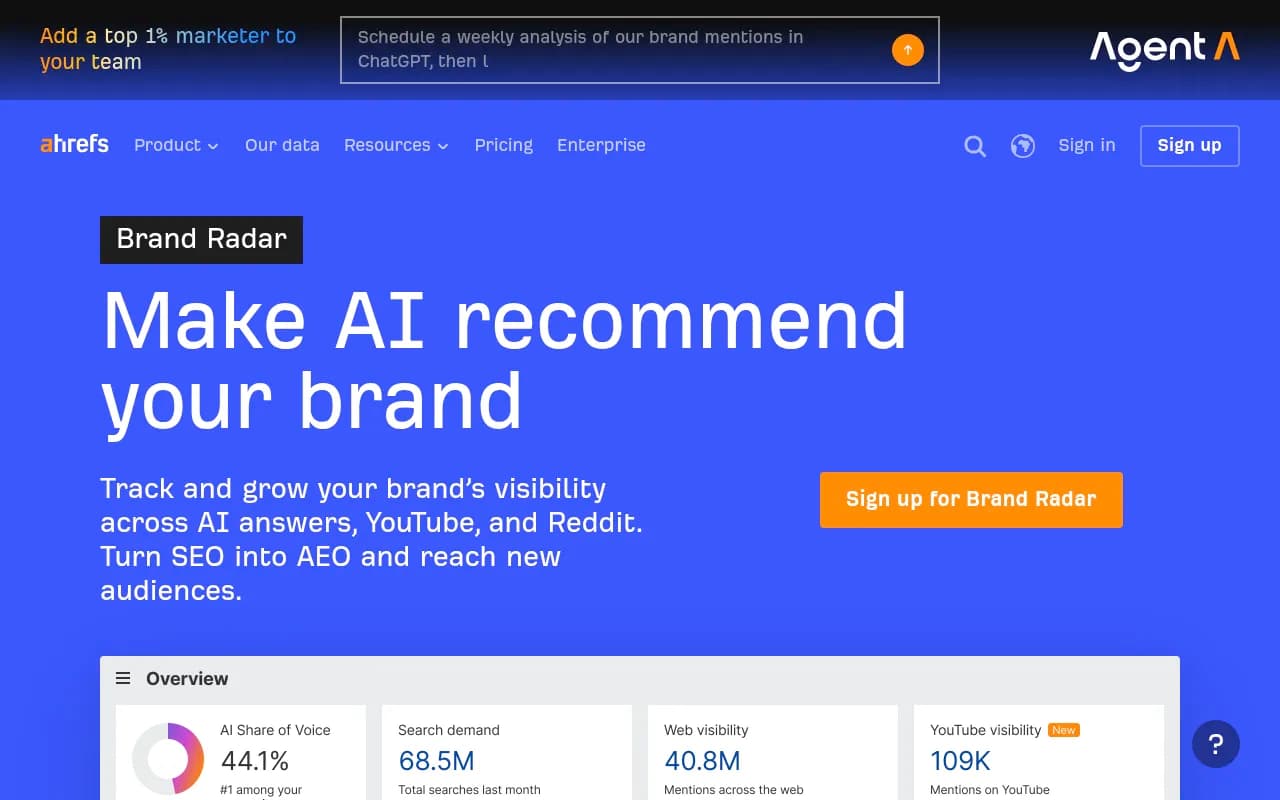
Ahrefs Brand Radar tracks brand mentions across AI search engines and is a natural extension for teams already in the Ahrefs ecosystem. The limitation is that it uses fixed prompts and doesn't offer AI traffic attribution.
Semrush AI Visibility Toolkit brings AI monitoring into the Semrush platform, though it also relies on fixed prompts rather than dynamic prompt tracking.
SE Ranking has been building out AI visibility features and is worth considering for teams that want a mid-market option with both traditional SEO and AI monitoring.
Specialized tools worth knowing
LLMrefs focuses specifically on query insights for LLM citation optimization -- useful for understanding which prompts are driving citations in your category.
Rankscale and Nightwatch both offer AI search rank tracking with different UI philosophies.
A practical framework for running both strategies simultaneously
Given the divergence between platforms, here's a workable approach for teams that can't dedicate separate headcount to each.
Start with prompt research, not keyword research
Traditional keyword research tells you what people search on Google. Prompt research tells you what people ask AI engines -- and those are different questions, framed differently. Tools like Promptwatch and LLMrefs surface actual prompts being used in AI search, along with volume estimates and difficulty scores. Start there, because the prompts you're invisible for are your highest-priority content gaps.
Build content that serves both platforms, then optimize for each
Write content that's substantive, well-sourced, and topically deep -- that baseline serves both platforms. Then layer in platform-specific optimizations: structured data and answer-first formatting for AI Overviews, and digital PR and offsite presence-building for ChatGPT.
Track citations at the page level, not just the domain level
Domain-level visibility scores are useful for benchmarking, but they don't tell you which specific pages are being cited and which aren't. Page-level tracking shows you exactly where your content is working and where it's falling short -- which makes your next content investment much more targeted.
Don't ignore Reddit and YouTube
Both platforms influence AI citations more than most SEO teams realize. Google AI Overviews surface Reddit and YouTube content frequently. ChatGPT's training data and live search both pick up Reddit discussions. A brand that's actively present in relevant Reddit communities and has YouTube content on key topics has a real advantage in both environments.
Monitor AI crawler logs
If ChatGPT's crawler is hitting your site but not citing your pages, there's a diagnostic problem worth solving -- maybe a crawl error, maybe a content quality issue, maybe a robots.txt configuration. AI Crawler Logs (available in Promptwatch's Professional and Business plans) surface these issues before they become invisible to you.
The traffic reality in 2026
Gartner predicted a 25% decline in traditional search volume by 2026, and that's roughly where we are. But the framing matters: 75% of search volume still exists, and AI-referred traffic often converts better than traditional organic traffic because users arrive with a more specific intent already shaped by the AI's answer.
The brands losing in 2026 are the ones that treated AI search as a single channel and optimized for it generically. The brands winning are the ones that understood the platform differences early, built content strategies that address each environment's specific signals, and used tools that close the loop from visibility monitoring to content creation to traffic attribution.
The gap between those two groups is widening. If your current GEO strategy is "publish good content and hope," you're already behind.