Key takeaways
- "Automated SEO software" covers two different products: tools that automate monitoring (crawls, rank checks, alerts) and tools that automate execution (research, writing, publishing, on-page fixes). Buying the wrong type is the most common mistake.
- Suites like Semrush, Ahrefs and SE Ranking are excellent at monitoring but leave the actual work to you.
- Execution-focused tools (Outrank, SEO.AI, Alli AI-style on-page deployers, AutoPublish, Junia AI) publish on a schedule, but you still need a review step so quality does not slide.
- AI search is now part of the job. If ChatGPT and Google AI Overviews matter to your pipeline, add a tool that tracks and acts on AI visibility.
- Pricing changes often. Confirm everything on each vendor's pricing page before you buy.
What "automated" actually means
I have watched people buy a rank tracker expecting a content machine, then wonder why nothing got published for three months. The word "automated" is doing too much work in this category.
There are two kinds of tools:
- Monitoring automation. It crawls your site on a schedule, tracks rankings, flags problems and emails you a report. Useful. But every fix is still manual.
- Execution automation. It researches keywords, drafts articles, publishes to your CMS, builds internal links or pushes on-page changes. Far fewer tools do this well, and it is what most people mean when they search the term.
A quick note on sources. One vendor-published roundup that circulates widely ranks its own product first and says it only tested four tools in production. Treat any "tested" list with that in mind, including this one. I have grouped the tools below by what they are documented to automate, and I have not invented prices. Check the vendor sites.
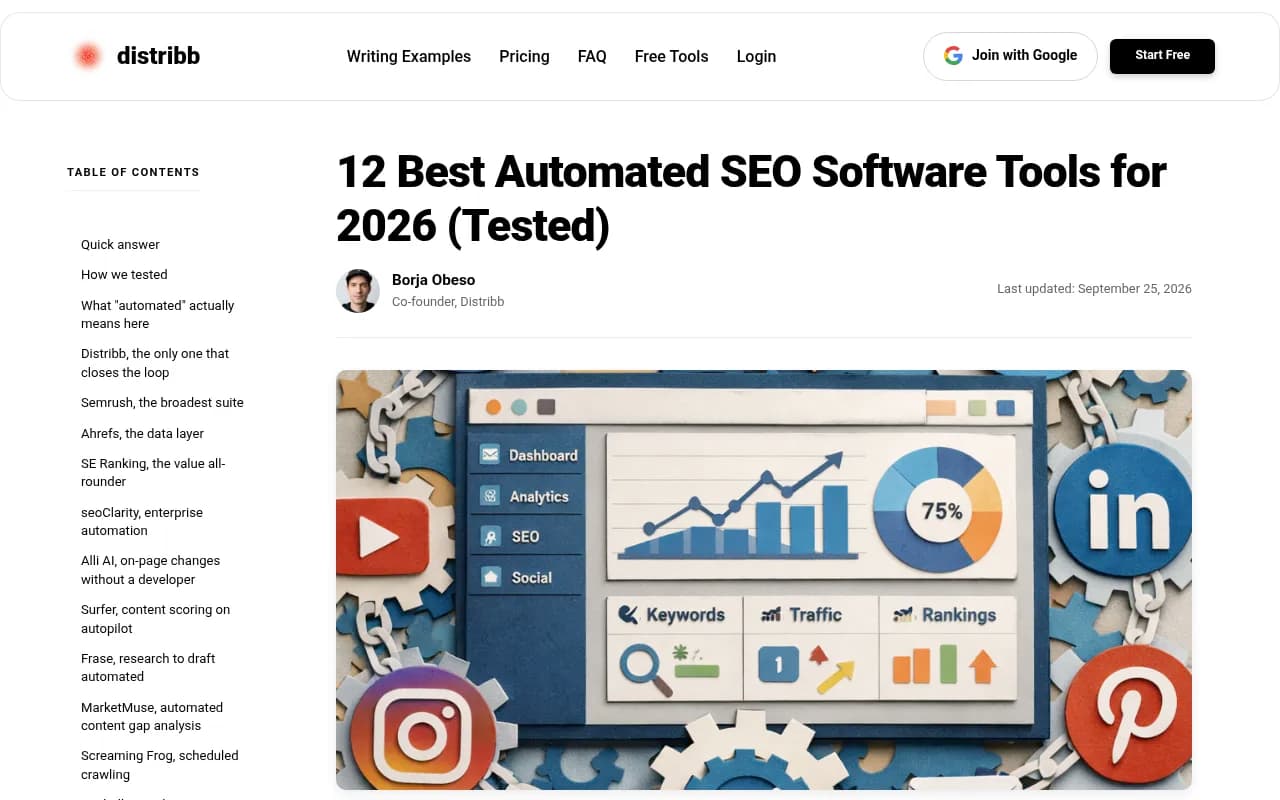
The split between monitoring and execution is the most useful idea in that article, even if you take its rankings with salt.
Quick comparison
| Tool | Automates monitoring | Automates execution | AI visibility | Best for |
|---|---|---|---|---|
| Semrush | Yes | Partial, advisory | Partial | All-in-one suite |
| Ahrefs | Yes | No | Brand Radar add-on | Data quality |
| SE Ranking | Yes | Partial | Yes | Value suite |
| seoClarity | Yes | Partial | Yes | Enterprise |
| Search Atlas | Yes | Yes (OTTO) | Yes | Agencies |
| Surfer SEO | No | Content only | Yes | On-page content |
| Frase | No | Content only | Yes | Briefs |
| Outrank | Light | Content and backlinks | Limited | Hands-off blogging |
| SEO.AI | Light | Content and backlinks | Limited | Small sites |
| AutoPublish | No | Keywords to publishing | Limited | Pipeline automation |
| Junia AI | Light | Competitor gaps, autopilot publishing | Limited | Lean content teams |
| Promptwatch | Yes | Yes, for AI search content | Deep | AI visibility |
The monitoring-first suites
These are the tools you keep running in the background. They tell you what is wrong. They rarely fix it.
1. Semrush
Semrush is the default all-in-one suite: scheduled site audits, position tracking, content tools and AI-driven recommendations. It reports and flags at scale, but most fixes are still manual. Its AI visibility layer is a newer add-on, which is convenient if you already live in the platform.
A third-party comparison puts it around $140 a month at entry level. I could not verify that, so check the pricing page.
2. Ahrefs
Ahrefs is the data layer. Backlink index, keyword research, site audits. It will not do a single thing on your site, and that is fine, because that is not what you buy it for. Brand Radar extends it into AI search tracking.

One caution that applies to every estimate-based tool: one published comparison found Google Search Console reporting 4.71k organic visits for a site where Ahrefs estimated 77.4k. Validate third-party numbers against your own first-party data before you automate decisions off them.
3. SE Ranking
SE Ranking is the value pick. Rank tracking, audits, AI Overview tracking and a separate AI visibility product. Execution is partial, but the price-to-coverage ratio is hard to beat for small teams.
4. seoClarity
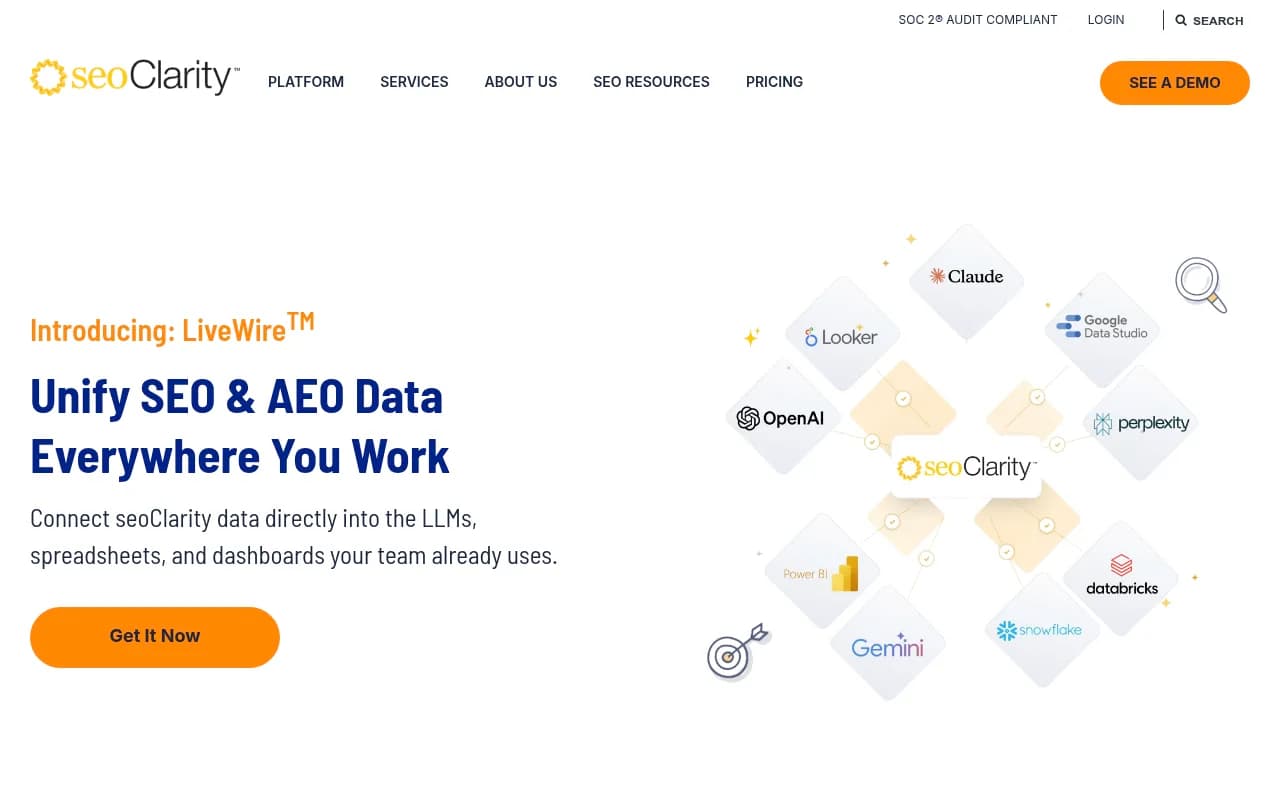
seoClarity is the enterprise option, with Clarity ArcAI for AI-search work. It suits large sites with big keyword sets and several stakeholders. Overkill for a five-person team.
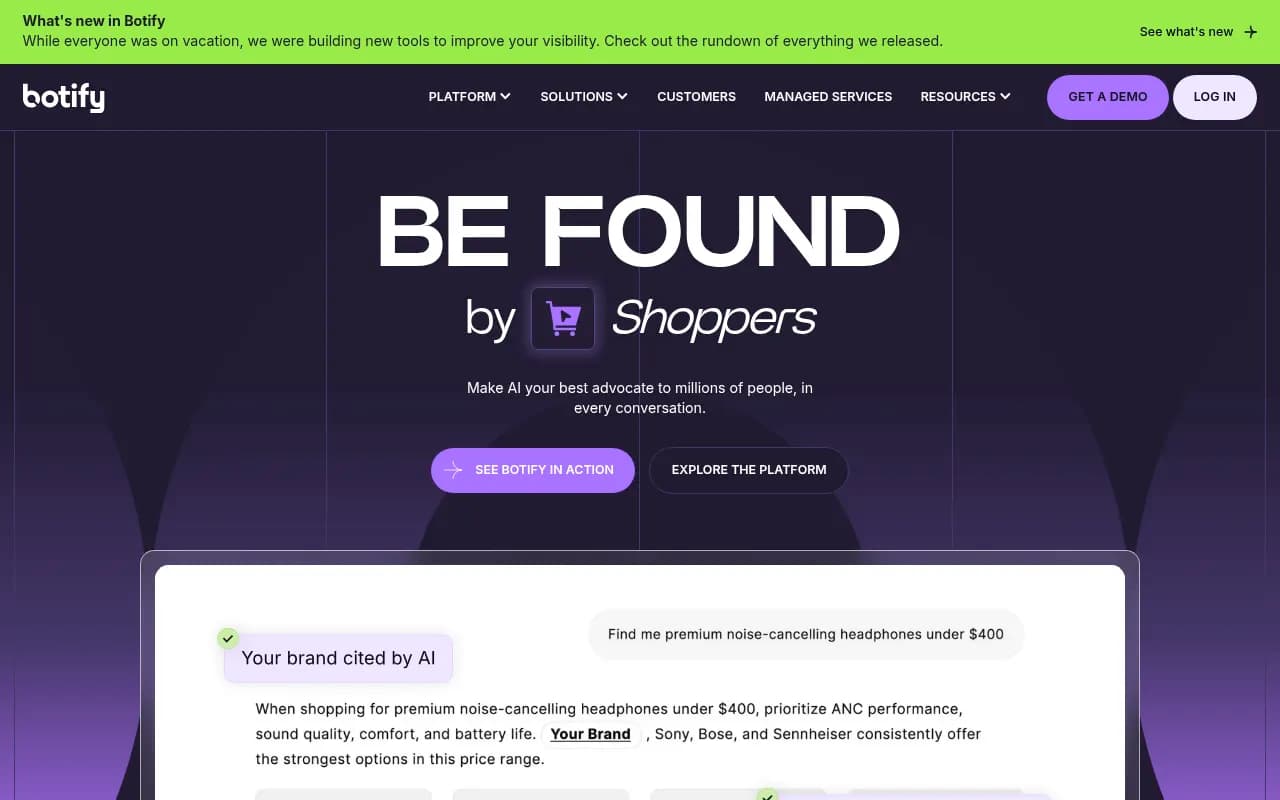
If you are comparing enterprise platforms, BrightEdge, Conductor and Botify sit in the same bracket.
The execution tools
This is the shorter list, and the one where the word "automated" is closest to honest.
5. Search Atlas
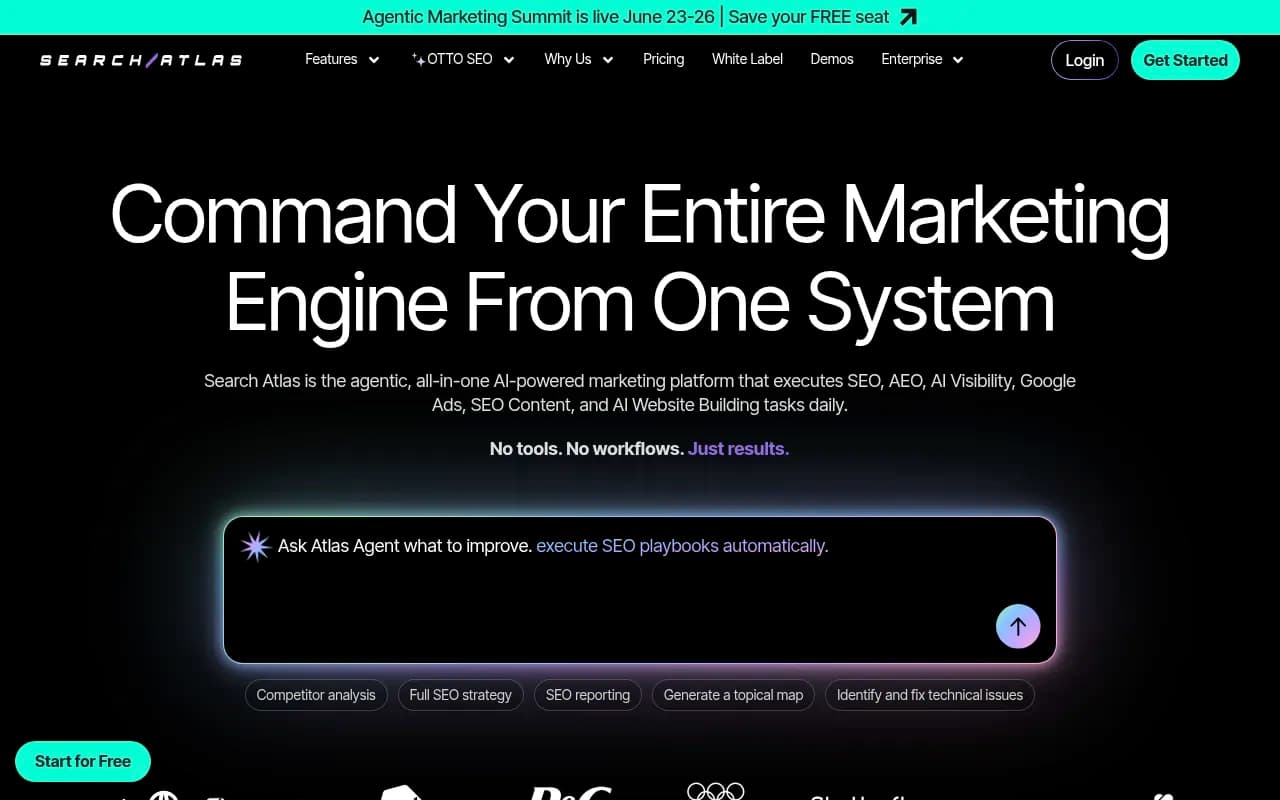
Search Atlas packages an all-in-one platform with OTTO, its automation layer that pushes on-page and technical changes. It is aimed at agencies that want fewer manual tickets.
6. Outrank
Outrank generates SEO articles and handles backlinks on a schedule. It suits founders who know they should be publishing and are not.

7. SEO.AI
SEO.AI sells itself as a hands-off agent for ranking content and backlinks. Similar territory to Outrank. Compare sample output on your own topic before committing.

8. AutoPublish
AutoPublish covers the whole pipeline from keyword selection to auto-publishing. The appeal is that you stop copying drafts between tools.

9. Junia AI
Junia AI finds competitor gaps and can publish on autopilot. Good for lean teams that want a steady cadence.

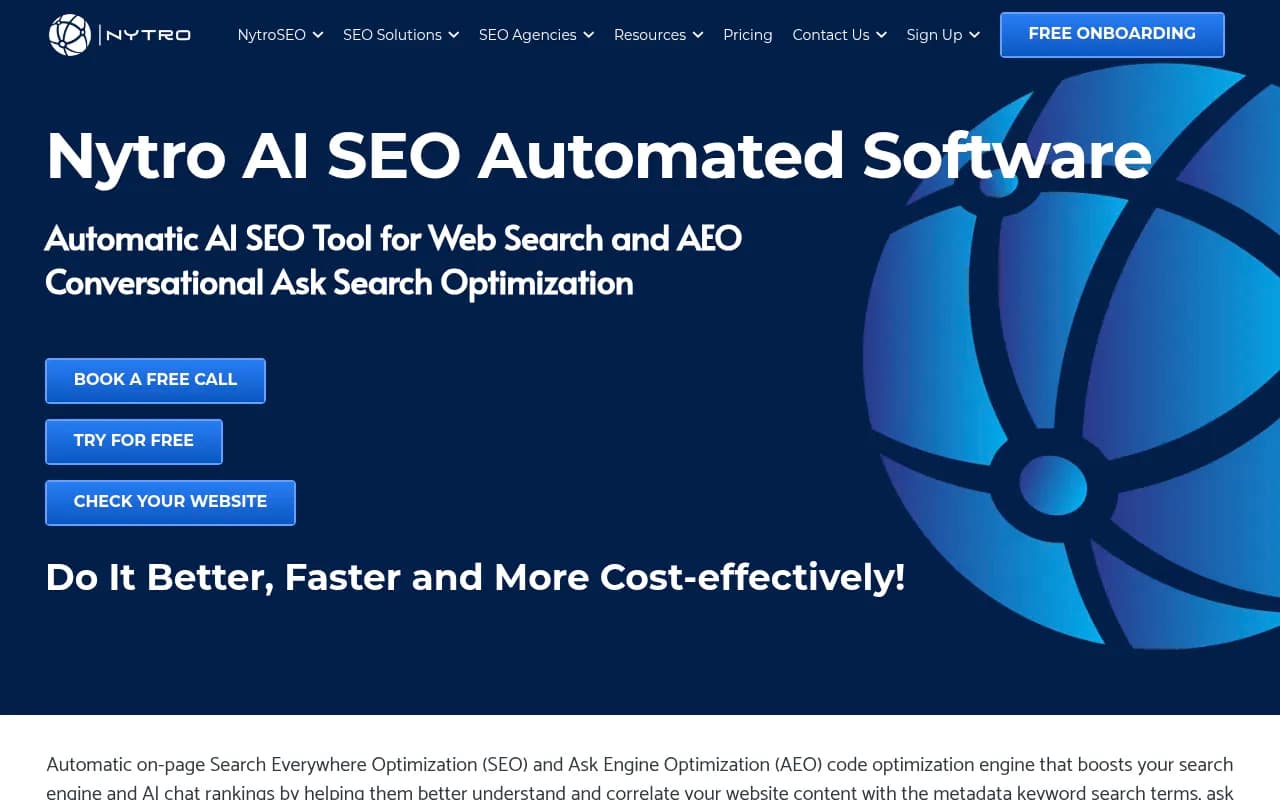
Some people will also look at NytroSEO, Ranked AI (software plus managed services) and Autoblogging.ai in this group.


A warning I will repeat because it matters: fully automatic publishing without review is how sites end up with thin, near-duplicate pages. Use the review inbox or approval step if one exists. Browse more in the general software directory at surferstack.com.
Content optimization tools (semi-automated)
These do not run on their own. They automate the tedious part of writing: briefs, scoring and NLP term suggestions.
10. Surfer SEO
Surfer scores content against SERP competitors and, increasingly, tracks AI visibility. You still write or edit.

11. Frase
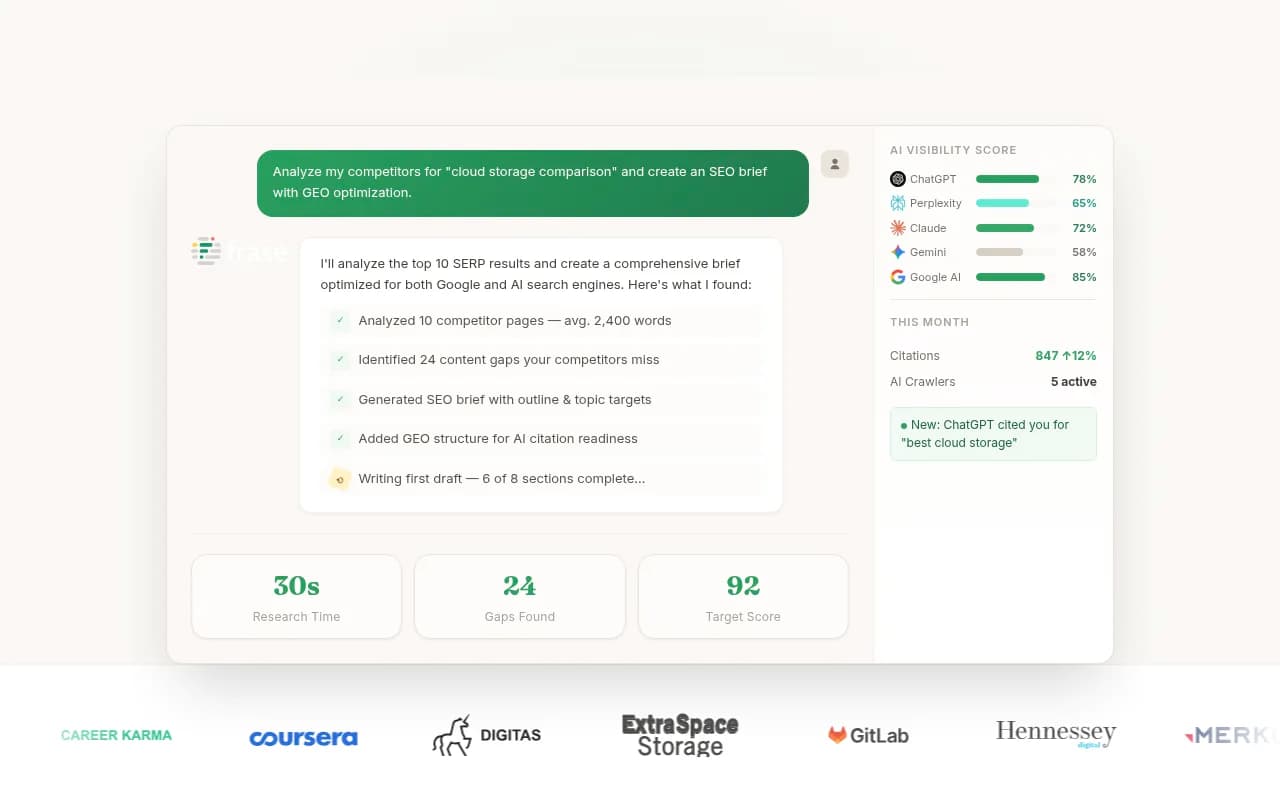
Frase generates research briefs quickly and scores drafts. It is cheaper to run than many peers and fits teams that already have writers.
Clearscope and MarketMuse are the usual alternatives if you want deeper semantic grading or topic planning.

Automation for AI search visibility
This is where the category has changed most. Classic SEO automation assumes the click starts on Google. A growing share of discovery now happens inside ChatGPT, Perplexity and Google AI Overviews, and a rank tracker will not tell you whether you are cited there.
What gets cited is not random. According to Promptwatch Data for Sep 28 to Oct 4, 2026, product pages were the most cited content type in ChatGPT at 22.4%, with landing pages at 16.8%. Listicles took 13.6%. So pages that plainly describe what you sell, with complete pricing and specs, carry real weight. Auto-generated blog filler does not.
For software vendors specifically, Promptwatch's software-category data for the same week shows docs and help centers earning the biggest share of ChatGPT citations, with G2 and Capterra profiles also mattering. If you sell SEO software, keep your docs crawlable and your review profiles complete.
12. Promptwatch
Promptwatch is the one I would put in this slot, because it automates the AI search side end to end rather than stopping at a dashboard. It tracks real interfaces such as ChatGPT, Google AI Overviews, Perplexity and Gemini, shows IP-verified AI crawler logs, and ties AI traffic to conversions. The execution part is the Content Agent and Action Board: they find the prompts where you are missing, write the content, and publish to WordPress, Webflow or Framer on a schedule you control, with a review inbox if you want one. Published pages are then tracked for crawls, citations and clicks, and underperformers come back as new actions.

The Content Agent sits on Business and above, so check promptwatch.com/pricing against your volume. If you only need monitoring, the cheaper trackers are a fair option, and the directories at bestgeosoftware.com and ai-rank-tools.com list plenty of them. Names worth a look: Otterly.AI, Peec AI, Profound and AthenaHQ.




How to choose
Start from the bottleneck
- Nothing gets published. Pick an execution tool (Outrank, SEO.AI, AutoPublish, Junia AI) and put a human review step in front of it.
- You publish but nothing ranks. Add a monitoring suite (Semrush, Ahrefs or SE Ranking) and fix technical issues first.
- Rankings are fine, traffic from AI is zero. Add AI visibility tracking and crawler logs.
- Large site, many stakeholders. Look at seoClarity, BrightEdge or Conductor.
A sane starter stack
- Google Search Console, as the source of truth.
- One monitoring suite. SE Ranking if budget matters, Semrush or Ahrefs if you want depth.
- One execution tool matched to your CMS.
- One AI visibility platform, so you know whether any of it shows up in ChatGPT and AI Overviews.
Questions to ask before paying
- What exactly runs without me? Ask for a list of steps, not a feature tour.
- Can I approve drafts before they go live?
- Does it connect to my CMS, or do I paste?
- What does it do about internal linking? Tools like InLinks can fill that gap.
- How does it measure results? A tool that publishes but cannot show crawl, citation or ranking outcomes is half a tool.
What I would not automate
Strategy, positioning and anything that makes factual claims about your product. Let the software draft and schedule. Keep a person on the facts, because ChatGPT quotes product pages directly, and wrong specs get repeated.
If you would rather hand the whole thing to people than tools, 1001 SEO Media runs technical SEO, content and AI search work for clients with senior specialists and no long-term contracts. Otherwise, start with the bottleneck above, pick one tool per job, and confirm pricing on the vendor pages before you commit.