Key takeaways
- "AI SEO solution" covers four different product types: monitoring trackers, optimization platforms, content generators, and agencies. Pick the category before the vendor.
- Test any tool against four jobs: see where you appear, understand why, fix it, and prove the revenue impact. Most tools only do the first.
- AI engines behave very differently from each other and change fast, so per-engine tracking and fresh data matter more than a big feature list.
- Ask every vendor or agency for a named client where AI visibility produced pipeline. A revenue figure is a good answer. A citation screenshot is not.
- Run a 30-day pilot with the same prompts on your shortlist, and judge on what you actually changed, not on dashboard polish.
Why choosing is harder than it looks
Two years ago you picked an SEO tool by comparing keyword databases. Now you are choosing between rank trackers that bolted on an AI tab, brand-new GEO startups, content generators that claim to "optimize for ChatGPT," and agencies that renamed their SEO retainer. All of them say "AI SEO" on the homepage.
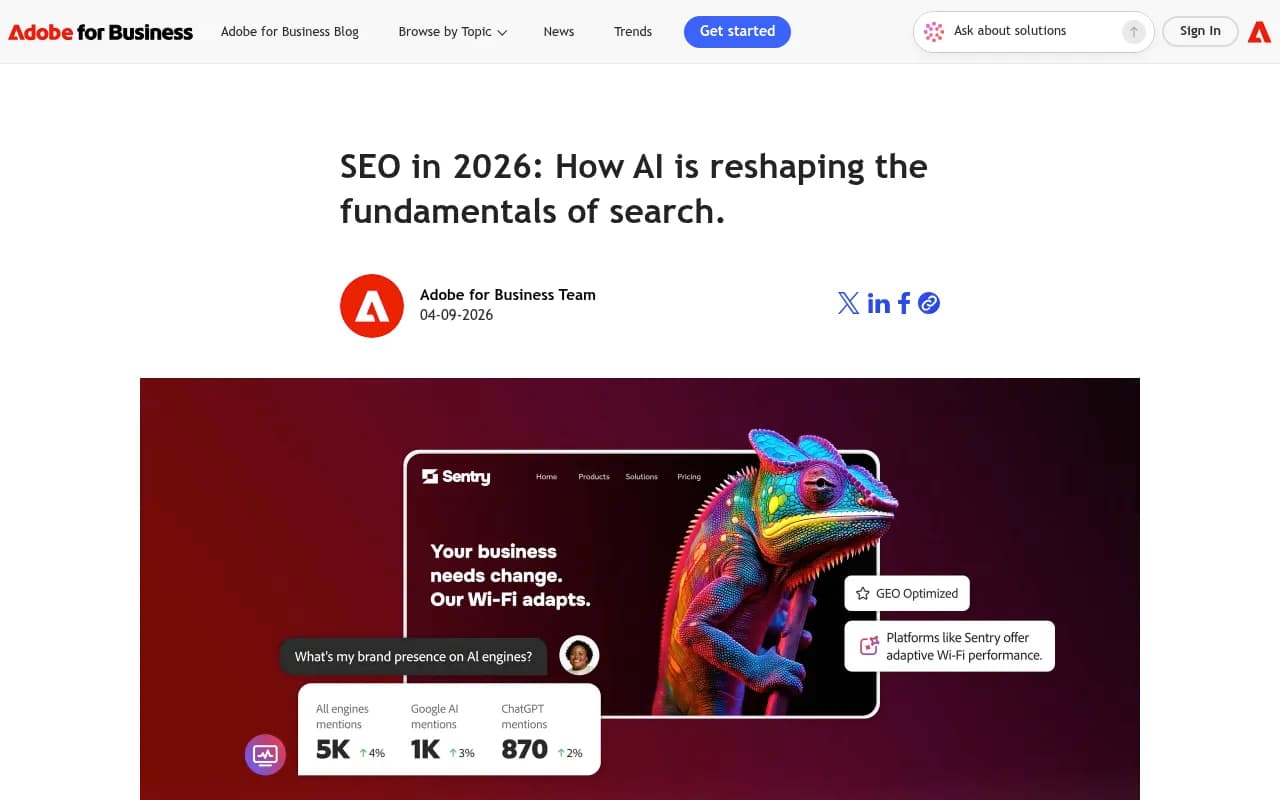
The underlying shift is real. Adobe's enterprise SEO team argues that visibility now depends less on page position and more on whether a brand is cited inside AI-generated answers, and that citation frequency and AI referral traffic belong next to rankings and clicks as core metrics. I mostly agree, with one caveat: that is a vendor-side argument, and Adobe sells an LLM optimizer. Treat it as a reasonable thesis, not a neutral finding.
The good news is that you can cut through the noise with a small number of decisions made in the right order.
Step 1: Decide which job you are hiring for
Before opening a single vendor tab, write down which of these four jobs you need done. Most teams need more than one.
- See. Know whether your brand is mentioned, cited, and recommended across ChatGPT, Google AI Overviews, Perplexity, Gemini and others, for the prompts your buyers actually use.
- Understand. Find out why you are or are not visible. Are AI crawlers reaching your pages? Which pages get cited? Which competitors take your slots, and from what sources?
- Fix. Produce and publish the content, technical changes, and off-site mentions that close the gaps.
- Prove. Connect AI visibility to traffic, conversions, and pipeline, so the budget survives the next planning cycle.
A pure monitoring tool covers job one. If that is all you need, you will save money. If you also expect it to tell you what to publish on Tuesday, you will be disappointed.
Step 2: Pick the category
The market sorts into a handful of types. Knowing which one you are looking at is half the evaluation.
| Category | What it does | Typical weakness | Examples from our catalog |
|---|---|---|---|
| Prompt trackers | Run prompts across AI engines and report mentions, position, sentiment | Stop at "you are not visible", no fix or attribution | Otterly.AI, Peec AI, Rankscale, ZipTie |
| AI visibility platforms | Tracking plus crawler data, traffic attribution, content gap analysis, sometimes content creation | Broader and pricier, more to learn | Promptwatch, Profound, Scrunch, AthenaHQ |
| SEO suites with AI add-ons | Traditional SEO toolkit with an AI visibility module | Often fixed prompt sets and shallow AI-specific data | Semrush, Ahrefs Brand Radar, SE Ranking, Search Atlas |
| Content optimizers and generators | Draft and score content for search | No visibility data to ground the content | Surfer SEO, Clearscope, Frase, AirOps |
| Enterprise suites | Governance, integrations, large-site technical SEO | Cost and implementation time | BrightEdge, Conductor, Botify, Adobe LLM Optimizer |
| Agencies | People and process, sometimes with their own tooling | Quality varies wildly, tool lock-in | See the agency section below |
You can browse each of these categories in more depth: the GEO software directory at bestgeosoftware.com covers visibility platforms, and ai-rank-tracking directory focuses on trackers.
Step 3: Check the tool against what AI engines actually do
This is where I would spend most of my evaluation time, because the engines are not behaving the way a lot of 2025 advice assumes.
Per-engine tracking is not optional
Promptwatch's social citation data for Sep 28 to Oct 4, 2026 shows how different the engines are. ChatGPT drew just 0.46% of its citations from social platforms, while Google AI Overviews drew 12.2%, about 26 times more. Perplexity sat at 2.7%. Reddit alone fell from 5.19% to 0.09% of ChatGPT citations in that comparison. You can see the full breakdown in the social media citations by AI model report, and the earlier collapse in the Reddit citations report.
If your tool blends everything into one "AI visibility score," it will not tell you that a "go post on Reddit" strategy has stopped working for ChatGPT but may still matter for AI Overviews. Ask any vendor to show you results split by engine, country, and prompt.
Real interface data versus API calls
What a model says through an API is not always what a user sees in the ChatGPT or AI Overviews interface. Citations and shopping results can differ. Ask each vendor directly how they collect responses. Tools like Superlines and Promptwatch emphasize tracking from the real interfaces. Others rely on API output, which is cheaper to run and can be fine for a rough read on model knowledge, but is a weaker proxy for what customers see.
Prompt intent and content type
The content type ChatGPT cites depends on the question. In Promptwatch's data for Sep 28 to Oct 4, 2026, product pages were 22.4% of ChatGPT citations and landing pages 16.8%, so roughly 39% go to pages describing what a company sells. For commercial prompts like "best CRM for small businesses," product pages reached 26.0%, landing pages 20.6%, listicles 15.0% and comparisons 7.9%. For branded prompts, reviews rose to 5.6%, more than three times their overall share. Details are in the ChatGPT citation share by content type report.
The practical test: can the tool segment by commercial, informational, and branded prompts, and map the gaps to specific content types? A tool that only says "you were mentioned in 31% of responses" will not tell you whether to write a comparison page or fix a product page.
Crawler visibility
A surprising number of AI visibility problems are access problems. Promptwatch's AI crawler traffic report (June 8 to September 6, 2026, IP-verified requests) shows OpenAI at 79.8% of verified AI crawler requests in the week of Aug 31 to Sep 6, down from 94.8% in early June. The mix shifts, and the report's own advice is to compare your server logs to it: a provider that is big in the chart but near zero in your logs suggests you may be blocked by robots.txt, a CDN, or a WAF rule.
So ask whether the tool shows AI crawler logs, and whether those logs are IP-verified so spoofed user agents are filtered out. Very few trackers do this. If your team has ever wondered why a good page never gets cited, this is the feature that answers it.
Freshness
Engines change behavior with no warning. Promptwatch Data recorded ChatGPT starting to use the site: operator at scale on August 8, 2026, jumping from about 0.4% to about 17% of fan-out queries (report). Citations per response dropped around the GPT-5.3 rollout on March 4, 2026 (report). A vendor that cannot explain recent shifts like these is probably not watching closely.
Step 4: Score vendors on a simple rubric
Here is the rubric I would use. Give each criterion 0 to 2 points and total it. Weight the criteria that match the jobs you picked in step 1.
| Criterion | What good looks like | Question to ask |
|---|---|---|
| Data collection | Real UI responses, multiple countries and languages | How do you collect answers, and can I see raw responses? |
| Engine coverage | ChatGPT, AI Overviews, AI Mode, Gemini, Perplexity, Copilot, Claude at minimum | Can I see results per engine, not blended? |
| Prompt intelligence | Volumes or difficulty, query fan-outs, topic and persona grouping | How do I choose which prompts to track? |
| Diagnosis | Crawler logs, citation sources, page-level data | Why was I not cited for this prompt? |
| Action | Content gaps, briefs, drafting, CMS publishing, prioritized tasks | What do I do on Monday morning? |
| Attribution | AI referral traffic, conversions, Search Console and Bing data | Can I tie this to revenue? |
| Reporting and access | White-label, exports, API, Slack, MCP | Can it fit my team and clients? |
| Pricing clarity | Published tiers, response-based limits, no surprise overages | What counts toward my limit? |
A tracker may score 6 or 7 out of 16 and still be the right buy if you only need monitoring. A platform scoring 13 or 14 is the right buy if you want to close the loop from insight to published page to measured result.
Step 5: Shortlist by situation
Here is how I would map the common situations to the categories. These are starting points, not endorsements, and you should confirm current pricing and features on each vendor's site before buying.
You want to find out whether you have a problem
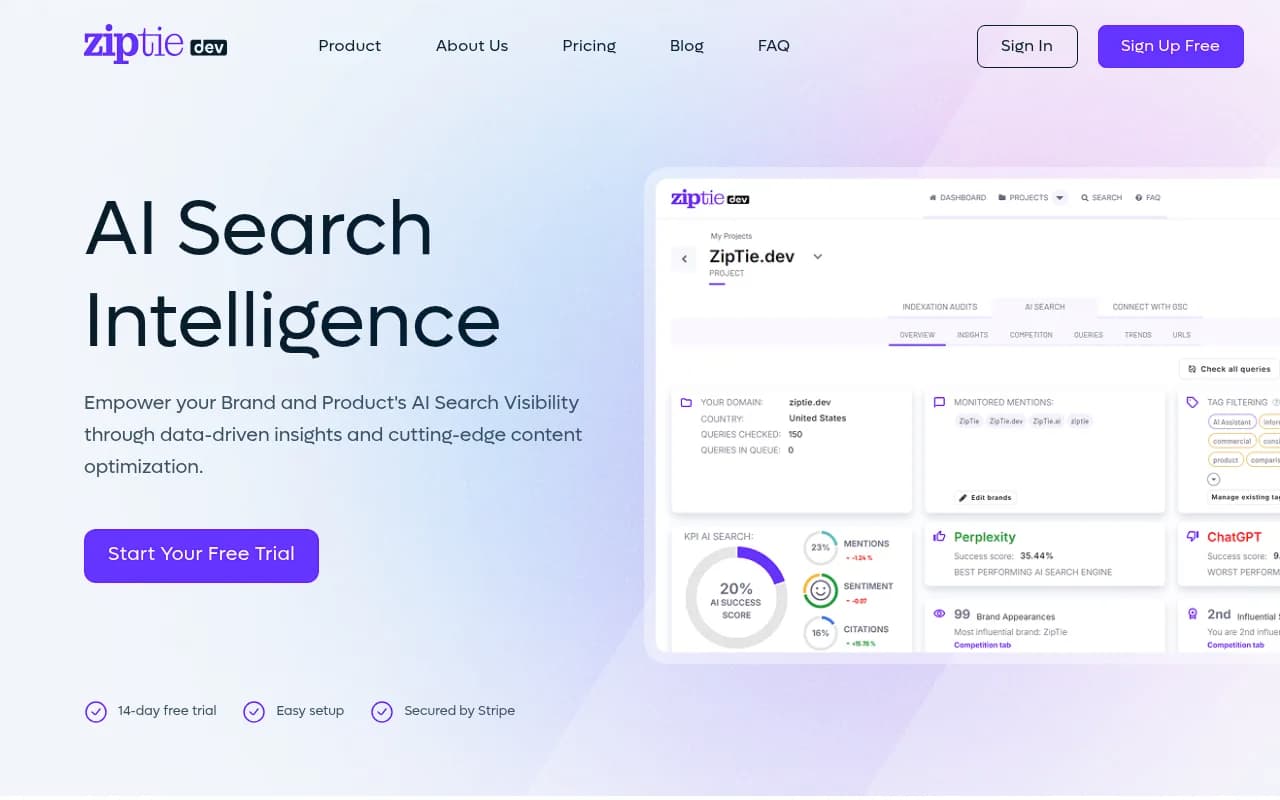
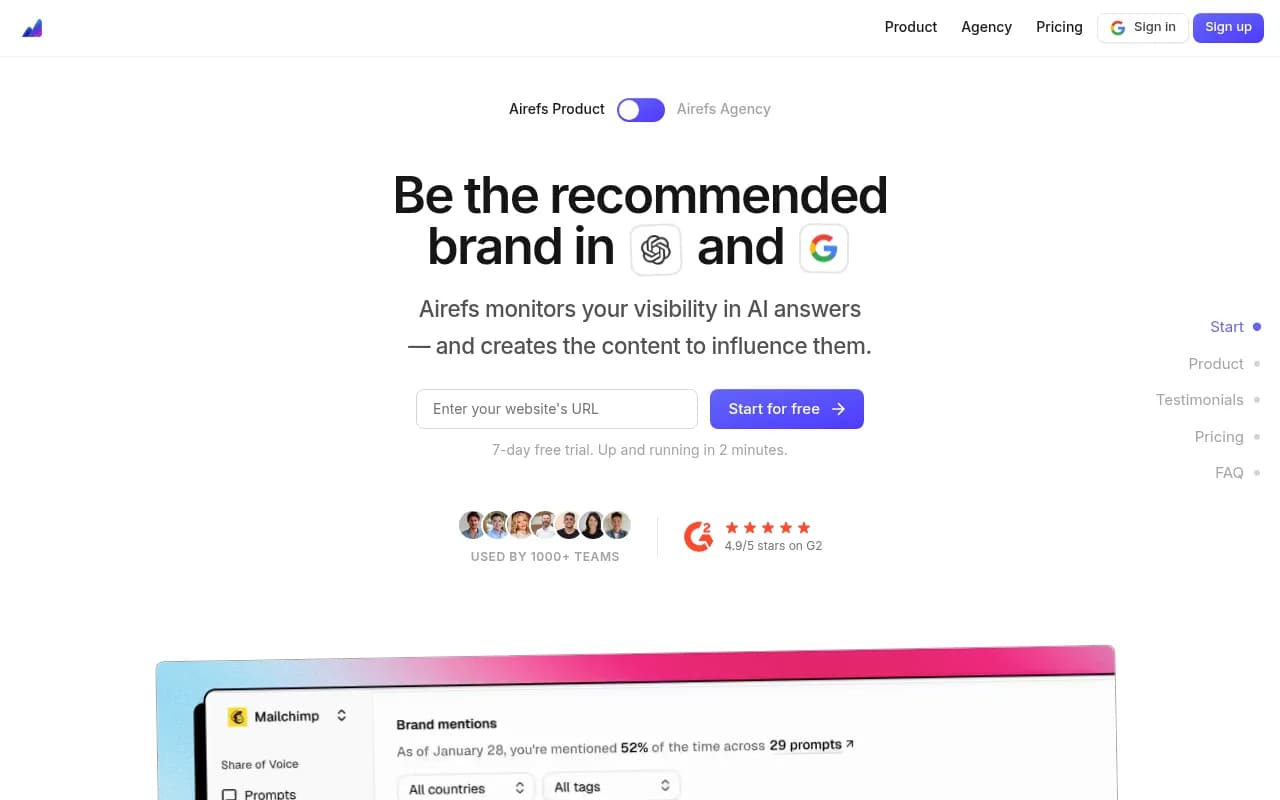
Start with something free or cheap. Promptwatch has a free AI Visibility Report scan and a free Explore tier, and lightweight trackers such as Otterly.AI, Airefs, and ZipTie are built for exactly this stage.

You want to fix it, not just watch it
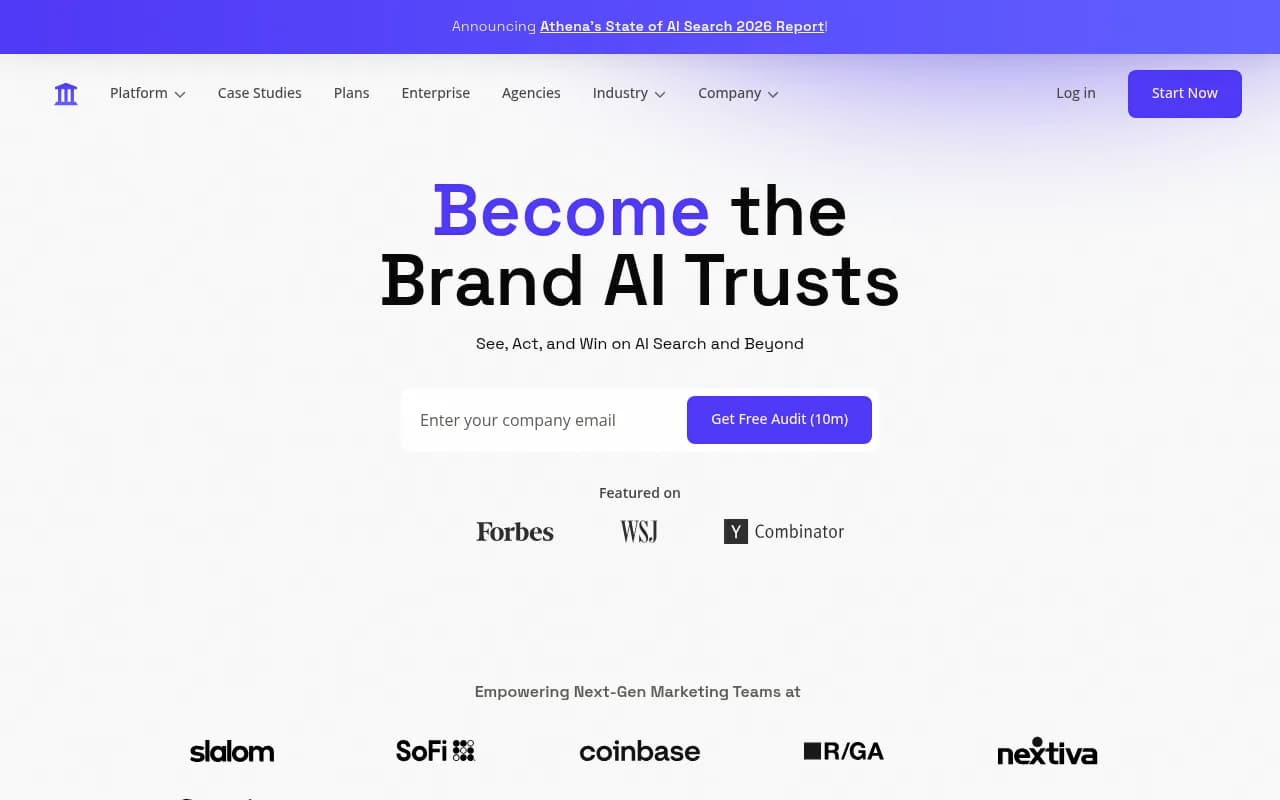
This is where the platform category earns its price. Promptwatch pairs prompt tracking with IP-verified crawler logs, citation analytics, traffic attribution, and a Content Agent that plans, writes, and publishes to Webflow, Framer, or WordPress, with an Action Board that prioritizes tasks. Profound and Scrunch are also strong on monitoring at higher price points, and AthenaHQ and Qwairy lean toward monitoring with lighter optimization.



You already live inside an SEO suite
Semrush, Ahrefs, and SE Ranking all added AI visibility features. These are convenient if you want one login and one invoice. The tradeoff is that AI tracking is usually a module rather than the core product, so check prompt limits and whether you can customize the prompt set.

You are enterprise with governance needs
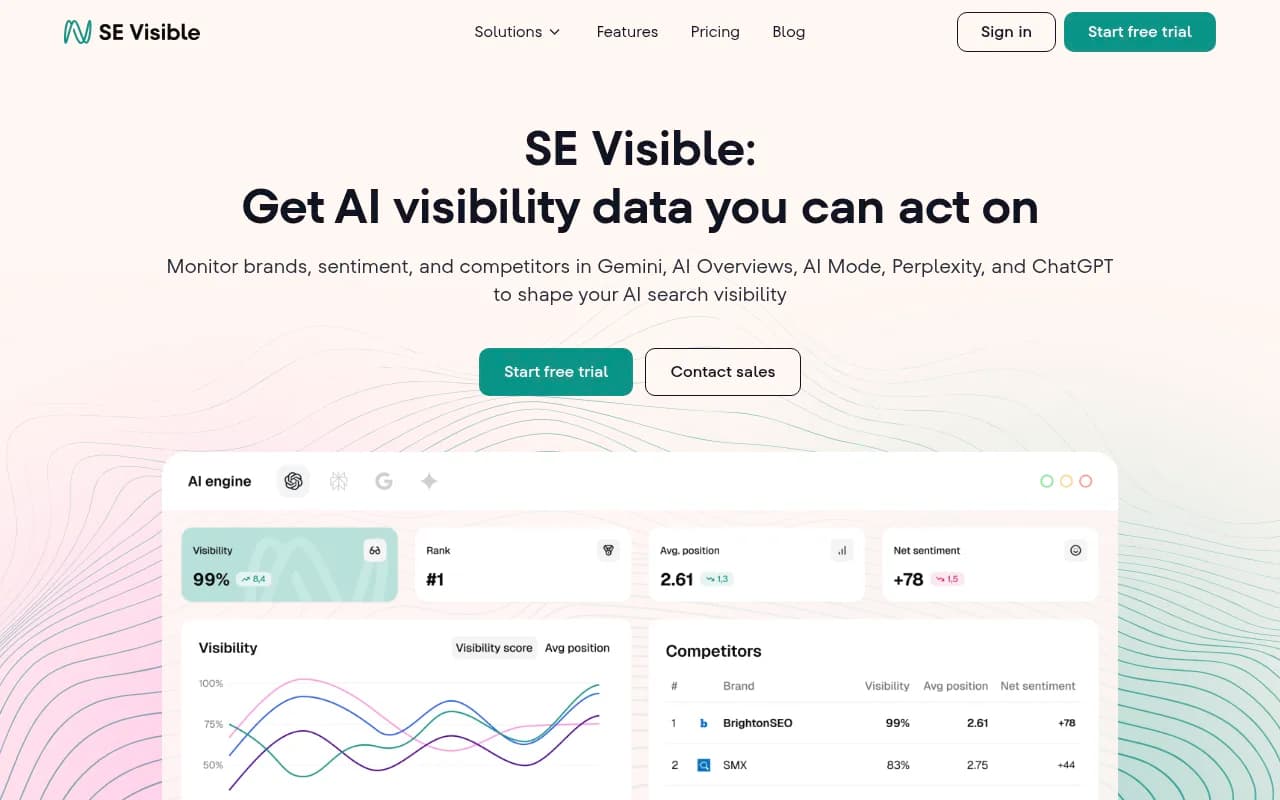
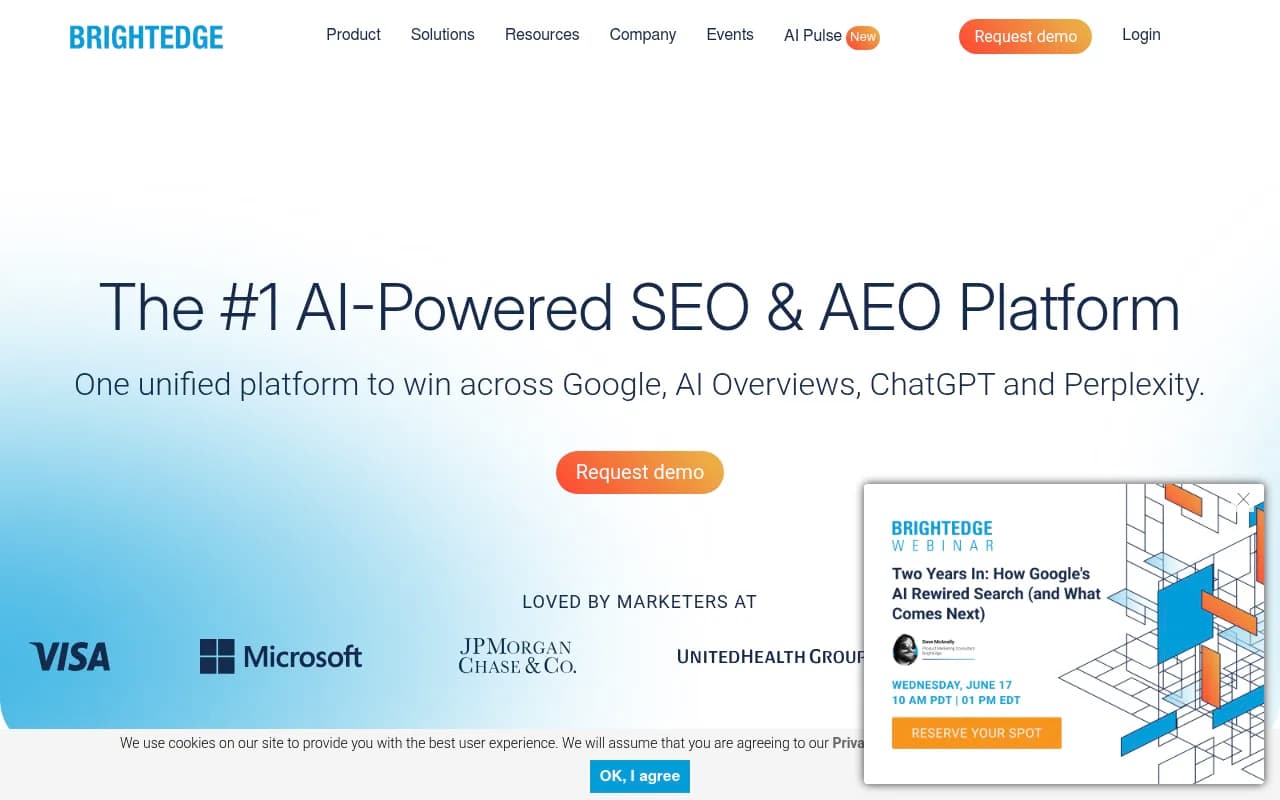
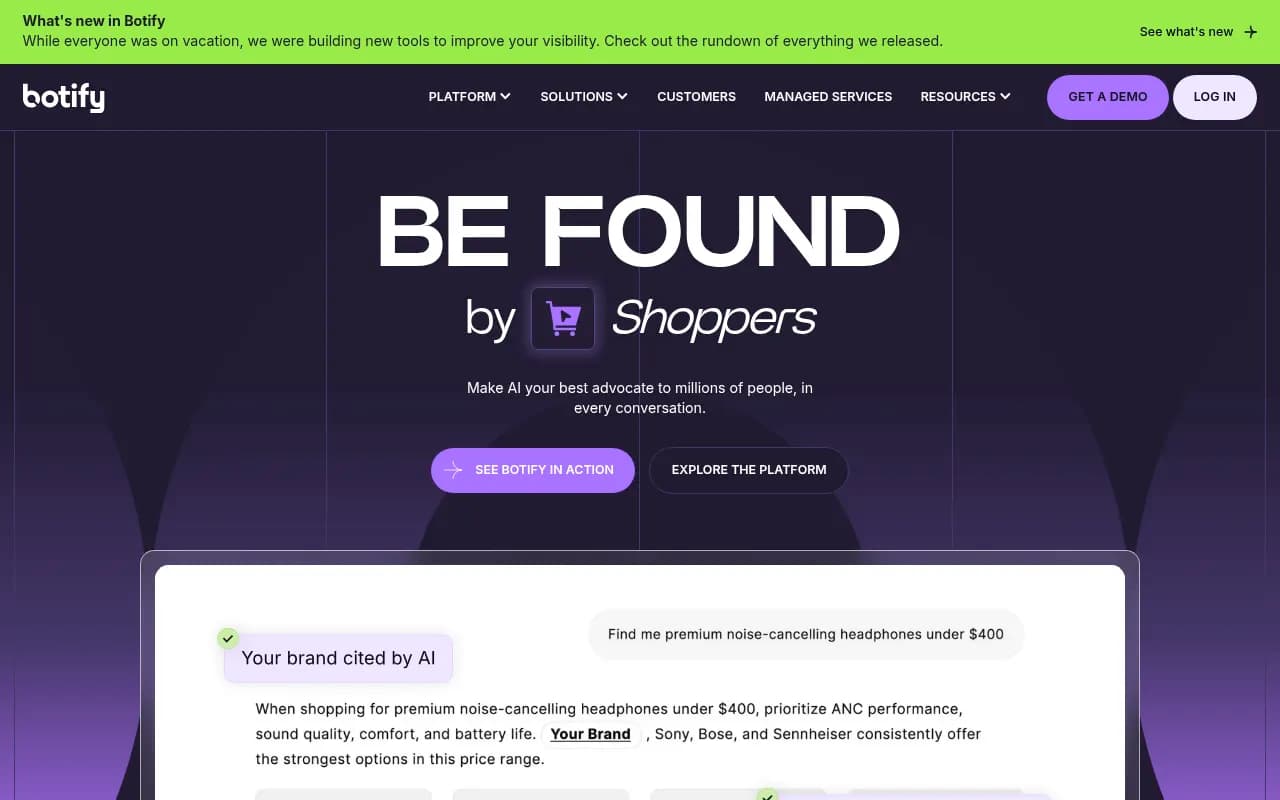
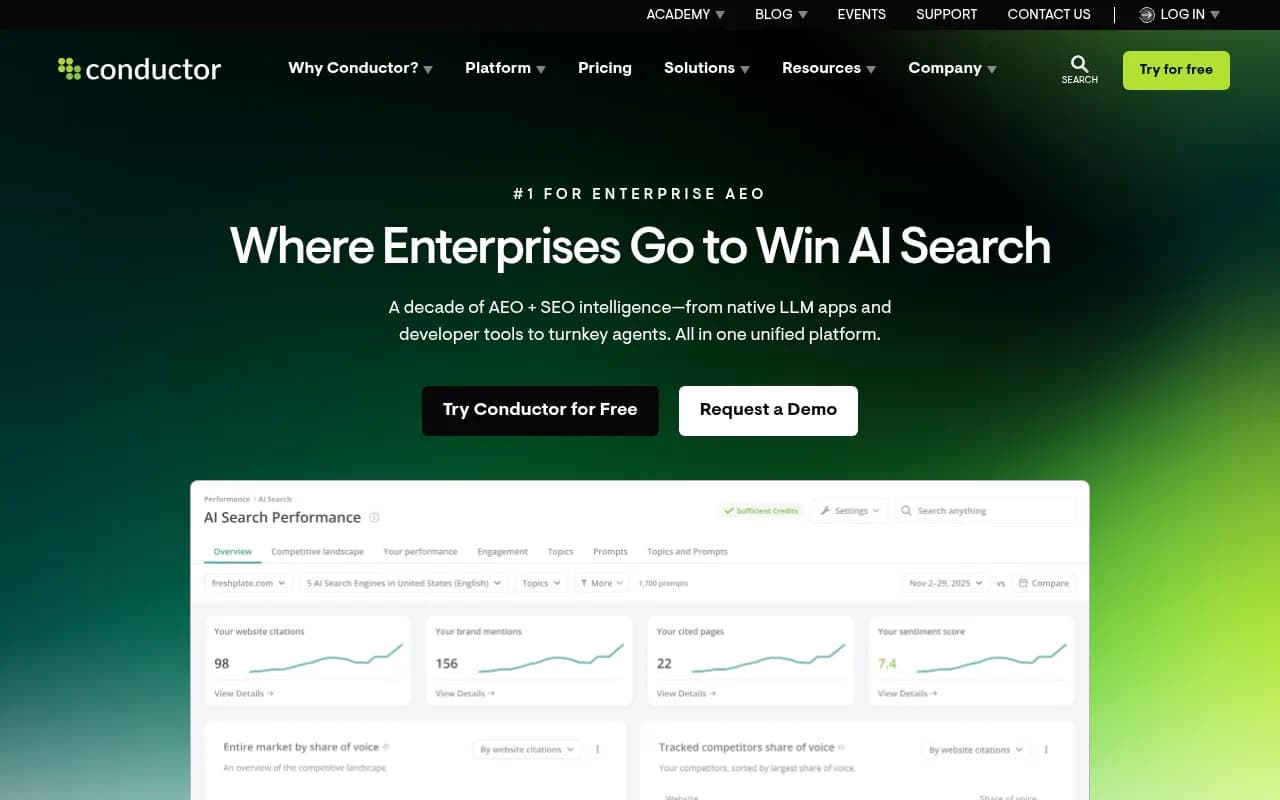
If you have thousands of pages, multiple CMSs, and a security review process, look at BrightEdge, Conductor, Botify, seoClarity, or Adobe LLM Optimizer. These bring technical SEO depth and integrations. They can also take months to roll out, so ask for a time-to-first-insight estimate.
Adobe LLM Optimizer
You sell products online
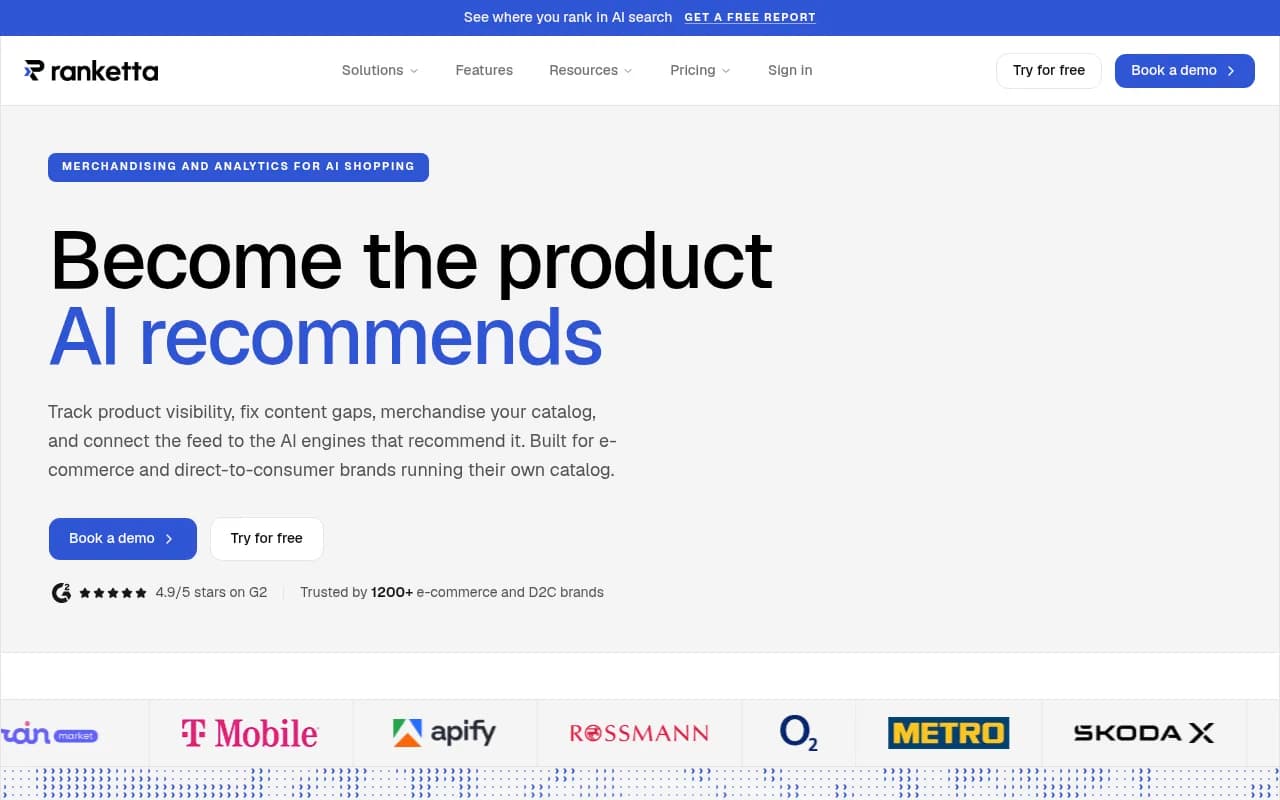
Ecommerce teams should care about product-level tracking, shopping carousels, and catalog data. Alhena AI, Ranketta, Yotpo Discover, and Azoma are built around this. Promptwatch also tracks ChatGPT shopping and Alexa product results if you upload a catalog.
Yotpo Discover
Your main bottleneck is content production
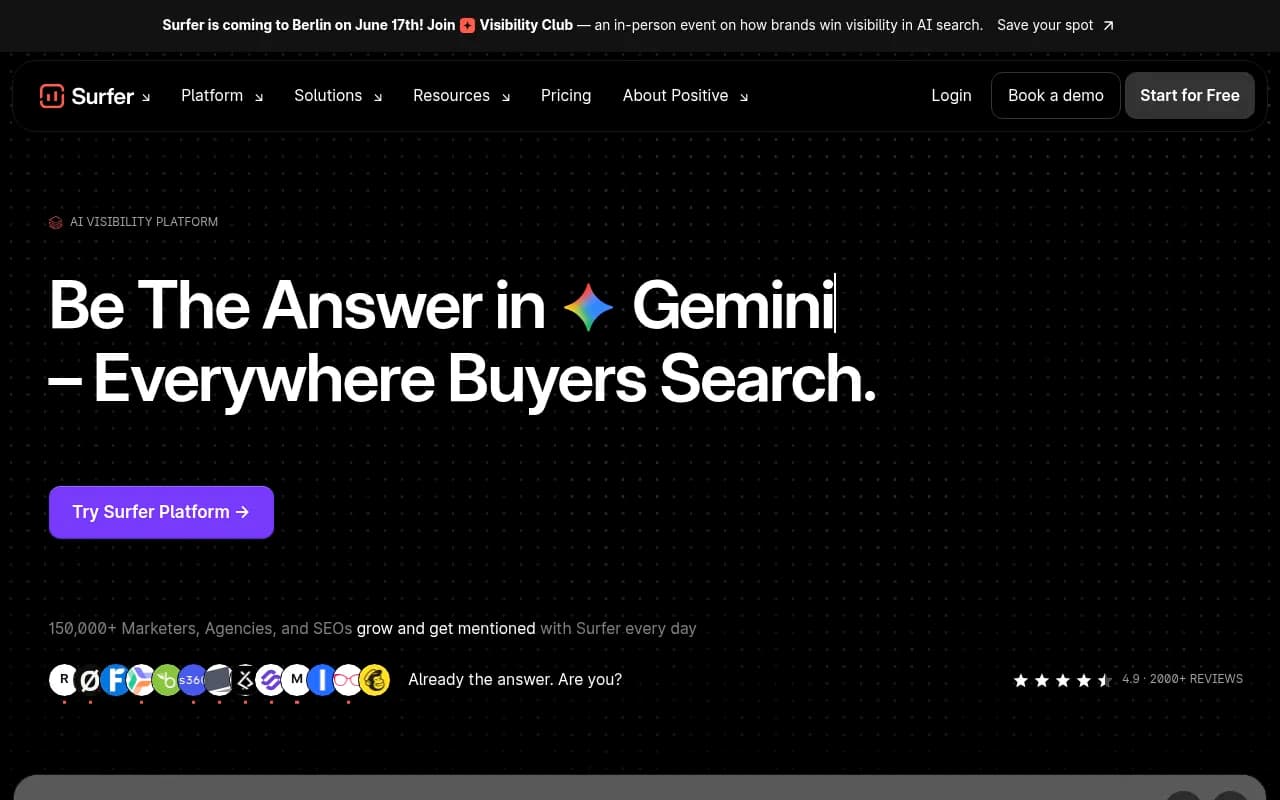
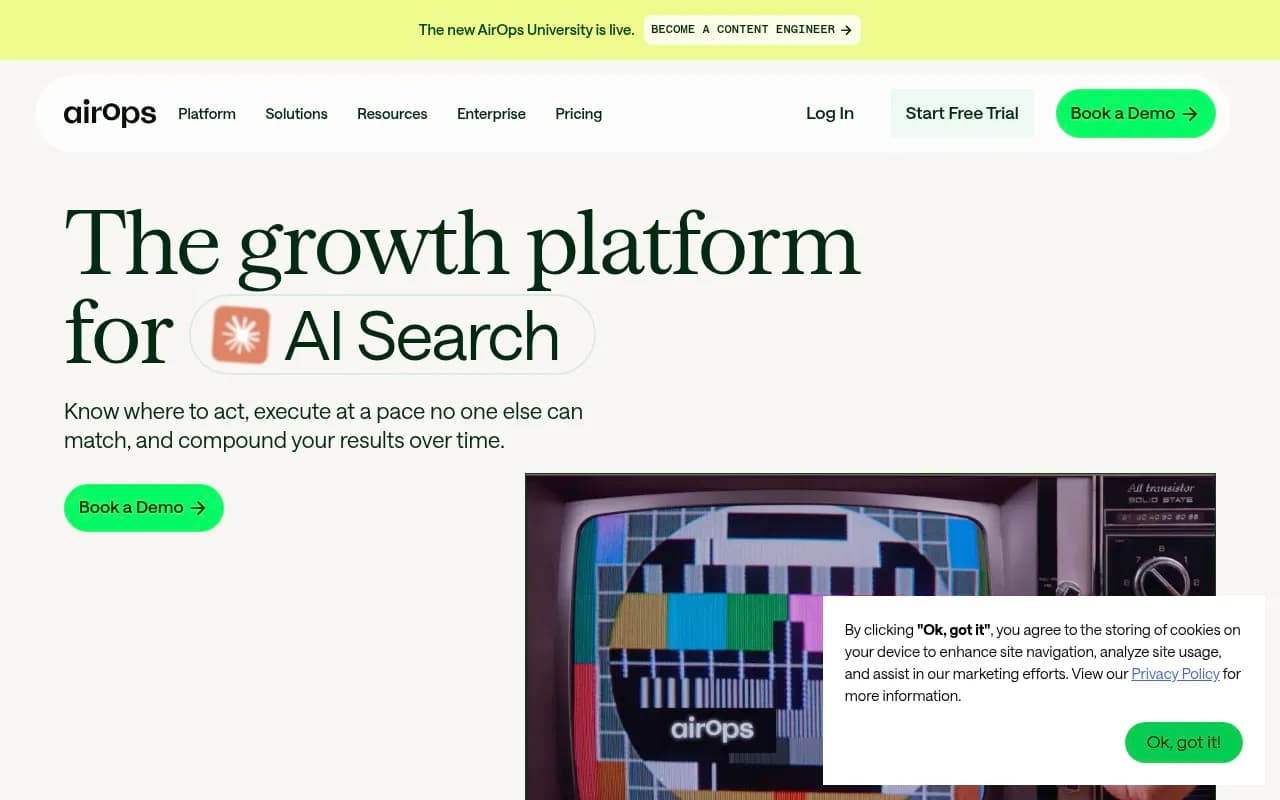
Content tools like Surfer SEO, Clearscope, Frase, and AirOps are good at making a page more thorough. Their blind spot is that they do not know which prompts you are losing or which sources AI trusts. Pair them with a visibility tool, or choose a platform where the content step is grounded in your gap data.

Step 6: If you are considering an agency
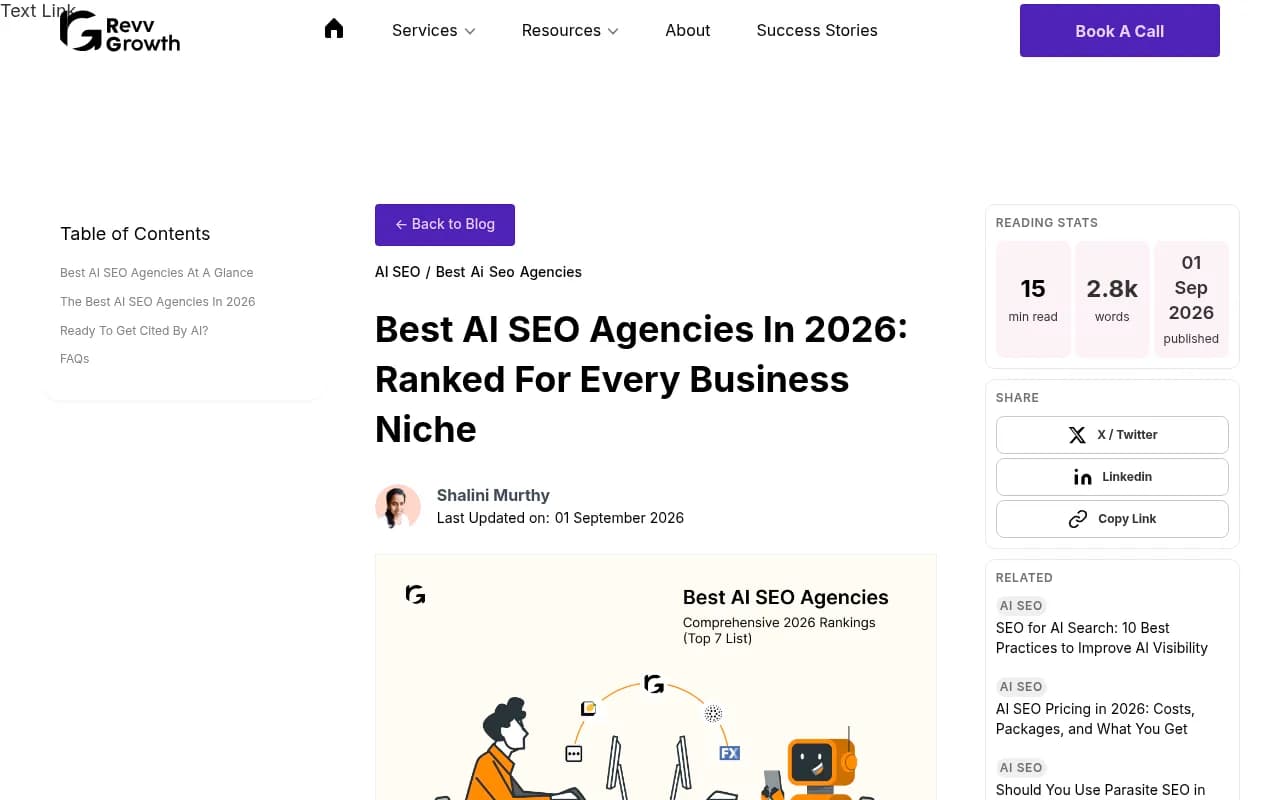
Sometimes the right answer is people, not software. Hundreds of agencies now claim AI SEO, and most added it to an existing playbook. A shortlist article from RevvGrowth makes the same point: it reviewed seven agencies that showed clearer specialization. Note that it is a vendor-published ranking that puts the publisher first, so read it as a data point, not a verdict.
Two questions from the Yesoptimist agency guide are the best filter I have seen:
- Ask for a named client where AI visibility produced pipeline, and watch whether the answer is a revenue figure or a citation screenshot.
- Ask whether the agency runs AEO/GEO and traditional SEO as one engine or two invoices.
I would add three more. Who owns the data and the tracking account if you leave? Which tool does the agency use, and will you get login access? Is there a long-term contract? Agencies like 1001 SEO Media cover technical SEO, content, digital PR, and GEO under one roof, with no long-term contracts and monthly reporting. Whichever agency you consider, hold it to the same named-client test.
Step 7: Run a 30-day pilot
Demos are polished. Pilots are honest. Before you commit annually, run your top two or three candidates against the same inputs.
- Pick 30 to 50 prompts. Mix commercial ("best X for Y"), informational ("how to do Z"), and branded ("is [your brand] any good") prompts. Include a few where you already know you are cited and a few where you know you are not.
- Run them in every tool. Compare raw answers, not summary scores. Do the tools agree with what you see when you try the prompt yourself in ChatGPT?
- Check one diagnosis. Pick a page you expected to be cited that was not. Can the tool tell you why: blocked crawler, thin content, a competitor with a stronger source?
- Ship one change. Publish or update one page based on the tool's recommendation. Time how long it took.
- Measure after two to four weeks. Did crawls, citations, or referral clicks change? Content ages at different speeds, too: Promptwatch's content half-life report found that landing pages and docs stay cited longest while news loses half its pages within 36 days, so match your expectations to the content type you tested.
- Ask for the bill. Confirm how responses, prompts, seats, and countries are counted. Pricing models differ a lot, and unit cost per tracked response is a fairer comparison than monthly sticker price.
Red flags that should end a conversation
- A single "AI visibility score" with no way to inspect the underlying responses.
- No explanation of how prompts are chosen or whether they reflect real user behavior.
- Guaranteed rankings or guaranteed citations. Nobody controls the models.
- Advice built on stale patterns, like "get more Reddit threads" as a universal ChatGPT fix, given the 2026 data above.
- Claims of impact with no named customer, no revenue figure, and no baseline.
- Treating markdown files or llms.txt as a silver bullet. Promptwatch's markdown report found markdown makes up 0.05% of AI search citations. It serves agents, not AI search.
Putting it together
If you only remember one thing: decide the job first, the category second, and the vendor last. Teams that start from a vendor demo end up buying whatever the demo made look easy.
For most marketing teams that want results rather than reports, an AI visibility platform with crawler data, content gap analysis, and publishing will beat a tracker plus a separate writing tool. For teams that just need a baseline, a cheap tracker and a 30-day pilot is a fine start. For enterprises, shortlist two suites and two platforms, and insist on a proof of concept. And whatever you buy, verify pricing on the vendor's own site, because plans in this market change every few months.
To keep exploring, the software directory at surferstack.com has reviews and comparisons for most of the tools mentioned here.