Key takeaways
- GEO (Generative Engine Optimization) is the practice of making your content visible and citable in AI search engines like ChatGPT, Perplexity, and Google AI Overviews.
- Beginners should start with monitoring before jumping into content creation -- you need a baseline before you can improve anything.
- Free and low-cost tools exist for getting started, but they have real limits; knowing when to upgrade saves time and money.
- The core GEO workflow is: track where you appear, find the gaps, create content that fills them, then measure what changed.
- AI search visitors convert at 4.4x the rate of regular search visitors, so even small visibility gains can have a meaningful impact.
What GEO actually is (and why it's different from SEO)
If you've done any SEO before, GEO will feel familiar in some ways and completely foreign in others.
The basic idea: GEO is the process of adapting your content so that AI platforms -- ChatGPT, Perplexity, Claude, Google AI Overviews, Gemini, and others -- can understand it, extract it, and cite it when someone asks a relevant question. Where traditional SEO is about ranking on a results page, GEO is about being mentioned in a generated answer.
That's a meaningful difference. In SEO, you're competing for position 1 on a list. In GEO, you're competing to be one of the sources an AI model trusts enough to reference. The AI doesn't show ten blue links -- it synthesizes an answer and might cite two or three sources. Getting into that shortlist is the whole game.
Why does it matter right now? According to Gartner, 25% of search volume will shift to generative AI tools by 2026. And research shared in the GEO community on Reddit suggests that AI search visitors convert at 4.4x the rate of traditional search visitors -- which makes sense, because someone asking a detailed question to an AI is much further along in their decision process than someone typing two keywords into Google.
The catch for beginners: GEO is harder to measure than SEO. There's no "position 1" to track. AI models don't always show their sources. And the tools are newer, so the space is still figuring itself out. That's exactly why choosing the right tools from the start matters -- the wrong ones will leave you staring at dashboards that don't tell you what to do next.
The four stages of a GEO workflow
Before picking any tools, it helps to understand the workflow you're building toward. GEO isn't a one-time task -- it's a cycle.
- Establish a baseline: Find out where you currently appear (or don't) across AI search engines.
- Find the gaps: Identify which prompts and topics your competitors are being cited for that you're not.
- Create content to fill those gaps: Write articles, FAQs, comparisons, and guides that directly answer the prompts AI models are fielding.
- Track the results: See whether your new content gets crawled, cited, and whether that translates to traffic.
Most beginners skip straight to step 3 -- they start writing content without knowing what's missing. That's the most common mistake. Start with monitoring.
Stage 1: Establishing your baseline
Your first job is to understand your current AI visibility. That means running your brand name and core topics through several AI engines and seeing what comes back.
You can do this manually -- open ChatGPT, Perplexity, and Google AI Overviews, ask questions your customers would ask, and note whether your brand appears. It's tedious, but it works for a first pass.
For anything more systematic, you need a tool.
Affordable entry-level monitoring tools
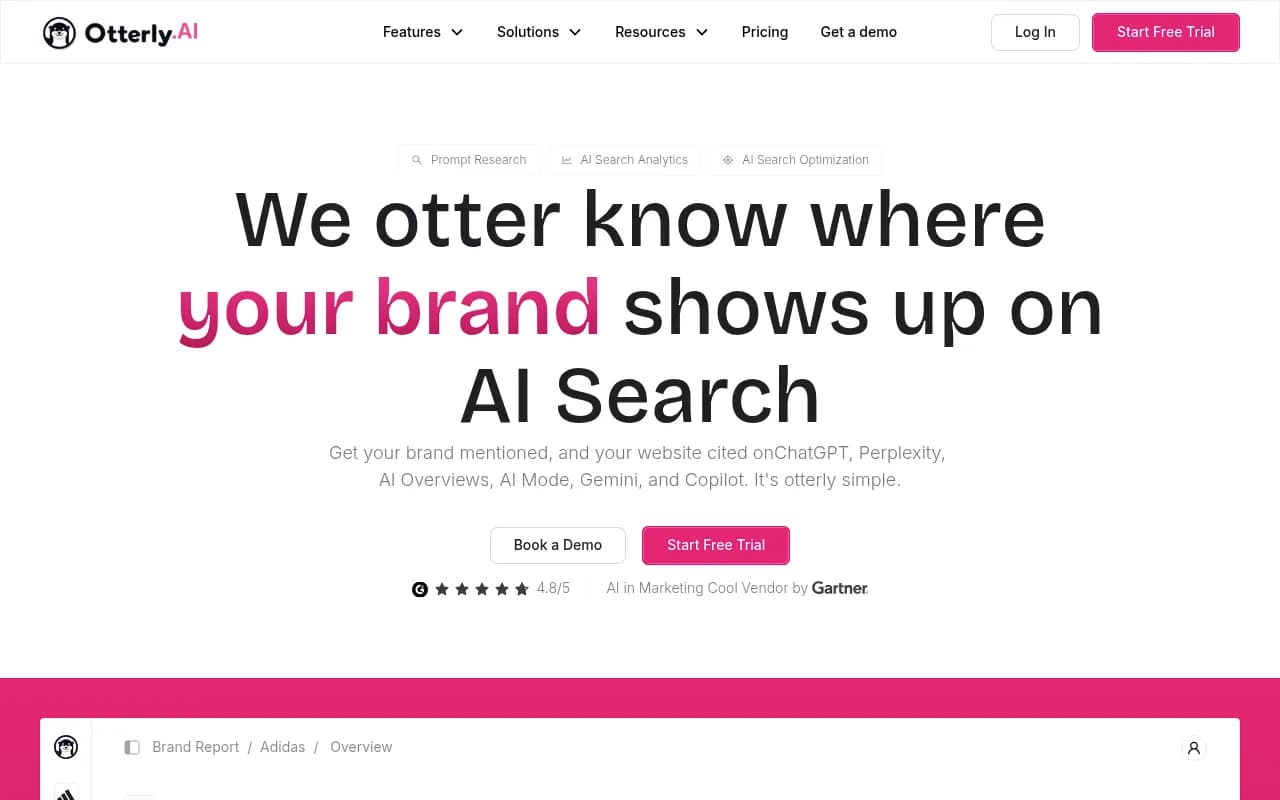
Otterly.AI is one of the most accessible starting points. It tracks brand mentions across AI search engines at a price point that makes sense for small teams and solo operators.
LLM Pulse is another lightweight option built for growing teams that don't need enterprise features yet.

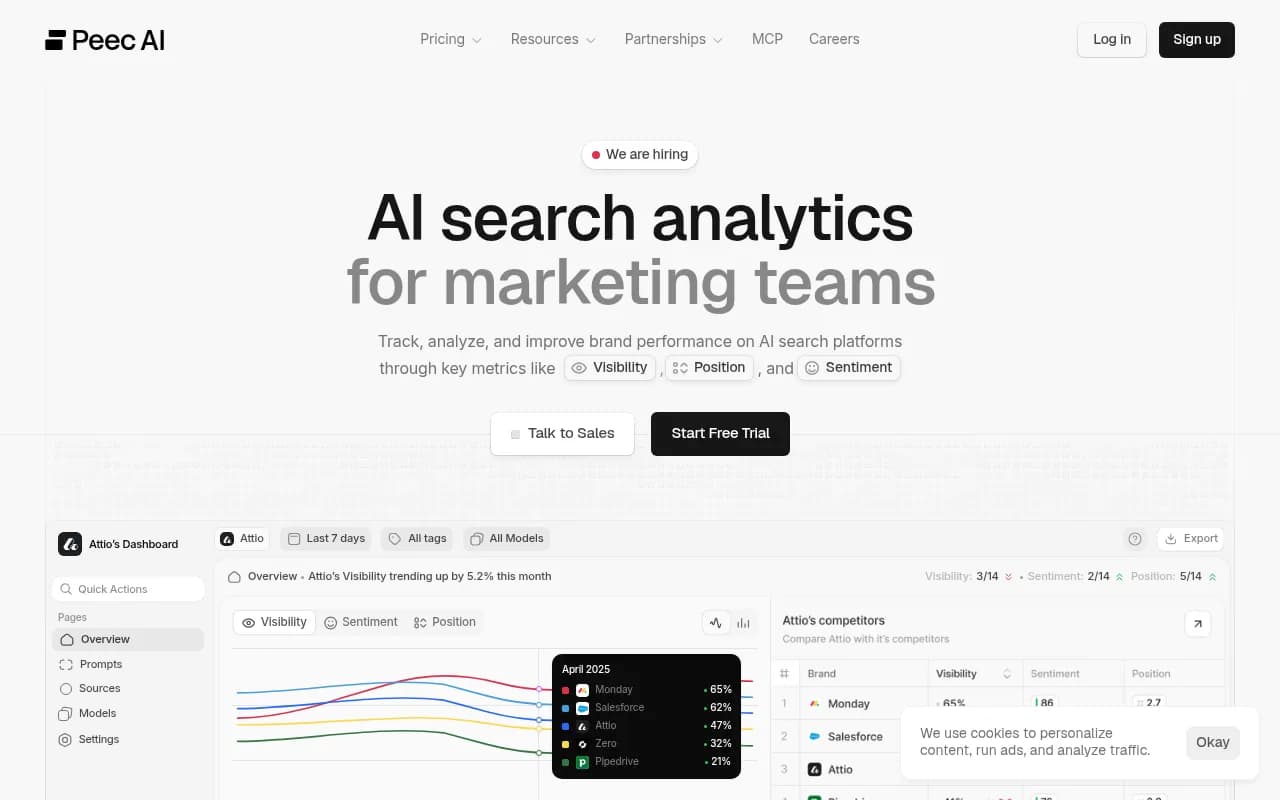
Peec AI sits slightly above the free tier but adds smart suggestions on top of the monitoring, which helps beginners who aren't sure what to do with the data they're seeing.
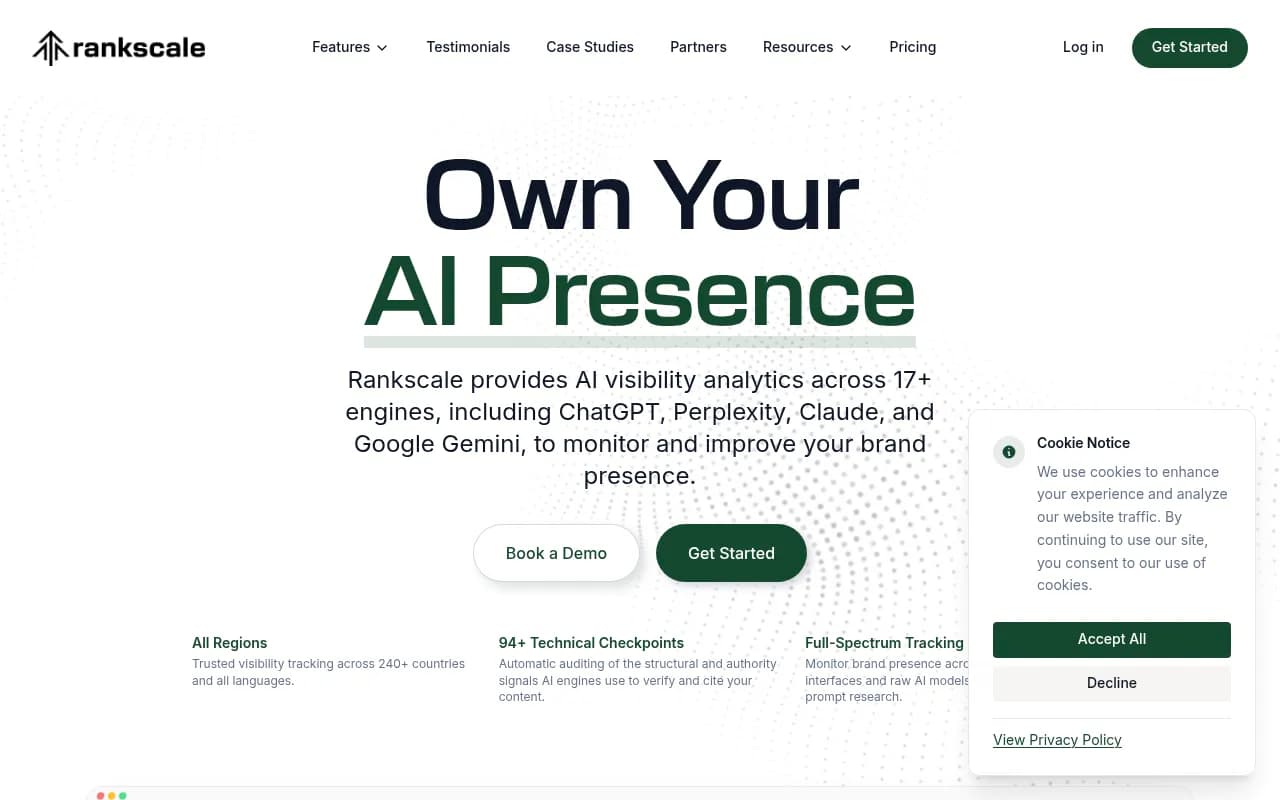
Rankscale and ZipTie are both focused trackers worth considering if you want something purpose-built and simple.
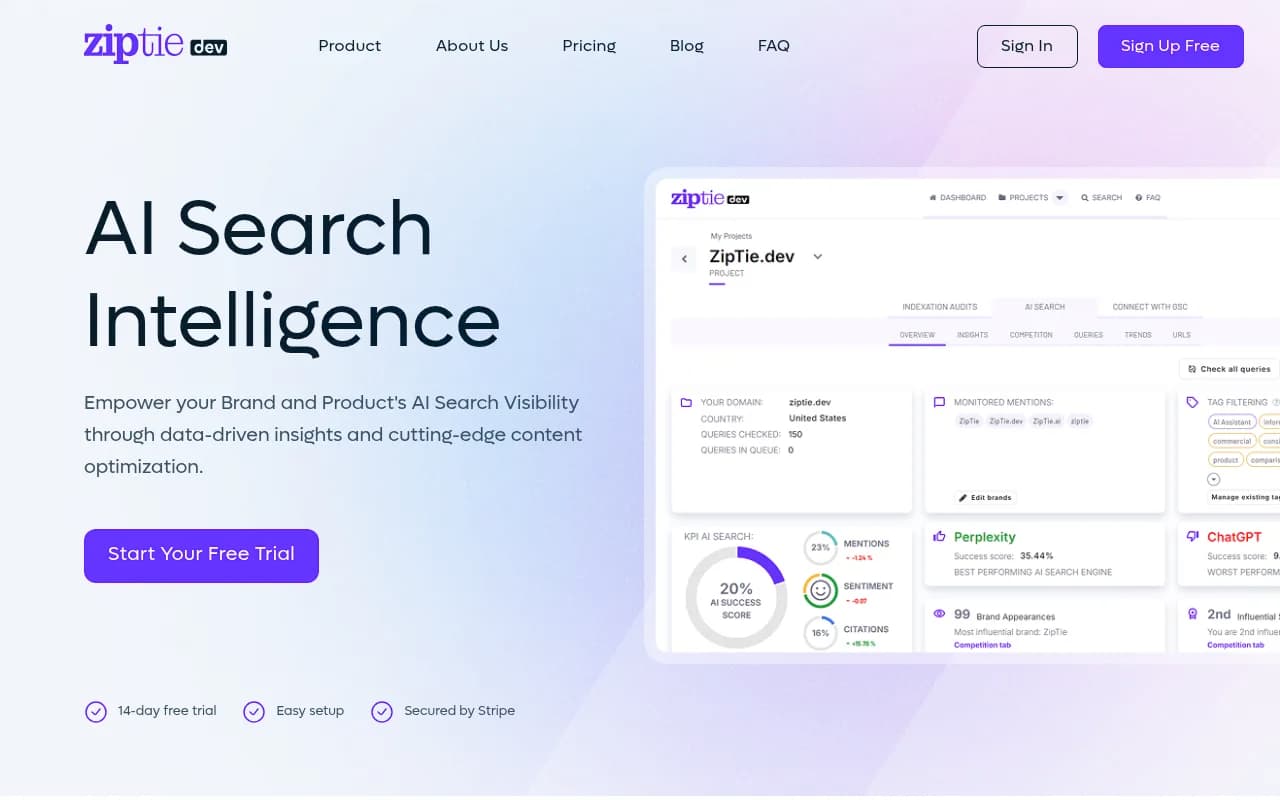
What you're looking for at this stage: which AI models mention you, in response to which prompts, and how often. Even a rough picture is better than nothing.
Stage 2: Finding the gaps
Once you know your baseline, the next step is figuring out where your competitors are showing up that you're not. This is called answer gap analysis, and it's where GEO gets genuinely interesting.
The idea is simple: if a competitor is being cited by ChatGPT when someone asks "best [your category] for [use case]" and you're not, that's a gap. You need content that answers that prompt better than what's currently on your site.
Tools that help with gap analysis
AthenaHQ is built around monitoring and gap identification. It's a solid choice for teams that want to understand the competitive landscape in AI search.
Profound goes deeper on enterprise-level analysis, though it's priced accordingly.
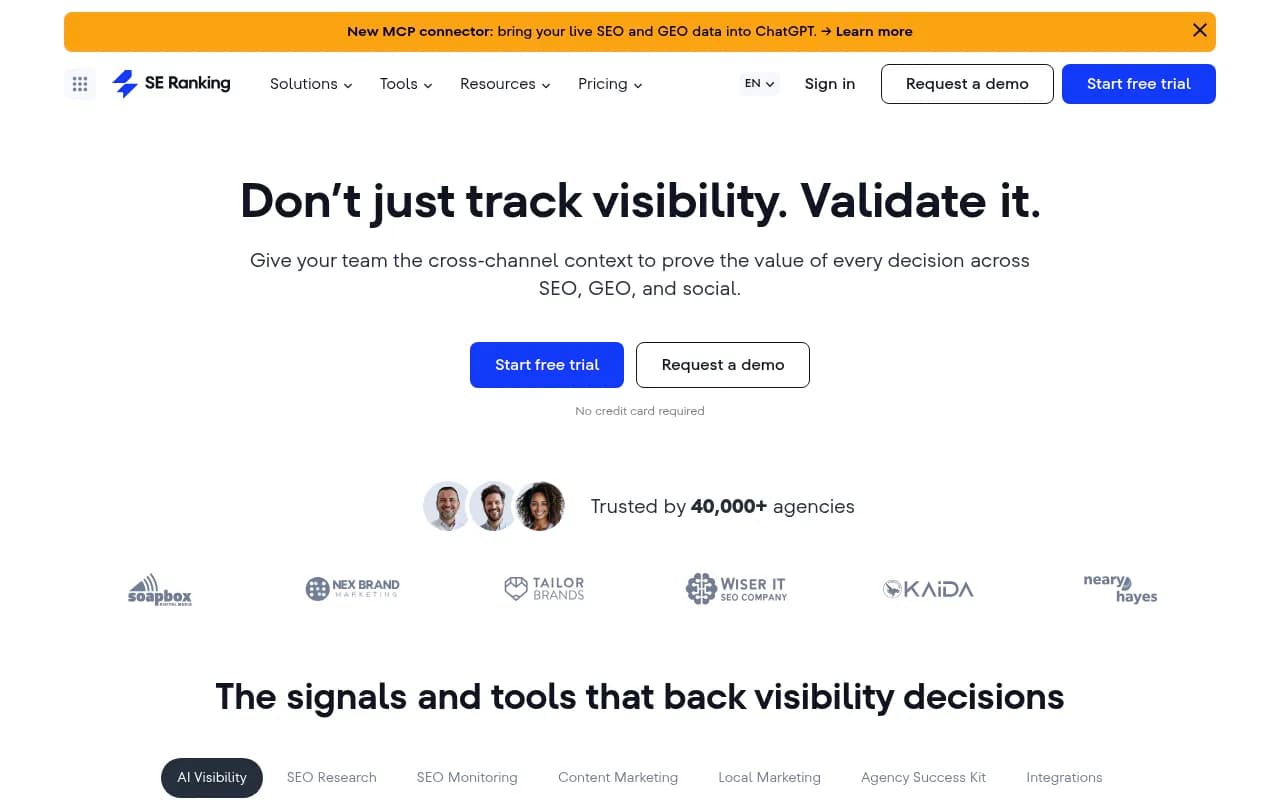
SE Ranking has expanded its platform to include GEO-specific research features, making it a good option if you're already using it for traditional SEO.
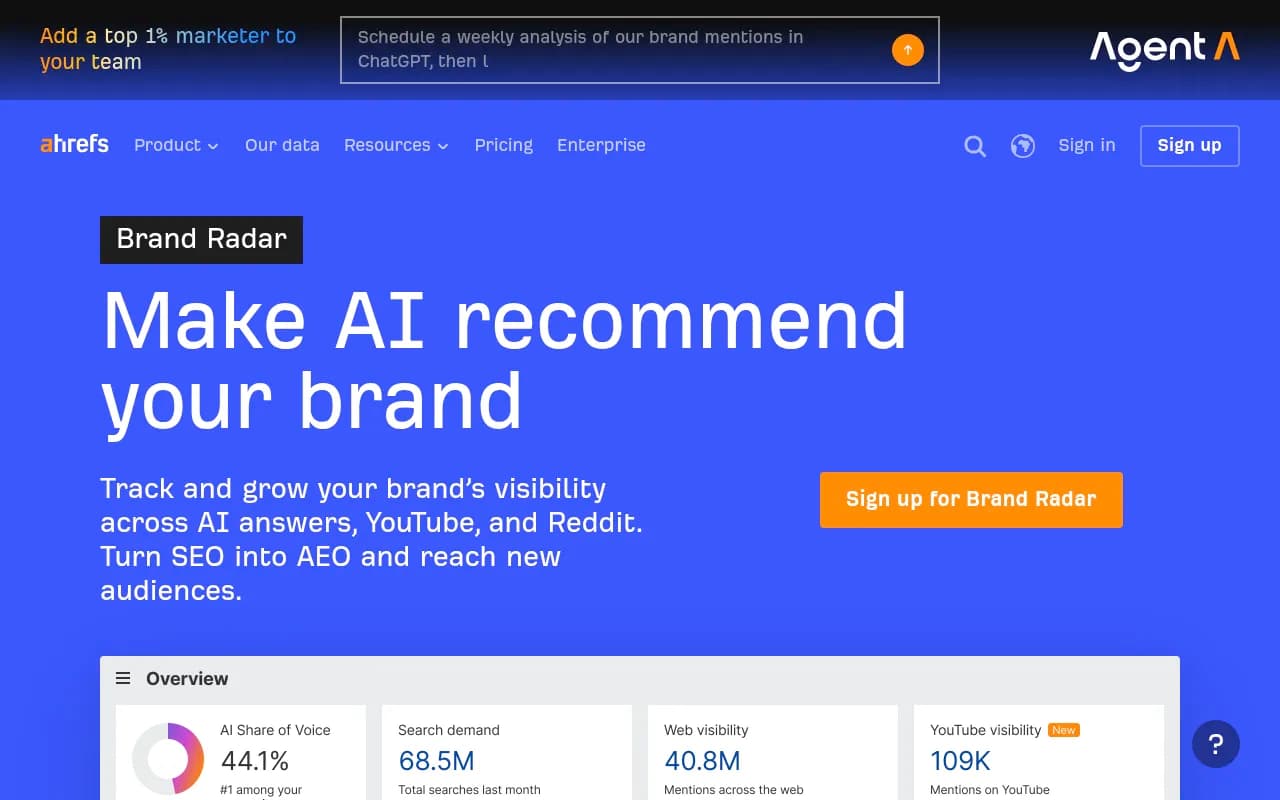
Ahrefs Brand Radar is worth checking if you're already an Ahrefs user -- it tracks your brand across AI search engines without requiring a separate subscription.
For a more complete picture that goes beyond monitoring into actual optimization, Promptwatch has an Answer Gap Analysis feature that shows you the specific prompts competitors are visible for that you're not -- down to the exact content your site is missing.
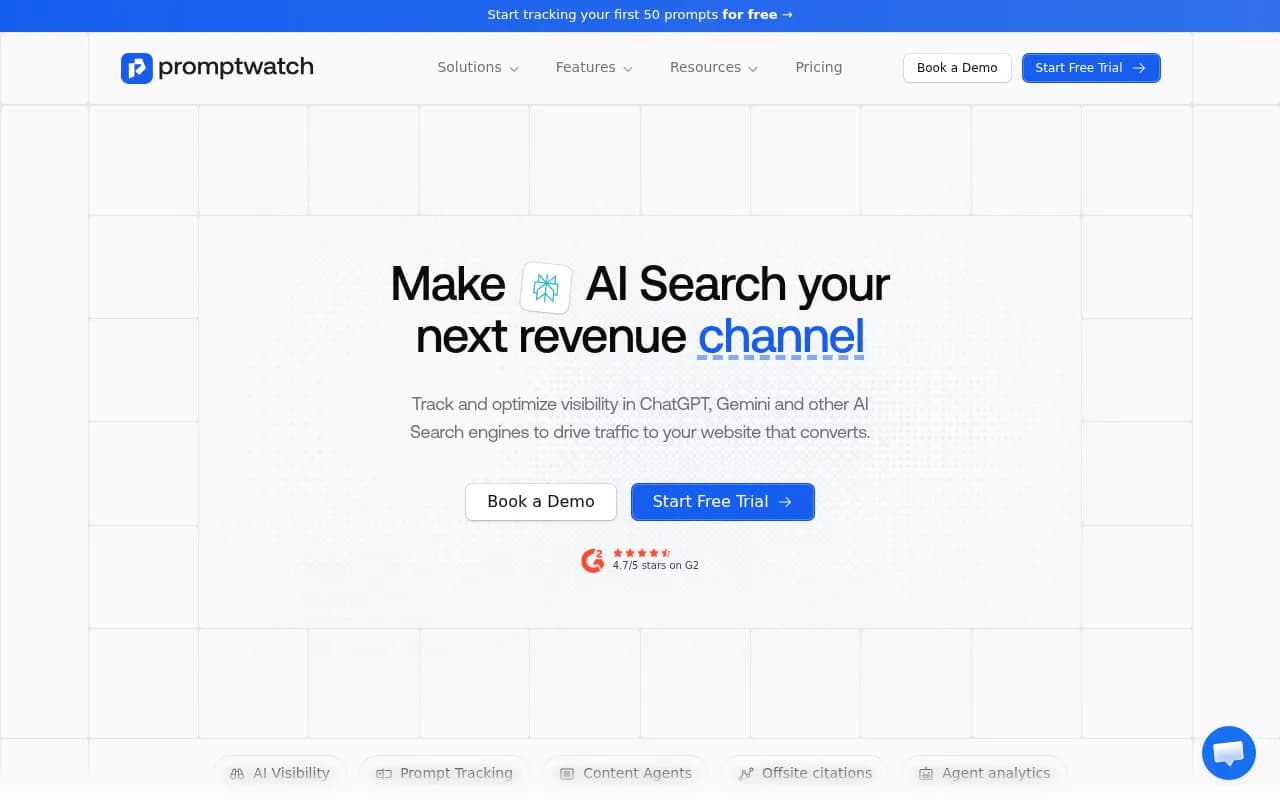
The difference between a monitoring tool and a gap analysis tool is significant. Monitoring tells you where you are. Gap analysis tells you where you need to go. Beginners often underestimate how much time they spend staring at monitoring data without knowing what action to take -- a tool that points you toward specific gaps saves a lot of that.
Stage 3: Creating content that gets cited
This is where most of the work happens. AI models cite content that directly and clearly answers questions. That means:
- FAQ-style content that matches how people actually ask questions
- Comparison articles that weigh options against each other
- Definitive guides on specific topics (like this one)
- Content with clear structure, headings, and factual claims
The goal isn't to game the AI -- it's to be genuinely useful in a format AI models can parse and reference.
Content creation and optimization tools
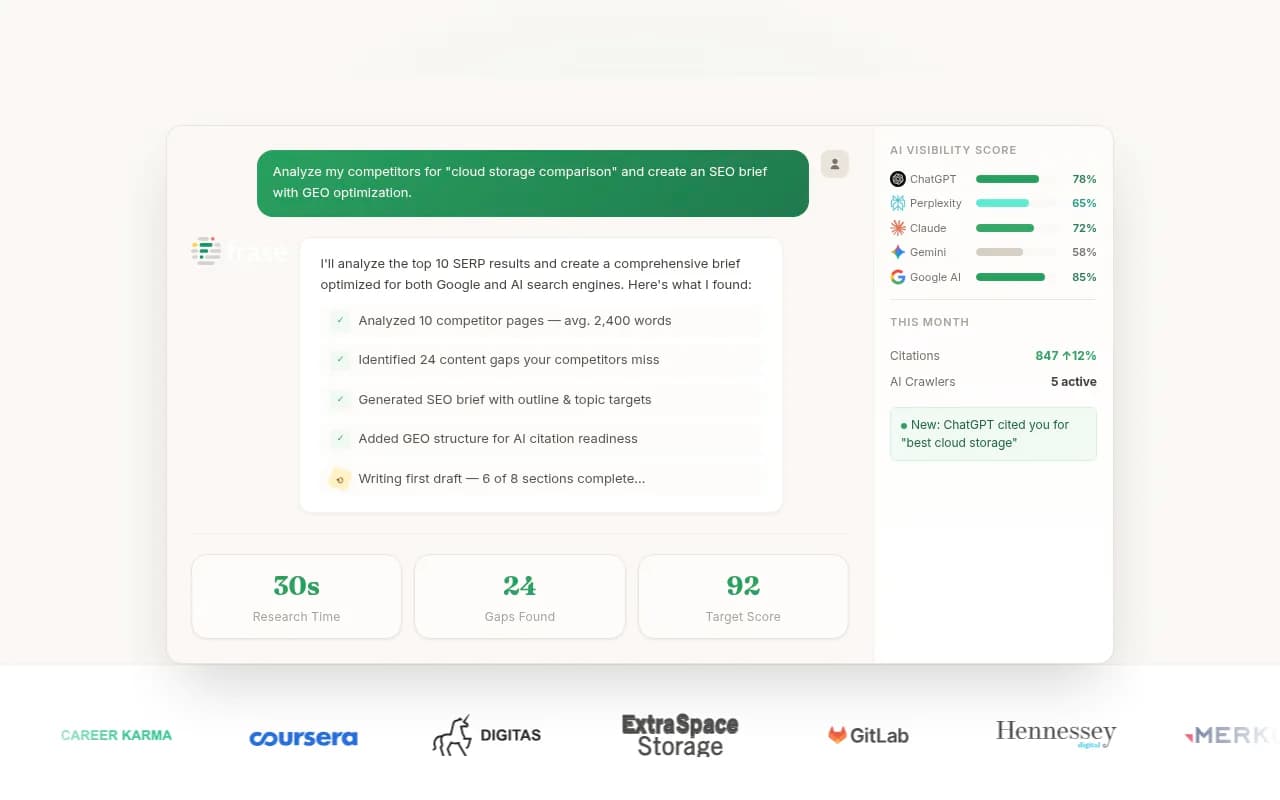
Frase is one of the better-known tools for content briefs and optimization. It helps you understand what topics to cover and how to structure content for search visibility.
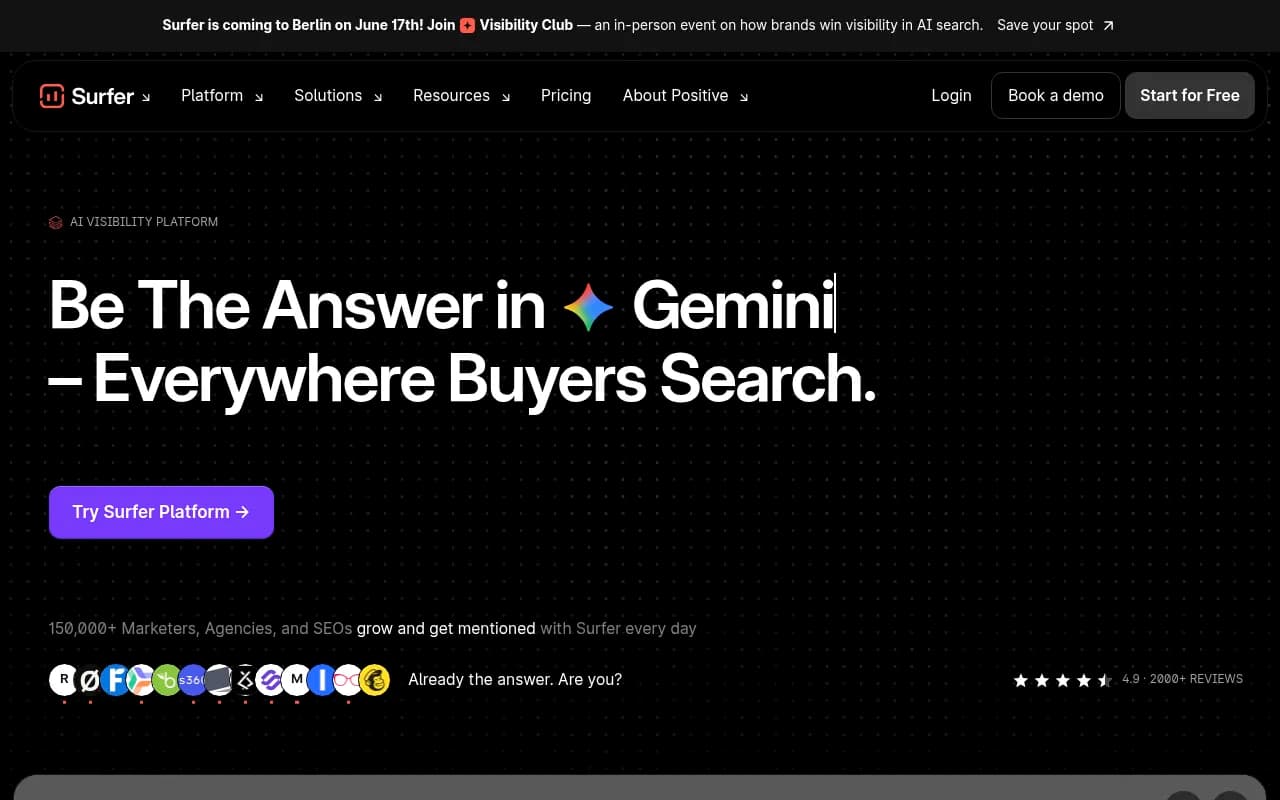
Surfer SEO remains a strong choice for on-page optimization, and it's been expanding into AI search content guidance.
Clearscope is particularly good for content teams that want data-driven guidance on what to include in an article.
MarketMuse takes a content strategy angle -- it helps you plan which topics to prioritize based on your existing content and competitive gaps.
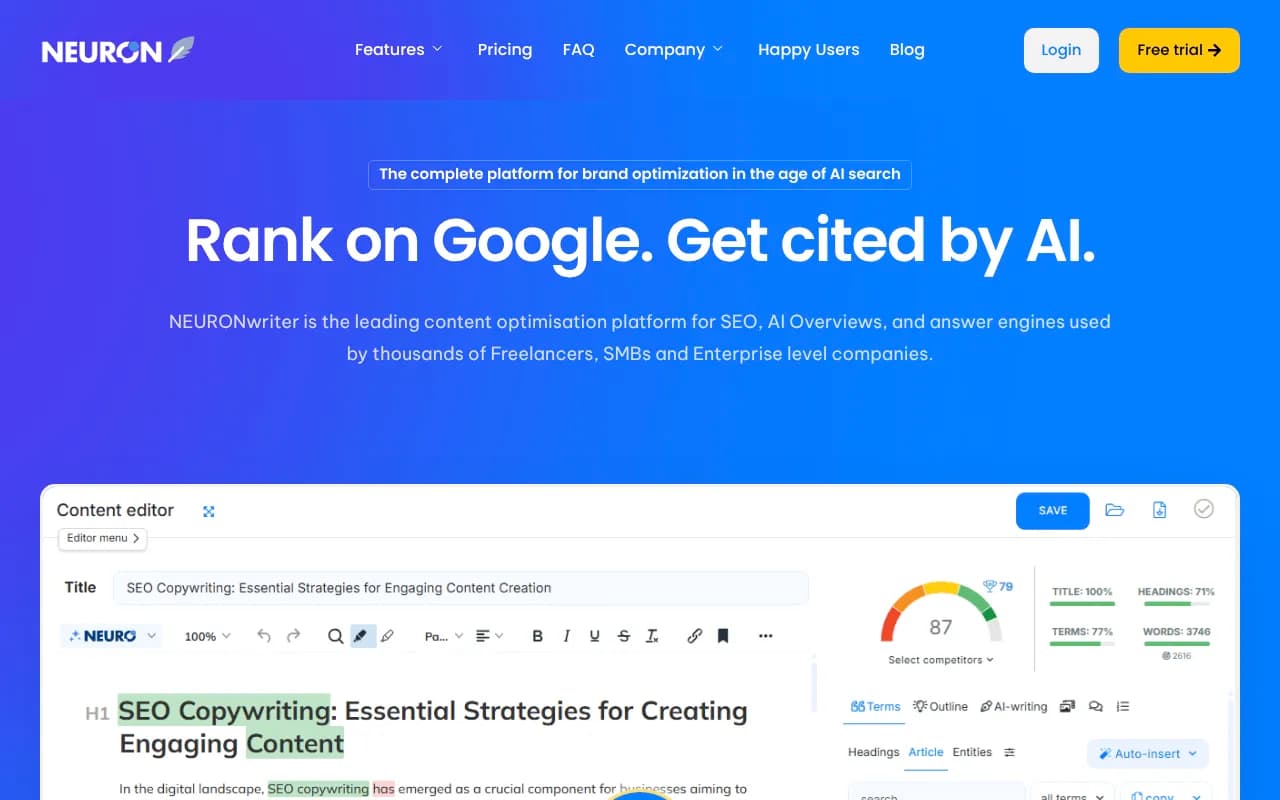
NeuronWriter uses NLP-based analysis to help you write content that matches how AI models understand topics.
For teams that want AI-assisted content generation grounded in actual prompt data (not just generic SEO guidance), Promptwatch's Content Agents generate articles and briefs based on real citation data, prompt volumes, and competitor analysis. That's a different approach from most content tools, which optimize for keyword density rather than AI citability.
If you're using a general AI writing tool like Jasper or Writesonic, they can help with production speed, but they don't have the GEO-specific intelligence that purpose-built tools offer.
Stage 4: Tracking results
After you publish new content, you need to know whether it's working. This is harder in GEO than in SEO because there's no rank tracker equivalent -- you can't just check "position 3 for this keyword." Instead, you're looking for:
- Whether AI crawlers are visiting your new pages
- Whether those pages start appearing in AI-generated answers
- Whether AI-referred traffic is increasing
Tools for tracking GEO results
LLMclicks.ai focuses specifically on tracking clicks and traffic from AI search engines -- useful for connecting visibility to actual site visits.
Similarweb GEO Tools offers AI traffic measurement alongside its broader traffic analytics.
Nightwatch has extended its rank tracking capabilities into AI search, making it a natural upgrade if you're already using it.
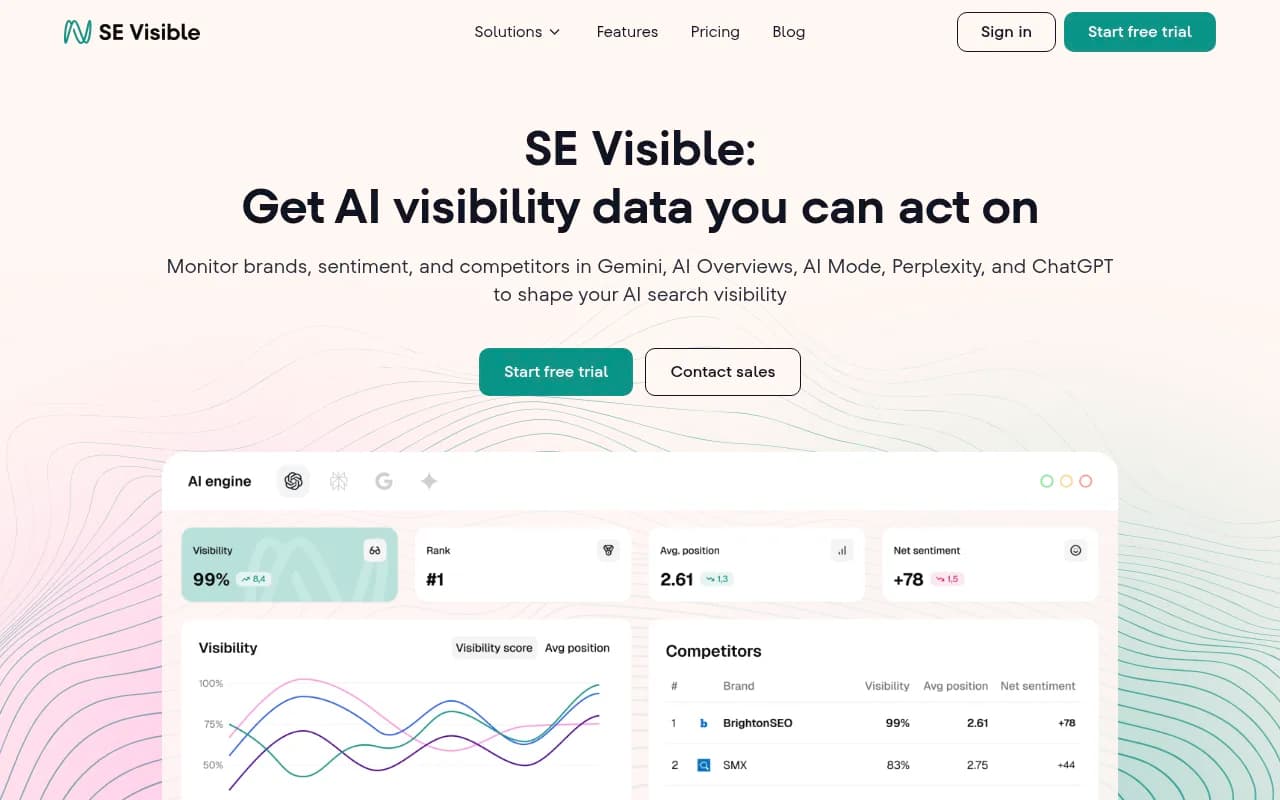
SE Ranking Visible is SE Ranking's dedicated AI visibility tracker, worth using if you want to keep your SEO and GEO data in one place.
For crawler-level data -- meaning you can actually see when ChatGPT or Perplexity's crawler visits your site, which pages it reads, and when those pages move from "crawled" to "cited" -- Promptwatch's AI Crawler Logs feature is one of the few tools that provides this. Most monitoring tools don't go that deep.
Comparison: GEO tools by use case
Here's a quick reference for matching tools to your situation:
| Use case | Recommended tools | Price range |
|---|---|---|
| First visibility check | Otterly.AI, LLM Pulse, Peec AI | $0-$50/mo |
| Competitive gap analysis | AthenaHQ, Promptwatch, SE Ranking | $99-$299/mo |
| Content brief creation | Frase, MarketMuse, Clearscope | $45-$179/mo |
| AI content generation | Promptwatch Content Agents, Jasper | $99-$249/mo |
| Traffic from AI search | LLMclicks.ai, Similarweb GEO | $0-$99/mo |
| Full-cycle GEO platform | Promptwatch, Profound | $99-$579/mo |
| Traditional SEO + GEO | SE Ranking, Ahrefs, Semrush | $50-$499/mo |
What to avoid as a beginner
A few patterns that waste time and money when you're starting out:
Buying a monitoring tool and stopping there. Knowing you're invisible doesn't help unless you do something about it. If a tool only shows you data without helping you act on it, you'll hit a wall fast.
Optimizing for one AI model. ChatGPT gets the most attention, but Perplexity, Google AI Overviews, and Gemini each have different citation behaviors. A brand that only tracks ChatGPT is missing a significant portion of AI search traffic.
Treating GEO like keyword stuffing. AI models are good at detecting thin, repetitive content. The content that gets cited tends to be specific, well-structured, and genuinely useful -- not content that just mentions a phrase repeatedly.
Ignoring your existing content. Before creating anything new, audit what you already have. Many brands have pages that are close to being citable but need structural improvements -- better headings, clearer answers, more specific claims.
A realistic starting stack for beginners
If you're just getting started and want to spend wisely, here's a practical sequence:
Month 1 -- Baseline and monitoring: Start with a lightweight tool like Otterly.AI or Peec AI. Run your brand and core topics through ChatGPT, Perplexity, and Google AI Overviews manually. Document what you find.
Month 2 -- Gap analysis: Upgrade to a tool with gap analysis capabilities. Understand which prompts your competitors own that you don't. Prioritize 5-10 gaps that are both high-value and winnable.
Month 3 -- Content creation: Use a content optimization tool (Frase, Clearscope, or a platform with built-in content agents) to create content that directly addresses your priority gaps. Publish and submit to Google Search Console.
Month 4 onward -- Track and iterate: Monitor whether your new content is being crawled and cited. Adjust based on what's working. Add more prompts to track as your baseline improves.
This isn't the fastest path, but it's the one that builds on itself. Each month you're learning something that makes the next month more effective.
The bigger picture
GEO is still early. The tools are improving quickly, the best practices are still being written, and the AI models themselves keep changing how they handle citations. That's actually good news for beginners -- you're not years behind. The brands that figure this out in 2026 will have a real advantage over those that wait.
The core skill isn't technical. It's the ability to think about what questions your customers are asking AI models, and whether your content gives those models a good enough answer to cite you. Start there, pick tools that help you measure and improve that, and you'll be ahead of most of your competition.