Key takeaways
- Hall AI is a capable AI visibility monitor, but most teams don't need to pay premium prices to get meaningful brand tracking across AI search engines
- Several solid alternatives offer free tiers or plans under $50/month -- Otterly.AI, LLMrefs, and SE Ranking being the most notable
- The biggest gap in budget tools is content optimization: most cheap options show you where you're invisible but don't help you fix it
- If you need to actually improve your AI visibility (not just measure it), you'll need a tool that goes beyond monitoring -- or combine a cheap tracker with a content tool
- For teams that want the full picture -- tracking, gap analysis, and content generation -- Promptwatch covers all three starting at $99/month
Hall AI does one thing reasonably well: it tells you whether your brand shows up when someone asks an AI engine a question about your category. That's useful. But the pricing has a way of catching teams off guard, and the feature set is narrower than what many teams actually need.
So if you're shopping for alternatives -- either because Hall's cost doesn't fit your budget or because you want more than a monitoring dashboard -- this guide covers the best options in 2026, with a focus on what's free, what's genuinely affordable, and what you actually get for the money.
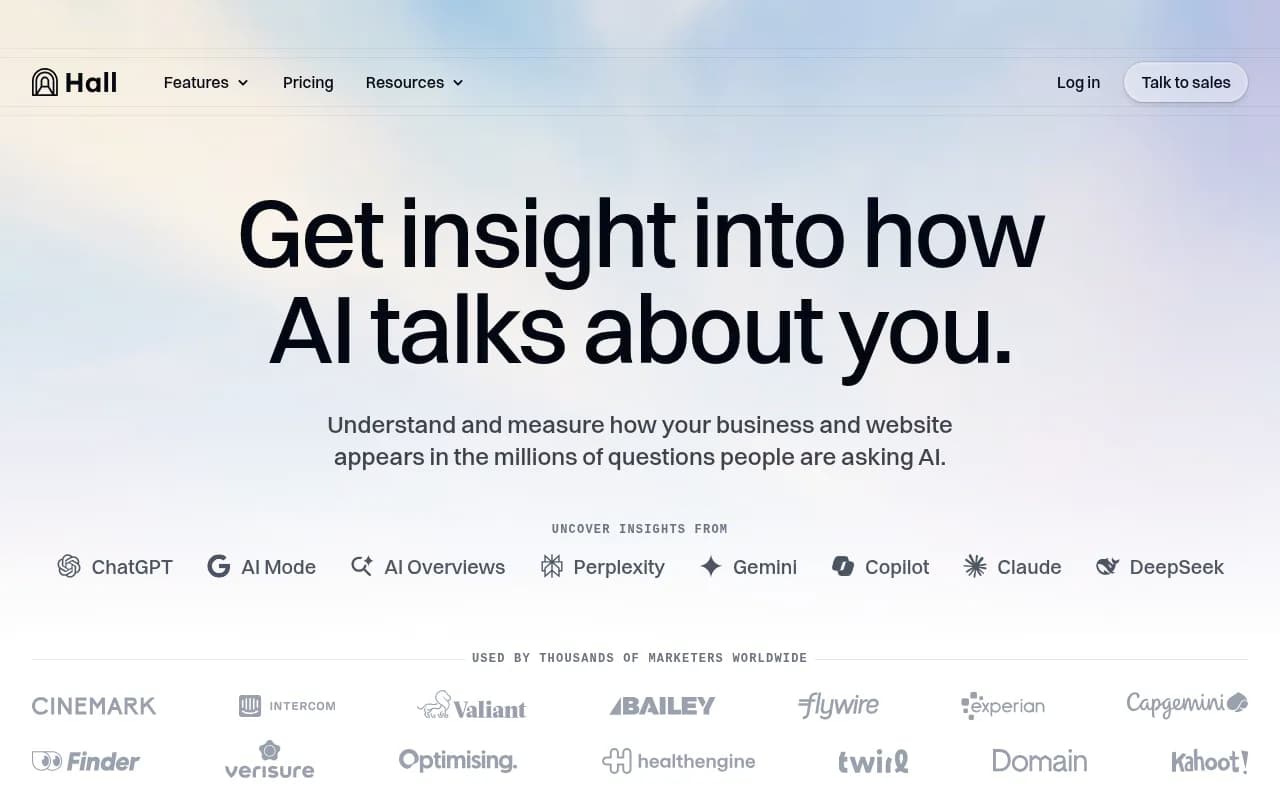
What Hall AI actually does (and where it falls short)
Before jumping to alternatives, it's worth being specific about what you're replacing.
Hall AI tracks brand mentions across AI search engines -- ChatGPT, Perplexity, and a handful of others. You set up prompts, it runs them on a schedule, and you get a dashboard showing how often your brand appears, which competitors show up, and how responses change over time.
That's the core loop. And it's genuinely useful for teams that are just getting started with AI visibility.
The limitations show up quickly, though. Hall doesn't tell you why you're missing from responses. It doesn't help you create content to fill those gaps. It doesn't show you which of your pages AI crawlers are actually visiting, or which external sources are driving citations. You get a score, not a strategy.
For teams that want to move from "we know we're invisible" to "we're doing something about it," that's a real ceiling.
The free and low-cost options worth knowing
Otterly.AI
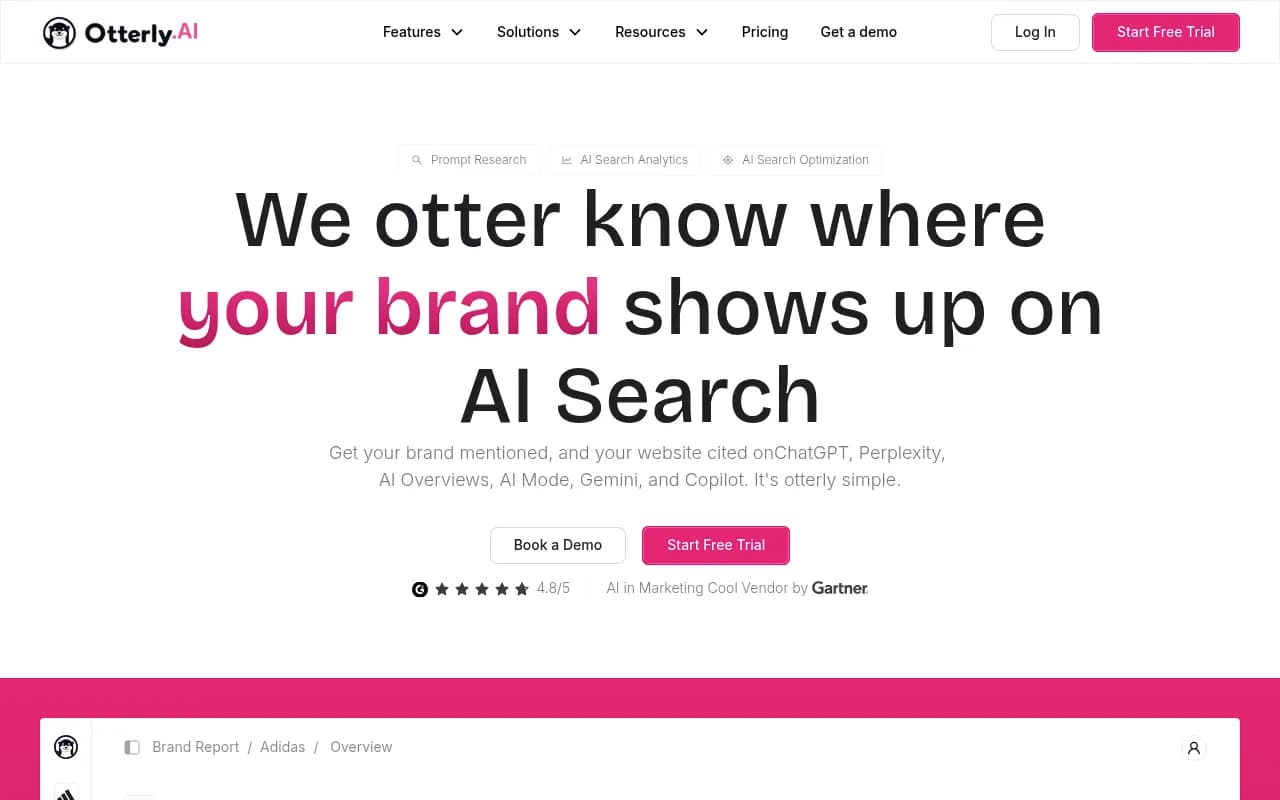
Otterly.AI is probably the most-cited budget option in this space, and for good reason. It has a free tier that lets you track a handful of prompts across multiple AI models, and the paid plans start low enough that solo consultants and small teams can actually afford them.
The interface is clean. Setup is fast. You can monitor ChatGPT, Perplexity, and Google AI Overviews without a sales call.
The catch: it's a monitoring tool, full stop. No content gap analysis, no content generation, no crawler logs. If you want to know your visibility score, Otterly works. If you want to improve it, you'll need something else alongside it.
LLMrefs
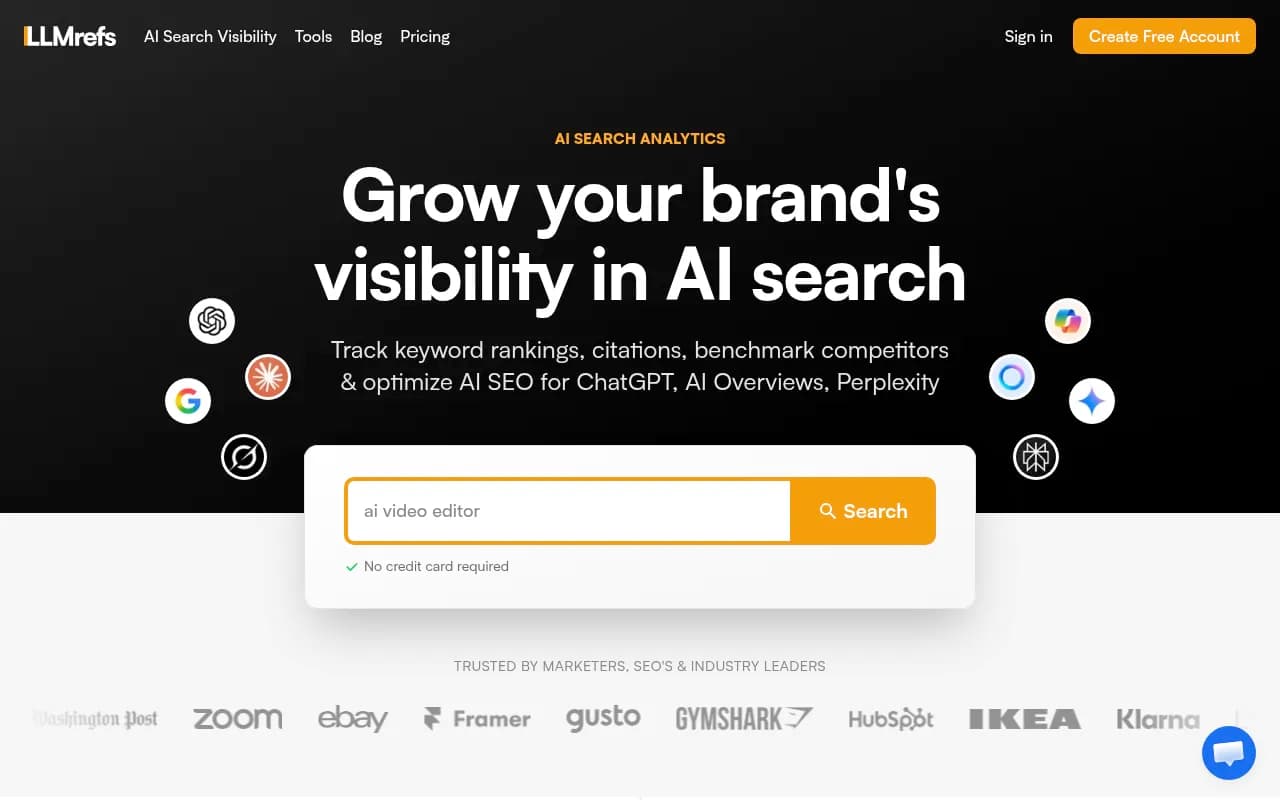
LLMrefs takes a slightly different angle. Rather than just tracking whether your brand appears, it focuses on citation patterns -- which sources AI models are pulling from, how often, and for what kinds of queries. There's a free plan that gives you a meaningful sample of this data.
For content teams trying to understand where to publish (not just whether they're visible), LLMrefs is worth a look. It's not a full GEO platform, but the citation intelligence it surfaces is genuinely useful for prioritizing outreach and content strategy.
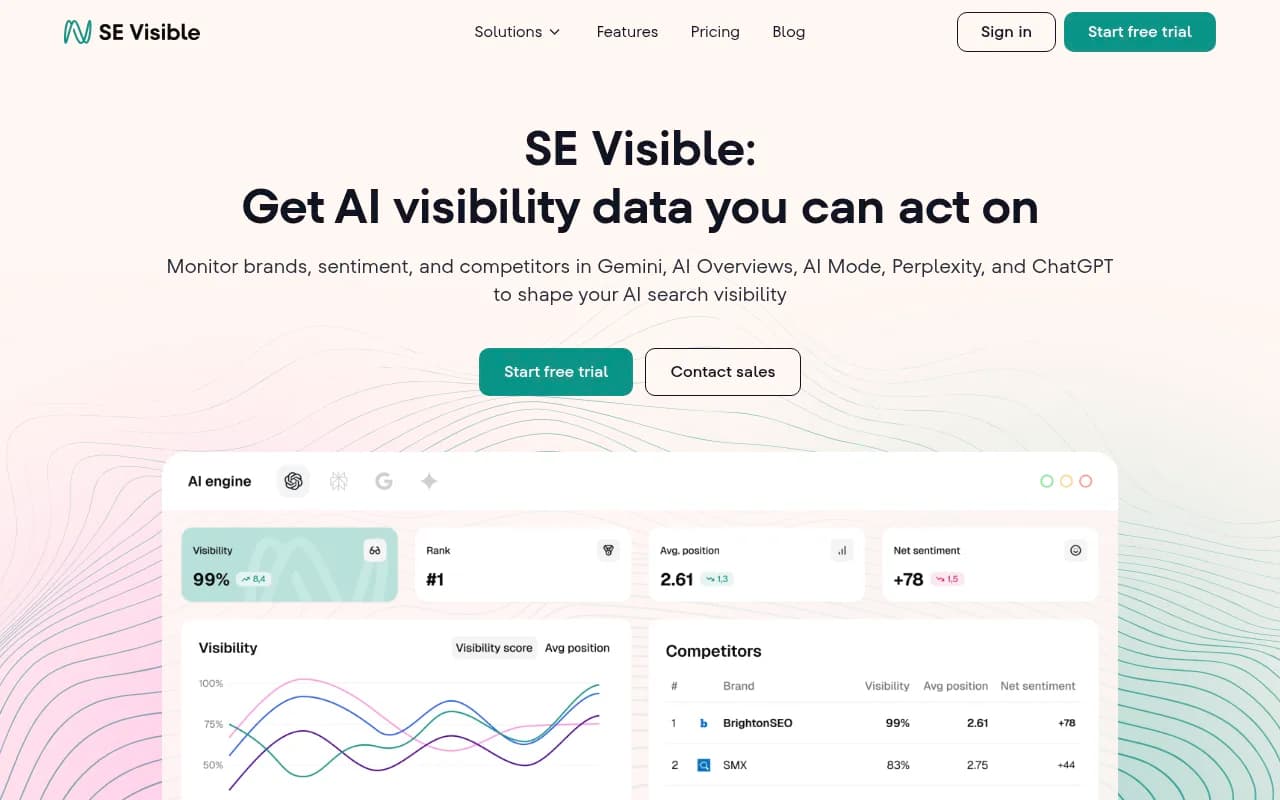
SE Ranking AI Visibility Tracker
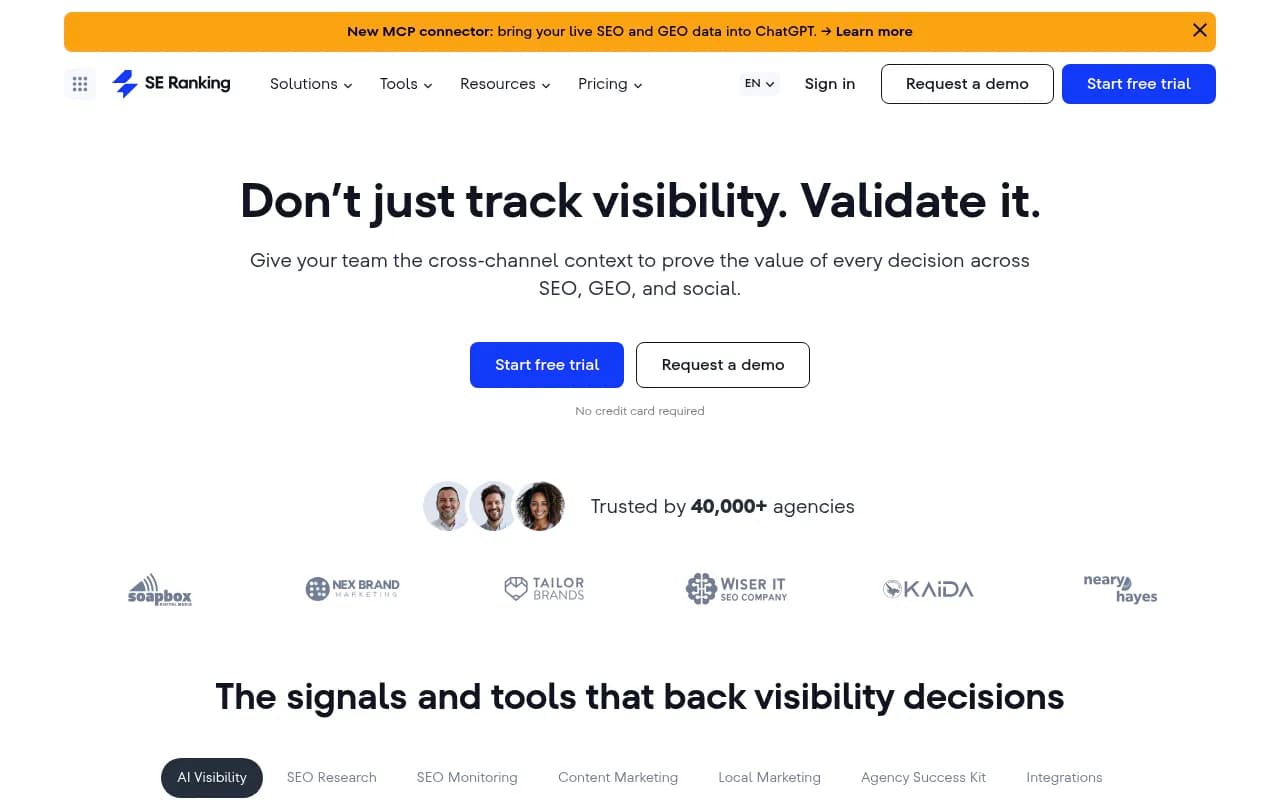
SE Ranking has been a reliable mid-market SEO tool for years, and its AI visibility module is a reasonable add-on if you're already paying for the platform. The pricing is more accessible than dedicated GEO tools, and you get the benefit of having traditional SEO data alongside your AI tracking.
Coverage across AI models is solid -- ChatGPT, Perplexity, Gemini, and Google AI Overviews are all included. The depth of AI-specific features is thinner than dedicated platforms, but if you're already in the SE Ranking ecosystem, it's a low-friction way to add AI monitoring.
SE Ranking Visible
SE Ranking also has a separate product called Visible, which is specifically focused on AI search visibility. It's worth checking out independently if you don't need the full SE Ranking suite.
Nightwatch
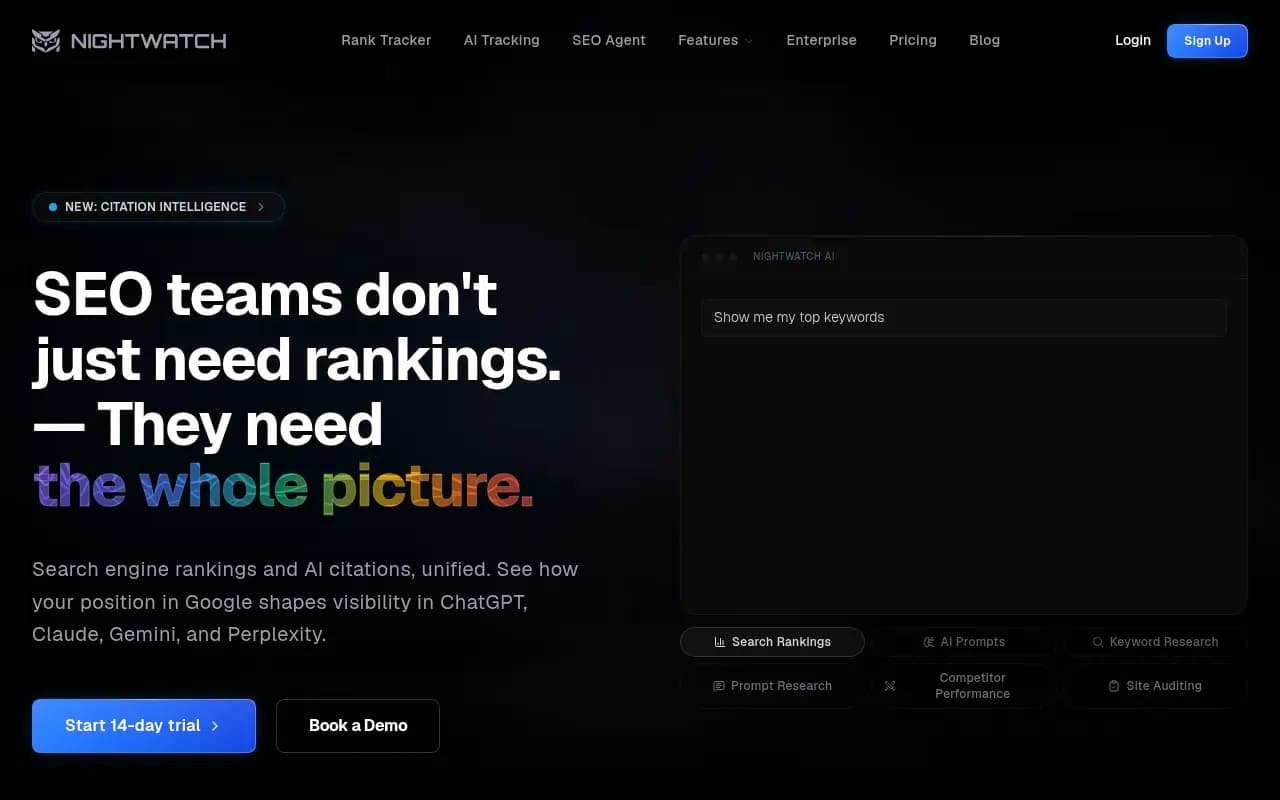
Nightwatch built its reputation on rank tracking, and it's extended that into AI search monitoring. The pricing is competitive, and the interface will feel familiar to anyone who's used a traditional rank tracker. Good option for teams that want AI visibility bolted onto an existing rank tracking workflow.
Peec AI
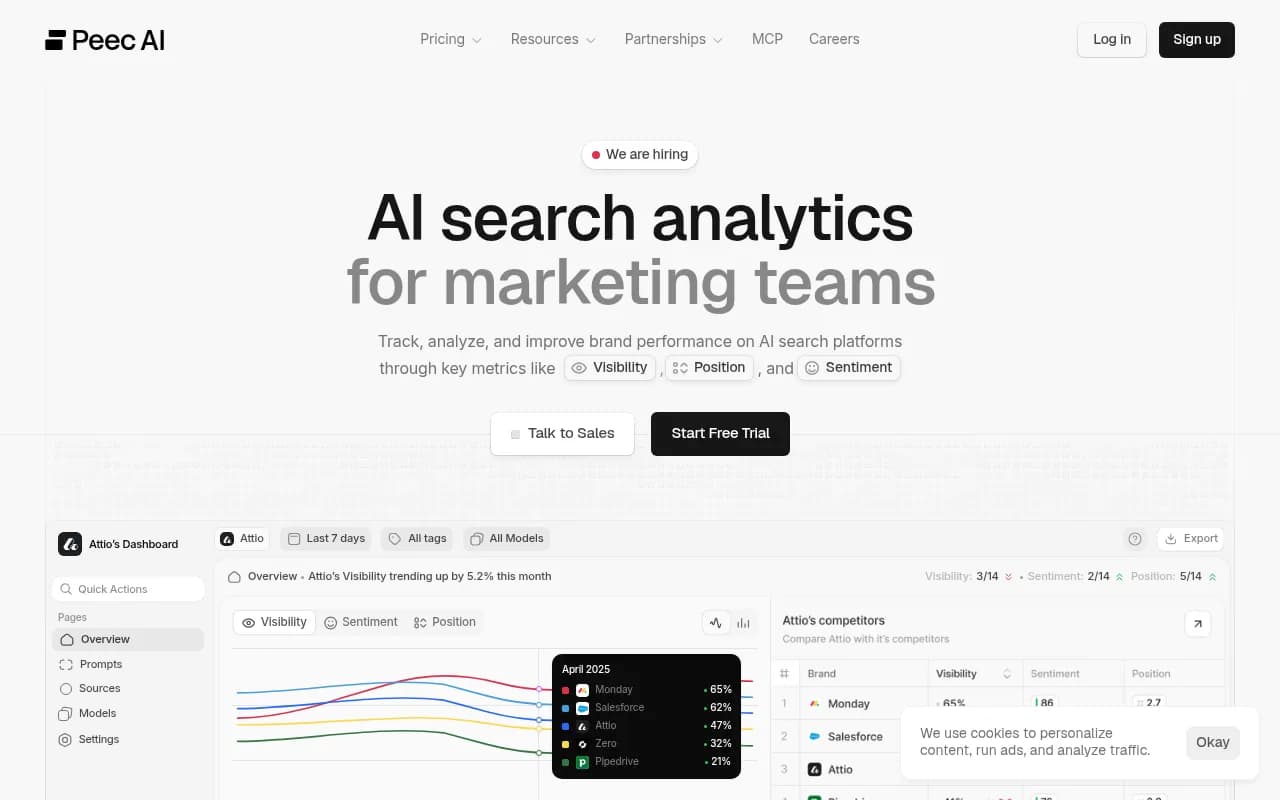
Peec AI sits in the affordable middle ground -- not free, but not enterprise-priced either. It tracks brand mentions across the major AI models and surfaces some basic suggestions for improving visibility. The prompt setup is straightforward, and the reporting is clean enough for client-facing work.
Radarkit
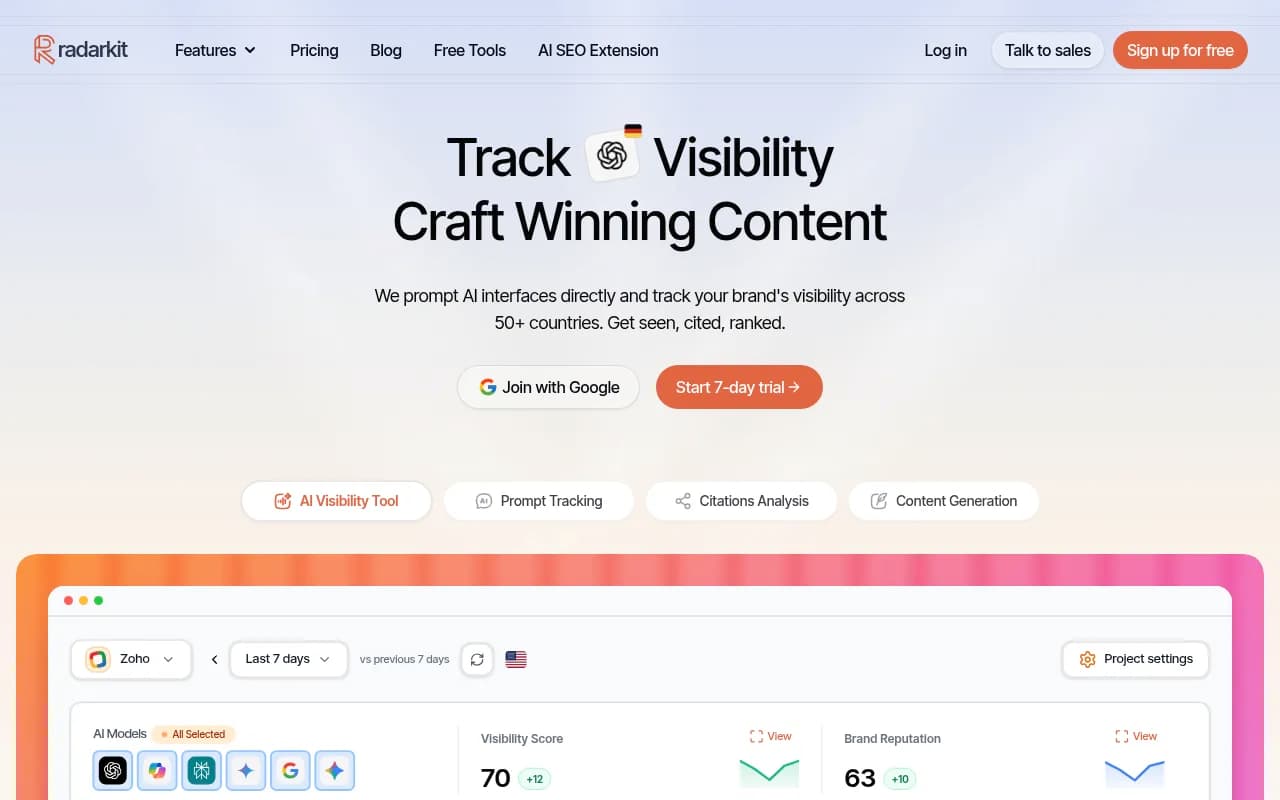
Radarkit gets mentioned frequently in agency circles as a solid all-around option. It covers the core monitoring use case well and has better prompt management than some of the cheaper alternatives. Worth evaluating if you're managing multiple brands or clients.
Ahrefs Brand Radar
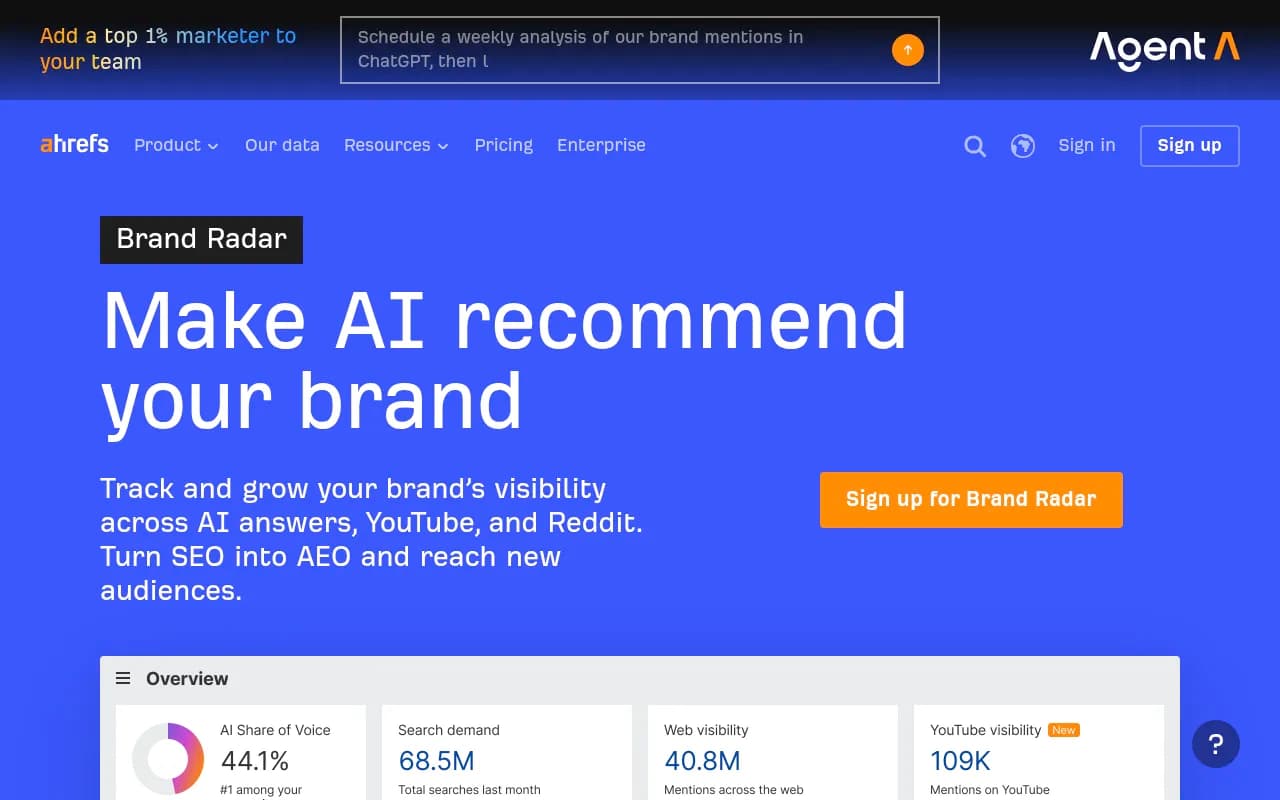
If you're already an Ahrefs subscriber, Brand Radar is worth turning on. The data quality argument here is real: rather than fabricating prompts and guessing what users might ask, Brand Radar pulls from actual search query data, which means the prompts it tracks correspond to things real people have typed. That's a meaningful methodological difference.
The standalone pricing ($50-$250/month depending on volume) is reasonable, and the $699/month all-indexes plan is competitive with dedicated GEO platforms at the enterprise tier.
A comparison of the main budget options
| Tool | Free tier | Starting price | AI models covered | Content tools | Best for |
|---|---|---|---|---|---|
| Otterly.AI | Yes | ~$19/mo | ChatGPT, Perplexity, Google AIO | No | Solo users, quick setup |
| LLMrefs | Yes (limited) | Free / paid tiers | Multiple | No | Citation research |
| SE Ranking | No | ~$65/mo (full suite) | ChatGPT, Perplexity, Gemini, Google AIO | Basic | Existing SE Ranking users |
| Nightwatch | No | ~$39/mo | ChatGPT, Perplexity | No | Rank tracker users |
| Peec AI | No | ~$49/mo | Multiple | Basic suggestions | Small teams |
| Radarkit | No | Varies | Multiple | No | Agencies, multi-brand |
| Ahrefs Brand Radar | Demo only | $50/mo | Multiple AI indexes | No | Ahrefs subscribers |
| Promptwatch | No | $99/mo | 10+ models | Full (gap analysis + generation) | Teams that want to act on data |
The tools that go beyond monitoring
Here's the honest tension in this category: the cheapest tools are cheap because they only do one thing. They track. They report. They show you a number.
That's fine if you just need to answer "are we showing up?" But most teams asking that question quickly follow it with "why aren't we showing up, and what do we do about it?" And that's where the budget tools hit a wall.
Writesonic GEO
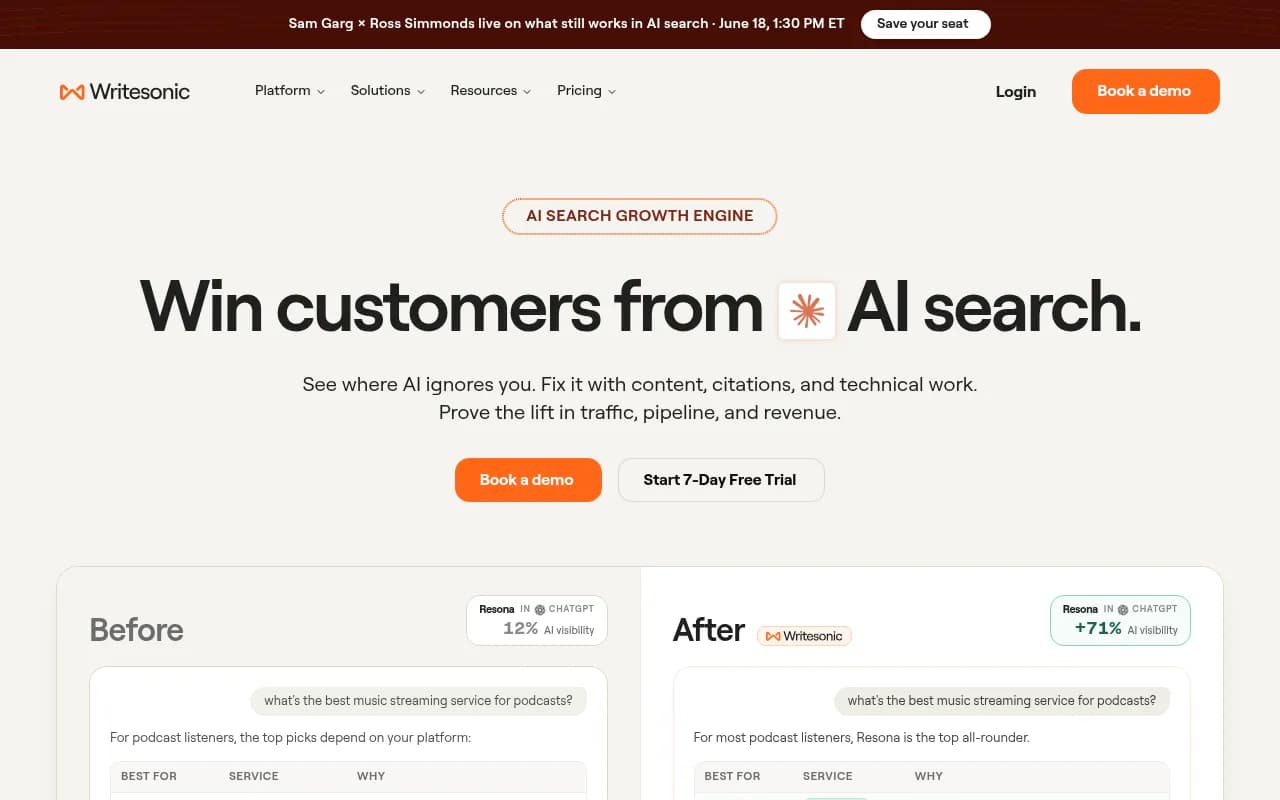
Writesonic has built out a GEO module that combines visibility monitoring with content generation. The idea is that you track your gaps and then use Writesonic's writing tools to fill them. The integration between the two is tighter than you'd get from stitching together a cheap tracker and a separate AI writer.
Scrunch AI
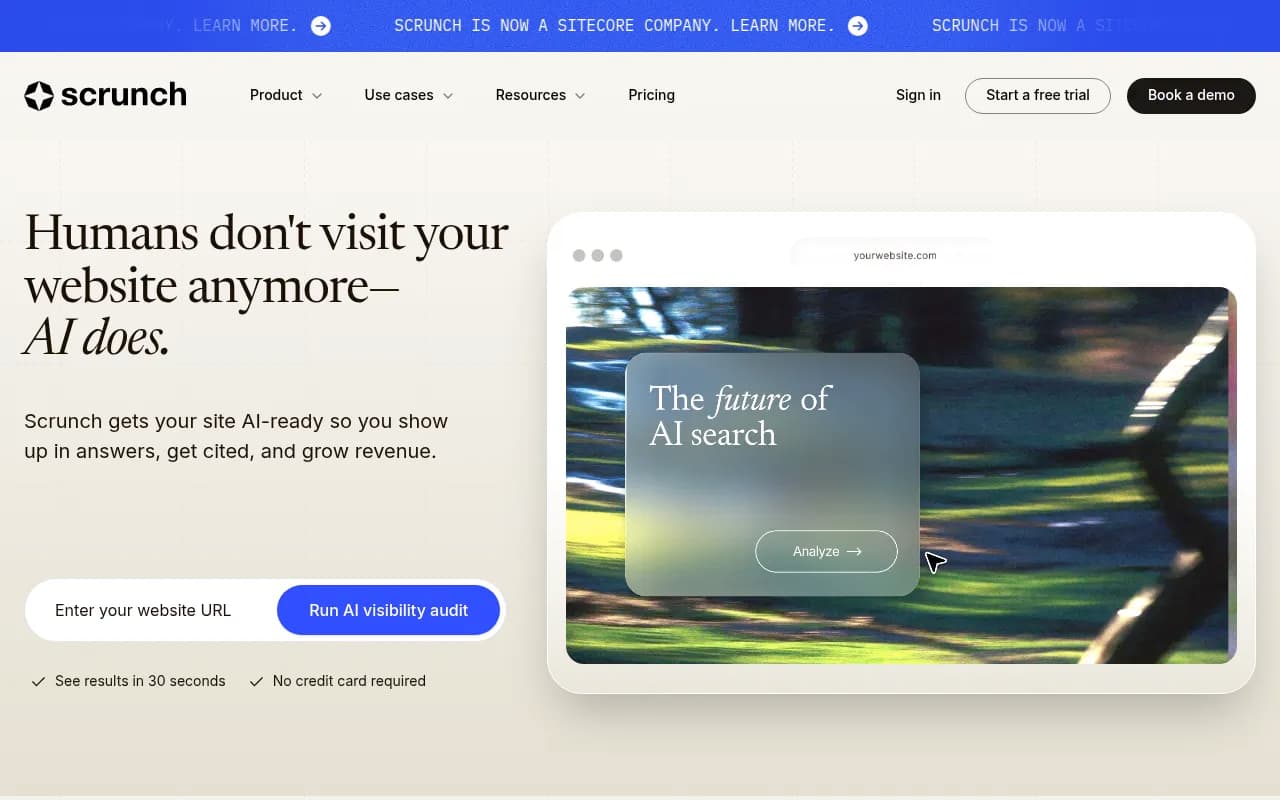
Scrunch AI is more enterprise-oriented, but it's worth mentioning because it takes a structured approach to AI monitoring that goes deeper than most budget tools. If you're at a mid-size company and need something more rigorous than Otterly but less expensive than the top-tier platforms, Scrunch is worth a demo.
AthenaHQ
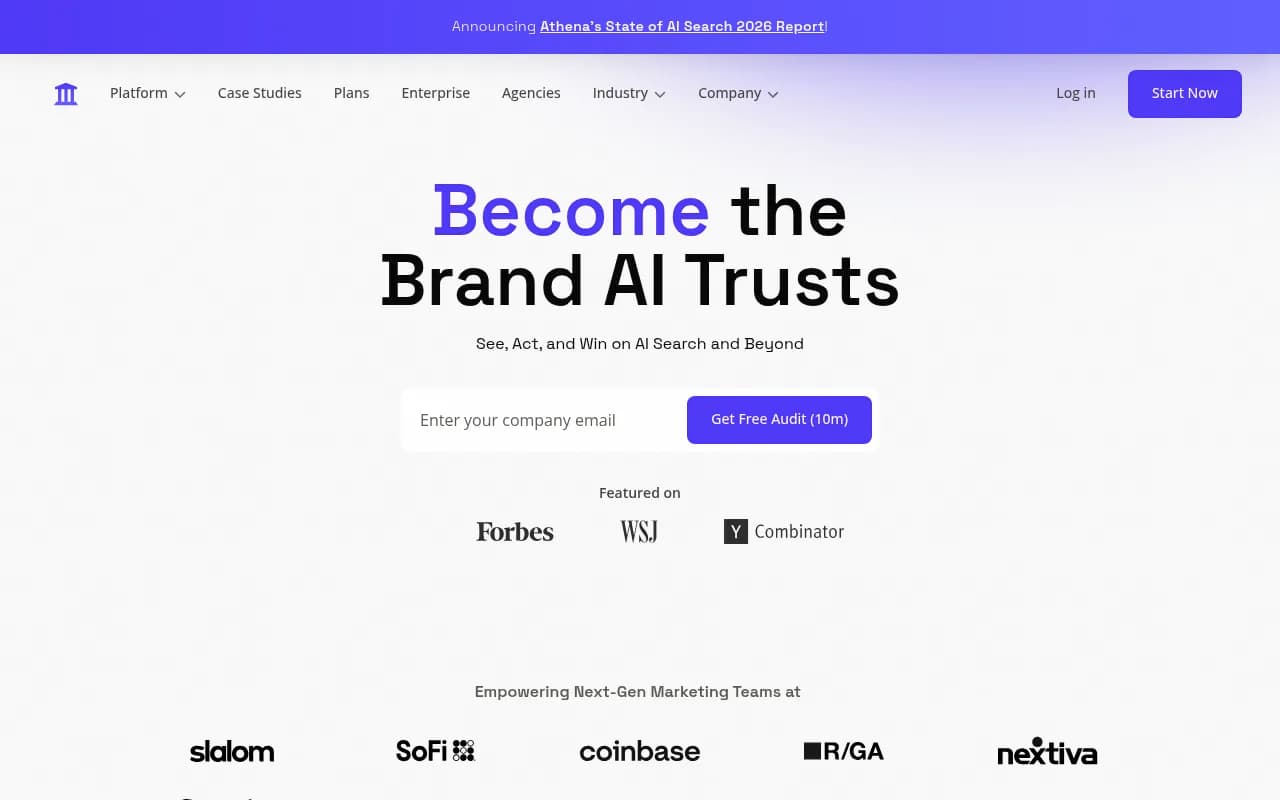
AthenaHQ focuses on AI search monitoring with a cleaner interface than many competitors. It's monitoring-focused, but the depth of data it surfaces on competitor visibility and citation patterns is better than most tools in this price range.
Profound
Profound is the tool many teams graduate to from Hall AI. It has real-user prompt volume data and front-end response capture that most competitors don't offer. The pricing jumps sharply as you add model coverage -- $99/month for ChatGPT only, $399/month to add Perplexity and Google AIO -- which is why it's worth knowing the alternatives before committing.
When budget tools aren't enough
There's a pattern that plays out with teams that start on free or cheap AI visibility tools. Month one: they set up tracking, get excited about the data, share it with leadership. Month two: leadership asks what they're doing about the gaps. Month three: the team realizes the tool they're using can't answer that question.
The monitoring-only tools aren't bad. They're just incomplete for teams that need to actually move the needle.
If you're at the point where you need to go from visibility data to visibility improvement, the tools worth looking at are the ones that close the loop: gap analysis that shows you which prompts competitors rank for but you don't, content tools that help you create pages targeting those gaps, and tracking that shows whether the new content is actually getting cited.
Promptwatch is the platform that does all three. The Answer Gap Analysis shows exactly which prompts your competitors appear for and you don't. Content Agents generate articles and briefs grounded in real prompt data and citation patterns. And page-level tracking shows when AI crawlers pick up your new content and start citing it. It's not the cheapest option, but at $99/month for the Essential plan, it's not enterprise-priced either -- and it's the only tool in this category that actually helps you fix the problem instead of just measuring it.
How to choose based on your situation
You just want to know if you're showing up
Start with Otterly.AI or LLMrefs. Both have free tiers. Set up 10-15 prompts relevant to your category, run them for a few weeks, and see where you stand. This is enough to answer the basic question and build a case for investing in something more serious.
You're already paying for SE Ranking or Ahrefs
Turn on their AI modules before buying a dedicated tool. The data quality is solid, and you're already paying for the platform. Ahrefs Brand Radar in particular has a methodological advantage worth understanding.
You're an agency managing multiple clients
Radarkit and Peec AI are both worth evaluating. The multi-brand management and reporting features matter more at this scale than they do for single-brand teams.
You need to show ROI and actually improve visibility
This is where the monitoring-only tools fall short. You need something that connects visibility data to content creation to traffic attribution. Promptwatch is the clearest option here -- it tracks 10+ AI models, surfaces content gaps, generates content to fill them, and shows you when that content starts getting cited.
You're at an enterprise with a real budget
Profound and Scrunch AI are the main options to evaluate. Both have features that smaller tools don't -- Profound's real-user prompt data and Amazon Rufus tracking, Scrunch's structured enterprise monitoring. Expect to pay accordingly.
A note on data quality
One thing that gets glossed over in most tool comparisons: the prompts these tools track aren't all created equal.
Most AI visibility platforms -- including many of the budget options -- construct their own prompts. A developer writes a list of questions that seem relevant to your category, the tool runs them, and you get a visibility score. The problem is that those fabricated prompts may not reflect what real users are actually asking AI engines.
Ahrefs Brand Radar is the clearest exception here, pulling from actual search query data with real volume behind it. Promptwatch tracks real user-facing AI responses rather than just API outputs, which matters because what users see in ChatGPT's interface can differ meaningfully from what the API returns.
If you're making decisions based on visibility data, it's worth understanding where that data comes from.
Bottom line
Hall AI isn't a bad tool, but it's not the only option -- and for many teams, it's not the right one. The free and low-cost alternatives in this space have gotten genuinely good at the monitoring side of things. Otterly.AI and LLMrefs are solid starting points that cost nothing to try.
The real question is what you want to do with the data. If the answer is "understand where we stand," the budget tools are fine. If the answer is "improve where we stand," you need something that closes the loop between tracking and action.
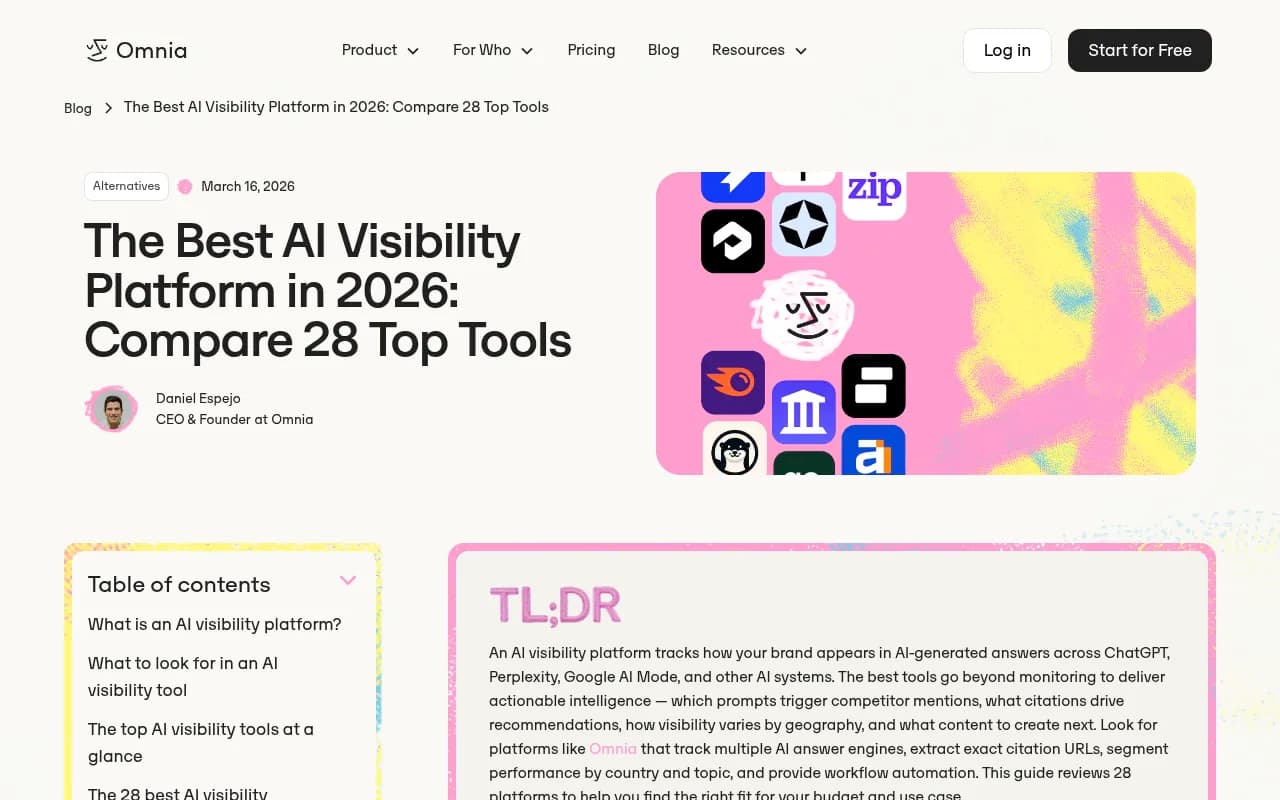
The AI visibility tool market has expanded fast -- there are now 28+ platforms competing for this space, which means prices are more competitive than they were even a year ago. That's good news for buyers. The tools that will win long-term are the ones that help teams actually improve their AI search presence, not just measure it.